How to Match a Necklace on Wedding Gown Necklines and Fabrics
Learn how to perfectly match a necklace on wedding gown necklines. Expert tips on lengths, metal grades, and clasps for bridal jewelry.

The Geometry of Bridal Necklines and Jewelry Pairings
Selecting the perfect bridal jewelry requires more than just picking a sparkling gemstone; it demands a rigorous understanding of proportion, metallurgy, and textile interaction. When you are figuring out how to style a necklace on wedding gown silhouettes, the stakes are incredibly high. The wrong drop length can visually truncate your neck, while an improper clasp or setting can snag delicate French Chantilly lace or silk mikado. According to bridal styling experts at The Knot, the neckline of your dress dictates the exact geometry your jewelry must follow to create a harmonious visual flow.
Sweetheart and Strapless: The Canvas for Statement Pieces
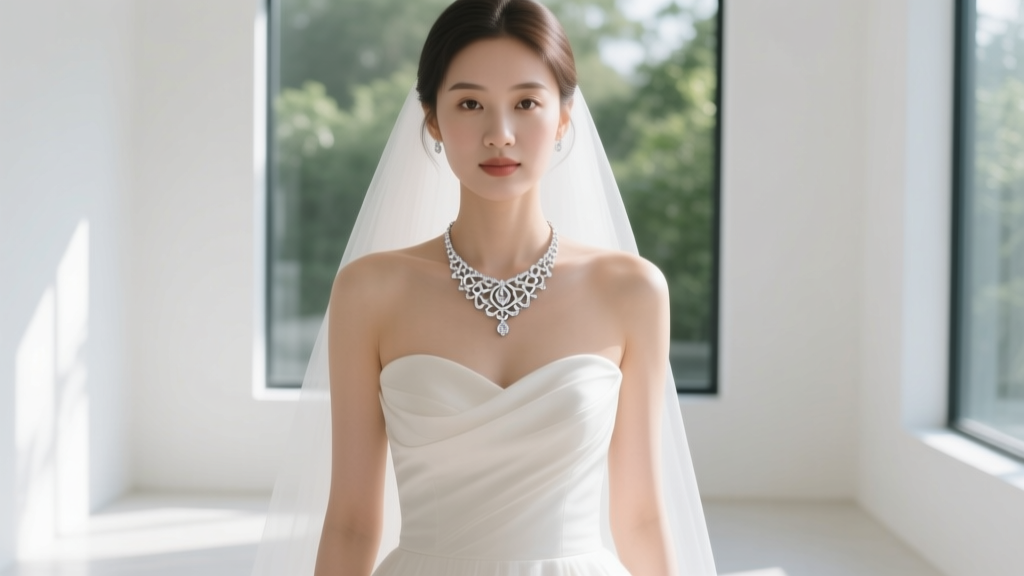
A strapless or sweetheart neckline leaves the décolletage entirely exposed, creating a broad canvas. The most common mistake brides make here is wearing a choker (14 to 15 inches), which visually chops the neck and creates a harsh horizontal line against the curved bodice. Instead, opt for a 'Princess' length necklace (18 inches). This specific drop length rests perfectly on the collarbone, drawing the eye downward and mirroring the V-shape of a sweetheart bodice. If you are wearing a heavily beaded bodice, keep the necklace minimal—a simple 18-inch 950 platinum chain with a single bezel-set diamond solitaire (0.50 to 1.00 carat) provides elegance without competing with the dress's embroidery.
V-Neck and Plunge: Following the Geometry
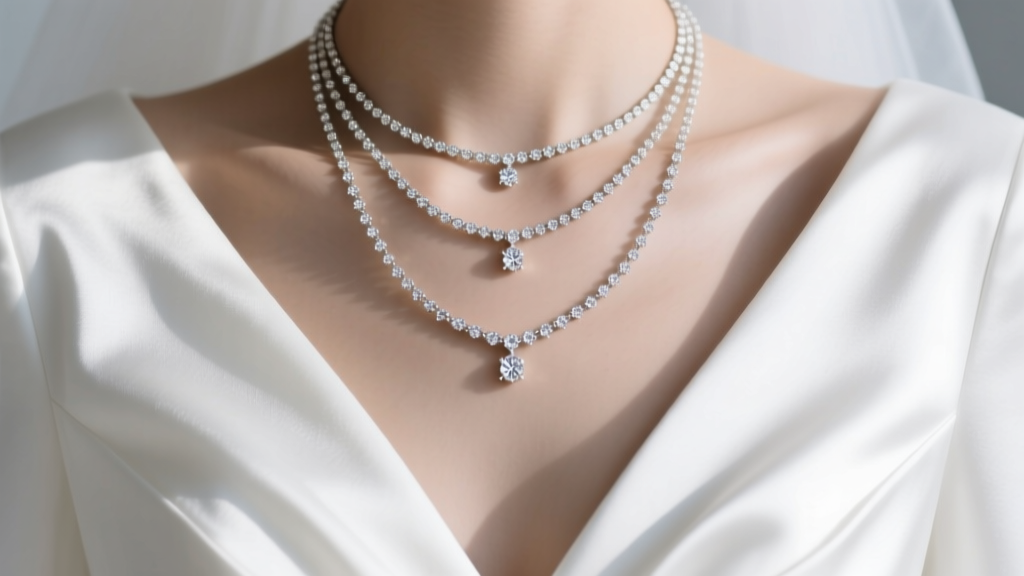
For V-neck and deep plunge gowns, your jewelry must mimic the dress's angles. A Y-necklace or a pendant with a distinct teardrop or marquise cut works best. The ideal length here is a 'Matinee' drop (20 to 22 inches), ensuring the pendant sits roughly two inches above the actual plunge of the fabric. Avoid round, bulky pendants, as they will clash with the sharp, elongated lines of the V-neck. Layering a delicate 16-inch collar with a 20-inch pendant chain is a highly effective technique for adding depth to a simple crepe V-neck gown.
High Neck, Halter, and Illusion: When to Skip the Pendant
When dealing with high necklines, halters, or illusion tulle overlays adorned with crystals, the golden rule is subtraction. Wearing a necklace on wedding gown styles with heavy upper-half detailing almost always results in a cluttered, chaotic look. The illusion tulle itself acts as a decorative layer. In these scenarios, bypass the necklace entirely and redirect your jewelry budget toward statement drop earrings or a sophisticated hair comb. If you absolutely must wear a necklace, restrict it to a 14-inch micro-chain collar that sits flush against the base of the throat, entirely above the dress's structural seam.
Step-by-Step: Sizing and Measuring for the Bridal Drop
Necklace lengths are standardized in the jewelry industry, but how they sit on your body depends entirely on your bust size, neck circumference, and torso length. A standard 18-inch princess necklace might sit at the collarbone on a petite bride but plunge into the cleavage on a bride with a larger bust. Here is how to accurately measure for your specific drop.
- Step 1: Use a Flexible Tailor's Tape. Never use a rigid ruler or metal measuring tape. Wrap a soft, flexible tailor's tape measure around your neck where a choker would naturally sit.
- Step 2: Account for the Bust Apex. Let the tape measure drape down your chest. Note exactly where the 16-inch, 18-inch, and 20-inch marks fall in relation to your collarbone and the neckline of your dress.
- Step 3: Test with a String and Weight. Cut a piece of string to your desired length, tie a small washer or heavy ring to the end to simulate the weight of a pendant, and wear it over your dress during the final fitting. Pendants pull chains downward, often dropping the visual length by half an inch compared to an unweighted chain.
- Step 4: Check the Back Profile. Have your tailor or maid of honor check where the clasp sits. If the chain is too long, the clasp may slip around to the front or rest awkwardly on the delicate buttons or lace of the dress's back panel.
Material Grades and Metal Matching for Bridal Wear
The undertone of your wedding dress dictates the metal grade you should choose. Bridal white is rarely just 'white.' Fabric dyes range from stark, optic white to warm ivory and champagne. Matching the metal's alloy to the fabric's undertone is critical for avoiding a washed-out or muddy appearance in flash photography.
| Dress Undertone | Ideal Metal Grade | Metallurgical Notes |
|---|---|---|
| Stark / Optic White | 950 Platinum or 18k White Gold | Platinum is naturally white and hypoallergenic. 18k white gold is alloyed with nickel or palladium and plated in rhodium (usually 0.75 to 1.0 microns thick) to achieve a stark white mirror finish. |
| Ivory / Candlelight | 18k Yellow Gold or Palladium | Yellow gold complements the warm, creamy tones of ivory silk and satin without looking brassy. Avoid 24k gold, as it is too soft and easily bends during hugs and dancing. |
| Champagne / Blush | 14k or 18k Rose Gold | Rose gold gets its pinkish hue from a higher copper content in the alloy. It beautifully enhances the romantic, vintage feel of blush and champagne tulle overlays. |
According to gemological standards outlined by the Gemological Institute of America (GIA), platinum is the premier choice for bridal jewelry due to its density and durability. Unlike white gold, which requires re-plating when the rhodium wears off, platinum develops a soft patina over time but never loses its structural integrity or color. For a piece meant to be worn for decades after the wedding day, 950 platinum is the superior investment.
Practical Fitting: Clasps, Snags, and Dress Fabrics
The structural mechanics of your necklace are just as important as its aesthetic. Wedding gowns feature notoriously delicate and easily snagged fabrics. French Chantilly lace, silk mikado, and hand-tacked tulle are highly susceptible to catching on sharp jewelry edges.
Avoiding Lace Snags and Tulle Tangles
If your necklace features diamonds or gemstones, the setting type is critical. Avoid micro-prong settings, where tiny metal claws hold the stones. These prongs can easily catch on tulle or lace threads, potentially tearing the fabric or loosening the stones. Instead, opt for bezel settings or flush settings, where the metal completely surrounds the gemstone, creating a smooth, snag-free surface. High-polish metal knots or smooth pavé beads are also excellent, fabric-safe alternatives.
Clasp Mechanics: Security vs. Convenience
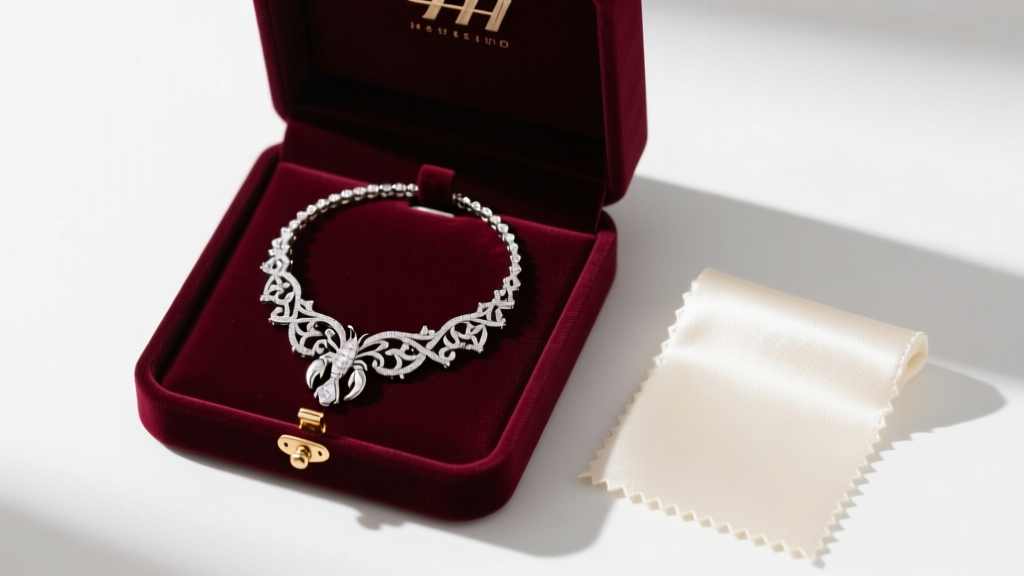
The clasp is the most common point of failure in fine jewelry. Spring-ring clasps are common on lightweight chains but are notoriously difficult to operate, especially if you have freshly manicured nails, and they can easily catch on hair or fabric. For bridal wear, a lobster clasp is the minimum standard. It features a solid, spring-loaded mechanism that is far more secure. If you are wearing a heavy pendant or a multi-strand collar, insist on a box clasp with a figure-8 safety catch. This mechanism locks the chain into a grooved box and features a secondary wire safety that snaps over a pin, ensuring the necklace stays on even if the primary latch is bumped during the reception. As noted by the editors at Brides, securing your clasps properly before walking down the aisle prevents catastrophic jewelry losses during emotional embraces.
The Final Fitting Checklist Before the Aisle
To ensure your jewelry performs flawlessly from the first look to the final dance, run through this technical checklist during your final dress fitting:
- The Sit Test: Sit down in your gown. The bodice will shift and rise slightly. Ensure the 18-inch or 20-inch pendant does not suddenly dip below the neckline or rest awkwardly on the dress's top seam.
- The Flash Photography Test: Have your photographer or a friend take a test photo with a direct flash. Step-cut stones (like emerald or Asscher cuts) can sometimes look dark or glassy in harsh flash, whereas brilliant round cuts will refract light beautifully. Ensure the metal polish isn't creating a blinding glare on camera.
- The Veil Interaction: If you are wearing a blusher or a heavily beaded veil, ensure the comb does not catch on the back of your necklace clasp when the veil is lifted or removed.
- The Skin Sensitivity Check: If you are wearing 14k or 18k white gold, ensure the rhodium plating is fresh. As the plating wears thin, the exposed nickel alloys can cause contact dermatitis, leading to red, irritated skin on your chest on your wedding day. Platinum or palladium alloys are inherently hypoallergenic and bypass this risk entirely.
Mastering the art of pairing a necklace on wedding gown styles is about balancing visual weight, respecting textile boundaries, and choosing materials that will outlast the trends of the season. By focusing on precise drop measurements, appropriate metal grades, and snag-free structural mechanics, you ensure your bridal jewelry enhances your silhouette with effortless, enduring elegance.


