How to Choose the Perfect Necklace One Diamond: A Buyer's Guide
Discover how to choose the perfect necklace one diamond. Our expert guide covers the 4Cs, settings, chain types, and pricing for solitaire pendants.

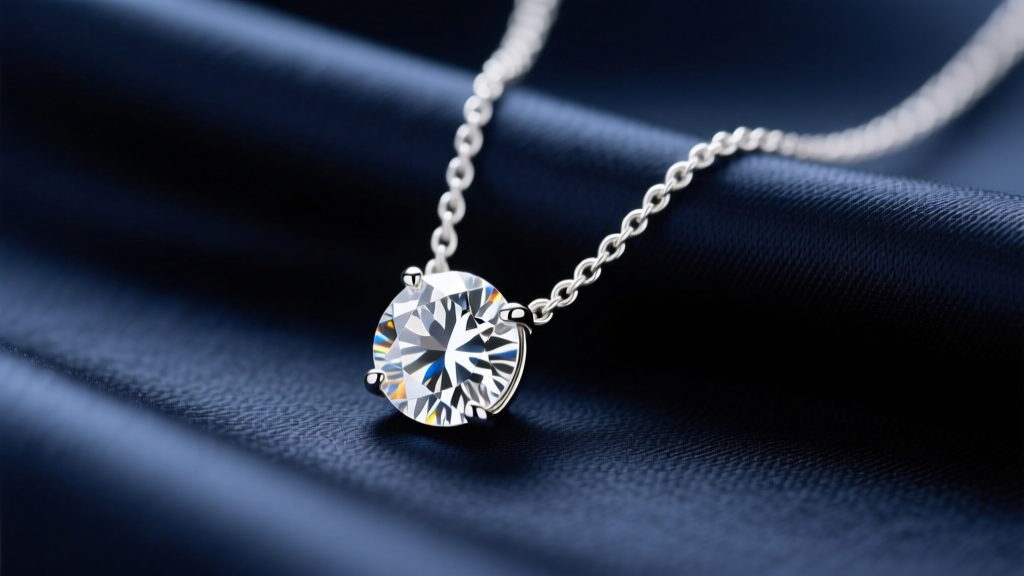
The Allure of the Solitaire: Why a Single Diamond Necklace?
When it comes to timeless elegance, few pieces of jewelry rival the classic solitaire pendant. Often searched for as a necklace one diamond style, this minimalist design strips away the noise of halos and side stones, placing the entire focus on the optical brilliance of a single gemstone. Whether you are purchasing a milestone gift, building a capsule jewelry wardrobe, or investing in an everyday staple, understanding the mechanics of a solitaire pendant is crucial.
Unlike diamond stud earrings, which are viewed up close, a pendant rests on the décolletage and is typically viewed from a distance of two to three feet. This fundamental difference in viewing geometry changes how you should prioritize the 4Cs, select your setting, and choose your chain. In this comprehensive 2026 buying guide, we break down exactly what to look for to ensure your single diamond necklace offers maximum fire, durability, and value.
Decoding the 4Cs for a Solitaire Pendant
The Gemological Institute of America (GIA) established the 4Cs as the universal standard for diamond grading. However, applying these metrics to a pendant requires a strategic approach to avoid overpaying for characteristics that the naked eye cannot perceive from a distance.
Cut: The Non-Negotiable Factor
Cut is the only 'C' you should never compromise on. Because a solitaire pendant lacks the reflective assistance of surrounding pavé diamonds, a poorly cut stone will look flat, glassy, and lifeless. Always demand a GIA 'Excellent' or AGS 'Ideal' cut grade for round brilliants. If you are exploring fancy shapes like ovals or pears, look for superior symmetry and a well-defined bow-tie effect. A well-cut 0.50-carat diamond will face up larger and sparkle more brilliantly than a poorly cut 0.75-carat diamond.
Clarity and Color: Where You Can Save
Because the pendant rests against the skin and is viewed from afar, you do not need flawless clarity. A VS2 or even an eye-clean SI1 clarity grade is perfectly acceptable. Inclusions in an SI1 stone are typically invisible without 10x magnification, making it a smart way to allocate your budget toward a larger carat weight or better cut.
Similarly, color grading can be relaxed. While D-F (colorless) grades are premium, a G or H (near-colorless) diamond will face up completely white to the naked eye once set in a white gold or platinum basket. If you prefer the warmth of a yellow gold chain and setting, you can comfortably drop down to an I or J color grade, as the yellow metal will naturally mask the diamond's faint warmth.
Carat Weight: Sizing for the Neckline
The most common mistake buyers make is assuming carat weight translates directly to physical size. Carat is a measure of weight, not millimeter dimensions. Here is a practical sizing framework for a round brilliant necklace one diamond pendant:
- 0.25 ct (approx. 4.1mm): Delicate and subtle. Ideal for layering or for younger recipients.
- 0.50 ct (approx. 5.1mm): The 'sweet spot' for everyday wear. Noticeable but not overpowering.
- 0.75 ct (approx. 5.8mm): A luxurious statement piece that catches the light beautifully.
- 1.00 ct (approx. 6.5mm): A bold, high-impact solitaire best suited for evening wear or milestone anniversaries.
Setting Styles: Securing Your Solitaire
The setting not only secures the diamond but also dictates the pendant's overall profile and how it interacts with light. The bail (the loop that connects the setting to the chain) is equally important; a poorly designed V-bail can cause the diamond to constantly flip upside down.
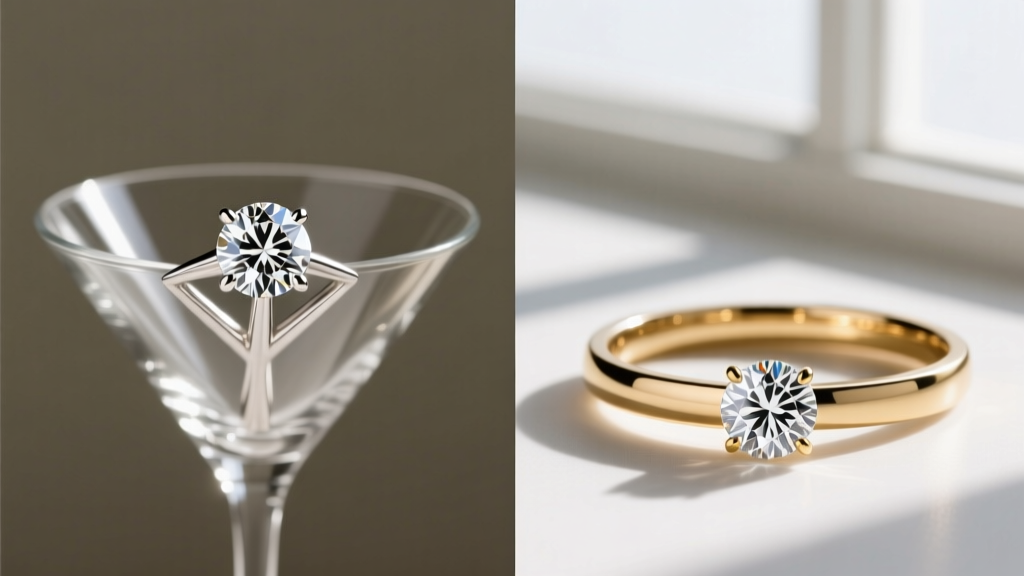
| Setting Style | Pros | Cons | Best For |
|---|---|---|---|
| 3-Prong Martini | Allows maximum light entry; low profile. | Can cause the pendant to 'droop' forward on the chest if the diamond is heavy. | Smaller carat weights (under 0.50ct). |
| 4-Prong Basket | Highly secure; keeps the diamond perfectly upright. | Slightly more metal visibility from the side profile. | Medium to large carat weights (0.50ct+). |
| Bezel | Snag-free; modern look; protects the girdle from chipping. | Blocks some light return; can make the diamond look slightly smaller. | Active lifestyles; modern aesthetic lovers. |
Chain Selection: The Unsung Hero
A stunning diamond will be ruined if it hangs from a weak, kink-prone chain. The chain must support the weight of the pendant without overpowering it. For a standard 0.50ct to 1.00ct diamond, a chain thickness between 0.9mm and 1.2mm is ideal.
Top Chain Types for Solitaires
- Cable Chain: The classic choice. It features uniform oval links. However, thinner cable chains (under 0.8mm) are prone to kinking and catching in hair.
- Box Chain: Composed of square links that create a smooth, sturdy, and modern look. Box chains are highly resistant to kinking and are excellent for slightly heavier pendants.
- Wheat (Spiga) Chain: Woven oval links that mimic stalks of wheat. This is arguably the most durable chain style for everyday wear, offering a beautiful textured reflection that complements the diamond's sparkle.
Troubleshooting Tip: Never use a spring-ring clasp for a diamond pendant. They are notoriously difficult to operate and prone to breaking. Always ensure your chain is fitted with a lobster claw clasp or a secure fold-over clasp for peace of mind.
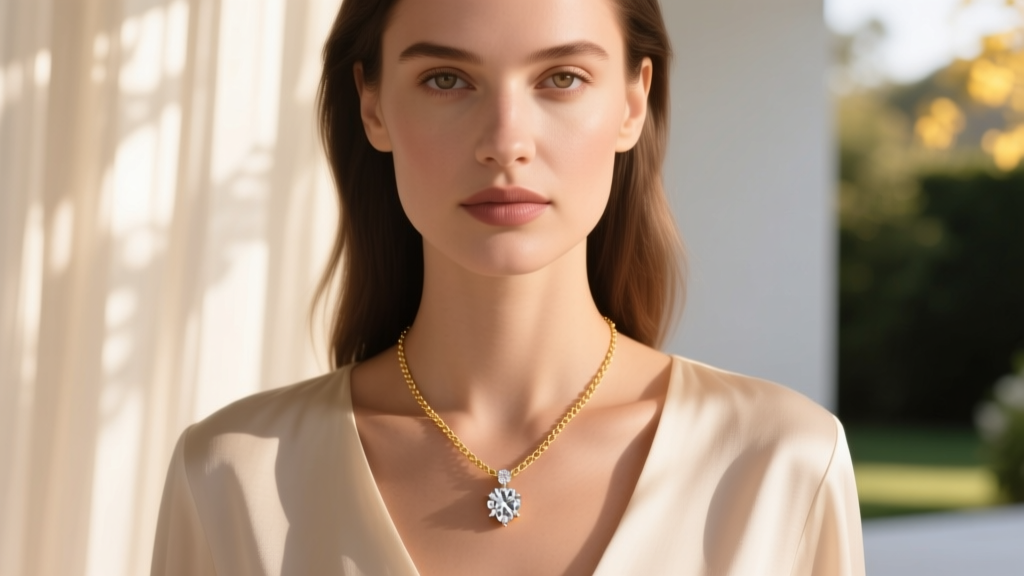
Lab-Grown vs. Natural: The 2026 Market Reality
The diamond market has shifted dramatically over the last few years. According to industry analysts tracking the JCK market reports, lab-grown diamonds have achieved massive consumer acceptance due to their identical chemical, physical, and optical properties to mined stones.
For a necklace one diamond design, choosing a lab-grown stone allows you to double or even triple your carat size for the exact same budget. A natural, GIA-certified 1.00-carat solitaire pendant in a 14k white gold setting will typically retail between $4,500 and $7,500 depending on color and clarity. Conversely, an IGI or GIA-certified lab-grown 1.00-carat pendant of identical visual quality can be acquired for $600 to $950 in today's market.
Expert Insight: If you choose a lab-grown diamond, ensure it comes with a rigorous grading report from IGI or GIA. Never accept a 'certificate of authenticity' from the jeweler itself as a substitute for independent laboratory grading.
Final Checklist Before You Buy
Before you finalize your purchase, run through this quick E-E-A-T verified checklist to ensure you are getting a high-quality piece of fine jewelry:
- Verify the Report: Cross-reference the laser inscription on the diamond's girdle with the digital PDF of the GIA or IGI grading report.
- Check the Bail Threading: Ensure the hole in the bail is smooth and wide enough for your chosen chain. A tight bail will cause the chain to fray over time.
- Inspect the Prongs: Run a piece of silk or a cotton swab over the prongs. If it snags, the prongs are poorly finished and will catch on your clothing.
- Confirm the Metal Stamp: Look for the '14K', '18K', or 'PT950' hallmark on the clasp and the pendant bail to guarantee metal purity.
By prioritizing cut quality, selecting a durable chain, and making an informed decision between natural and lab-grown origins, your single diamond necklace will remain a brilliant, cherished staple in your jewelry collection for decades to come.


