Necklace With a Ring Meaning: A Buyer's Guide to Symbolic Pendants
Discover the necklace with a ring meaning, from promise bands to Claddagh pendants. Learn how to choose materials, chains, and styles for symbolic jewelry.

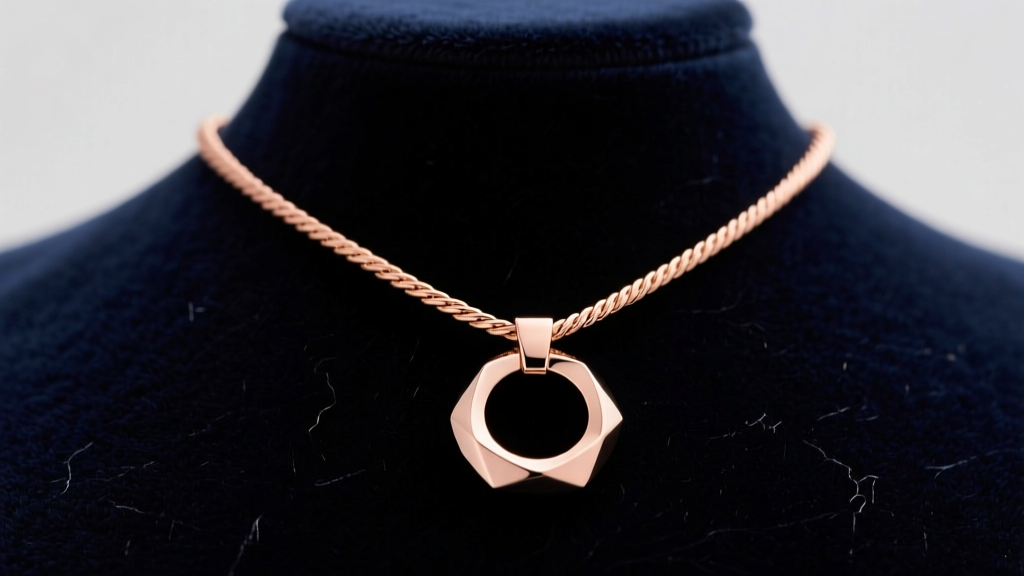
Decoding the Necklace With a Ring Meaning
The practice of suspending a ring from a chain is steeped in emotional resonance, cultural heritage, and practical necessity. When buyers begin researching the necklace with a ring meaning, they quickly discover that this styling choice is rarely just a fashion statement. It is a deeply personal sartorial decision. Whether it is a widow wearing her late husband’s wedding band, a mechanic protecting their diamond engagement ring from workplace hazards, or a young couple exchanging promise bands, the ring pendant serves as a tangible anchor to a profound memory or commitment.
As a jewelry style guide, we approach the ring necklace not just as an accessory, but as a wearable artifact. In 2026, the trend of wearing meaningful rings on chains has evolved beyond simple leather cords. Today’s buyers are pairing heirloom bands with precision-engineered chains, balancing metallurgical weight with aesthetic proportion. This comprehensive buying guide will help you navigate the symbolism, material grades, and structural requirements of choosing the perfect ring pendant and chain combination.
The Core Symbolism: Why Wear a Ring on a Chain?
According to jewelry historians at the Victoria and Albert Museum, the adaptation of finger rings into necklaces has roots in Victorian mourning jewelry and wartime sentimentality. Today, the symbolism has expanded into several distinct categories:
1. The Promise and Commitment Pivot
Often, a promise ring or engagement ring is moved to a necklace due to physical changes or lifestyle demands. Pregnancy, weight fluctuations, or jobs requiring frequent glove use (such as nursing or culinary work) make finger wear impractical. Suspending the ring over the heart transforms it into a continuous, intimate reminder of commitment without risking loss or damage to the band.
2. Memorial and Mourning Bands
Wearing a departed spouse’s wedding band on a chain is a universal symbol of enduring love. Because men’s bands (often size 9 to 12) are significantly wider and heavier than traditional pendants, this specific meaning requires heavy-duty chain selections and reinforced clasps to prevent breakage.
3. The Claddagh Heritage
The traditional Irish Claddagh ring—featuring hands (friendship), a heart (love), and a crown (loyalty)—is frequently worn as a pendant. The orientation matters: wearing the heart pointing inward toward the body signifies that the wearer’s heart is taken, while pointing outward signifies availability. When worn on a necklace, it is almost universally positioned with the heart pointing inward, resting against the chest.
Matching Ring Styles to Chain Architectures
The visual weight and historical context of the ring dictate the chain it should hang from. A delicate cable chain will snap under the weight of a tungsten signet, while a thick curb chain will visually overpower a slim 2mm gold promise band. Use the framework below to pair your pendant with the correct chain architecture.
| Ring Style | Core Meaning | Ideal Chain Type | Recommended Gauge | Clasp Requirement |
|---|---|---|---|---|
| Plain Band (2mm-4mm) | Commitment / Memorial | Box or Cable | 1.2mm - 1.8mm | Spring Ring or Small Lobster |
| Claddagh Ring | Heritage / Loyalty | Rope or Wheat | 2.0mm - 3.0mm | Lobster Clasp |
| Signet Ring | Identity / Lineage | Curb or Figaro | 2.5mm - 4.0mm | Heavy Lobster or Toggle |
| Puzzle Ring | Interconnected Souls | Wheat or Snake | 1.5mm - 2.5mm | Lobster Clasp |
| Tungsten/Steel Band | Modern Durability | Stainless Rope | 3.0mm - 5.0mm | Toggle or Magnetic Lock |
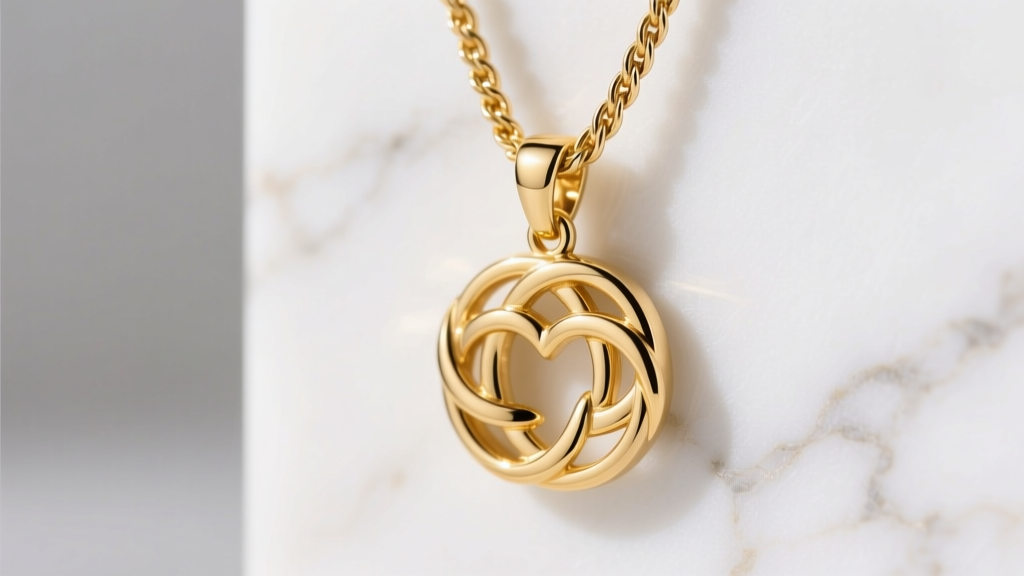
Metallurgy and Weight: What to Look For
Understanding the specific gravity and hardness of your ring’s metal is critical for chain longevity. The Gemological Institute of America (GIA) provides extensive data on metal densities, which directly impact how a pendant behaves on a chain.
- Platinum (950 Pt): Platinum is exceptionally dense. A standard size 8, 6mm wide platinum wedding band can weigh upwards of 14 grams. This requires a chain rated for at least 20 grams of tensile stress. Avoid hollow chains; opt for solid 18k gold or platinum chains with soldered links.
- Tungsten Carbide: Ranking around 9 on the Mohs hardness scale, tungsten is virtually scratch-proof but highly brittle. It cannot be resized or traditionally soldered. If a tungsten ring is to be worn as a pendant, it must either be slipped onto the chain directly (requiring a chain end small enough to pass through the band) or fitted with a mechanical bail by a jeweler using specialized laser welding.
- Titanium (Grade 5 / Ti-6Al-4V): Aerospace-grade titanium is incredibly lightweight and hypoallergenic. A titanium band will weigh roughly 25% of an identically sized platinum band. This allows for greater versatility, permitting the use of finer, more delicate chains without risking structural failure.
- 14k and 18k Gold: 18k gold (75% pure gold) is softer and more prone to micro-abrasions than 14k gold (58.3% pure gold). If your 18k gold ring pendant rubs against a harder stainless steel chain, the pendant will slowly wear away. Always match the chain metal to the pendant metal, or ensure the chain is softer (e.g., a 14k gold ring on an 18k gold chain).
Chain Length and Proportion: Avoiding the 'Lost Pendant' Effect
A common mistake buyers make is selecting a chain length that diminishes the visual impact of the ring. The inner diameter of the ring must dictate the chain length.
The Proportion Framework
- Size 4 to 6 Rings (14.9mm - 16.5mm diameter): These smaller bands can easily look like mere beads if dropped on a 24-inch chain. Opt for a 16-inch choker length or an 18-inch collarbone length to keep the ring framed prominently against the upper chest.
- Size 7 to 9 Rings (17.3mm - 18.9mm diameter): The standard range for most women’s and men’s bands. An 18-inch to 20-inch chain provides the perfect drape, allowing the ring to rest just below the clavicle.
- Size 10+ Rings & Wide Bands (19.8mm+ diameter): Larger memorial bands or wide signets require physical space to lay flat. A 22-inch or 24-inch chain prevents the ring from flipping upside down and ensures it rests comfortably without feeling like a choke hazard.
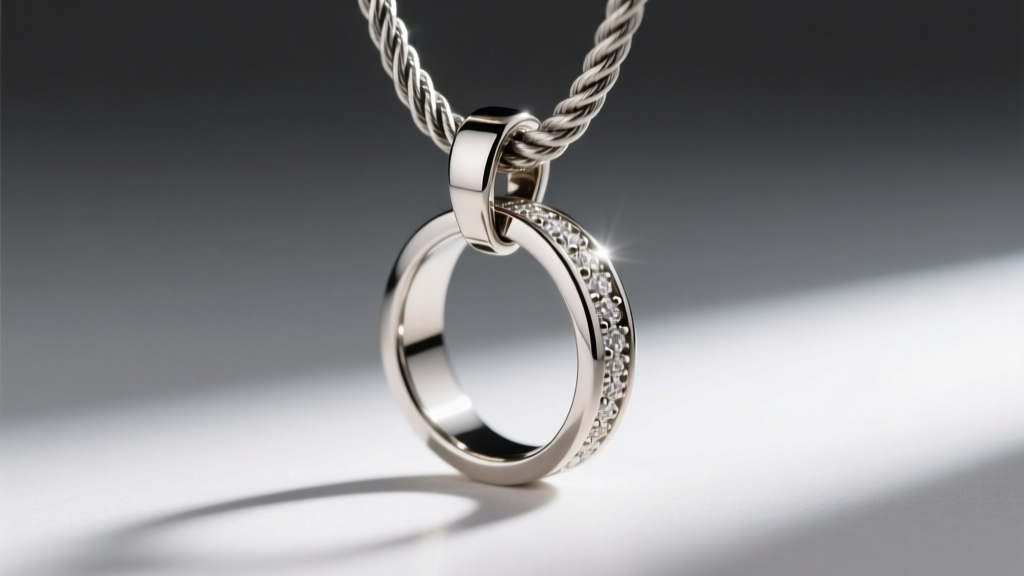
Sourcing and Customization: The Bench Jeweler Advantage
While many heritage brands sell pre-made ring pendants, the most meaningful pieces are often existing finger rings repurposed for the neck. If you are converting a family heirloom or a personal wedding band, consult a master bench jeweler rather than attempting a DIY solution.
"Slipping a ring directly onto a chain is the safest method, but it limits your chain options to those with microscopic clasps. A jeweler can laser-solder a custom V-bail or hidden jump ring to the inner shank of the band, allowing it to hang perfectly flush and accommodate heavier, more secure chains." — Master Jeweler Bench Notes
When having a bail soldered, ensure the jeweler uses a laser welder rather than a traditional torch if the ring contains tension-set stones, heat-sensitive gems (like opals or emeralds), or is made of titanium. Traditional torches can shatter gems or alter the temper of alternative metals, whereas laser welding localizes the heat to a microscopic focal point.
Final Verdict: Wearing Your Story
The necklace with a ring meaning is ultimately defined by the wearer. Whether it serves as a shield against workplace hazards, a memorial to a lost loved one, or a proud display of cultural heritage, the ring pendant is one of the most versatile and emotionally charged pieces of jewelry you can own. By carefully matching the metallurgical weight of your band to the tensile strength of your chain, and respecting the proportional geometry of the pendant, you ensure that your symbolic jewelry remains safe, striking, and deeply personal for decades to come.


