Choosing a Necklace Silver Alloy: Purity & Chain Tech
Master the technical specs of silver necklaces. Explore sterling vs. argentium alloys, hallmark verification, and chain link failure modes.

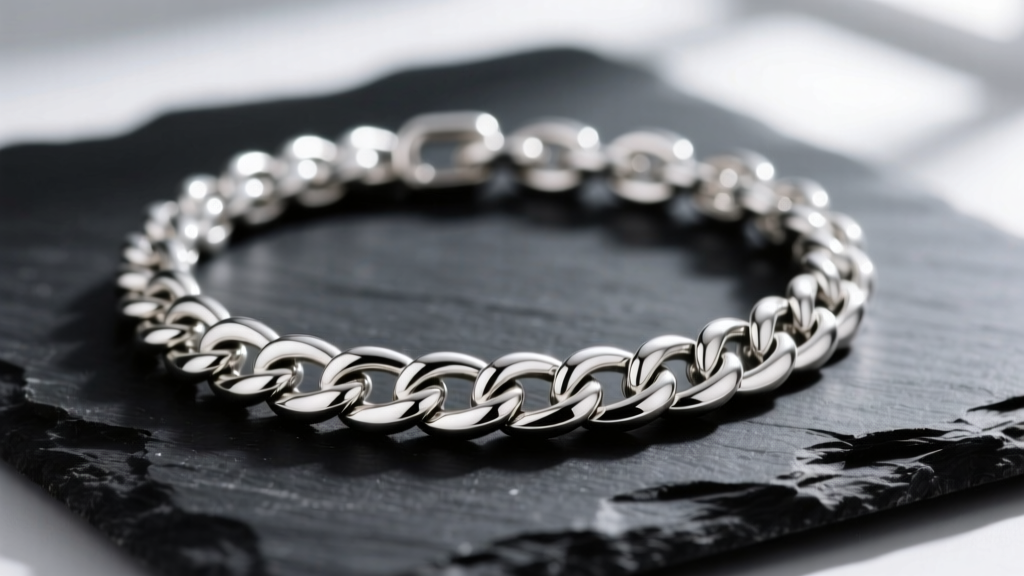
The Metallurgy of Silver Necklaces: Beyond the 925 Stamp
When evaluating a necklace silver composition, most retail buyers stop their analysis at the familiar "925" stamp. However, as a domain expert in jewelry metallurgy, I can tell you that this binary approach ignores the complex alloy science that dictates a chain's tensile strength, tarnish resistance, and long-term structural integrity. Pure silver (999 fine) possesses a Vickers hardness (HV) of roughly 25, making it entirely unsuitable for the mechanical stress a necklace endures during daily wear. To achieve durability, silver must be alloyed with other metals, fundamentally altering its chemical and physical properties.
As of 2026, the market has evolved far beyond traditional copper-alloyed sterling. Understanding the specific elemental additions in your silver jewelry is the first step in making an informed, technically sound purchase.
Standard Sterling vs. Argentium Silver
Traditional sterling silver consists of 92.5% silver and 7.5% copper. While copper provides necessary structural rigidity (raising the hardness to approximately 65 HV), it is highly reactive. The copper atoms readily bond with atmospheric sulfur to form copper sulfide, the primary culprit behind the black tarnish that plagues silver jewelry.
Argentium silver, a modern metallurgical breakthrough, replaces a portion of the copper with germanium. This addition fundamentally changes the oxidation profile of the metal. According to technical data from Rio Grande, the germanium migrates to the surface and forms a transparent, self-healing layer of germanium dioxide. This barrier physically blocks sulfur from reaching the copper, granting Argentium an exponential increase in tarnish resistance. Furthermore, Argentium can be heat-hardened to over 130 HV, making it vastly superior for delicate chain links that require high tensile strength.
| Alloy Type | Composition | Vickers Hardness (HV) | Tarnish Resistance | Firescale Risk |
|---|---|---|---|---|
| Fine Silver (999) | 99.9% Ag | ~25 HV (Annealed) | Excellent | None |
| Standard Sterling (925) | 92.5% Ag, 7.5% Cu | ~65 HV (Annealed) | Poor | High |
| Argentium (935) | 93.5% Ag, Cu, Ge | ~85 HV (Annealed) / 130+ HV (Heat Hardened) | Exceptional | None |
| Platinum Sterling | 92.5% Ag, Pt, Cu | ~75 HV | Good | Moderate |
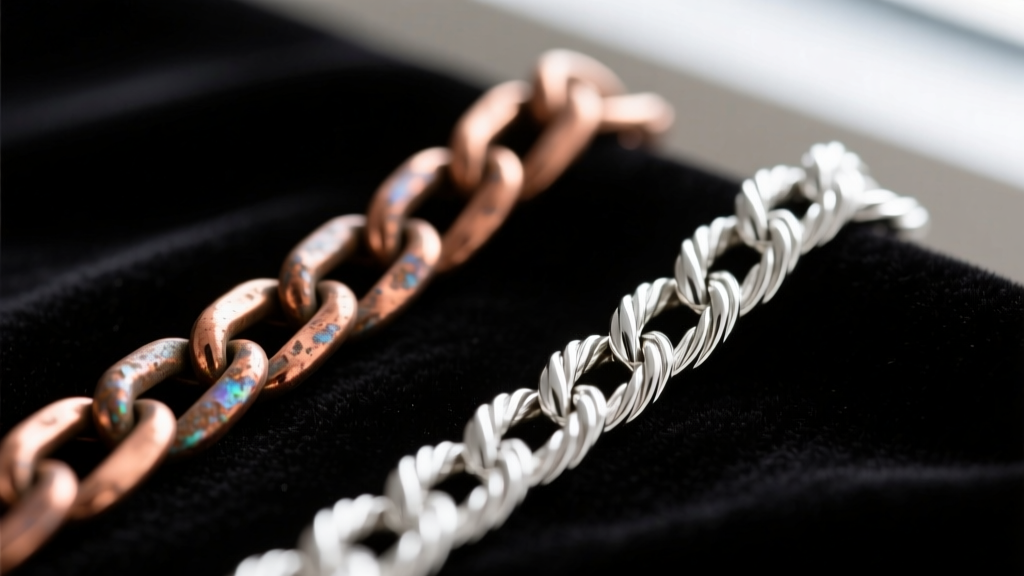
Decoding Hallmarks and Deceptive Stamps
The stamping of silver jewelry is a highly regulated practice in many jurisdictions, yet the global market remains flooded with misleading nomenclature. The Gemological Institute of America (GIA) emphasizes that a legitimate hallmark must represent the exact precious metal content, but enforcement varies wildly by region.
In the United Kingdom, the Assay Office system mandates rigorous independent testing before a hallmark is applied. A compliant UK necklace will feature the maker's mark, the fineness mark (e.g., 925), and the Assay Office mark. In the United States, the Federal Trade Commission (FTC) dictates that if a fineness stamp is used, it must be accompanied by a registered trademark of the manufacturer, ensuring accountability.
Red Flag Terminology
When sourcing silver necklaces, immediately disqualify any piece utilizing the following deceptive terms, as they contain zero elemental silver and can cause severe contact dermatitis due to high nickel content:
- Tibetan Silver: A cupronickel or zinc alloy, often containing dangerous levels of lead or nickel.
- Nickel Silver (German Silver): An alloy of copper, nickel, and zinc. Highly allergenic.
- Silver Plated / EPNS: A base metal core (usually brass or copper) with a microscopic veneer of silver that will wear through to the base metal within months of friction.
Chain Link Engineering: Soldered vs. Unsoldered Links
The structural failure of a necklace rarely occurs in the middle of a solid wire; it occurs at the link junctions. The engineering of these junctions determines the chain's torsion resistance and ultimate breaking point.
Soldered Link Chains (High Durability)
Chains such as Cable, Curb, Figaro, and Anchor links are constructed from individual wire loops that are individually welded or soldered shut. This creates a closed mechanical system. If subjected to extreme tensile stress (e.g., the necklace being forcefully yanked), a soldered link will stretch and deform before it snaps. This deformation provides a visual warning of structural compromise before catastrophic failure occurs.
Unsoldered Link Chains (Low Torsion Resistance)
Chains like Snake, Box, Herringbone, and Omega are created by tightly interlocking folded metal ribbons or stamped links without soldering. While they offer a beautiful, fluid drape, they possess near-zero torsion resistance. A herringbone chain, for instance, will permanently kink if bent at a sharp angle, destroying the structural alignment of the mesh. Snake chains are notorious for snapping abruptly when caught on clothing, as the interlocking tension is compromised instantly.
Gauge Sizing and Pendant Load Limits
Matching the chain gauge to the pendant weight is critical for preventing clasp failure and link elongation. The industry standard rule of thumb is that the chain's breaking strength should be at least five times the static weight of the pendant to account for dynamic kinetic shock (the sudden jerk of a swinging pendant).
- 22-Gauge (0.64mm): Suitable only for micro-pendants under 3 grams. Prone to kinking.
- 20-Gauge (0.81mm): The standard for lightweight everyday pendants (3g - 8g).
- 18-Gauge (1.02mm): Ideal for medium-weight statement pieces (8g - 15g). Offers excellent balance of durability and drape.
- 16-Gauge (1.29mm) & 14-Gauge (1.63mm): Required for heavy, solid-cast pendants exceeding 15 grams. Often utilized in heavy Cuban or Curb link designs.
Clasp Mechanisms and Security Failures
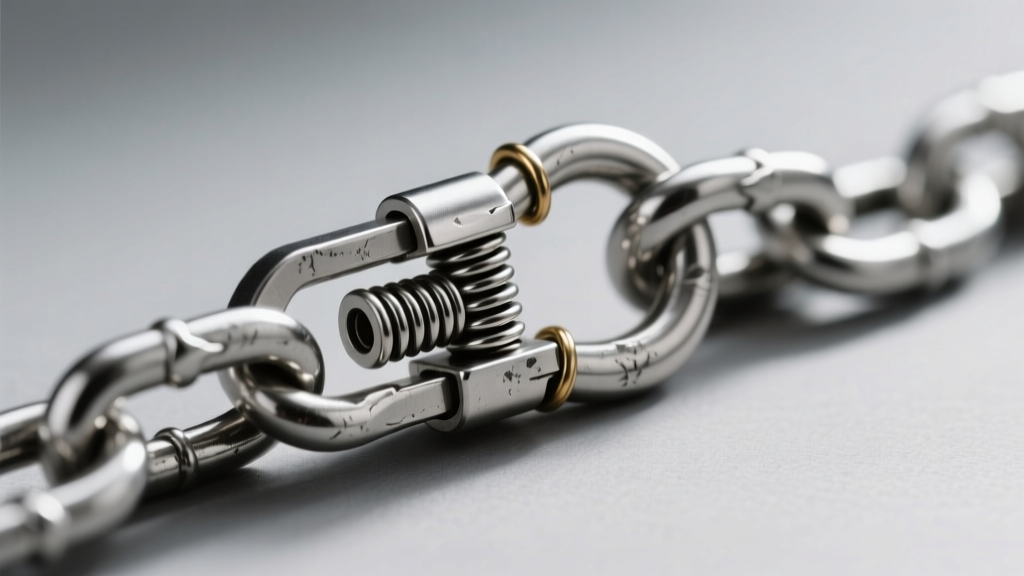
The clasp is the most mechanically complex and vulnerable component of any necklace. The internal spring mechanisms are subject to work hardening and eventual metal fatigue.
Lobster Claw Clasps: The industry standard for chains ranging from 18-gauge to 14-gauge. The internal spring is usually made of base steel to maintain tension, housed within a cast silver body. Failure typically occurs when the tiny internal retaining pin shears or when the spring loses tension due to exposure to chlorinated water or harsh ultrasonic cleaning chemicals.
Spring Ring Clasps: Common on lightweight 20-gauge to 22-gauge chains. These feature a hollow tubular body with a coiled spring. They are highly susceptible to misalignment; if the internal coil shifts, the clasp will fail to close flush, leaving the necklace insecure.
Fold-Over Safety Clasps: The superior choice for heavy, high-value silver chains (14-gauge and above). These rely on friction and a hinged mechanical lock rather than a delicate internal spring, offering vastly superior longevity and security against accidental unfastening.
"A chain is only as secure as its weakest soldered joint. Always inspect the jump ring connecting the clasp to the chain. If the jump ring is not laser-welded or properly soldered shut, a simple pull will pry the gap open, resulting in immediate loss of the piece." — Master Bench Jeweler Technical Guidelines, 2025.
Tarnish Kinetics and Preventative Maintenance
Silver tarnish is not a sign of poor quality; it is an unavoidable electrochemical reaction between the alloyed metals and hydrogen sulfide ($H_2S$) present in the atmosphere. The rate of this reaction is catalyzed by high humidity, elevated temperatures, and the specific pH and sulfur content of the wearer's sweat.
While rhodium plating is frequently applied to white gold and some silver jewelry to provide a bright, tarnish-proof barrier, it is a temporary solution. On a necklace, the constant friction against the skin and clothing will wear through the microscopic rhodium layer (usually 0.1 to 0.5 microns thick) within 12 to 24 months, requiring costly re-plating.
For long-term maintenance of unplated Argentium or Sterling silver, the most effective technical intervention is the use of activated carbon or copper-based anti-tarnish intercept strips stored within an airtight polyethylene environment when the necklace is not being worn. This chemically neutralizes the atmospheric sulfur before it can react with the silver lattice.
Final Technical Verdict
Selecting the right silver necklace requires looking past the aesthetic surface and evaluating the underlying metallurgy and mechanical engineering. For buyers prioritizing low maintenance and high tensile strength, heat-hardened Argentium silver in a soldered 18-gauge curb or cable link configuration represents the optimal technical choice in the modern market. By verifying FTC-compliant hallmarks, avoiding deceptive base-metal alloys, and matching the chain gauge to the dynamic load of your pendant, you can secure a piece of jewelry that is structurally engineered to last generations.


