Necklace vs Chain: The Ultimate Budget & Value Guide
Discover the real differences in a necklace vs chain. Learn how to maximize your jewelry budget with our expert value assessment and cost-per-wear guide.

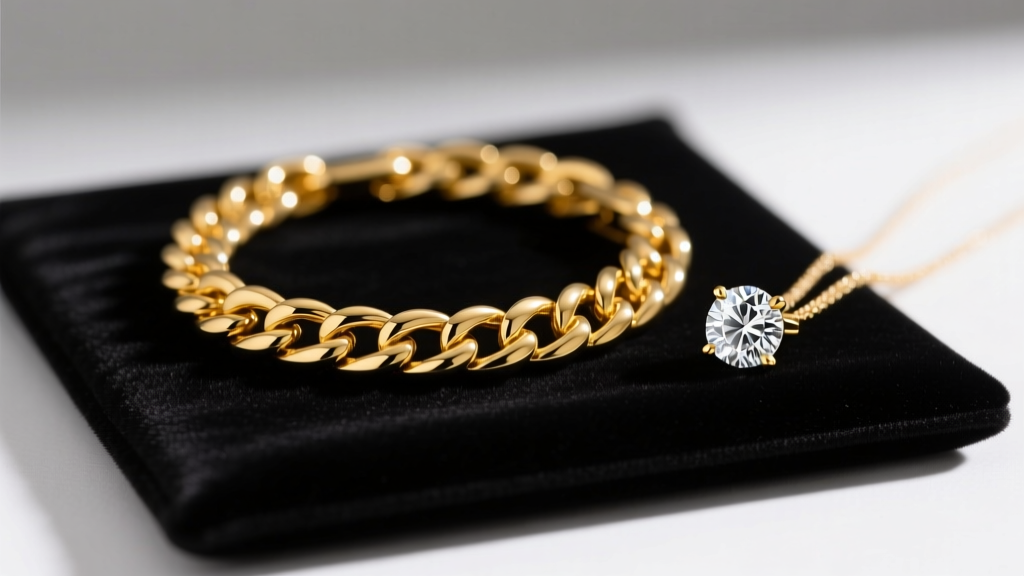
When navigating the jewelry market, consumers and even some retail associates frequently use the terms "necklace" and "chain" interchangeably. However, from an appraisal, budgeting, and value-retention perspective, understanding the strict distinction between a necklace vs chain is critical. Making the wrong assumption can lead to overpaying for brand markups, underestimating repair costs, or failing to maximize your cost-per-wear. In this comprehensive budget and value assessment, we break down the economics of neck adornments to help you make financially sound jewelry investments in 2026.
The Core Distinction: Defining Chain vs. Necklace for Appraisers
To assess value accurately, we must first define our terms. A chain is fundamentally a structural component—a series of interlocking metal links or wires designed to hold weight or serve as a standalone metallic ornament. Its value is primarily dictated by raw material weight (grammage), metal purity (karat), and the labor required to manufacture the specific link pattern.
A necklace, conversely, is a broader categorical term for a complete piece of neck jewelry. While a necklace often incorporates a chain as its foundation, it also includes focal elements such as pendants, gemstone settings, beadwork, or intricate collars. When you buy a "necklace," you are paying for the chain plus the gemological value of the stones, the setting labor, and the design premium. Recognizing this necklace vs chain distinction is the first step in auditing your jewelry budget.
Material Value Breakdown: Where Your Money Actually Goes
When you allocate a $1,500 budget, how that capital is distributed depends entirely on whether you are purchasing a standalone chain or a complete necklace. According to the Gemological Institute of America (GIA), the intrinsic value of gold alloys remains a primary driver of jewelry pricing, but labor and gemstones drastically alter the final retail cost.
| Value Component | Standalone Chain (e.g., 14k Gold Cuban) | Complete Necklace (e.g., Chain + Diamond Pendant) |
|---|---|---|
| Raw Metal Value | 60% - 75% of retail price | 20% - 35% of retail price |
| Manufacturing Labor | 25% - 40% (depends on link complexity) | 15% - 25% (chain labor + setting labor) |
| Gemstone / Focal Point | 0% | 30% - 60% (highly variable) |
| Resale / Melt Retention | High (tied closely to spot gold prices) | Low to Moderate (stones lose retail premium) |
As the table illustrates, standalone chains offer significantly higher value retention relative to their melt weight. A heavy 14k gold chain is essentially a wearable asset, whereas a diamond pendant necklace carries a steep retail markup that is rarely recouped upon resale.
Chain Styles and Failure Modes: A Durability Assessment
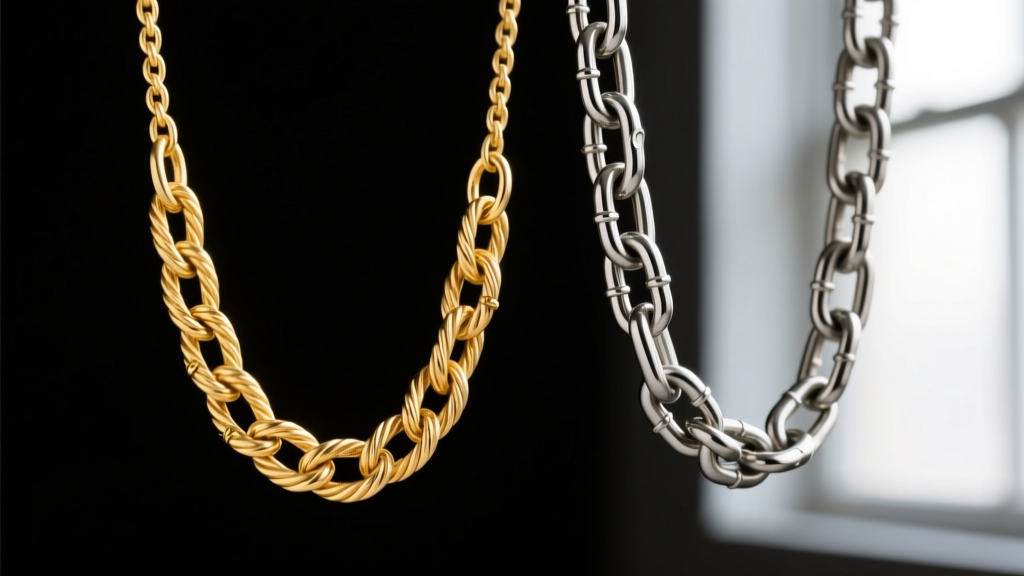
If you opt to invest your budget into a high-quality chain to serve as a modular foundation, you must evaluate the structural integrity of the link style. Not all chains are created equal, and repair costs can quickly destroy the value proposition of a poorly chosen link.
- Cable Chain: The most basic and economical link. Because the links are simple ovals, they are incredibly easy and cheap to solder if broken (average repair: $25-$40). Excellent for budget-conscious buyers holding lightweight pendants (under 5 grams).
- Box Chain: Offers a beautiful geometric reflection but is notorious for kinking. Once a box chain kinks, the structural integrity is compromised, and jewelers often refuse to repair it because soldering the square links results in a visible, stiff joint.
- Rope Chain: Highly brilliant and durable against snapping, but if it does break, the twisted links unravel. Repairing a rope chain requires advanced laser welding and can cost upwards of $80-$120, making it a hidden long-term liability.
- Cuban / Curb Chain: The gold standard for value retention. The flat, interlocking links distribute weight evenly. They rarely snap under normal wear, and if they do, the flat surface area makes soldering seamless and affordable.
Clasp and Hardware: The Hidden Value Killers
When assessing a necklace vs chain for everyday wear, the clasp is the most critical point of failure. Budget chains often utilize spring ring clasps. These are inexpensive to produce but feature a tiny internal steel spring that degrades over time. A spring ring is entirely inadequate for any chain weighing over 10 grams.
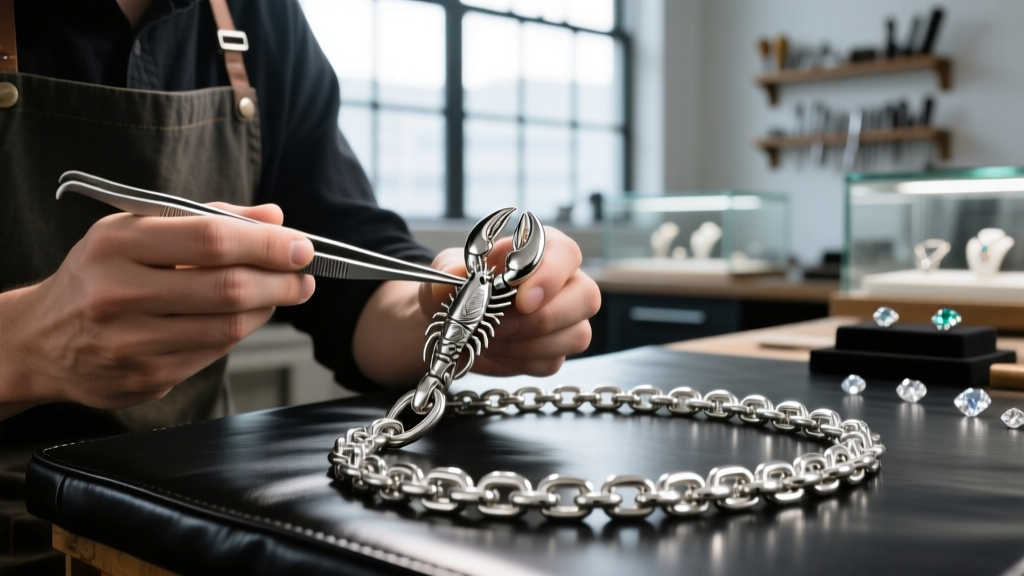
For true value and security, insist on a lobster clasp or a fishhook clasp. A solid 14k gold lobster clasp adds roughly $30 to $60 to the initial retail price but prevents the catastrophic loss of a heavy gold chain or valuable pendant. According to Jewelers of America, upgrading hardware is one of the most cost-effective ways to extend the lifespan of your jewelry.
The Cost-Per-Wear Framework: Modular Chains vs. Fixed Necklaces
The most financially sound strategy for modern jewelry collectors is the Modular Chain Method. Instead of purchasing three distinct necklaces for $600 each ($1,800 total), allocate your budget toward one premium, heavy-gauge chain and multiple interchangeable pendants.
The 2026 Modular Budget Example:
Option A (Fixed Necklaces): Three 14k gold necklaces with small birthstone pendants. Total weight: 9 grams. Total cost: $1,650. High redundancy, low metal value.
Option B (Modular Chain): One 18-inch, 15-gram 14k gold Franco chain ($1,100) + three high-quality interchangeable gemstone pendants with custom bails ($450). Total cost: $1,550. You now own a substantial piece of gold bullion jewelry that can be worn alone, plus three distinct looks.
By focusing on the chain as the primary investment, you lower your cost-per-wear and ensure that the bulk of your capital is tied to the fluctuating, yet historically appreciating, precious metal market rather than the depreciating retail markup of mass-produced necklace settings.
2026 Market Realities: Navigating High Gold Prices
With precious metal markets experiencing sustained volatility and high baselines in 2026, understanding karat purity is essential for budget assessment.
- 10k Gold (41.7% pure): The most budget-friendly option. Highly durable and resistant to scratching, but lacks the rich color of higher karats and holds less intrinsic melt value. Best for heavy, streetwear-style chains where durability outweighs investment potential.
- 14k Gold (58.3% pure): The optimal intersection of budget, durability, and value retention. It offers enough gold content to maintain a strong resale floor while retaining the alloy strength necessary to prevent link deformation.
- 18k Gold (75% pure): A premium investment. While it offers superior color and hypoallergenic properties, 18k gold is softer. Delicate 18k chains are prone to stretching under the weight of heavy pendants, which can ruin the link structure over time.
Final Verdict: Which Offers Better Long-Term Value?
When debating a necklace vs chain from a strict budget and value perspective, the standalone chain emerges as the superior financial asset. A well-chosen, structurally sound chain (like a 14k gold Cuban or Franco) offers high intrinsic value, excellent repairability, and unmatched versatility. While complete necklaces offer immediate aesthetic gratification and are essential for formal or bridal occasions, they carry steep retail premiums that evaporate the moment you leave the store. By adopting a modular approach—investing heavily in the chain and selectively sourcing pendants—you build a jewelry wardrobe that is both economically resilient and endlessly adaptable.


