Choosing a Necklace Wall Rack: Material Guide to Prevent Tarnish
Compare wood, metal, and acrylic necklace wall rack materials. Learn how rack properties affect silver tarnish and chain longevity.

The Hidden Chemistry of Jewelry Storage
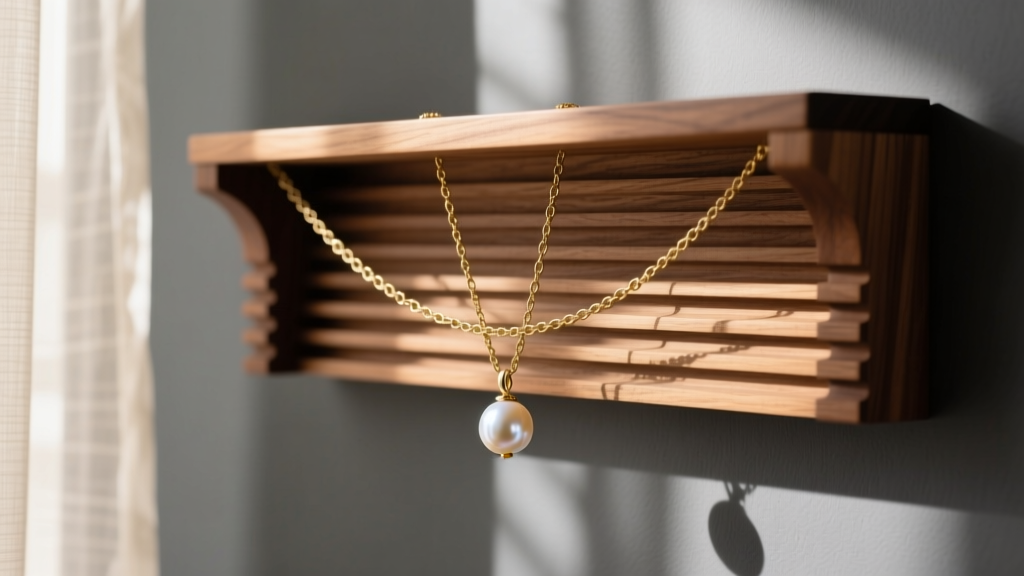
When curating a collection of fine necklaces, chokers, and pendants, most enthusiasts obsess over gold karats, gemstone clarity, and chain link structures. Yet, the environment where these pieces rest for 90% of their lifespan is often an afterthought. A necklace wall rack is not merely a decorative display tool; it is an active microenvironment. The material properties of your chosen rack dictate the rate of silver sulfide tarnishing, the risk of galvanic corrosion, and the physical deformation of delicate wire gauges.
Storing a porous turquoise pendant or a delicate 0.8mm gold snake chain on the wrong surface can lead to irreversible micro-abrasions and chemical degradation. To protect your investments, we must evaluate wall-mounted storage through the lens of material science, focusing on off-gassing, moisture retention, and structural gauge compatibility.
Material Comparison: Wood vs. Metal vs. Acrylic
Before diving into the chemical interactions, it is essential to understand the baseline physical and environmental properties of the three primary materials used in wall-mounted jewelry organizers. The table below outlines how each material interacts with fine jewelry over a 12-month period in a standard climate-controlled bedroom (45% relative humidity).
| Rack Material | Tarnish Risk (VOCs/Sulfur) | Snag / Deformation Risk | Humidity Buffering | Average Price Range |
|---|---|---|---|---|
| Solid Hardwood (Sealed) | Low (if water-based sealant) | Low (smooth carved hooks) | Moderate | $45 - $120 |
| MDF / Particleboard | High (Formaldehyde off-gassing) | Medium (screw-in hooks) | High (traps moisture) | $15 - $40 |
| Powder-Coated Steel | None (Inert coating) | High (if hook gauge is too thick) | None | $30 - $85 |
| Cast Brass (Unlacquered) | Medium (copper/silver galvanic) | Low | None | $90 - $200 |
| Cast Acrylic | None (Chemically inert) | Low | None | $25 - $60 |
Wood Racks: Tannins, Moisture, and Sealants
Wood is the most traditional material for a necklace wall rack, prized for its aesthetic warmth. However, from a chemical standpoint, raw wood is a minefield for precious metals. According to the Silver Institute, hydrogen sulfide and high humidity are the primary catalysts for silver tarnish. Raw wood naturally holds moisture and releases tannins and organic acids that can accelerate the oxidation of sterling silver and copper alloys.
The MDF and Plywood Problem
Cheap, mass-produced wall racks are often constructed from Medium-Density Fiberboard (MDF). MDF is bound together with urea-formaldehyde resins. Over time, especially in humid environments, MDF off-gasses formaldehyde and other Volatile Organic Compounds (VOCs). While formaldehyde itself does not directly tarnish silver, the acidic microenvironment it creates in an enclosed space (like a jewelry cabinet or a densely packed wall display) degrades the protective rhodium plating often found on white gold and silver necklaces.
Choosing the Right Sealant
If you opt for a solid hardwood rack (like walnut or maple), the finish is more important than the wood species. Avoid oil-based polyurethanes and tung oils, which cure slowly and can trap sulfur compounds. Instead, look for racks finished with water-based acrylic polyurethane. This creates a completely inert, non-porous barrier that locks in wood tannins and prevents moisture exchange, keeping your layered gold chains and diamond pendants safe from acidic degradation.
Metal Racks: Galvanic Corrosion and Hook Gauges
Metal wall racks offer a sleek, modern aesthetic and excellent load-bearing capacity for heavy chains, such as 10mm Cuban links or solid platinum rolo chains. However, the specific alloy of the rack and the physical gauge of the hooks dictate their safety for delicate jewelry.

The Danger of Galvanic Corrosion
When two dissimilar metals rest against each other in the presence of an electrolyte (even ambient humidity), galvanic corrosion occurs. If you hang a sterling silver necklace on a bare copper or uncoated brass hook, the silver will act as the cathode and the base metal hook as the anode. Over months of storage, this leaves permanent dark oxidation marks on the silver chain links where they touched the hook. To prevent this, ensure your metal necklace wall rack is either powder-coated, plated in thick rhodium, or features a protective layer of clear jewelers' lacquer on the contact points.
Hook Gauge and Chain Stress
The thickness of the wire used to form the hooks is a critical, often overlooked metric.
- 12-Gauge (2.05mm) Hooks: Excellent for heavy gemstone chokers and thick chain necklaces. However, forcing a delicate 0.9mm snake chain over a 2mm hook will cause micro-kinking, permanently damaging the chain's interlocking structure.
- 14-Gauge to 16-Gauge (1.29mm - 1.62mm) Hooks: The ideal middle ground. These gauges provide enough structural integrity to hold a 50-gram gold pendant without bending, while remaining thin enough to slip through the small jump rings of fine lockets without stressing the solder joints.
- 18-Gauge (1.02mm) and Thinner: Avoid these for heavy items, as the hooks will warp over time, creating sharp burrs that will snag and scratch high-polish gold surfaces.
Acrylic and Polycarbonate: The Inert Alternatives
For collectors of highly reactive antique jewelry or porous organic gems (like pearls, coral, and turquoise), cast acrylic is the safest material for a necklace wall rack. Acrylic is chemically inert, meaning it will not off-gas acids, nor will it trigger galvanic reactions with any metal alloy. Furthermore, acrylic does not absorb ambient humidity, preventing the localized moisture traps that cause pearl nacre to craze or turquoise to shift color.
The Static Electricity Drawback
The primary failure mode of acrylic is its propensity to build up static charges. As you remove and replace necklaces, friction generates static electricity, which attracts microscopic household dust. According to the Gemological Institute of America (GIA), dust often contains microscopic quartz particles (hardness 7 on the Mohs scale). When this dust settles on your jewelry and is subsequently rubbed against the acrylic rack or other chains, it acts as a mild abrasive, dulling the high-polish finish of 18k gold and scratching softer gemstones like opals. To mitigate this, wipe acrylic racks weekly with an anti-static microfiber cloth and avoid using standard glass cleaners, which can strip anti-static factory coatings.
How to Match Your Rack Material to Your Collection
To maximize the lifespan of your jewelry, align your necklace wall rack material with the specific vulnerabilities of your collection:
For Sterling Silver and White Gold
Avoid raw wood and bare brass. Choose a powder-coated steel rack or a water-based sealed hardwood. Ensure the room has adequate airflow to disperse any ambient sulfur compounds from household sources.
For Heavy Gold Chains and Statement Pendants
Opt for solid metal racks with 12-gauge or 14-gauge hooks. Wood hooks may snap under the dynamic load of a heavy 100-gram chain being lifted off the rack, and acrylic can crack under sustained point-stress.
For Pearls, Opals, and Antique Lockets
Use cast acrylic or felt-lined wooden racks. Keep these racks away from direct sunlight, as UV exposure will yellow acrylic over time and dehydrate organic gemstones, regardless of the rack's material properties.
Expert Installation and Environmental Controls
Even the most chemically inert necklace wall rack will fail if installed in a high-risk environment. Never mount your jewelry display on a bathroom wall or an exterior-facing wall where temperature fluctuations cause condensation. Condensation introduces liquid water to the metal-to-rack interface, accelerating tarnish exponentially. Mount your rack in a climate-controlled dressing area or bedroom, ideally utilizing a localized silica gel desiccant pack hidden behind the rack's mounting plate to absorb residual ambient moisture. By treating your storage solution with the same material scrutiny as the jewelry itself, you ensure your collection remains pristine, untangled, and chemically stable for decades.


