The Necklace With a Key: 2026 Style Trends & Modern Pairings
Discover how the necklace with a key evolved in 2026. Explore modern styling, material grades, and trend analysis for symbolic key pendants.

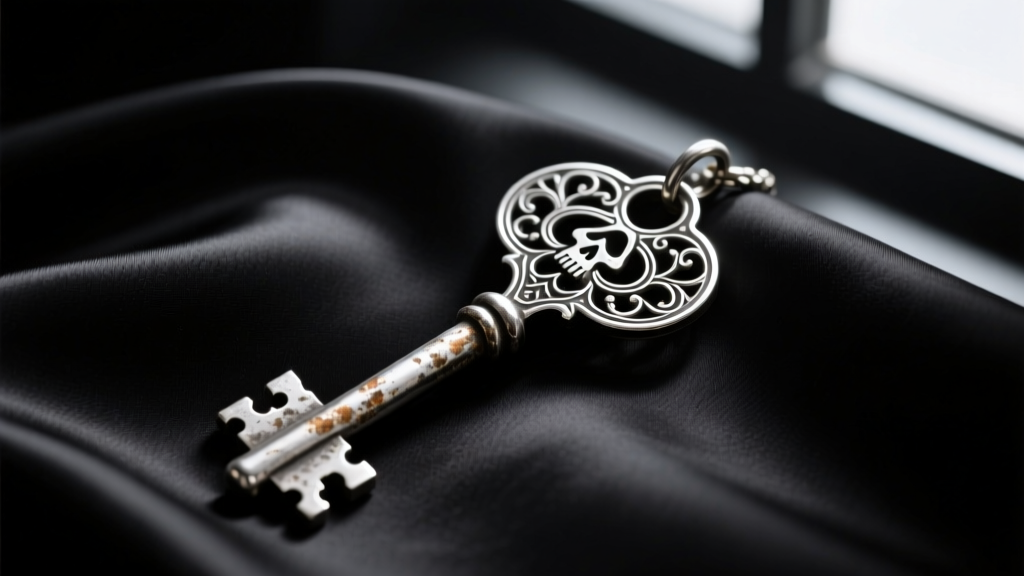
If you still associate the necklace with a key with the mass-produced, zinc-alloy heart-and-lock sets of the early 2010s, it is time to recalibrate your jewelry radar. In 2026, the key pendant has undergone a radical metamorphosis. Stripped of its cliché romantic tropes, the modern key motif has emerged as a sophisticated symbol of autonomy, architectural appreciation, and modular design. Today’s fine jewelry designers are treating the key not as a novelty, but as a canvas for intricate metalwork, hidden compartments, and mixed-metal experimentation.
This comprehensive style and trend analysis breaks down exactly how the necklace with a key is being reimagined this year, from specific metal patinas to the structural mechanics of chain pairings. Whether you are sourcing an artisanal skeleton key or investing in a modular 18k gold piece, this guide provides the actionable framework you need to wear it with intent.
The Evolution of the Key Pendant: From Cliché to Couture
The semiotics of jewelry are deeply rooted in historical symbolism. According to archival research from the Gemological Institute of America (GIA), keys have represented guardianship, secret knowledge, and access since the Victorian era. However, the fast-fashion boom diluted this rich history into juvenile novelty items.
The 2026 resurgence is driven by a consumer demand for 'quiet symbolism'—pieces that hold deep personal meaning without broadcasting it through overt logos or recognizable brand motifs. The modern necklace with a key leans heavily into the skeleton key silhouette, characterized by ornate bows (the top loop), cylindrical shafts, and complex, asymmetrical bitting (the teeth). Designers are now utilizing 3D CAD modeling to create geometric, brutalist, and Art Deco-inspired keys that appeal to a mature, style-literate demographic.
2026 Material & Design Trends for Key Necklaces
The materiality of a key pendant dictates its entire aesthetic profile. This year, high-polish finishes are taking a backseat to textured, oxidized, and mixed-metal applications.
Oxidized Sterling Silver & Antique Brass
For skeleton keys, contrast is everything. Artisans are utilizing liver of sulfur to oxidize 925 sterling silver, turning the recessed grooves of the key’s shaft and teeth a deep, matte black, while hand-polishing the raised edges to a brilliant shine. This technique, known as antiquing, highlights the intricate engravings and makes the pendant look like a genuine historical artifact. Brass alternatives offer a warmer, golden-brown patina that develops a unique wear-pattern over time, appealing to the raw, unrefined aesthetic popular in indie jewelry circles.
Modular Bails and Hidden Compartments
Functionality is a major trend in 2026. We are seeing a surge in 'modular' key pendants. Instead of a static jump ring, the bow of the key features a threaded, screw-top bail. This allows the wearer to unscrew the top and access a hollowed-out shaft (typically 4mm in diameter and 15mm deep), designed to hold a tightly rolled intention scroll, a pinch of ceremonial ash, or a micro-engraved message.
Chain Pairings: Matching the Right Cable to Your Key
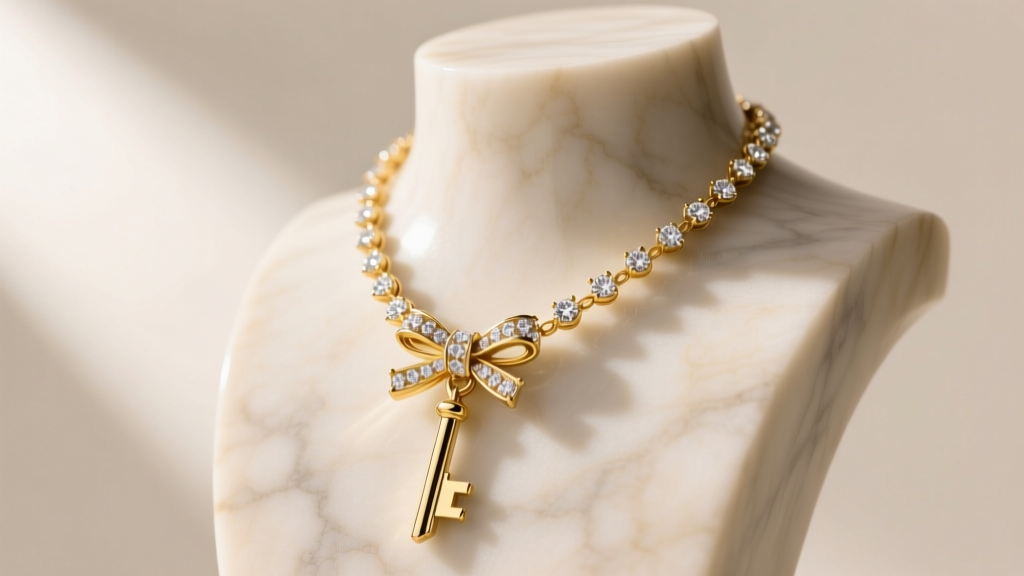
A critical failure mode in styling a necklace with a key is pairing a heavy, asymmetrical pendant with an inadequate chain. Keys are inherently top-heavy; the bow pulls upward while the bitting drags downward, causing flimsy chains to twist, kink, or snap. Below is a structural decision matrix for pairing chains with key pendants based on weight and gauge.
| Chain Style | Recommended Gauge | Max Pendant Weight | Aesthetic & Structural Notes |
|---|---|---|---|
| Box Chain | 1.2mm - 1.5mm | 12 - 18 grams | Highly rigid and kink-resistant. The geometric links complement the architectural lines of a brutalist or Art Deco key. |
| Figaro Chain | 1.5mm - 2.0mm | 15 - 25 grams | Offers a vintage, nautical vibe. Excellent for oxidized silver skeleton keys. The alternating link pattern adds visual weight. |
| Snake Chain | 1.0mm - 1.5mm | Under 8 grams | Warning: Prone to permanent kinking if paired with heavy, asymmetrical keys. Only use for lightweight, minimalist gold key charms. |
| Wheat (Spiga) | 1.2mm - 1.8mm | 10 - 20 grams | Woven, directional links provide immense tensile strength and a luxurious, textured backdrop for intricate 18k gold keys. |
Styling Framework: Necklines and Layering Techniques
How you frame a necklace with a key depends entirely on the garment's architecture. The goal is to create negative space that allows the pendant to act as a focal point rather than getting lost in fabric folds.
The Solo Statement: V-Necks and Deep Scoops
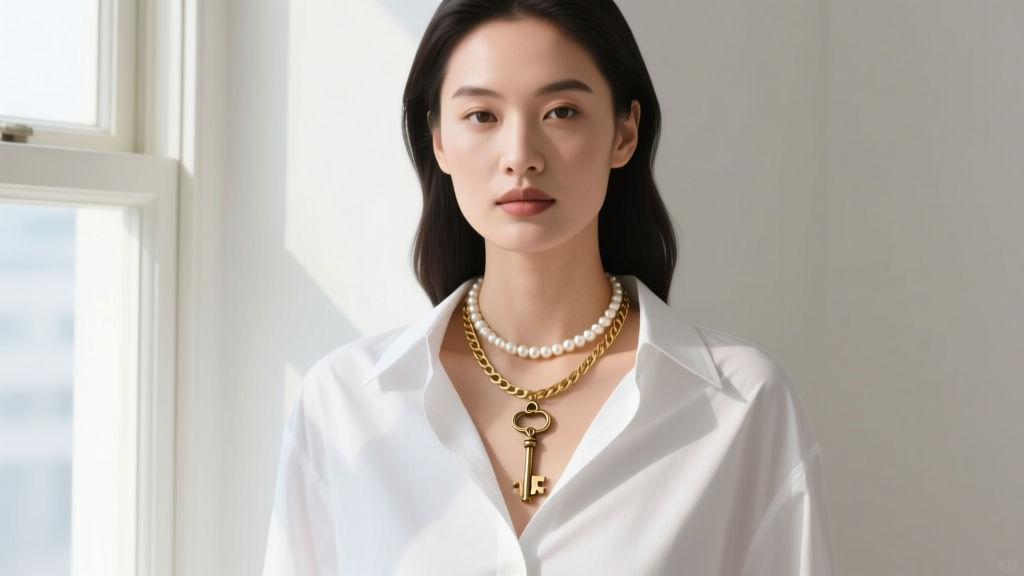
For a standalone skeleton key (typically 1.5 to 2.5 inches in length), a 22-inch or 24-inch chain is optimal when wearing a V-neck sweater or a deep scoop blouse. This length ensures the bitting of the key rests precisely in the center of the chest's negative space, drawing the eye downward and elongating the neckline. Avoid 16-inch choker lengths with large keys, as the pendant will awkwardly collide with the collarbone.
The 2026 Layering Matrix
According to trend forecasters at Vogue Fashion & Shopping, the 'curated stack' remains dominant, but the rules have tightened. When layering a necklace with a key, adhere to the Rule of Thirds to prevent tangling and visual clutter:
- Layer 1 (14-15 inches): A delicate, 1.0mm gold cable chain with a micro-pearl or a simple 3mm bezel-set diamond. This sits high on the collarbone.
- Layer 2 (18 inches): A medium-weight chain featuring a textured coin pendant or a horizontal bar. This bridges the gap.
- Layer 3 (22-24 inches): Your statement necklace with a key. The length disparity (at least 4 inches between each layer) ensures the key swings freely without catching on the shorter chains.
Investment Guide: Pricing Tiers and Brand Spotlights
When shopping for a necklace with a key, understanding the pricing tiers will help you identify genuine craftsmanship from overpriced fashion jewelry. Here is what you should expect to pay in the current market:
Pro Tip: Always check the bail construction. A high-quality key pendant will feature a soldered, closed jump ring or a threaded modular bail. If the bail is a thin, unsoldered wire loop, the pendant will eventually slip off the chain and be lost.
Tier 1: Artisan Brass & Bronze ($60 - $120)
At this level, expect hand-cast brass or bronze pieces from independent makers on platforms like Etsy. These keys often feature raw, unpolished finishes and organic, asymmetrical shapes. The chains are usually basic cotton cords or simple brass cables. Ideal for everyday, casual wear and bohemian styling.
Tier 2: Indie Fine Jewelry & Oxidized Sterling ($180 - $450)
This is the sweet spot for design and durability. Brands in this tier use solid 925 sterling silver, heavy oxidization, and semi-precious stone accents (like a 2mm turquoise cabochon set in the key's bow). Chains are upgraded to solid box or wheat chains with secure lobster clasps. These pieces offer heirloom potential and intricate detailing.
Tier 3: Luxury & 18k Gold Modular Designs ($900 - $3,500+)
Fine jewelry houses and high-end indie designers are producing keys in solid 14k and 18k gold, often incorporating hidden compartments, pavé diamond accents, and custom-engineered threaded bails. At this price point, you are paying for the precision of the CAD engineering, the purity of the gold, and the brand's design pedigree.
Final Thoughts on Symbolic Jewelry
The necklace with a key has successfully shed its juvenile associations to become a cornerstone of modern, symbolic jewelry styling. By focusing on architectural silhouettes, oxidized material grades, and structurally sound chain pairings, you can elevate this historic motif into a sophisticated, everyday statement piece. Whether you opt for a heavy, antique-inspired skeleton key or a sleek, modular 18k gold design, the key remains a powerful emblem of unlocking your own personal narrative.


