How to Wear and Fix a Necklace With Shirt Necklines
Discover expert troubleshooting tips for wearing a necklace with shirt necklines. Solve snagging, tangling, and styling issues with our guide.

The Core Friction: Why Your Necklace With Shirt Combinations Fail
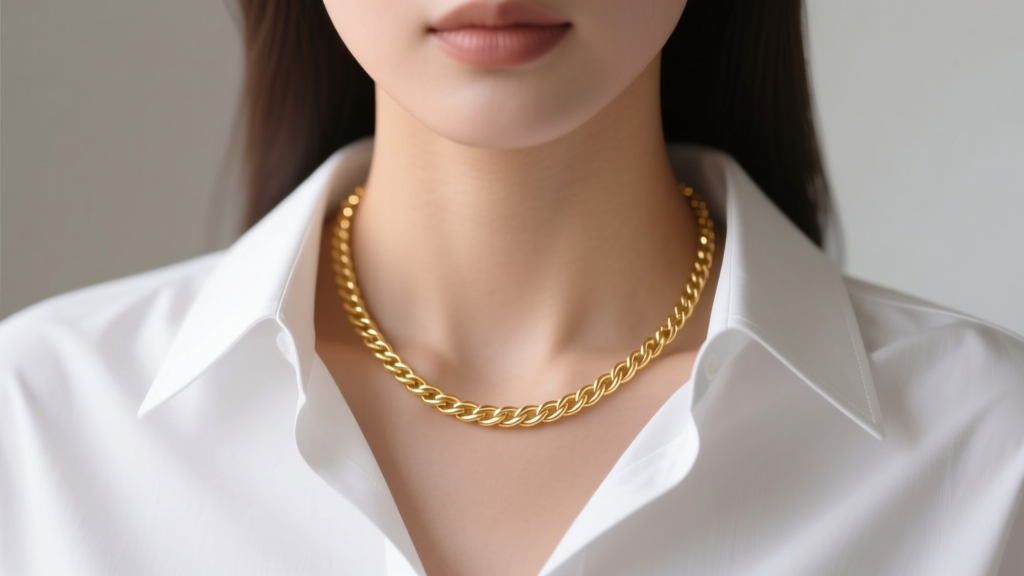
Pairing a necklace with shirt outfits should be effortless, yet it frequently results in tangled chains, flipped pendants, and ruined fabrics. The root cause of these wardrobe malfunctions lies in the physics of friction and static electricity. When metal meets textile, the surface tension and weave density of the shirt dictate how the jewelry behaves. A common mistake is treating all chains as universally compatible with all fabrics. According to metal care guidelines from the Gemological Institute of America (GIA), micro-abrasions from rough textiles like Oxford cloth or raw linen can actually accelerate the wear of gold vermeil and rhodium plating over time.
To master the art of wearing a necklace with shirt ensembles, you must evaluate three variables: the chain weave geometry, the pendant weight in grams, and the textile composition. Lightweight chains (under 1.5mm in width) paired with high-friction fabrics like heavy cotton or wool will inevitably catch, pull, and twist. Conversely, pairing heavy, rigid chains with delicate silk or rayon blouses can cause the metal to drag the neckline down, distorting the shirt's silhouette. By understanding these material interactions, you can troubleshoot and prevent the most common styling failures before you even leave the house.
Neckline Troubleshooting Matrix
Different shirt necklines demand specific chain lengths and pendant drops to maintain visual balance and physical comfort. Use this decision matrix to eliminate guesswork and ensure your jewelry sits perfectly against your chosen top.
| Shirt Neckline | Ideal Chain Length | Best Chain Weave | Pendant Weight Requirement |
|---|---|---|---|
| Crew Neck T-Shirt | 16" - 18" (Choker/Princess) | Cable or Box Chain | 2g - 4g (Lightweight) |
| V-Neck Tee or Blouse | 18" - 22" (Princess/Matinee) | Rope or Wheat Chain | 5g - 8g (Medium Anchor) |
| Button-Down (Open) | 20" - 24" (Matinee) | Figaro or Curb Chain | 8g+ (Heavy Statement) |
| Button-Down (Closed) | 16" (Hidden/Peekaboo) | Flat Snake Chain | 1g - 2g (Minimalist) |
| Turtleneck / Mock Neck | 24" - 30" (Opera) | Long Beaded or Rope | 10g+ (Bold Focal Point) |
As highlighted by styling experts at Vogue, the V-neck is the most universally forgiving neckline for layering, provided the pendant rests exactly one inch above the vertex of the shirt's V-shape. If the chain is too short, it creates a visual chokehold; if it is too long, it gets lost in the fabric folds.
Solving the Snag-and-Pull Dilemma
Nothing ruins a morning faster than a chain link catching on a loose thread of your favorite shirt. The geometry of the chain weave is usually the culprit. Here is how to troubleshoot specific chain types against common shirt fabrics:
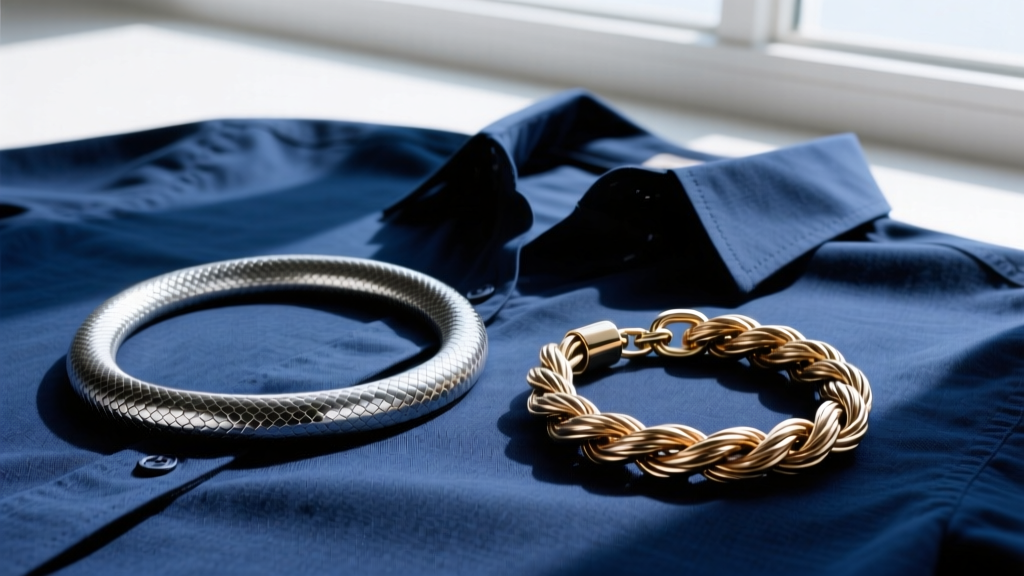
- Snake Chains: These feature tightly interlocked, smooth rings that create a tubular surface. While they look sleek, the microscopic gaps between the rings act like Velcro against cotton and linen. Fix: Reserve snake chains for silk, satin, or synthetic blends with a smooth finish. Never wear them with textured knit shirts.
- Box Chains: The sharp, 90-degree angles of square box links can easily hook onto the loops of terry cloth or the seams of a casual t-shirt. Fix: Opt for rounded box chains or switch to a cable chain when wearing casual cotton tees.
- Rope and Wheat Chains: These are the ultimate problem-solvers for high-friction shirts. Their spiraled, continuous patterns lack sharp edges or deep gaps, allowing them to glide over rough weaves like Oxford cloth and flannel without snagging.
The Static Electricity Factor
In dry climates or during winter months, synthetic shirt blends (polyester, rayon, and nylon) generate significant static electricity. This static causes lightweight chains (specifically those weighing less than 10 grams total) to cling awkwardly to the chest or wrap around the back of the neck. To troubleshoot this, you must ground the chain. Adding a heavier pendant (at least 5 grams) provides the necessary gravitational pull to overcome the static charge. Alternatively, a light mist of anti-static spray on the inside of the shirt will instantly neutralize the electrical field, allowing the metal to drape naturally.
Collared Shirts and Button-Downs: A Masterclass in Placement
Styling a necklace with shirt collars requires a strategic approach to spatial awareness. The rigid structure of a collar creates a physical barrier that can clash with poorly placed jewelry. When wearing a button-down shirt, you have two distinct styling zones: inside the collar and outside the collar.
Inside the Collar (The Peekaboo Effect): If you are wearing the shirt fully buttoned or with just the top button undone, keep the chain length at exactly 16 inches. The chain should sit flush against the collarbone, hidden beneath the collar leaves, with only a small pendant (under 10mm in diameter) visible in the negative space. Using a flat, 1.5mm cable chain prevents an unsightly bulge under the fabric.
Outside the Collar (The Statement Drop): When wearing an open, relaxed button-down over a camisole or t-shirt, the necklace must be worn outside the shirt entirely. A 22-inch to 24-inch matinee-length chain works best here. The pendant should rest on the sternum, bridging the gap between the two open sides of the shirt. To prevent the chain from slipping behind the collar and rubbing against your neck, use a heavier pendant (8g to 12g) to anchor the chain in the center of the chest.
Quick Fixes for Mid-Day Wardrobe Malfunctions
Even with careful planning, jewelry can misbehave throughout the day. Keep these troubleshooting tools and techniques in your arsenal to fix a necklace with shirt issues on the go:
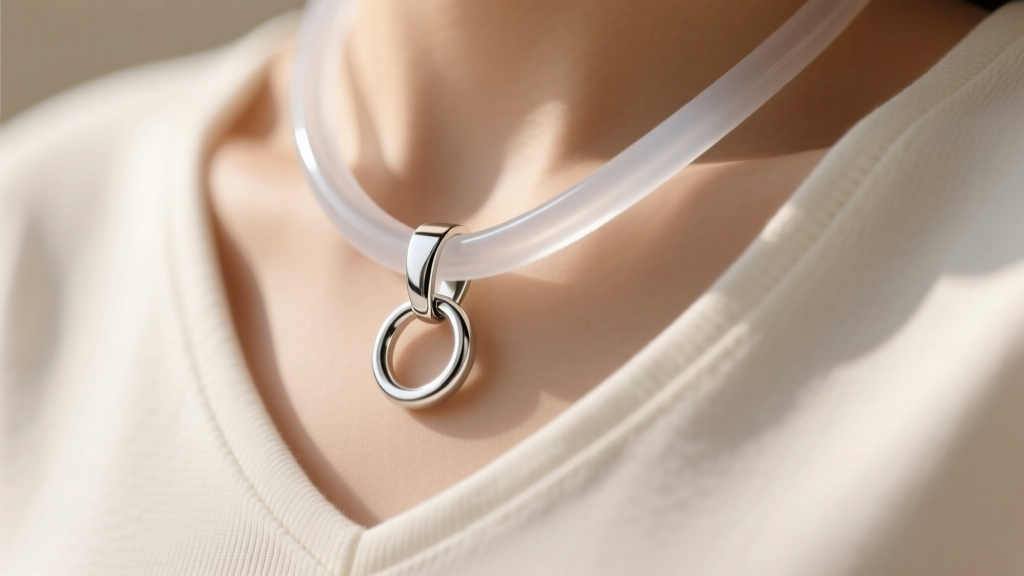
- The Silicone Stay: If your pendant constantly flips backward on a V-neck or scoop-neck shirt, slide a tiny, clear silicone O-ring (available at craft stores) onto the chain just above the bail. This creates invisible friction against the skin and fabric, keeping the pendant facing forward all day.
- Fashion Tape Anchors: For lightweight chains that refuse to lay flat against a silk or satin blouse, apply a tiny strip of double-sided fashion tape to the back of the pendant. This secures it to the shirt without damaging the metal or the delicate textile.
- Clasp Weighting: If your necklace keeps sliding to the front of your neck (a common issue with slippery rayon shirts), the clasp is too light compared to the pendant. Have a jeweler solder a small, 2-gram gold or steel bead onto the chain directly opposite the clasp. This counterweight ensures the clasp stays hidden at the nape of your neck.
By treating your jewelry and wardrobe as an interconnected system rather than isolated elements, you can eliminate the daily frustrations of snagging, flipping, and static cling. Mastering the mechanics of how metal interacts with fabric ensures that your necklace with shirt combinations always look intentional, polished, and effortlessly styled.


