Restore and Repair Your Vintage Orange Flower Necklace
Learn expert troubleshooting to fix chipped enamel, restore faded resin, and untangle chains on your favorite vintage or artisan orange flower necklace.

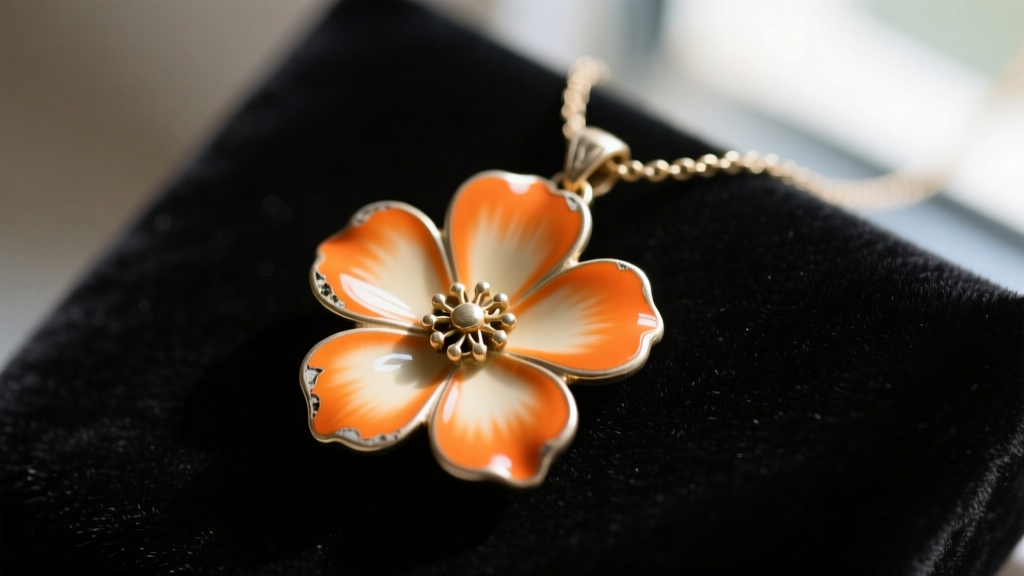
The Unique Vulnerabilities of Botanical Jewelry
An orange flower necklace is a striking statement piece, capturing the warmth and vitality of late summer blooms. However, floral pendants—whether crafted from vitreous enamel, cold-poured resin, polymer clay, or carved semi-precious stones like carnelian and spessartite garnet—present a unique set of structural and chemical vulnerabilities. The intricate geometry of petals creates micro-crevices that trap skin oils and cosmetics, while the vibrant orange pigments used in artisan jewelry are notoriously susceptible to photodegradation. As of 2026, jewelry conservationists emphasize that proactive troubleshooting is essential to preserve these delicate botanically inspired pieces. In this guide, we will diagnose the most common failures associated with floral necklaces and provide professional-grade repair protocols.
Troubleshooting Faded Orange Pigments in Resin and Enamel
The most frequent complaint from collectors of vintage and artisan floral jewelry is color shifting. Orange pigments, particularly organic azo dyes used in mid-century cold enamel and modern UV resins, degrade rapidly when exposed to ultraviolet light. Unlike inorganic pigments (such as cadmium-based hues, which are largely phased out due to toxicity), modern organic orange complexes break down at the molecular level, resulting in a dull, yellowish-brown patina.
Diagnosing the Fade: UV Damage vs. Chemical Yellowing
Before attempting restoration, you must identify the root cause of the discoloration. UV damage typically presents as a bleached, chalky appearance on the surface of the petals, whereas chemical yellowing (often seen in epoxy resins) manifests as a deep, uniform amber shift throughout the entire petal.
| Material Type | Primary Cause of Fading | Restoration Potential | Recommended Treatment |
|---|---|---|---|
| Vitreous Enamel (Fired Glass) | Surface grime / oxidation of metal backing | High | Ultrasonic cleaning (if no fractures); mild ammonia solution. |
| Cold Enamel (Epoxy/Resin) | UV degradation of organic orange dyes | Moderate | Light surface polishing with Novus 2; tinted micro-glazing. |
| Polymer Clay | Plasticizer migration / UV exposure | Low | Sealing with UV-inhibiting clear coat; cannot reverse deep fade. |
| Carved Carnelian / Sunstone | Dehydration / heat exposure | High | Mineral oil bath for 24 hours to restore translucency and hue. |
For resin-based orange flower necklace pendants that have suffered surface UV damage, gentle polishing with a micro-abrasive like Novus 2 Fine Scratch Remover can strip the oxidized top layer, revealing the vibrant pigment beneath. According to the AIC Conservation Wiki, always test chemical cleaners on an inconspicuous area, such as the back of the pendant bail, before applying them to the primary floral face.
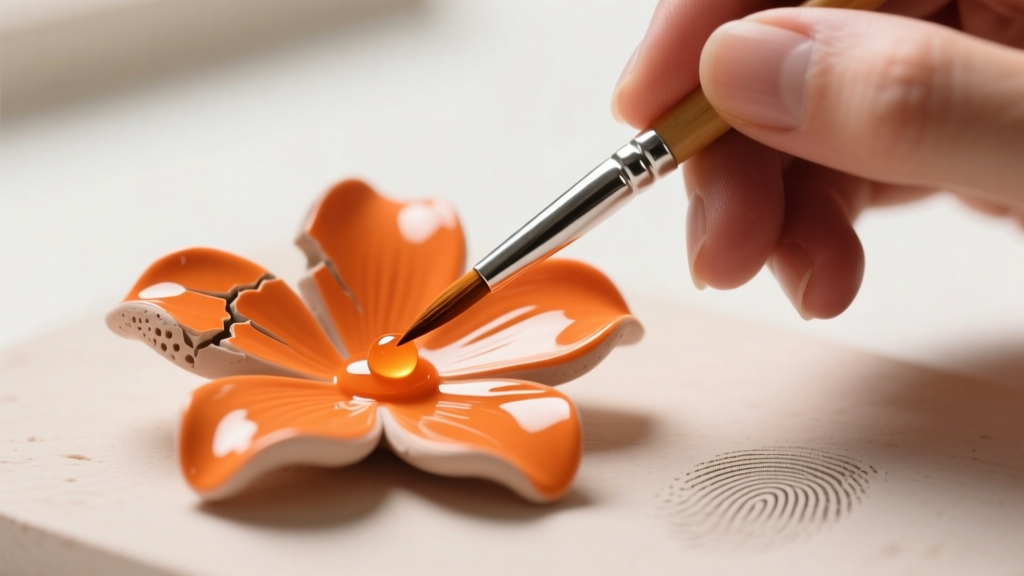
Fixing Chipped Petals and Snagged Stone Prongs
Floral shapes are inherently fragile. The protruding nature of petals makes them prime targets for impact damage, resulting in chipped enamel or fractured clay. Furthermore, if your orange flower necklace features carved gemstones set in prongs, the delicate metal claws can easily snag on knitwear, bending away from the stone and compromising the setting.
Resin Patching Techniques for Enamel and Clay
If your pendant features a chipped petal, avoid using standard superglue (cyanoacrylate), which dries brittle and cloudy. Instead, utilize a two-part, UV-stable jewelry epoxy. Mix a microscopic amount of the epoxy on a glass palette. Using a 0.5mm liner brush, carefully wick the resin into the chip. If the original orange pigment is missing, you can tint the epoxy with specialized mica powders or alcohol inks to match the surrounding petals. Once cured, wet-sand the patch with 2000-grit automotive sandpaper and buff with a jeweler's rouge to restore the high-gloss finish.
Prong Tightening for Stone Florals
For necklaces featuring carved orange stones like sunstone or carnelian, inspect the prongs under a 10x jeweler's loupe. If a prong has lifted, do not simply push it back down with your thumb, as this can crack the stone. Use a pair of nylon-jawed pliers to gently squeeze the base of the prong, followed by a burnisher to rub the metal tip smoothly over the stone's edge. For micro-fractures in the metal bail itself, a professional laser welder is required; attempting to solder near heat-sensitive orange stones (especially treated carnelian) will cause irreversible thermal shock and color loss.
Chain Snagging and Tangle Prevention on Intricate Pendants
The geometry of a floral pendant often creates a nightmare for chain management. The uneven edges of petals, combined with oversized jump rings, create friction points that cause delicate chains to kink, tangle, and eventually snap. The 'bail catch' problem occurs when the pendant flips backward, trapping the chain between the metal bail and the top petal.
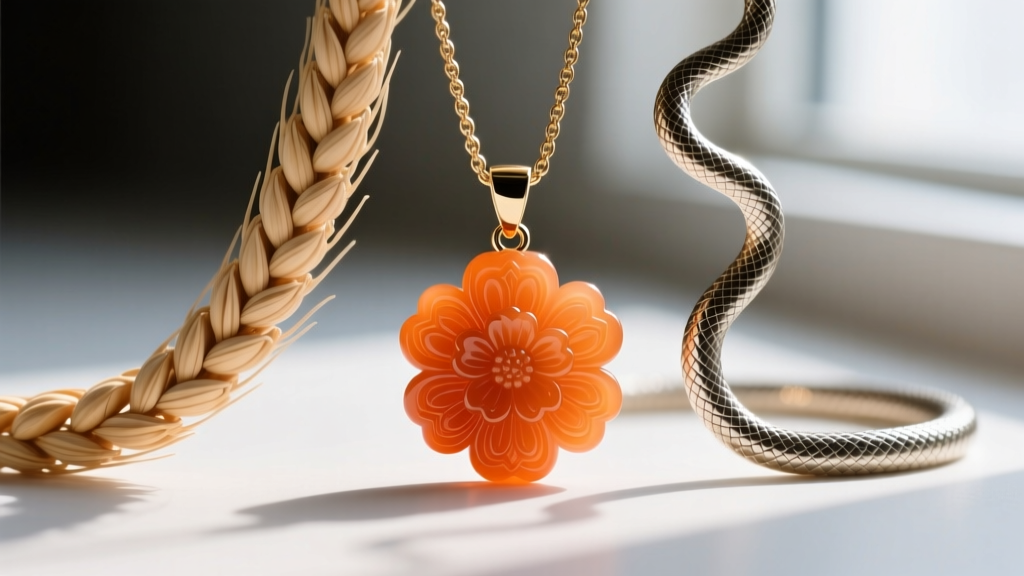
Selecting the Optimal Chain Weave
To solve the tangling issue, you must pair the pendant with a chain weave that resists kinking and slides smoothly through the bail. Jewelers of America recommends avoiding tubular chains for intricate pendants. Here is a breakdown of chain compatibility for heavy or complex floral pendants:
- Wheat (Spiga) Chain: Excellent. The woven, directional links prevent kinking and provide enough structural rigidity to support heavy resin or stone floral pendants without tangling.
- Box Chain: Very Good. The square, interlocking links lay flat and slide easily through standard bails, reducing the friction that leads to metal fatigue.
- Rope Chain: Good. The twisted links are highly durable, but the textured surface can occasionally catch on unpolished enamel edges if the pendant flips.
- Snake Chain: Avoid. The smooth, tubular surface is highly prone to permanent kinking when subjected to the uneven weight distribution of an asymmetrical flower pendant.
- Herringbone Chain: Avoid. Extremely fragile and prone to fraying when caught on the protruding petals of a floral design.
Bail Modification and Jump Ring Soldering
If your orange flower necklace constantly flips backward, the bail is likely too shallow or the jump ring is too wide. A bench jeweler can easily solder the jump ring shut, eliminating the gap where the chain gets trapped. Alternatively, adding a small, clear silicone o-ring (often used in beading) inside the bail can act as a friction buffer, keeping the pendant oriented forward and protecting the metal from wear.
Long-Term Archival Care and Storage
Preserving the vibrant hue and structural integrity of an orange flower necklace requires specific environmental controls. Never store resin or polymer clay floral pieces in direct sunlight or in high-humidity environments like bathrooms, as moisture accelerates the breakdown of organic dyes and causes metal findings to oxidize. Wrap the pendant in an acid-free, unbuffered tissue paper and place it inside an anti-tarnish ziplock bag with a silica gel desiccant packet. To protect the surface of cold enamel and resin from micro-scratches during wear, apply a microscopically thin layer of Renaissance Wax using a soft lint-free cloth. This museum-grade conservation wax provides a breathable, UV-resistant barrier that repels skin oils and keeps the orange petals looking as vivid as the day they were crafted.


