Expert Guide to the Noodle Necklace: Tubular Chains & Beads
Explore the technical anatomy of the noodle necklace, from hollow tubular gold chains and karatage limits to cylindrical bead specs and repair.

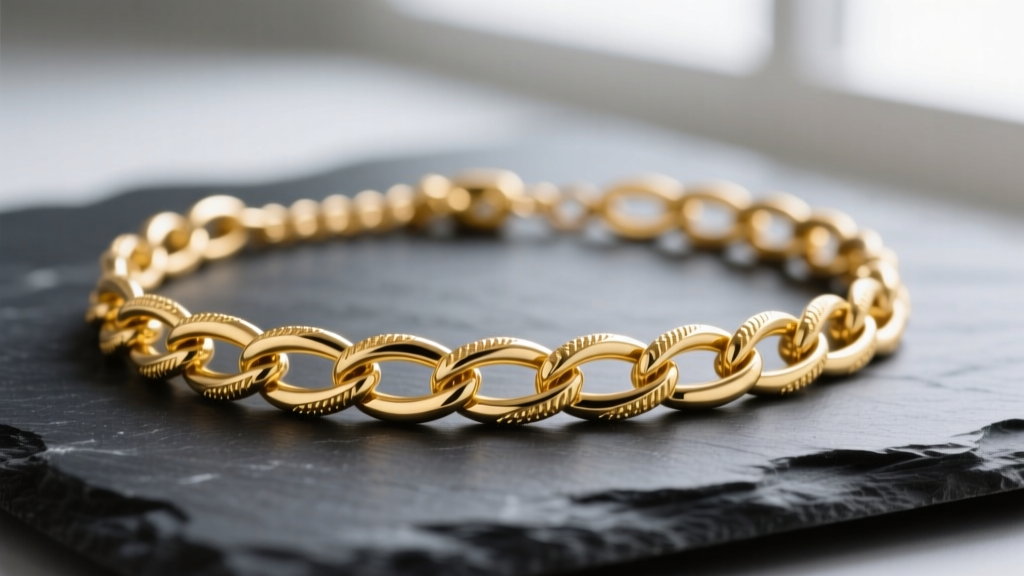
The Metallurgy of Hollow Tubular Noodle Chains
In fine jewelry, the term "noodle necklace" primarily refers to a chain constructed from elongated, hollow, tubular links that resemble cylindrical noodles. These chains are prized for their high visual volume and extremely low weight, making them comfortable for all-day wear. However, manufacturing a hollow tubular link requires advanced metallurgical techniques, most notably electroforming or core-drawing.
Electroforming is the most common method for producing high-quality gold noodle chains. A conductive mandrel—typically made of copper or a specialized silver alloy—is submerged in an electrolytic bath containing dissolved gold ions. By carefully controlling the amperage density and temperature, gold is deposited onto the mandrel layer by layer. Once the desired wall thickness (usually between 0.20mm and 0.40mm) is achieved, the piece is removed and submerged in a nitric or sulfuric acid bath. The acid dissolves the base metal core, leaving behind a perfectly hollow, lightweight gold tube. According to the Gemological Institute of America (GIA), the alloy composition used in this process dictates the structural integrity of the final hollow link.
Karatage and Structural Integrity Matrix
Because the walls of a noodle chain link are exceptionally thin, the karatage of the gold plays a critical role in its durability. Pure gold (24k) is far too malleable and would collapse under the weight of the chain itself. Therefore, alloying metals like copper, silver, and zinc are introduced to increase tensile strength and Vickers hardness.
| Karatage | Gold Purity | Recommended Wall Thickness | Crush Risk Profile |
|---|---|---|---|
| 10k | 41.7% | 0.20mm - 0.25mm | Low (High tensile strength, ideal for large links) |
| 14k | 58.3% | 0.25mm - 0.35mm | Moderate (Industry standard for optimal balance) |
| 18k | 75.0% | 0.40mm+ | High (Too malleable for thin-walled tubes) |
| 22k | 91.6% | N/A | Extreme (Never used for hollow structural links) |
As noted by Lang Antiques University, 14k gold remains the gold standard for hollow tubular chains. It provides enough gold content for a rich color and hypoallergenic properties, while the 41.7% alloy content provides the necessary rigidity to resist minor impacts.
The Beaded Variant: Cylindrical Gemstone Noodles
In the realm of beaded jewelry, a "noodle necklace" refers to a strand of cylindrical, tube-shaped beads. These are frequently crafted from turquoise, lapis lazuli, coral, or glass. The technical challenge in manufacturing gemstone noodle beads lies in the drilling process.
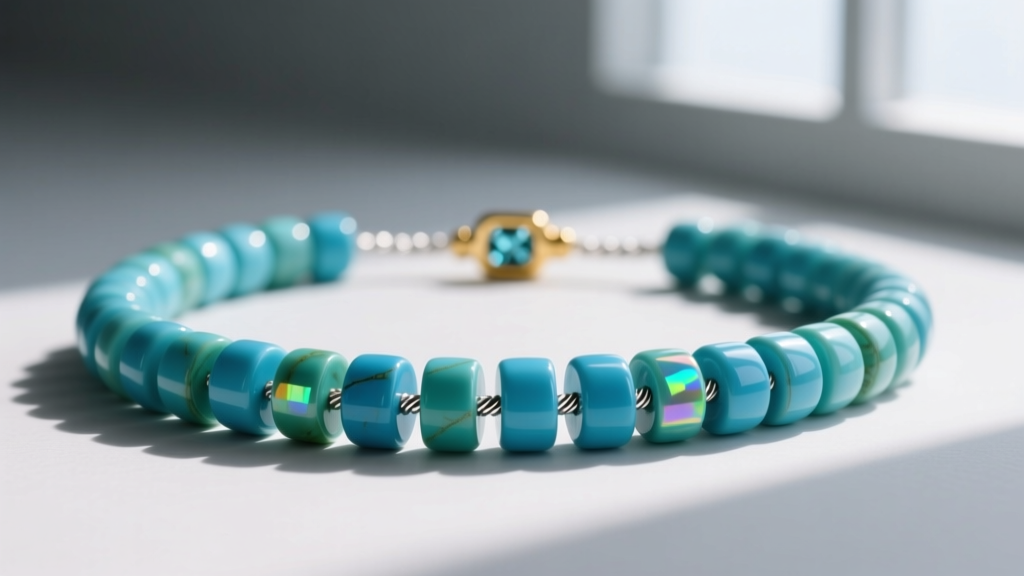
Unlike spherical beads, cylindrical beads (typically ranging from 4x10mm to 8x25mm) require deep, perfectly centered drill channels. For hard stones like lapis lazuli, CNC ultrasonic drilling is utilized to prevent micro-fractures along the grain. For softer, porous stones like turquoise, diamond-tipped core bits with continuous water-cooling are mandatory to prevent thermal shock and discoloration. The resulting drill holes are usually 1.5mm to 2.0mm in diameter. Because the edges of these drilled holes can be sharp, stringing a gemstone noodle necklace requires a 49-strand micro-fused stainless steel wire (0.018-inch diameter) coated in nylon, as traditional silk or nylon cords will quickly fray and snap against the stone's internal bore.
Catastrophic Failure Modes and Repair Limitations
The primary vulnerability of a metal noodle necklace is its susceptibility to crushing and kinking. Understanding these failure modes is essential for both wearers and jewelers.
- Compressive Crushing: Because the gold wall is only 0.25mm thick, leaning against a hard surface or accidentally pulling the chain can cause the tubular link to flatten. Once the metal is compressed, it work-hardens, meaning it becomes brittle and prone to cracking if bent back into shape.
- Stress Kinking: Repeated bending at the exact same point along a tubular link will cause a stress fracture, eventually snapping the hollow tube in half.
- Soldering Limitations: Traditional torch soldering is virtually impossible on a crushed hollow link. The heat required to flow the solder will instantly melt the adjacent 0.25mm gold wall, destroying the link entirely.
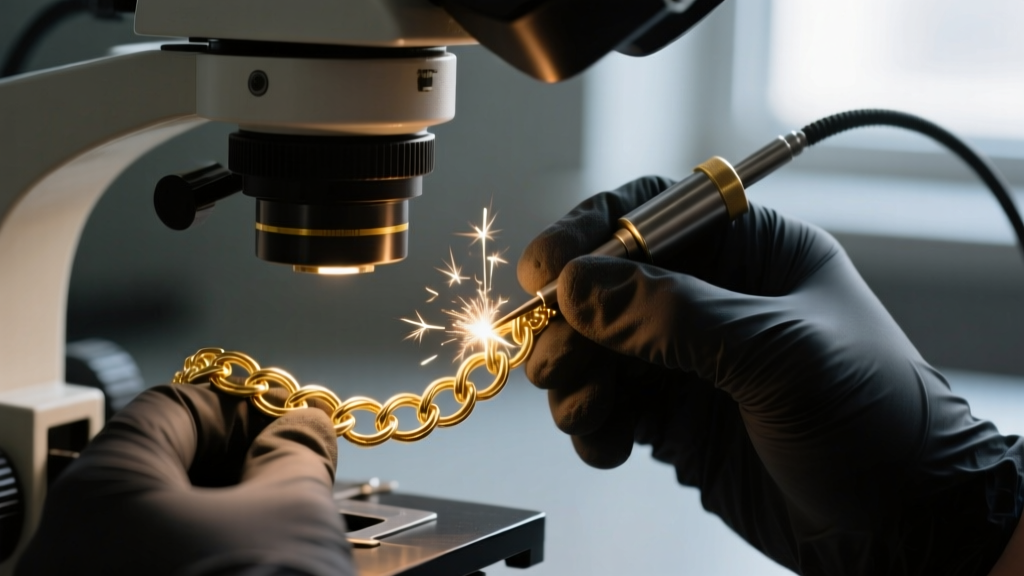
The only viable repair method for a fractured noodle chain is laser welding. Using a pulsed Nd:YAG laser under a stereomicroscope, a master jeweler can fuse a microscopic patch of gold over the fracture or seam without transferring thermal energy to the surrounding tube. However, if the link is severely crushed, it must be cut out and replaced, which can alter the overall length and weight distribution of the necklace.
Clasp Mechanics and Weight Distribution
A 24-inch, 5mm hollow noodle chain might weigh a mere 8 to 10 grams. This extreme lightness creates a unique physics problem regarding the clasp. If a heavy, solid-cast 12mm lobster clasp (weighing 3+ grams) is attached, it creates a pendulum effect. The center of gravity shifts to the back of the neck, causing the necklace to constantly rotate and the clasp to slide to the front of the collarbone. To maintain equilibrium, the clasp weight should never exceed 15% of the total chain weight. Lightweight stamped spring-ring clasps or hollow-cast lobster clasps are the only technically sound options for metal noodle chains.
Expert Care and Maintenance Protocols
"Never place a hollow tubular noodle chain in an ultrasonic cleaner. The high-frequency cavitation can shake loose internal debris from the electroforming process, rattle against the thin walls, and exacerbate micro-fractures at the solder joints."
To clean a metal noodle necklace, use a mild, phosphate-free dish soap mixed with lukewarm water. Gently agitate the chain with a soft-bristled baby toothbrush, ensuring you do not apply downward pressure that could dent the links. Rinse thoroughly and pat dry with a microfiber cloth. For gemstone noodle bead necklaces, avoid chemical dips entirely, as the porous nature of stones like turquoise will absorb the chemicals, leading to permanent staining and degradation of the stone's matrix.
When storing a noodle necklace, always lay it flat or hang it from a wide, padded jewelry stand. Never toss it into a jewelry box where heavier items can rest on top of it, as the dead weight will inevitably cause irreversible compressive crushing to the hollow links.


