Nosferatu Necklace Materials: Silver, Titanium & Gothic Gems Compared
Discover the best metals and gems for a Nosferatu necklace. We compare oxidized silver, black titanium, and gothic stones for durability and dark aesthetics.

The Anatomy of a True Nosferatu Necklace
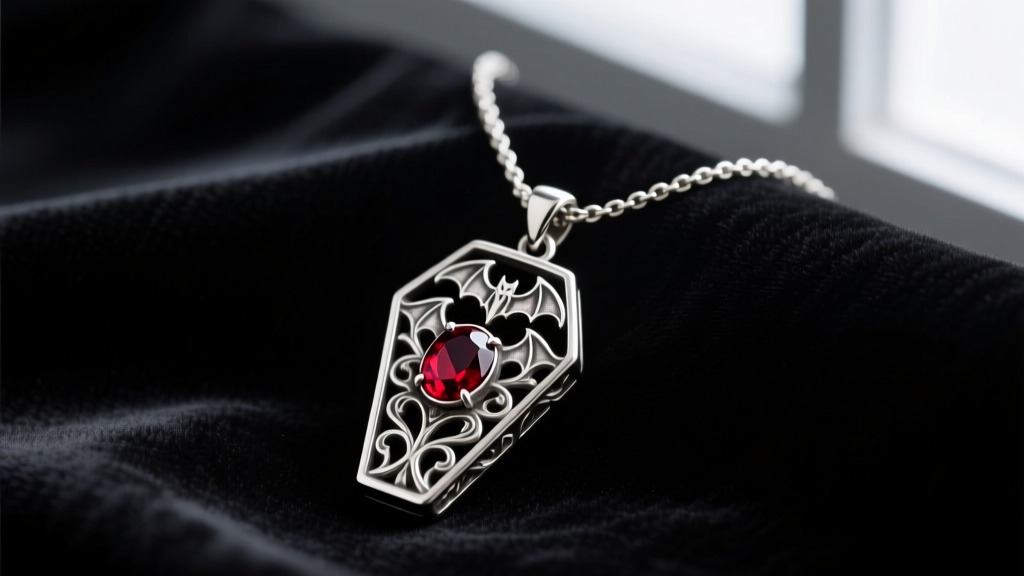
The 'Nosferatu' aesthetic in jewelry draws heavily from Victorian mourning traditions, dark academia, and macabre gothic literature. It is characterized by ornate filigree, coffin or bat motifs, thorny vines, and an overarching sense of antique mystery. However, achieving this brooding, centuries-old look requires more than just a spooky design; it demands a masterful understanding of material properties. A true Nosferatu necklace must look as though it has survived centuries in a Transylvanian crypt, yet it must possess the metallurgical integrity to withstand daily wear in the modern era.
When selecting or commissioning a piece of dark gothic jewelry, the interplay between the base metal's patina and the gemstone's optical depth is critical. In this comprehensive guide, we break down the exact material grades, chemical treatments, and structural properties required to craft a Nosferatu necklace that is both hauntingly beautiful and structurally enduring.
Dark Metal Matrix: Choosing the Right Base
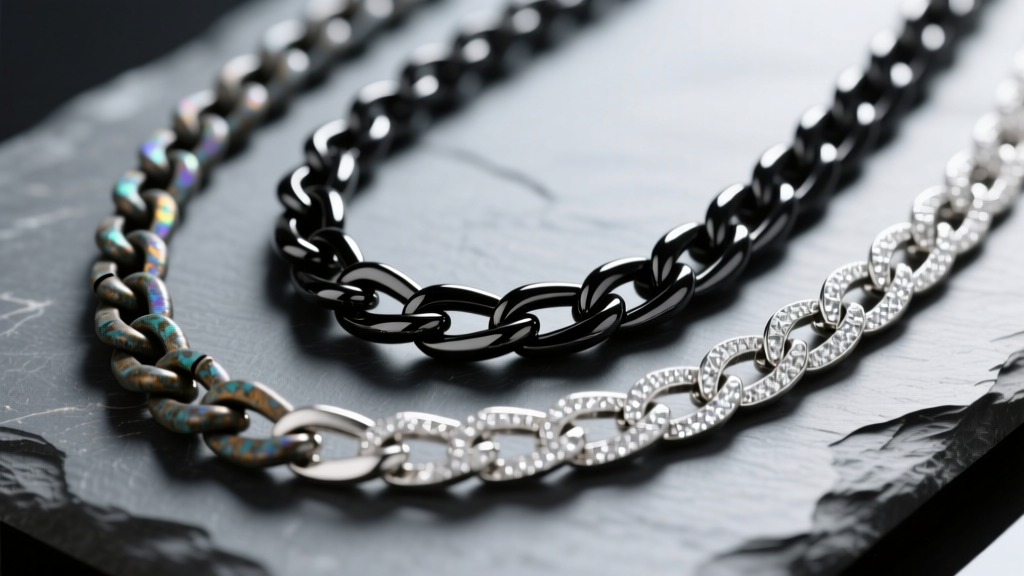
The foundation of any gothic pendant is the metal. While yellow gold has its place in vintage revival, the Nosferatu style demands dark, brooding, or antiqued metals. Here is how the top three dark metals compare in terms of longevity, maintenance, and aesthetic authenticity.
Oxidized Sterling Silver (The Traditionalist)
For historical accuracy and intricate detail, .925 sterling silver treated with an oxidizing agent is the undisputed king of gothic jewelry. Jewelers typically use liver of sulfur (potassium polysulfide) to accelerate tarnishing, creating a layer of black silver sulfide on the surface. The piece is then selectively polished, leaving the deep recesses of bat wings and coffin hinges pitch-black while the high-relief edges gleam with a ghostly, antique silver light.
Pros: Unmatched ability to hold microscopic filigree details; develops a unique, personalized patina over time; easily repaired or re-oxidized by a silversmith.
Cons: The oxidation layer is a surface chemical reaction, not a permanent coating. It will slowly wear off on high-friction areas and can be instantly stripped by harsh chemicals or ultrasonic cleaners.
PVD-Coated Titanium (The Modern Vampire)
For those who want a permanent, pitch-black finish without the maintenance of oxidized silver, Grade 23 Titanium (Ti-6Al-4V) treated with Physical Vapor Deposition (PVD) is the ultimate modern choice. PVD bonds a microscopically thin layer of titanium carbide or nitride to the surface in a vacuum chamber, resulting in a gunmetal or true black finish that is harder than the base metal itself.
Pros: Completely hypoallergenic; the black finish will never tarnish, rub off, or fade; incredibly lightweight, making it ideal for massive, oversized gothic pendants.
Cons: Titanium is notoriously difficult to cast into intricate, delicate Victorian-style filigree. Designs must be slightly more geometric or modern. Furthermore, if the piece breaks, traditional silver soldering techniques will not work; it requires laser welding.
Black Rhodium-Plated White Gold (The Luxury Heirloom)
High-end luxury gothic jewelry often utilizes 14k or 18k white gold plated with black rhodium. Rhodium is a platinum-group metal that provides a brilliant, dark, mirror-like finish.
Pros: Offers the prestige and intrinsic value of solid gold; provides a highly reflective, luxurious black surface that makes inset diamonds or garnets pop.
Cons: Black rhodium plating is typically only 0.1 to 0.2 microns thick. On a necklace pendant that rubs against the skin and clothing, the plating will inevitably wear through to the yellowish-white gold beneath within 1 to 3 years, requiring professional replating.
Material Comparison Matrix
| Metal Base | Darkening Method | Hardness (Vickers) | Patina Evolution | Best For |
|---|---|---|---|---|
| .925 Sterling Silver | Liver of Sulfur (Chemical) | ~120 HV | Wears to antique gray; requires re-dipping | Intricate Victorian filigree, cameos |
| Grade 23 Titanium | PVD Coating (Vacuum) | ~350 HV (Surface) | Permanent; no wear or fading | Chunky modern gothic, daily wear |
| 14k/18k White Gold | Black Rhodium Plating | ~140 HV (Base) | Wears off in 1-3 years; needs replating | High-end luxury, diamond accents |
Blood & Shadow: Gemstone Hardness and Optical Properties
A Nosferatu necklace is rarely complete without a central gemstone that evokes the macabre—either the deep, arterial red of fresh blood or the light-swallowing void of the grave. However, not all dark or red stones are suitable for jewelry. We must evaluate them through the lens of the Mohs hardness scale and refractive index (RI).
Pyrope Garnet: The Blood of the Ancients
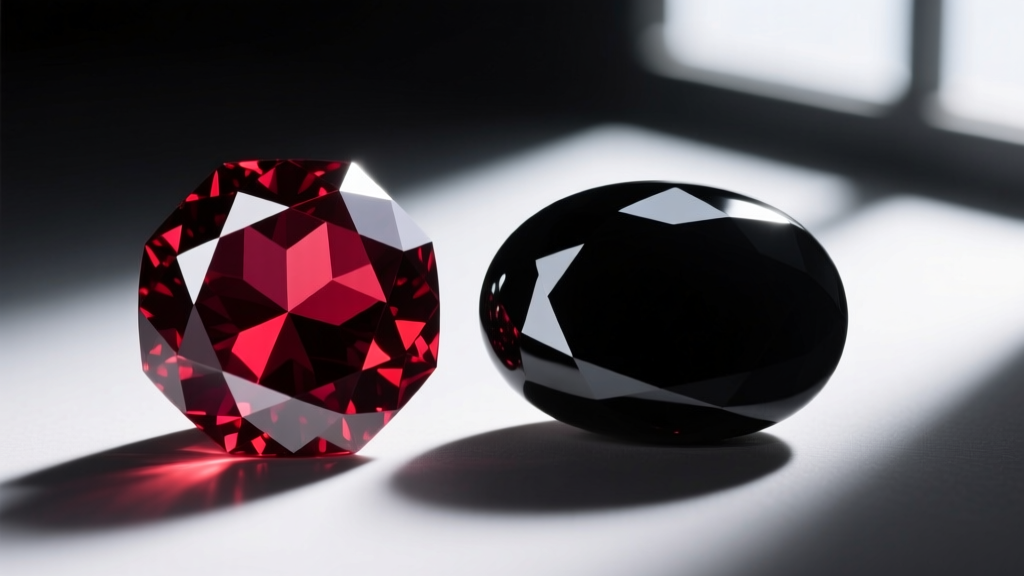
When designers need a 'pigeon blood' red stone, pyrope garnet is the premier choice. Unlike softer red stones like carnelian, pyrope garnet boasts a Mohs hardness of 7 to 7.5, making it highly resistant to scratching from everyday dust (which contains quartz, Mohs 7). According to the Gemological Institute of America (GIA), pyrope also lacks cleavage planes, meaning it is less likely to fracture if the pendant is dropped. Its high refractive index (1.73 to 1.76) gives it a deep, glowing red brilliance even in low, candlelit environments—perfect for the gothic aesthetic.
Black Onyx vs. Obsidian: Capturing the Void
For the 'shadow' element of the necklace, jewelers frequently debate between black onyx and obsidian. While both appear as polished black voids, their physical properties are vastly different.
Black onyx is a dyed variety of chalcedony (microcrystalline quartz). As noted in GIA's comprehensive onyx guide, it sits at a 6.5 to 7 on the Mohs scale and features a waxy to vitreous luster. It is incredibly durable, takes a high mirror polish, and is ideal for intricate inlay work or large, flat cabochons in coffin-shaped pendants.
Obsidian, conversely, is naturally occurring volcanic glass. It maxes out at a mere 5 to 5.5 on the Mohs scale and exhibits a conchoidal fracture, meaning it chips and shatters with curved, shell-like edges if struck. While obsidian offers a stunning, glassy depth that onyx cannot replicate, it should only be used in heavily protected bezel settings on pendants, never in pieces prone to impact.
Chain Selection: Gauge and Link Styles for Heavy Pendants
A common failure point in gothic jewelry is the chain. Nosferatu pendants are often cast in solid silver or feature heavy gemstone cabochons, easily weighing between 15 and 35 grams. A delicate 1.0mm chain will inevitably snap under this dynamic load. To properly suspend a heavy macabre pendant, adhere to these structural guidelines:
- Gauge Thickness: Opt for a chain width between 3.5mm and 5.0mm. This provides the visual weight necessary to balance an ornate pendant while offering sufficient tensile strength.
- Link Style: Curb chains and rope chains are superior to box or snake chains for heavy pendants. Curb links lay flat and distribute tension evenly across the interlocking joints, while rope chains offer a vintage, twisted texture that complements Victorian aesthetics.
- Clasp Mechanics: Avoid standard spring-ring clasps, which are prone to spring failure under heavy loads. Instead, utilize a cast (not stamped) lobster clasp with a heavy-duty jump ring, or a T-bar toggle clasp, which relies on gravity and tension to remain securely fastened.
Care and Maintenance for Antiqued Finishes
Preserving the dark, brooding finish of a Nosferatu necklace requires unlearning standard jewelry cleaning habits. If your piece features oxidized sterling silver, never use commercial silver dip solutions, baking soda paste, or ultrasonic cleaners. These methods are designed to strip silver sulfide (tarnish) and will instantly remove the intentional black oxidation from your pendant's crevices, leaving it looking flat and overly bright.
To clean an antiqued gothic necklace, use a mild, phosphate-free dish soap and lukewarm water. Gently agitate with a soft-bristled baby toothbrush, being careful not to scrub the recessed, blackened areas. Pat dry with a microfiber cloth, and only use a polishing cloth on the raised, high-relief edges to maintain the dramatic contrast between light and shadow.
'True gothic jewelry does not merely mimic the darkness; it embraces the passage of time. The slight wearing of an oxidized edge or the deepening of a garnet's patina is not damage—it is the piece coming alive.' — Master Silversmith & Antiquarian Jewelry Restorer
By carefully selecting the right metallurgical base, understanding the structural limits of gothic gemstones, and pairing them with appropriately gauged chains, you can ensure your Nosferatu necklace remains a hauntingly beautiful heirloom for decades to come.


