What Is an NRT Necklace? A Beginner’s Guide to Nickel-Tested Jewelry
Discover what an NRT necklace is and how Nickel Release Tested jewelry prevents allergies. Learn EN 1811 standards and safe metals for sensitive skin.

The Hidden Culprit Behind Jewelry Rashes
If you have ever taken off a necklace only to find an angry, red, and itchy rash circling your neck, you are not alone. Contact dermatitis caused by jewelry is one of the most common skin complaints worldwide. According to the Mayo Clinic, nickel allergy affects roughly 15% to 20% of the global population, and the prevalence is only climbing as we wear more mixed-metal accessories in our daily lives. For beginners navigating the jewelry market, terms like 'hypoallergenic' and 'nickel-free' are thrown around so casually that they have essentially lost their meaning. This is where the concept of an NRT necklace becomes a game-changer for anyone with sensitive skin.
As we move through 2026, the jewelry industry is facing stricter scrutiny regarding metal safety. Consumers are demanding transparency, and the shift toward scientifically validated jewelry standards is finally taking root. But what exactly does NRT mean, and how can you ensure the necklace you are buying will not trigger an allergic reaction? This beginner-friendly guide breaks down the science, the standards, and the shopping strategies you need to know.
What Exactly Is an NRT Necklace?
NRT stands for Nickel Release Tested. Unlike vague marketing buzzwords, NRT refers to jewelry that has been rigorously laboratory-tested to ensure it does not leach harmful levels of nickel into the skin. The gold standard for this testing is the European standard EN 1811:2011+A1:2015, which dictates the acceptable limits of nickel migration from jewelry intended to come into direct and prolonged contact with the skin.
To pass an NRT certification, a necklace must release less than 0.5 micrograms of nickel per square centimeter per week (0.5 µg/cm²/week) when submerged in a synthetic sweat solution (typically buffered to a pH of 6.5) for seven days. This specific threshold was established by dermatological researchers as the safe limit below which the vast majority of nickel-sensitized individuals will not experience an allergic flare-up. When you buy an NRT necklace, you are not just buying a piece of metal; you are buying a scientifically verified biological safety barrier.
NRT vs. 'Nickel-Free': Decoding the Marketing Myths
One of the most dangerous traps for beginners is assuming that 'nickel-free' guarantees a rash-free experience. In metallurgy, achieving absolute zero nickel in a commercial alloy is nearly impossible due to cross-contamination in foundries and the natural presence of trace elements. Therefore, 'nickel-free' is largely an unregulated marketing term. Here is how the different labels stack up when you are shopping for a safe pendant or chain:
| Industry Label | Scientific Definition | Reliability for Allergies |
|---|---|---|
| Nickel-Free | Marketing term; may still contain trace nickel (under 0.05%) | Low to Moderate |
| Hypoallergenic | 'Below normal' allergenic potential; entirely unregulated | Low |
| NRT (EN 1811) | Lab-tested release strictly under 0.5 µg/cm²/week | High |
| Implant-Grade | ASTM F136/F138 certified; virtually zero surface release | Very High |
As noted by researchers publishing in the National Center for Biotechnology Information (NCBI), it is not the total presence of nickel in the alloy that causes dermatitis, but rather the rate at which it migrates through the skin barrier via sweat and friction. An NRT necklace focuses on the migration rate, making it a vastly superior metric for consumer safety.
The Metallurgy of Safe Jewelry: Which Metals Pass the Test?
Not all metals are created equal, and understanding material grades is crucial when selecting an NRT-compliant necklace. Here are the most reliable metals that consistently pass nickel release testing:
1. Implant-Grade Titanium (ASTM F136)
Titanium is the undisputed king of hypoallergenic jewelry. Specifically, Grade 23 titanium (Ti-6Al-4V ELI) contains absolutely no nickel. It is lightweight, highly resistant to corrosion, and completely biocompatible. If you have severe contact dermatitis, an ASTM F136 titanium chain is your safest baseline.
2. Niobium
Niobium is a reactive metal that is naturally hypoallergenic and contains zero nickel. It is highly prized by jewelers because it can be anodized to produce vibrant, permanent colors without the use of external dyes or plating. A niobium pendant on a titanium chain is a bulletproof combination for sensitive skin.
3. 316L Surgical Stainless Steel (With Caveats)
This is where beginners get confused. 316L steel actually contains between 10% and 14% nickel. However, high-quality 316L can still pass the NRT EN 1811 test. Why? Because the chromium in the alloy forms a microscopic, invisible passivation layer (chromium oxide) that traps the nickel inside. If the steel is highly polished and properly passivated, the nickel cannot escape. However, if the surface is scratched, poorly polished, or exposed to harsh chlorine, that barrier breaks down, and the nickel leaches out.
4. Solid 14k and 18k Gold
Solid yellow gold is generally safe, provided it is alloyed with copper and silver rather than nickel. White gold, however, is a major red flag. Traditional white gold is alloyed with nickel to achieve its silvery color and is then plated with rhodium. Once that rhodium plating wears off (usually within 6 to 12 months), the nickel-rich alloy is exposed directly to your skin, almost guaranteeing a reaction.
Troubleshooting: Why Your 'Safe' Necklace Might Still Irritate
Even if you purchase a certified NRT necklace, you might occasionally experience irritation. Before blaming the metal, consider this practical troubleshooting framework to identify the real culprit:
- Trapped Moisture and Friction: A necklace that sits tightly against the collarbone can trap sweat, dead skin cells, and soap residue. This creates an acidic micro-environment that can irritate the skin, mimicking a nickel allergy. Ensure your chain is long enough to allow airflow, and clean the area daily.
- Clasp and Solder Points: A pendant might be made of pure titanium, but the spring ring clasp or the solder used to close the chain links might contain brass or nickel-bearing alloys. Always verify that the entire assembly, including the jump rings and clasp, is NRT-compliant.
- Degraded Plating: If you bought a gold-plated or rhodium-plated necklace, the base metal (often brass or copper) will eventually be exposed. Copper and brass do not contain nickel, but they oxidize and create acidic salts that cause green stains and contact dermatitis. Stick to solid metals or PVD (Physical Vapor Deposition) coatings, which are vastly more durable than traditional electroplating.
How to Shop for and Verify NRT Compliance in 2026
Shopping for an NRT necklace requires a bit of detective work, especially when buying from online marketplaces or fast-fashion brands. Here is your actionable checklist for verifying safety:
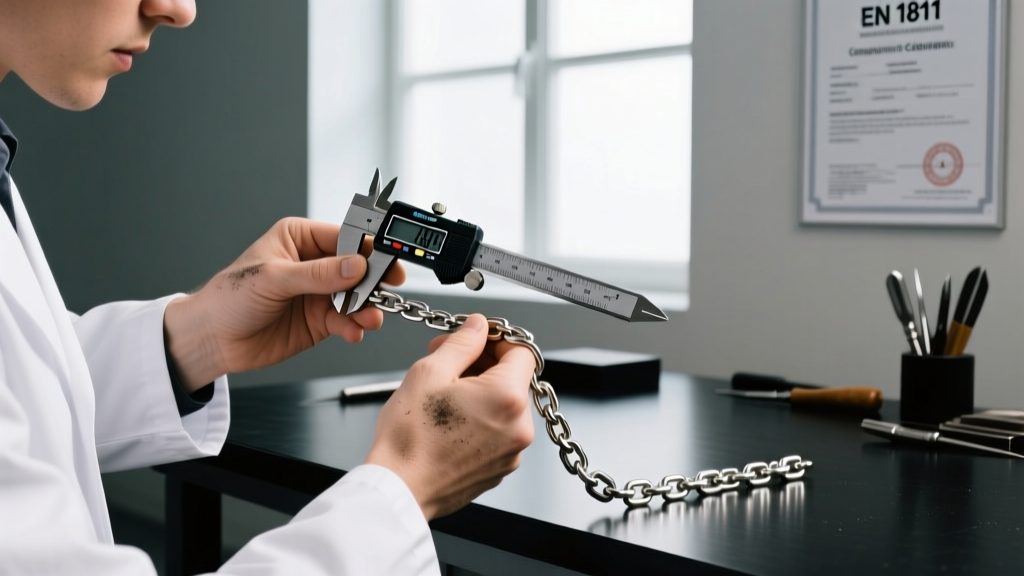
- Ask for the Lab Report: Reputable, direct-to-consumer jewelry brands in 2026 are proud of their safety standards. Email their customer service and ask for the EN 1811 synthetic sweat test certificate for the specific alloy they use. If they cannot provide it, walk away.
- Look for Material Specificity: Avoid listings that simply say 'stainless steel' or 'alloy.' Look for exact metallurgical designations like 'ASTM F136 Titanium,' '316L Surgical Steel,' or '99.9% Pure Niobium.'
- Beware of 'Mystery Metal' Clasps: Many brands will use a high-grade titanium chain but source cheap, mass-produced brass clasps to cut costs. Inspect the product photos closely. If the clasp looks dull, poorly finished, or is a different color than the chain, it is likely a contamination risk.
- The Magnet Test (For Steel): While not a substitute for lab testing, austenitic 316L stainless steel is largely non-magnetic. If your 'surgical steel' necklace is strongly attracted to a magnet, it is likely a cheaper, highly magnetic ferritic steel that is prone to rusting and leaching.
Final Thoughts on Building a Safe Jewelry Wardrobe
Transitioning to an NRT-compliant jewelry collection is an investment in your long-term comfort and health. By ignoring unregulated marketing terms and focusing on verifiable migration standards like EN 1811, you can eliminate the guesswork from your accessory shopping. Whether you opt for the featherlight durability of implant-grade titanium, the vibrant anodized hues of niobium, or the classic elegance of properly alloyed solid gold, understanding the science of nickel release empowers you to wear your favorite necklaces without fear of the dreaded collarbone rash.


