Number 7 Necklace Deep Dive: Metallurgy, Chains & Settings
Explore the technical details of the number 7 necklace. Learn about metal casting, chain gauges, gemstone settings, and maintenance for numeral pendants.

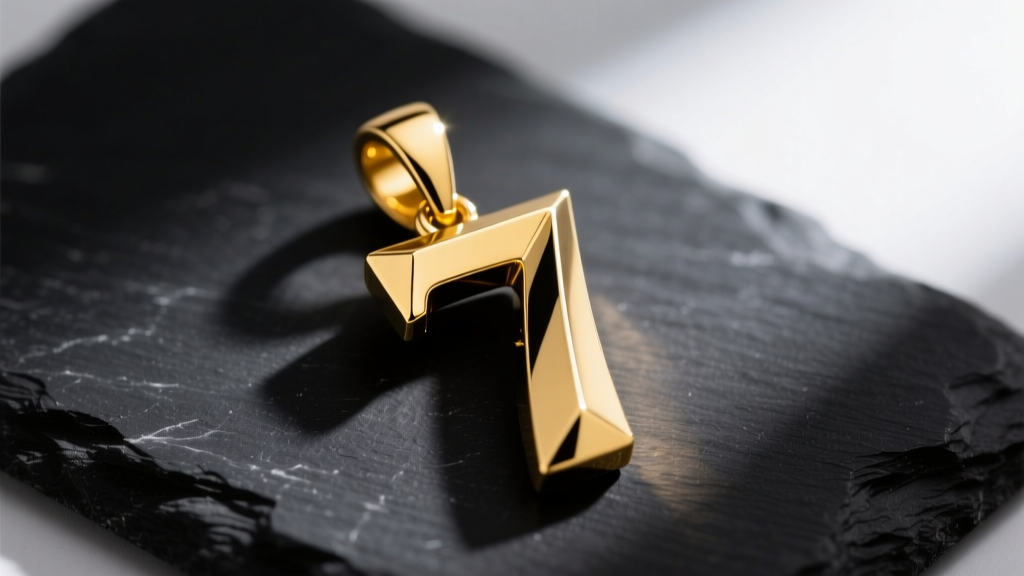
While the number 7 necklace is widely celebrated for its numerological significance, athletic associations, and aesthetic symmetry, designing and manufacturing a high-quality numeral pendant presents unique engineering challenges. Unlike circular or heart-shaped pendants, the numeral 7 features an asymmetrical mass distribution, sharp terminal points, and a distinct center of gravity. In this 2026 technical deep dive, we examine the metallurgical specifications, casting mechanics, and chain-pairing protocols required to produce a premium number 7 necklace that hangs perfectly and withstands daily wear.
The Anatomy of a Number 7 Necklace: Casting vs. Stamping
The manufacturing method dictates the structural integrity and visual weight of the pendant. For entry-level fashion jewelry, numeral pendants are often die-struck or stamped from 20-gauge (0.8mm) sheet metal. While cost-effective, stamped 7s lack dimensional depth and are prone to bending along the diagonal stem when subjected to lateral pressure.
Investment Casting Tolerances for Sharp Numerals
Fine jewelry manufacturers utilize lost-wax investment casting, increasingly aided by high-resolution DLP 3D resin printing for the master wax models. When casting a number 7 necklace in precious metals, the sprue (the channel through which molten metal flows) must be strategically placed. Attaching the sprue to the thin top horizontal bar risks shrinkage porosity and incomplete fills. Expert casters attach the main sprue to the thickest section—the lower diagonal stem—allowing the metal to flow upward and maintain pressure in the tighter corners of the top serif.
Proper sprue placement on asymmetrical numerals prevents micro-porosity along the sharp inner angles, ensuring a clean polish without pitting.
Modern casting yields a pendant thickness of 1.5mm to 2.5mm, providing enough mass for edge-beveling (millegrain or high-polish chamfers) which catches the light and defines the silhouette of the 7.
Metallurgical Choices: Hardness and Edge Retention
The sharp bottom terminal point and the acute inner corner of the number 7 are high-wear areas. The choice of alloy directly impacts how well these sharp lines are maintained over years of friction against clothing and skin.
- 14k Gold (58.5% Au): With a Vickers hardness (HV) of approximately 125-140, 14k gold offers excellent edge retention. The copper and silver alloy matrix provides rigidity, making it ideal for the sharp bottom point of the 7, which can otherwise round off or snag.
- 18k Gold (75.0% Au): Softer and more malleable (HV 90-110), 18k gold yields a richer color but is susceptible to edge deformation. If choosing 18k for a number 7 necklace, the design should incorporate slightly rounded, soft-beveled edges rather than razor-sharp geometric lines.
- 950 Platinum (95% Pt): Platinum is dense and highly durable. Unlike gold, which loses metal when scratched, platinum displaces. This makes it the superior choice for intricate, sharp-edged numeral designs, as the structural integrity of the 7's corners remains intact even after years of micro-abrasions.
Chain Mechanics: Solving the Asymmetrical Hang
The most common failure in numeral jewelry is the 'tilt.' Because the horizontal top bar of the 7 is heavier and wider than the lower diagonal stem, a standard centered bail will cause the pendant to hang crookedly. To achieve a perfectly plumb hang, the bail must be offset or counter-weighted.
Bail Placement and Jump Ring Gauges
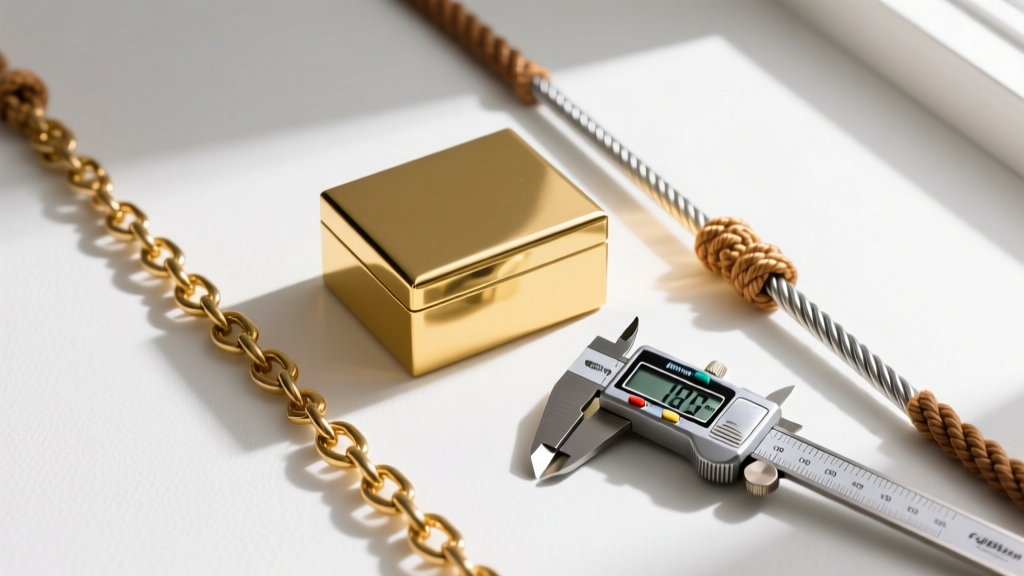
Custom jewelers often solder a hidden bail slightly to the right of the top bar's center, directly over the pendant's true center of gravity. Furthermore, the jump ring connecting the bail to the chain must be robust. A standard 18-gauge (1.0mm) jump ring will easily pull apart under the pendulum-like swinging motion of a solid metal 7. We recommend a minimum of a 16-gauge (1.29mm) or 14-gauge (1.63mm) soldered jump ring.
| Chain Style | Recommended Gauge | Compatibility with Numeral 7 |
|---|---|---|
| Box Chain | 1.5mm - 2.0mm | Excellent; rigid links prevent flipping and support the pendant's weight. |
| Rope Chain | 1.8mm - 2.5mm | Very Good; high tensile strength, but intricate links can snag on the 7's bottom point. |
| Cable Chain | 1.2mm - 1.5mm | Poor; too flexible, leading to constant pendant flipping and bail wear. |
| Wheat Chain | 1.5mm - 2.0mm | Excellent; smooth, woven profile slides easily without catching on sharp numeral edges. |
For further insights on chain tensile strength and clasp mechanics, manufacturing resources like Rio Grande provide extensive metallurgical data on wire drawing and chain linking tolerances.
Gemstone Integration: Micro-Pavé on the Horizontal Bar
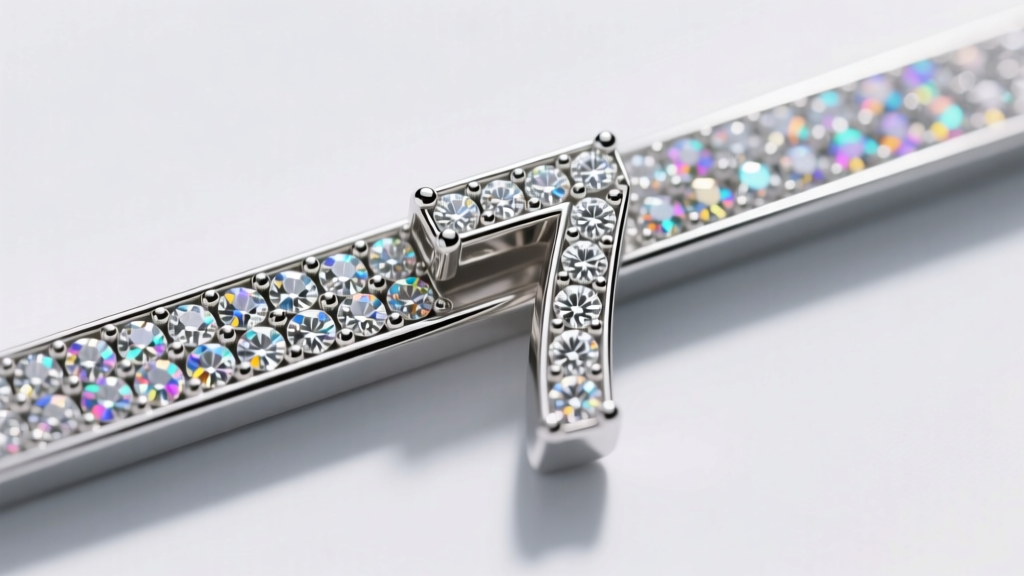
Adding diamonds to a number 7 necklace requires navigating the tight geometry of the top serif and the acute angle where the horizontal bar meets the diagonal stem. Channel setting is virtually impossible on the top bar due to the lack of parallel walls and the short run length.
Flush vs. Bead Setting Protocols
Instead, master setters utilize micro-pavé or flush (gypsy) settings. According to gemological standards outlined by the Gemological Institute of America (GIA), melee diamonds ranging from 0.8mm to 1.3mm in diameter are ideal for the top bar of a standard 20mm tall numeral pendant. The setter must carve precise bearing cuts into the gold or platinum, ensuring the table of the diamond sits perfectly flush with the metal surface to prevent snagging on fabrics. The acute inner corner of the 7 is typically left devoid of stones, as the metal stress in that tight radius can cause stones to pop if the piece is ever slightly bent.
Maintenance and Wear Patterns on Asymmetrical Pendants
Maintaining a number 7 necklace requires specific care, particularly regarding the inner angles and the bottom terminal point.
Polishing Protocols for Recessed Edges
The inner corner where the top bar meets the diagonal stem collects skin oils, lotions, and environmental dust. Standard polishing cloths cannot reach this recess. Ultrasonic cleaners are highly effective, but if the number 7 features a hollowed back (a common technique to reduce gold weight and cost), the ultrasonic waves can cause fluid to become trapped inside, leading to internal corrosion or blistering if the piece is subsequently heated for resizing or repair. Always verify if a pendant is solid or hollowed before utilizing ultrasonic or steam cleaning methods.
When polishing the exterior, jewelers must use tapered felt bobs with rouge compound to maintain the crisp inner angle. Over-polishing with a flat wheel will round the inner corner, fundamentally altering the typography and aesthetic sharpness of the numeral.
Conclusion: Engineering the Perfect Number 7 Pendant
A premium number 7 necklace is far more than a simple stamp of a digit; it is an exercise in asymmetrical balance, metallurgical hardness, and precise gemstone setting. By prioritizing proper sprue placement during casting, selecting an alloy with the appropriate Vickers hardness for edge retention, and pairing the pendant with a gauge-appropriate box or wheat chain, you ensure the piece hangs flawlessly. Whether chosen for its lucky connotations or its bold geometric profile, understanding the technical architecture of the numeral 7 guarantees a pendant that is as structurally sound as it is visually striking.