NYC Necklace Guide 2026: Custom Diamond District Designs
Discover the technical art of the custom NYC necklace. We break down 47th Street metallurgy, CAD tolerances, and diamond melee grading.

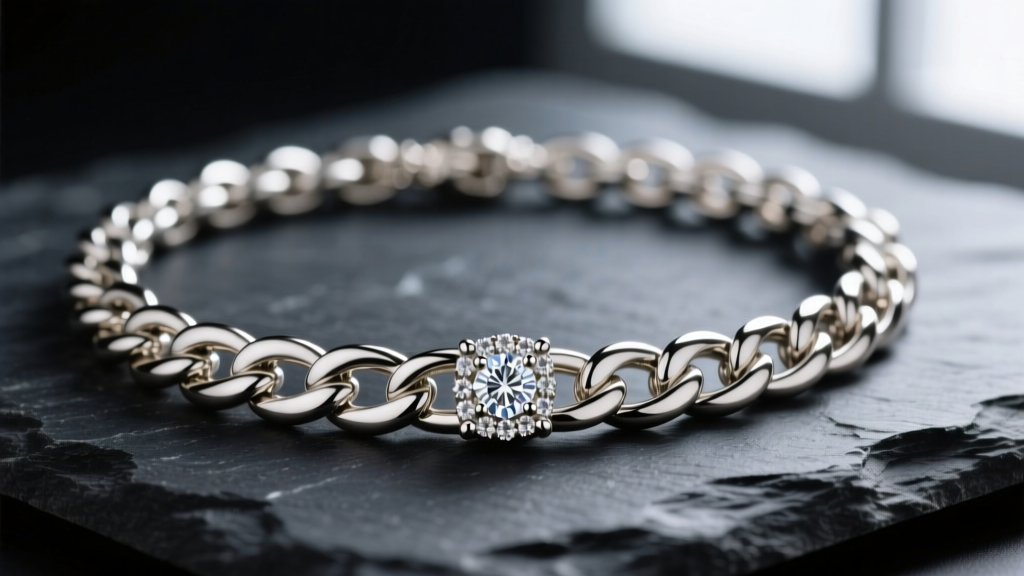
The Anatomy of a True NYC Necklace
When industry insiders refer to an "NYC necklace," they are rarely talking about a mass-produced tourist trinket from Midtown. In the lexicon of high jewelry, this term denotes a piece conceptualized, cast, and finished within the Manhattan Diamond District—specifically the labyrinth of 47th Street. As of 2026, the technical standards for custom necklaces and pendants emerging from New York's premier bench jewelers represent the pinnacle of American metallurgy and gemological precision. This deep dive bypasses the marketing fluff to examine the exact material grades, casting tolerances, and structural engineering that define a genuine NYC custom necklace.
Metallurgy and Alloy Selection for Manhattan Bench Jewelers
The foundation of any luxury pendant or chain is its alloy composition. While commercial jewelry brands often rely on standard 14k nickel-white gold to cut costs, elite NYC jewelers prioritize biocompatibility and long-term structural integrity. The gold standard for high-end custom white gold necklaces is 18-karat palladium white gold.
- 18k Palladium White Gold: Composed of 75% pure gold and 25% palladium (a platinum group metal). This alloy is naturally white-gray, eliminating the need for rhodium plating, which eventually wears off and requires expensive maintenance. It is also entirely nickel-free, preventing contact dermatitis.
- 18k Rose Gold: Formulated with 75% gold, 22.25% copper, and 2.75% silver. The precise copper ratio is tightly controlled by NYC refiners to prevent the alloy from becoming too brittle during the wire-drawing process required for intricate chain links.
- Platinum 950/Ru: An alloy of 95% platinum and 5% ruthenium. Ruthenium is preferred over iridium in New York casting houses because it increases the hardness of the platinum, making it vastly superior for securing micro-pavé diamonds on heavy pendant bails.
The CAD/CAM Pipeline: Tolerances and Shrinkage Compensation
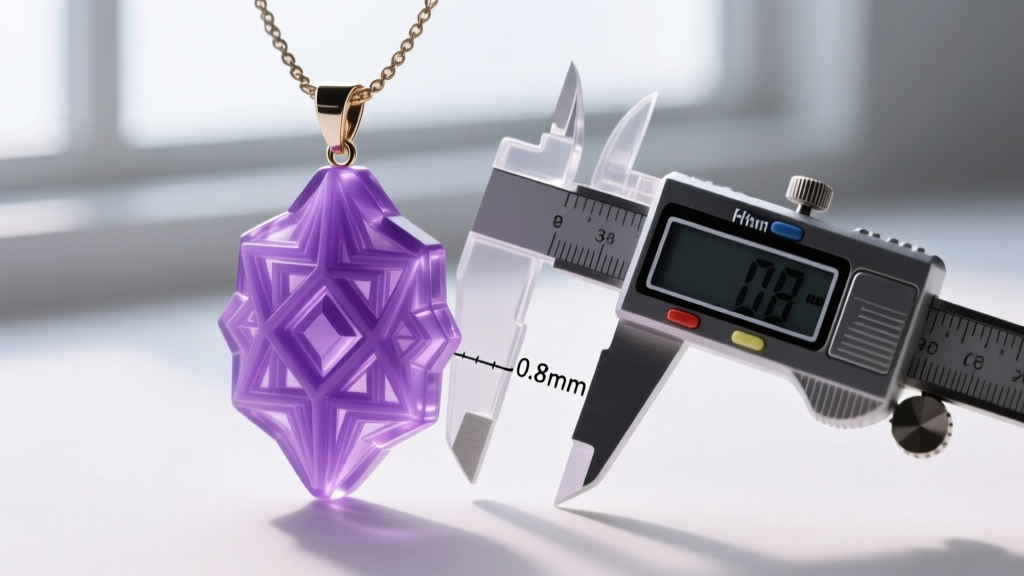
Before a single gram of gold is melted, a custom NYC necklace is born in CAD (Computer-Aided Design) software like MatrixGold or Rhino 3D. The precision required at this stage is microscopic. Master CAD designers on 47th Street operate with tolerances as tight as 0.05 millimeters.
Accounting for Casting Shrinkage
One of the most critical technical skills in custom jewelry design is compensating for metal shrinkage. When 18k gold cools from its liquid state (approx. 1,064°C) to room temperature, it shrinks by roughly 1.5% to 1.7%. If a designer creates a pendant bail with an internal diameter of exactly 4.0mm to fit a specific Cuban chain, the final cast piece will be too small unless the CAD model is mathematically scaled up by the exact shrinkage coefficient of the chosen alloy. Failure to calculate this results in a bail that requires aggressive, structural-weakening reaming by the bench jeweler.
Casting Techniques: Centrifugal vs. Vacuum Induction
Once the high-resolution resin wax model is printed and invested in a plaster-like flask, the burnout and casting phase begins. The method chosen drastically affects the porosity and durability of the final necklace components.
"For solid Cuban links or heavy signet pendants, centrifugal casting is perfectly adequate. But the moment you introduce intricate micro-pavé galleries or hollowed-out lightweight chains, we exclusively use vacuum-assisted induction casting. It pulls the molten gold into the finest details of the flask, virtually eliminating gas porosity." — Senior Master Caster, 47th Street Foundry
Gas porosity manifests as microscopic bubbles trapped inside the metal. In a necklace chain, porosity creates weak points that will inevitably snap under the tensile stress of a heavy diamond pendant. Vacuum induction casting ensures a dense, homogenous metal structure, which is why top-tier NYC jewelers charge a premium for this manufacturing step.
Chain Link Engineering: Tensile Strength and Laser Welding
The structural engineering of the chain itself is often overlooked. A custom NYC necklace chain must support the dynamic load of a pendant without stretching or snapping at the solder points.
| Chain Style | Structural Characteristics | Best Pendant Weight Limit |
|---|---|---|
| Cuban Link | Interlocking oval links with a flat surface. High tensile strength, but relies heavily on the integrity of the laser-welded seams. | Heavy (50g+ pendants) |
| Figaro | Alternating long and short links. The long links are prone to bending if subjected to lateral torque. | Medium (up to 25g) |
| Wheat / Spiga | Woven, directional links. Extremely resistant to pulling forces, making it the most durable option for heavy, diamond-set cross pendants. | Heavy (50g+ pendants) |
Modern NYC bench jewelers utilize laser welding rather than traditional torch soldering for chain assembly. Laser welding concentrates heat into a microscopic point, fusing the metal without annealing (softening) the surrounding links. This preserves the work-hardened strength of the chain.
Diamond Sourcing and Micro-Pavé Specifications
A custom diamond pendant is only as brilliant as its melee diamonds. Melee refers to diamonds weighing less than 0.18 carats. While commercial brands use commercial-grade (I1/I2 clarity) melee, authentic NYC custom pieces demand VS1/VS2 clarity and F/G color melee to ensure the pendant does not look cloudy or yellow against the white gold or platinum setting.

Full Cut vs. Single Cut Melee
For any melee diamond larger than 1.0mm, NYC jewelers insist on full-cut stones. A full-cut diamond has 57 or 58 facets, identical to a large center stone. Single-cut melee (which only has 17 or 18 facets) lacks the optical symmetry required to reflect light dynamically. According to the Gemological Institute of America (GIA), the facet alignment in full-cut melee is critical for maximizing brilliance in micro-pavé settings, where the diamonds are set flush against one another.
| Diameter (mm) | Carat Weight | Cut Style | Best Setting Application |
|---|---|---|---|
| 0.80 - 0.90 | 0.005 ct | Single Cut | Micro-pavé halos under 1mm |
| 1.00 - 1.15 | 0.010 ct | Full Cut | Standard bead-set pavé |
| 1.30 - 1.40 | 0.015 ct | Full Cut | Shared-prong pendant borders |
| 1.70 - 1.80 | 0.025 ct | Full Cut | Pave-set chain links |
Cost Breakdown: Spot Price vs. Bench Labor (2026 Estimates)
Understanding the pricing structure of a custom NYC necklace requires separating raw material costs from highly specialized bench labor. Below is a realistic breakdown for a custom 18k palladium white gold pendant featuring 0.50 carats of VS1/VS2 melee diamonds.
| Component | Technical Specification | Estimated Cost (USD) |
|---|---|---|
| CAD Design | MatrixGold / Rhino 3D Render & Revisions | $150 - $350 |
| Precious Metal | 18k Palladium White Gold (15 grams) | $950 - $1,100 |
| Casting & Finish | Vacuum induction, hand-polish, rhodium (if needed) | $250 - $400 |
| Melee Diamonds | 0.50 ctw, VS1/VS2, F/G Color, Full Cut | $400 - $600 |
| Stone Setting | Microscope-assisted bead setting ($10/stone) | $150 - $250 |
As verified by industry standards from Jewelers of America, consumers should be wary of quotes that fall significantly below the raw melt value of the gold plus a baseline labor fee. "Loss leader" pricing in the Diamond District often indicates the use of porous casting methods, single-cut melee, or nickel-heavy white gold alloys that will degrade over time.
Navigating 47th Street: Red Flags and Verification
Sourcing a custom piece in New York requires a discerning eye. When consulting with a diamond district jeweler for a bespoke necklace, watch for these technical red flags:
- Vague Alloy Disclosures: If a jeweler cannot specify the exact alloying metals in their white gold (e.g., palladium vs. nickel), they are likely using commercial-grade casting grain.
- Over-Polishing: Inspect the edges of the chain links or the gallery of the pendant. Over-polishing removes metal, rounding off crisp CAD edges and weakening the prongs holding the melee diamonds.
- Lack of GIA/AGS Documentation: For any custom pendant featuring a center stone over 0.50 carats, insist on a GIA or AGS grading report. EGL and IGI certificates are frequently used in the district, but their grading tolerances for color and clarity are notoriously looser than the GIA standard.
Ultimately, a true NYC necklace is an exercise in precision engineering. By demanding specific palladium alloys, vacuum-cast structures, and full-cut VS melee, you ensure your custom pendant or chain is not just a beautiful accessory, but a structurally flawless heirloom built to withstand decades of daily wear.


