Gifting an Old Crystal Necklace: 2026 Buyer's Guide
Discover how to gift an old crystal necklace in 2026. Learn to authenticate vintage paste, Art Deco rock crystal, and match eras to occasions.
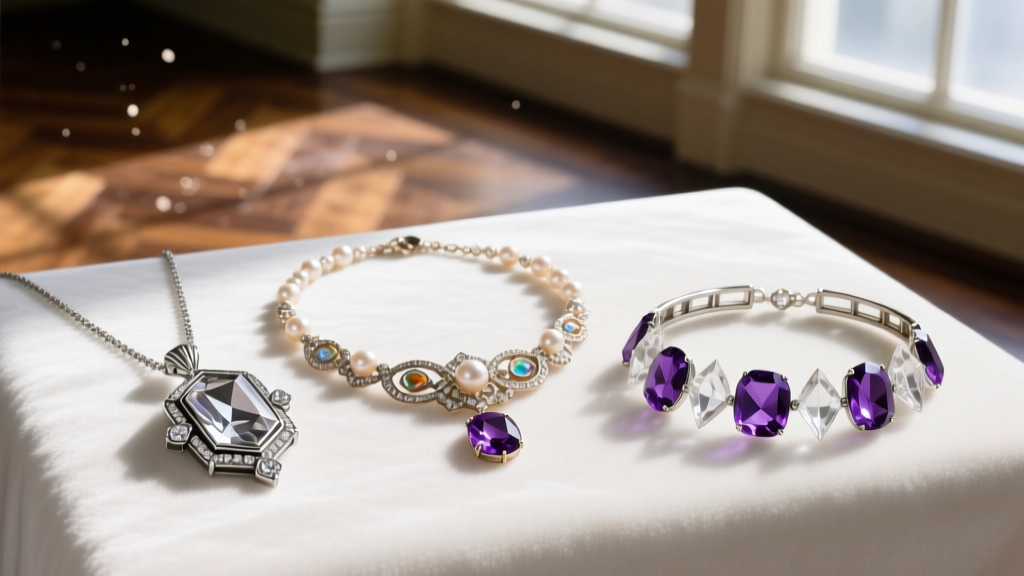
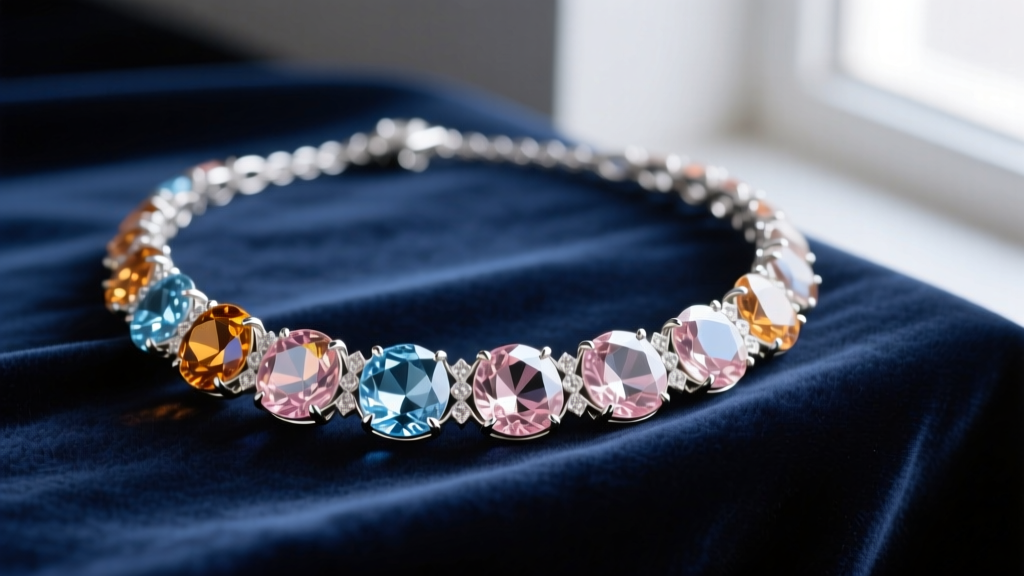
The Allure of Gifting an Old Crystal Necklace
In the landscape of 2026 jewelry gifting, the mass-produced has taken a backseat to the deeply personal and historically rich. Gifting an old crystal necklace is no longer just about presenting a beautiful accessory; it is about bestowing a wearable artifact. Whether you are sourcing a piece for a milestone anniversary, a bridal "something old," or a graduation gift, vintage and antique crystal necklaces carry an emotional weight and sustainable appeal that modern mall jewelry simply cannot replicate.
However, the secondary market is fraught with mislabeled pieces, synthetic reproductions, and damaged foiling. To gift with confidence, you must understand the nuances of historical glassmaking, natural quartz cutting, and mid-century rhinestone production. This guide will equip you with the connoisseur-level knowledge required to authenticate, select, and present an old crystal necklace tailored to your recipient's specific occasion.
Decoding Eras: What "Old" Really Means
The term "crystal" in the antique jewelry market is a broad umbrella that spans several distinct materials and centuries of craftsmanship. Identifying the exact era of the necklace dictates its value, fragility, and aesthetic.
Georgian Paste (1714–1837)
Before the advent of modern diamond cutting, jewelers relied on "paste"—a high-lead glass that offered incredible refractive brilliance. Georgian paste stones were hand-cut and often backed with metallic foil to amplify their sparkle in candlelight. They were set in silver or silver-topped gold using closed-back collet settings.
"A true Georgian paste stone isn't a 'fake' diamond; it is a masterwork of 18th-century glassmaking, designed to capture candlelight in ways early diamonds could not."
Victorian Rock Crystal (1837–1901)
The Victorian era saw a surge in the use of natural rock crystal (colorless quartz). Unlike paste, rock crystal is highly durable (7 on the Mohs scale) and was often carved into cameos, intaglios, or faceted drops. These pieces were frequently accented with seed pearls or black enamel, particularly during the mourning jewelry craze following the death of Prince Albert.
Art Deco Geometrics (1920–1935)
Art Deco necklaces favored stark, architectural designs. Carved rock crystal plaques, frosted quartz beads, and geometric pendants were paired with platinum, white gold, and occasionally marcasite or onyx. The focus was on high contrast and bold, modernist silhouettes.
Mid-Century Swarovski (1950s–1970s)
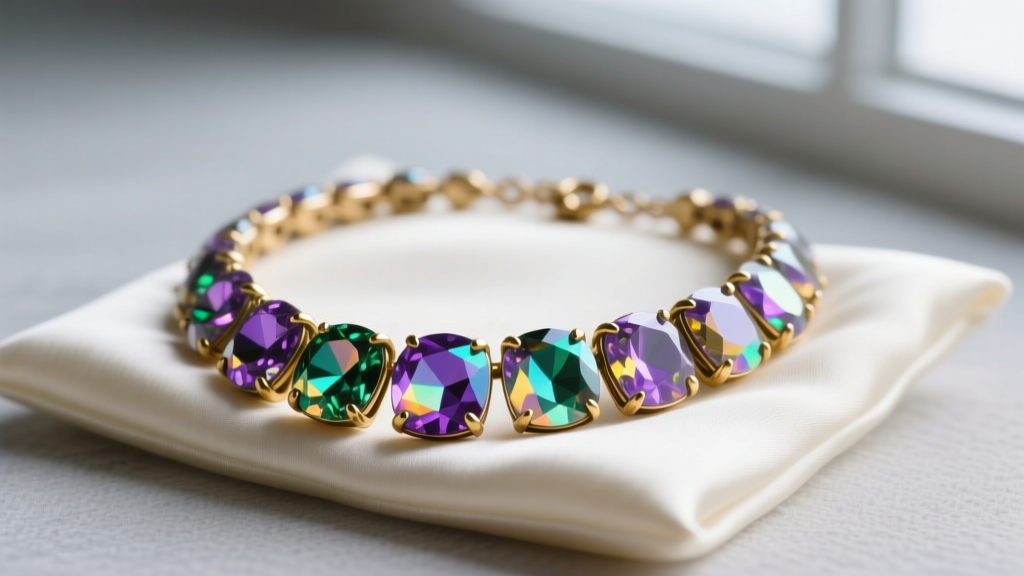
When we talk about mid-century "crystal," we are usually referring to precision-cut lead glass rhinestones. In 1956, Swarovski collaborated with Christian Dior to introduce the Aurora Borealis (AB) coating, giving stones a mesmerizing iridescent rainbow finish. These necklaces are highly collectible today and serve as vibrant, glamorous statement pieces.
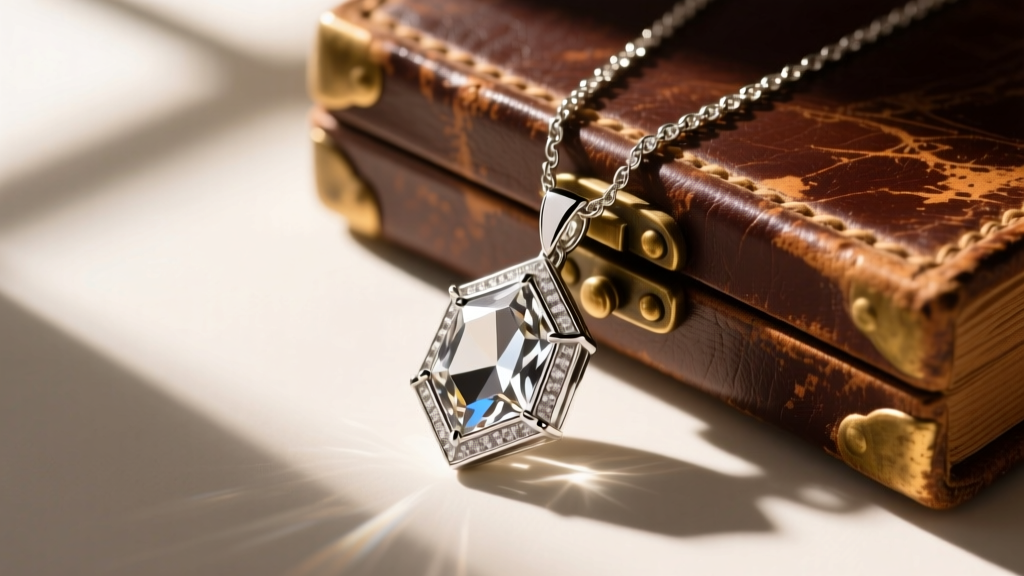
Occasion Matching: Which Era for Which Event?
Matching the historical context and material of the necklace to the recipient's milestone is the hallmark of a thoughtful gift. Use the framework below to align the piece with the occasion.
| Occasion | Ideal Era & Material | Aesthetic Vibe | Estimated 2026 Budget |
|---|---|---|---|
| 15th Anniversary (Crystal) | Art Deco Rock Crystal | Geometric, elegant, durable | $600 – $1,800 |
| Bridal / "Something Old" | Georgian Paste or Edwardian Crystal | Romantic, candlelit, intricate | $1,200 – $4,500+ |
| Graduation / Coming of Age | Mid-Century Swarovski AB | Bold, colorful, glamorous | $120 – $350 |
| Memorial / Heirloom Passing | Victorian Carved Quartz | Sentimental, subdued, historic | $400 – $900 |
Authentication: Hardware and Clasp Clues
The most reliable way to verify the age of an old crystal necklace is to examine its hardware. According to the jewelry historians at Lang Antiques, the clasp mechanism is a primary indicator of a piece's true vintage.
- C-Clasps: A simple 'C' shaped hook without a locking mechanism is a strong indicator of a piece dating to the late 19th century or earlier. If a piece claims to be Victorian but features a modern lobster clasp, the chain has likely been replaced, which affects the valuation.
- Trombone Clasps: Featuring a push-pull barrel mechanism, these were predominantly used on European jewelry from the late 1800s through the Art Deco period. They are highly prized by collectors.
- Spring Ring Clasps: Invented in the early 1900s but popularized in the 1920s. A spring ring on a vermeil chain often points to the 1940s or 1950s.
- Signs of Soldering: Look closely at where the clasp meets the jump ring. Hand-soldered, slightly uneven joints suggest antique origins, while perfectly smooth, laser-welded joints indicate modern manufacturing or heavy restoration.
Sizing, Layering, and Presentation
Vintage necklaces were often crafted to sit higher on the neck than modern tastes dictate. A Georgian or Victorian necklace might measure only 15 to 16 inches, designed to act as a choker or collar.
Adapting Vintage Lengths
If you are gifting a 15-inch antique crystal piece to a recipient who prefers a princess length (18 inches), do not attempt to stretch the original chain. Instead, gift the necklace alongside a custom-made, period-appropriate 3-inch silver or gold extender chain. This preserves the structural integrity of the original links while offering modern versatility.
The Unboxing Experience
Presentation is critical when gifting historical jewelry. Avoid modern plastic inserts. Source an archival-quality, acid-free jewelry box lined in untreated cotton or velvet. Include a small anti-tarnish strip (such as 3M Silver Shield) in the box, but ensure it does not directly touch foiled stones, as the chemical off-gassing can sometimes react with degraded antique foils.
Care Instructions for the Recipient
An old crystal necklace requires highly specific care, particularly if it features foil-backed stones. The Gemological Institute of America (GIA) notes that historical simulants and foiled glass are incredibly sensitive to moisture and modern cleaning techniques.
Include a handwritten care card with your gift outlining these strict rules:
- Never Use Ultrasonic Cleaners: The high-frequency vibrations can shatter antique glass and will instantly strip away fragile metallic foiling.
- Avoid Water Immersion: If a Georgian or Victorian stone is closed-back and foiled, water can seep behind the glass, turning the foil black and ruining the stone's brilliance.
- Cleaning Method: Use only a dry, ultra-soft makeup brush to dust the facets. If the setting requires degreasing, use a barely damp microfiber cloth on the front of the stone only, drying it immediately.
- Storage: Store the necklace flat or hung in a low-humidity environment. High humidity accelerates the oxidation of the silver collet settings and degrades the foil backing.
Final Thoughts on Vintage Gifting
Gifting an old crystal necklace in 2026 is a profound statement of intentionality. It requires patience to source, a discerning eye to authenticate, and a deep respect for the artisans who cut the glass or quartz centuries ago. By matching the specific era to the recipient's milestone and providing them with the knowledge to preserve it, you are not just giving a piece of jewelry—you are entrusting them with a beautiful, sparkling fragment of history.


