The Om Necklace Value Guide: Metal Grades & Pricing
Discover the true value of an Om necklace in our 2026 pricing guide. Learn to evaluate metal grades, avoid tourist traps, and invest in lasting quality.

The True Cost of an Om Necklace: Breaking Down the Market
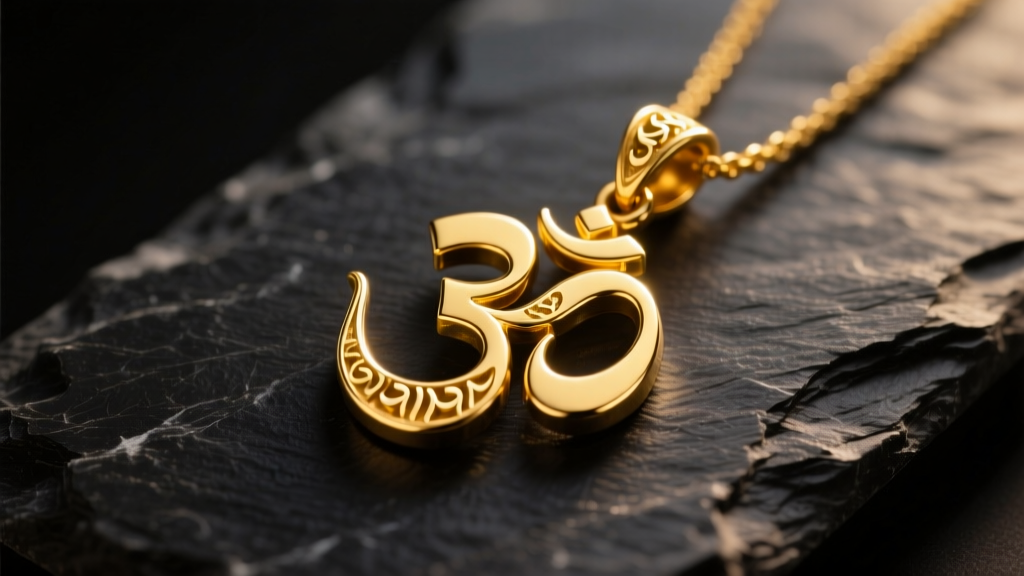
The Om (or Aum) symbol carries profound spiritual weight in Hinduism, Buddhism, and Jainism, representing the primordial sound of the universe. When translated into jewelry, the Om necklace has become a global staple. However, the commercialization of this sacred symbol has created a wildly inconsistent market. In 2026, consumers are facing a landscape where a poorly cast, lead-laced brass pendant from a tourist market can cost $15, while a meticulously crafted, solid 18k gold piece from a heritage jeweler can exceed $1,200.
Assessing the budget and value of an Om necklace requires looking past the spiritual aesthetic and evaluating the piece strictly on metallurgical merit, chain integrity, and cost-per-wear. This guide strips away the marketing fluff to provide a rigorous value assessment, helping you determine exactly what you should pay based on material grades and construction quality.
Material Grades and Value Retention
The primary driver of an Om necklace's value is its base metal. Because the Om symbol features intricate, sweeping curves and tight inner loops, it requires metals with good casting properties and structural durability. Here is how the most common materials stack up in terms of long-term value.
Sterling Silver vs. Silver-Plated Brass
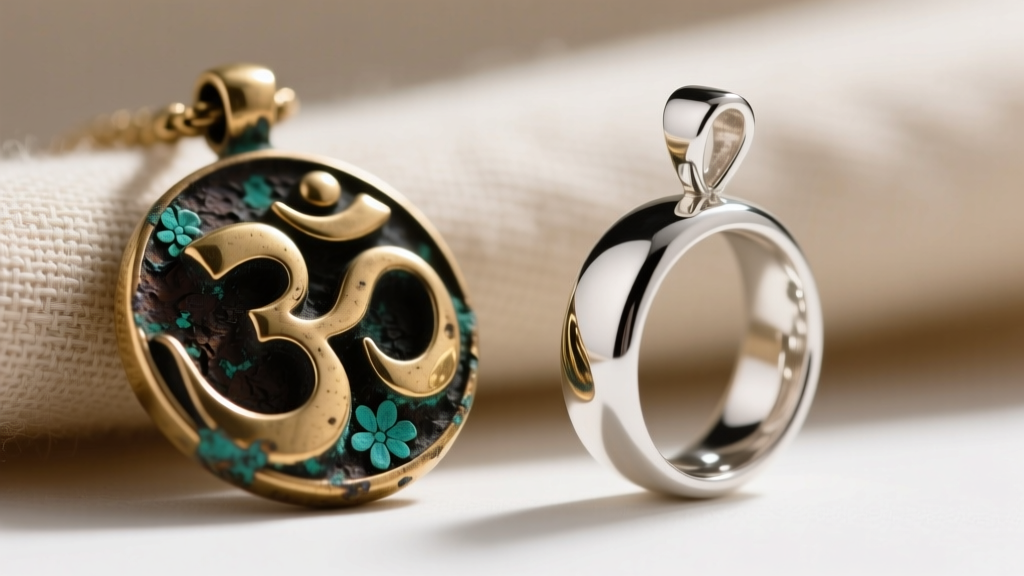
Sterling silver (stamped .925) is the baseline for fine jewelry. It contains 92.5% pure silver and 7.5% alloy (usually copper) for strength. A solid sterling silver Om pendant offers excellent value, typically retaining 30% to 40% of its retail price as scrap or resale value. Conversely, silver-plated brass or copper is a depreciating asset. The plating is usually less than 0.5 microns thick. Once the friction from clothing and skin oils wears through the plating—often within six months of daily wear—the underlying brass will oxidize, turning your skin green and rendering the piece unwearable. From a value perspective, silver-plated Om necklaces are essentially disposable and should be priced under $25.
Gold Vermeil vs. Gold Filled vs. Solid Gold
When seeking a gold-toned Om necklace without the solid gold price tag, buyers must understand the legal distinctions in gold layering. According to the Federal Trade Commission (FTC) Jewelry Guides, "gold vermeil" must consist of a sterling silver base coated with at least 10k gold that is a minimum of 2.5 microns thick. High-quality vermeil offers a solid 3-to-5-year lifespan with proper care.
Gold-filled jewelry, however, offers vastly superior value. Gold-filled Om pendants feature a brass core mechanically bonded with a gold layer that constitutes at least 1/20th (5%) of the total weight. This layer is typically 50 to 100 times thicker than standard plating, making it highly resistant to tarnish and wear. For buyers wanting the heirloom longevity of solid 14k or 18k gold without the $800+ price tag, 14k gold-filled is the undisputed champion of budget-to-value ratio.
Pricing Tiers: What You Should Actually Pay
To prevent overpaying, it is crucial to benchmark current market rates. The table below outlines the fair retail price ranges for a standard 1-inch (25mm) Om pendant paired with an 18-inch chain, categorized by material grade.
| Material Grade | Fair Retail Price Range | Expected Lifespan | Value Score (1-10) |
|---|---|---|---|
| Base Metal / Plated | $15 - $35 | 6 - 12 Months | 2 |
| 925 Sterling Silver | $45 - $90 | Lifetime (with polishing) | 8 |
| Heavy Gold Vermeil | $80 - $140 | 3 - 5 Years | 6 |
| 14k Gold Filled | $110 - $180 | 10+ Years | 9 |
| Solid 14k Gold | $350 - $600 | Generational Heirloom | 7 (High upfront cost) |
| Solid 18k Gold | $700 - $1,200+ | Generational Heirloom | 5 (Premium for purity) |
Note: Prices assume a standard, unadorned cast or die-struck pendant. Hand-forged pieces, diamond accents, or artisan enamel work will command a 30% to 50% premium.
Chain Selection: The Hidden Cost Factor
A common mistake in budget assessment is focusing entirely on the Om pendant while ignoring the chain. The chain accounts for up to 60% of the metal weight in a necklace. If you purchase a solid 14k gold Om pendant but hang it on a hollow, low-grade chain, you compromise both the aesthetic and the structural integrity.
For an Om pendant, which is typically top-heavy due to the dense lower curve of the Sanskrit character, you need a chain with high tensile strength. Box chains and rolo chains offer the best structural support and resist kinking. Avoid delicate cable chains or herringbone chains for pendants over 5 grams; they are prone to snapping under the pendulum effect of a swinging pendant. When evaluating a bundled necklace set, check the chain's clasp. A high-value piece will always feature a sturdy lobster clasp with a soldered jump ring, whereas budget pieces will use cheap spring rings that fail within a year.
Red Flags and Tourist Trap Warnings
When traveling to regions like India, Nepal, or Bali, tourists are frequently targeted with "authentic" Om necklaces that are metallurgical nightmares. The Gemological Institute of America (GIA) frequently warns consumers about misrepresented metals in global tourist markets. Be highly skeptical of the following terms:
- "Tibetan Silver": This is not silver. It is typically a zinc, copper, and nickel alloy that often contains dangerous levels of lead. It has zero intrinsic value and poses a health risk.
- "Nepalese Gold" or "Indian Gold" (Uncertified): Often sold as 22k or 24k, these pieces are frequently brass or bronze with a heavy acid wash to mimic the rich yellow hue of high-karat gold. Without a recognized hallmark (like the BIS hallmark in India), assume it is base metal.
- "Hollow-Cast" Solid Gold: Some vendors sell large, bulky 14k gold Om pendants at suspiciously low prices. These are electroformed or hollow-cast, meaning the gold shell is paper-thin. They dent easily and cannot be repaired or resized by a bench jeweler.
"Always demand a scrap gold test or an XRF (X-ray fluorescence) scan if you are purchasing high-karat Om pendants from independent market stalls. If the vendor refuses, walk away."
Final Verdict: Maximizing Your Investment
Ultimately, the value of an Om necklace is dictated by its material permanence. If your budget is under $50, invest in a high-quality, solid 925 sterling silver piece from a reputable brand rather than gambling on thick gold plating over mystery metals. If your budget allows for $120 to $200, 14k gold-filled necklaces provide the absolute best intersection of luxury aesthetics, daily wearability, and long-term durability.
By prioritizing verified metal grades, robust chain construction, and transparent hallmarking, you ensure that your Om necklace remains a lasting, meaningful investment rather than a fleeting, tarnished expense. True value in spiritual jewelry lies in its ability to endure, mirroring the timeless nature of the symbol itself.


