Omega Collar Necklace Materials: Gold, Silver & Platinum Compared
Compare omega collar necklace materials like 14k gold, sterling silver, and platinum. Discover durability, kink resistance, and pricing for your perfect fit.

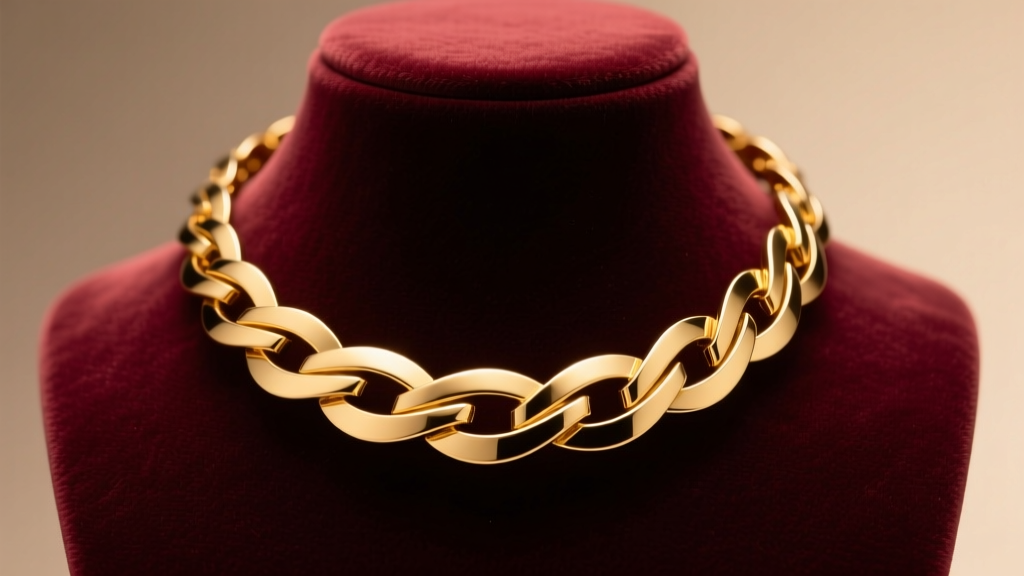
The Anatomy of an Omega Collar: Why Material Dictates Longevity
The omega collar necklace is a masterclass in jewelry engineering. Unlike traditional link chains that rely on individual interlocking loops, an omega chain achieves its signature sleek, liquid-metal appearance through a complex dual-layer construction. At its core lies a flexible woven wire mesh or a solid tension wire, which is then entirely encased in smooth, interlocking metal plates. This design creates a rigid yet flexible collar that sits flush against the collarbone, making it a premier choice for both minimalist daily wear and high-impact evening styling.
However, this unique structural integrity is entirely dependent on the metallurgical properties of the chosen material. Because the outer plates must bend in perfect unison without separating or crushing the inner core, the hardness, malleability, and tensile strength of the metal are critical. In 2026, advancements in alloy blending have improved the durability of precious metals, but the fundamental physics of the omega design remain unchanged: the wrong material choice will inevitably lead to kinking, plate separation, or irreversible creasing. Below, we break down the exact material properties you need to consider before investing in an omega collar necklace.
Precious Metal Breakdown: Gold, Silver, and Platinum
14k vs. 18k Gold: The Sweet Spot for Rigidity
Gold is the most popular choice for omega collars, but the karat weight drastically alters its performance. Pure 24k gold is far too soft for this application, so it is always alloyed. According to metallurgical data published by the Gemological Institute of America (GIA), the Vickers hardness (HV) of gold alloys increases as the pure gold content decreases.
- 14k Gold (58.5% Pure): With a Vickers hardness of approximately 130-150 HV (depending on the copper/silver/zinc ratio), 14k gold offers superior structural rigidity. It resists the backward bending that causes permanent kinks and holds the outer plates tightly against the inner core. This makes it the most practical choice for everyday wear. Expect to pay between $800 and $2,200 for a standard 16-inch 14k omega collar.
- 18k Gold (75% Pure): Softer and richer in color, 18k gold sits around 100-120 HV. While it offers a deeper, more luxurious yellow hue, it is significantly more prone to plate warping and core bending. If you choose 18k, it should be reserved for occasional wear and stored with extreme care. Pricing typically ranges from $1,800 to $4,500+.
Sterling Silver (925): The Budget-Friendly Classic
Sterling silver offers the sleek look of white gold at a fraction of the cost, typically ranging from $150 to $400. However, 925 silver is inherently soft (around 60-70 HV) and highly malleable. This makes sterling silver omega collars the most susceptible to kinking on the market. Furthermore, the microscopic seams between the interlocking plates are notorious traps for sulfur and moisture, leading to stubborn tarnish that is difficult to polish out without specialized ultrasonic equipment. To mitigate this, many modern jewelers apply a thick rhodium flash over silver omegas, which delays tarnishing but will eventually wear off at the friction points near the clasp.
Platinum: The Heavyweight Champion
Platinum (usually 950 platinum, alloyed with ruthenium or iridium) is incredibly dense and heavy, giving an omega collar a substantial, luxurious drape. With a Vickers hardness of 130-160 HV, it is highly resistant to initial kinking. However, platinum exhibits a property known as work-hardening. When bent, it doesn't just deform; it becomes harder and more brittle at the stress point. If a platinum omega collar does kink, the metal at the crease becomes so rigid that attempting to bend it back often results in the outer plates snapping or the inner core fracturing. Repairs are notoriously difficult and expensive, often leaving a visible scar. Expect pricing to start around $3,500 and easily exceed $8,000 for heavier widths.
Material Comparison Chart: Durability, Price, and Maintenance
Use this structured framework to evaluate which metal aligns with your lifestyle, budget, and maintenance tolerance.
| Material | Approx. Vickers Hardness | Kink Resistance | Tarnish / Corrosion Risk | Avg. Price (16-inch, 4mm) |
|---|---|---|---|---|
| 14k Yellow/White Gold | 130 - 150 HV | High | None | $900 - $2,200 |
| 18k Yellow Gold | 100 - 120 HV | Medium | None | $1,800 - $4,500 |
| 925 Sterling Silver | 60 - 70 HV | Low | High (in seams) | $150 - $400 |
| 950 Platinum | 130 - 160 HV | High (but brittle if bent) | None (develops patina) | $3,500 - $8,000+ |
| 316L Surgical Steel | 200 - 220 HV | Very High | None | $40 - $120 |
The Kink Factor: Failure Modes and Prevention
The most common point of failure for any omega collar necklace is the 'crease' or 'kink'. This occurs when the necklace is bent backward against its natural curve, crushing the interlocking plates and permanently deforming the inner tension wire. Once an omega chain kinks, the structural integrity is compromised, and the plates will begin to separate at that exact stress point during future wear.
Expert Insight: Never store an omega collar necklace coiled in a small jewelry box compartment or tossed loosely into a purse. The Jewelers of America recommends storing omega chains either perfectly flat in a wide drawer or hung vertically on a wide, padded neck bust to maintain the metal's memory and prevent accidental backward folding.
If your collar develops a minor crease, do not attempt to bend it back with your fingers. The uneven pressure will cause the outer plates to buckle. Instead, take it to a master jeweler who can use specialized nylon-jawed pliers and a mandrel to gently coax the metal back into its original radius without stressing the outer casing.

Alternative Materials: Stainless Steel and Titanium
For those seeking maximum durability on a budget, 316L surgical stainless steel has emerged as a formidable alternative in the 2026 market. With a Vickers hardness exceeding 200 HV, steel omega collars are virtually kink-proof under normal wear conditions. They are heavy, hypoallergenic, and maintain a bright, white-metal luster without the need for rhodium plating.
The primary drawback to steel is its repairability. Because steel requires extremely high temperatures to solder, if the lobster clasp or jump ring fails, most traditional jewelers cannot repair it without risking melting the adjacent interlocking plates. Laser welders can sometimes solve this, but it is often more cost-effective to simply replace a damaged steel omega chain.
Expert Verdict: Which Material Should You Choose?
Selecting the right omega collar necklace material requires balancing aesthetics with practical wearability. If you want a daily-wear piece that will withstand the rigors of modern life while retaining intrinsic value, 14k gold is the undisputed champion. Its alloy hardness provides the perfect tension to keep the plates flush without risking the softness of higher karats.
If you are purchasing for occasional, high-impact evening wear and have a strict budget, a rhodium-plated sterling silver collar offers unparalleled visual appeal, provided you commit to meticulous flat storage. Finally, for buyers who prioritize sheer indestructibility and modern industrial aesthetics over precious metal value, a 316L stainless steel omega collar delivers a flawless, kink-free drape that will easily last a lifetime.


