Hogs Tooth Necklace Repair: Fixing Cracks, Bails, and Odor
Learn how to troubleshoot common hogs tooth necklace issues. Expert tips on fixing cracks, securing bails, eliminating odors, and sealing organic tusks.

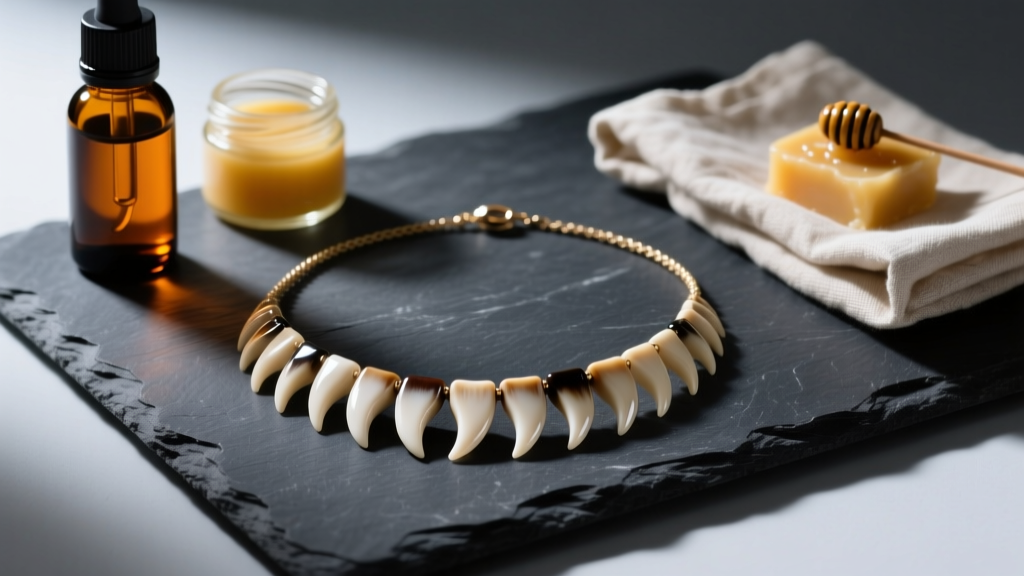
The Unique Challenges of Organic Tusk Jewelry
A hogs tooth necklace—whether crafted from wild boar, warthog, or feral pig tusks—is a striking piece of rustic, pagan, or outdoorsman jewelry. However, unlike inert metals or gemstones, a tusk is a biological composite material. It consists of a dense outer enamel layer, a porous dentin core, and an inner pulp cavity. This organic structure makes it highly susceptible to environmental fluctuations, mechanical stress, and biological degradation.
When a hogs tooth necklace is exposed to the oils, sweat, and temperature changes of daily wear, it inevitably faces structural and aesthetic challenges. Troubleshooting these issues requires an understanding of organic material conservation rather than standard jewelry repair techniques. Below, we break down the most common failure modes and provide actionable, professional-grade solutions to restore and preserve your pendant.
Troubleshooting Crack and Split Propagation
The most frequent issue with any tusk pendant is cracking. This occurs due to differential shrinkage: the inner dentin loses moisture and shrinks over time, while the outer enamel layer remains rigid. This internal stress creates micro-fractures that can rapidly propagate into full splits, ruining the pendant.
Stabilizing Micro-Fractures with Cyanoacrylate
If you notice hairline cracks forming along the grain of the tooth, immediate stabilization is required. Do not use standard hardware store superglue, which often contains thickeners that prevent deep penetration.
- Clean the Area: Wipe the tusk with 99% isopropyl alcohol to remove skin oils and debris. Let it dry completely.
- Apply Thin CA Glue: Use a water-thin cyanoacrylate adhesive (such as Starbond EM-02). Its low viscosity allows it to wick deep into the capillary network of the crack via surface tension.
- Cure and Sand: Allow it to cure for 24 hours. Lightly sand the surface with 1000-grit wet/dry sandpaper to remove any surface residue, then buff with a microfiber cloth.
Deep Crack Epoxy Filling
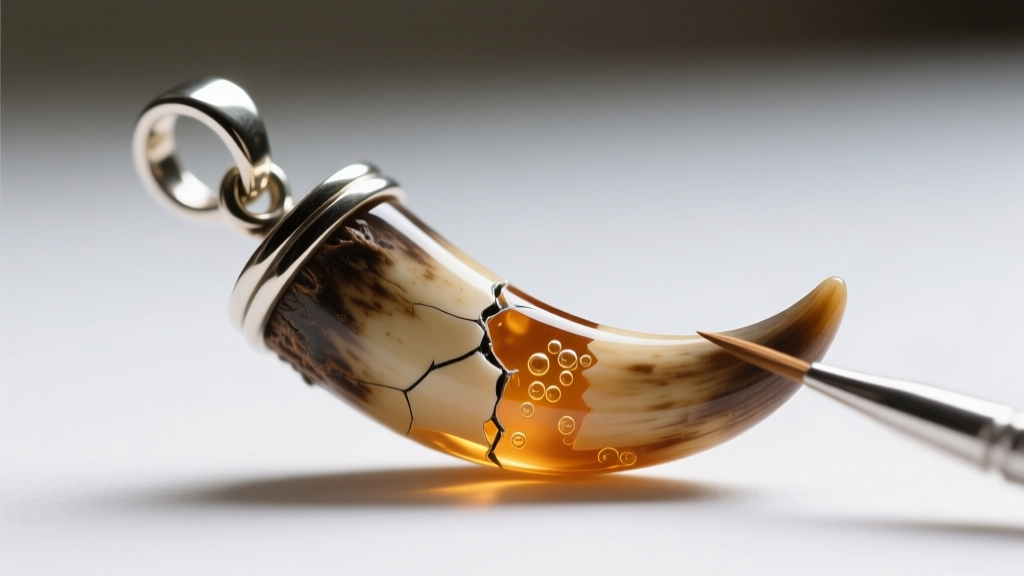
For structural splits where the tooth has physically separated, thin CA glue lacks the necessary gap-filling strength. You must use a two-part clear epoxy resin.
Mix a high-quality, UV-resistant jeweler's epoxy. Using a dental pick or a fine syringe, inject the epoxy directly into the fissure. Clamp the tusk gently using padded jewelry pliers or rubber bands to close the gap while the epoxy cures for 48 hours. Once hardened, you will need to progressively wet-sand the repair zone from 400-grit up to 3000-grit to restore the natural gloss of the enamel. For an in-depth look on how adhesives interact with porous organics, refer to this guide on gluing bone and antler by Starbond.
Bail Attachment Failures: Glue vs. Mechanical
The bail—the loop that connects the pendant to the chain—is a major point of failure on a hogs tooth necklace. Because the surface of a tusk is slightly porous and naturally oily, standard jeweler's epoxy often fails to maintain a lasting bond with a flat-pad glue-on bail. Furthermore, attempting to drill a hole through the top of the tusk for a mechanical bail frequently results in 'blowouts,' where the drill bit splinters the brittle enamel as it exits the back.
Evaluating Bail Methods
| Bail Method | Pros | Cons | Durability Score |
|---|---|---|---|
| Flat-Pad Glue-On | Easy to apply; no tools required. | Fails quickly due to tusk oils and sweat. | 2/10 |
| Drilled Hole & Jump Ring | Secure mechanical connection. | High risk of enamel blowout and cracking. | 5/10 |
| Wire-Wrapped Cage | Zero adhesives; highly secure; rustic look. | Requires wire-working skills; alters aesthetic. | 9/10 |
| Custom Saddle Bail | Wraps over the top edge; epoxied to flat sides. | Requires custom metal fabrication. | 8/10 |
The Expert Solution: If you must use a glued bail, mechanically score the back of the tusk and the base of the bail with 220-grit sandpaper to create a physical key for the adhesive. Clean both surfaces with acetone, then bond them using a two-part methacrylate adhesive rather than standard epoxy, as methacrylates cut through residual organic oils to create a superior structural bond.
Eliminating Odors and Organic Staining
A persistent, earthy, or foul odor emanating from a hogs tooth necklace is usually caused by residual organic matter left in the pulp cavity, or bacteria thriving in the porous dentin. Additionally, the tooth may yellow or stain from prolonged contact with skin acids and UV exposure.
The Sterilization and Whitening Protocol
Never use household bleach (sodium hypochlorite) on a tusk. Bleach destroys the hydroxyapatite mineral matrix, turning the tooth chalky, brittle, and permanently ruined. Instead, follow this conservation-safe protocol:
- Cavity Cleaning: Use a stiff wire or dental scaler to scrape out any remaining dried tissue from the hollow pulp cavity at the base of the tooth.
- Peroxide Soak: Submerge the pendant in a 3% to 6% hydrogen peroxide solution for 12 to 24 hours. This safely oxidizes stains and kills odor-causing anaerobic bacteria without degrading the enamel.
- Neutralization: Remove the tooth and soak it in a baking soda and distilled water paste for one hour to neutralize the peroxide.
- Sealing: Once fully dried (allow 48 hours), seal the porous dentin by rubbing in a mixture of food-grade mineral oil and natural beeswax. This locks out moisture and prevents future bacterial ingress.
Chain Friction and Wear Prevention
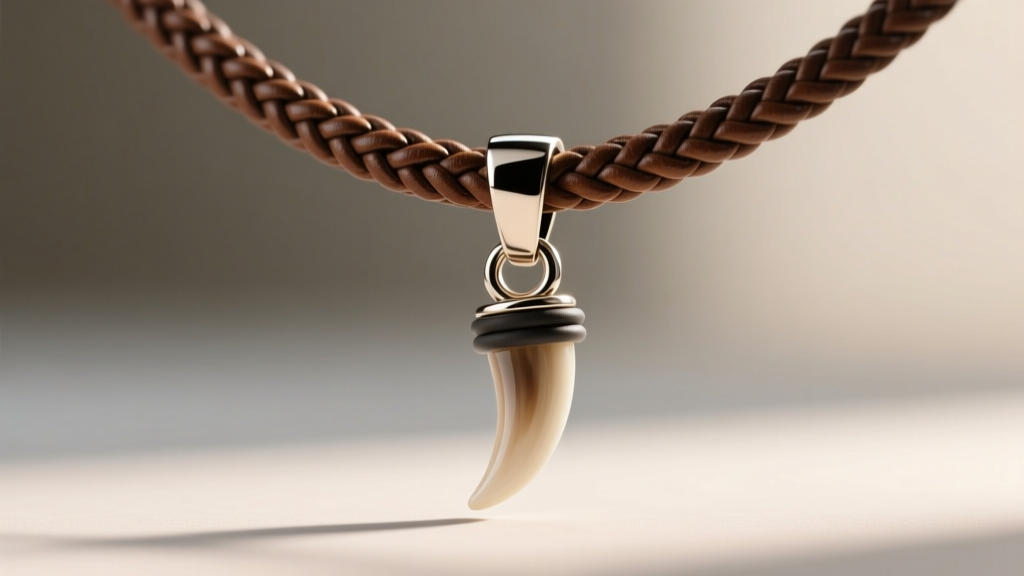
The chain you choose for your hogs tooth necklace can inadvertently destroy the pendant. Heavy metal chains, particularly those with sharp edges like curb or Figaro chains, act like microscopic saws against the bail hole or the top of the tusk itself. Over time, this friction will carve a groove into the organic material, eventually causing the pendant to snap off.
To prevent this, opt for smooth, rounded chains such as a 3mm to 5mm box chain or a high-quality braided leather cord. If you must use a metal chain, insert a small, transparent rubber O-ring or a smooth sterling silver jump ring between the chain and the pendant's bail. This sacrificial buffer absorbs the kinetic friction, protecting the structural integrity of the tusk. For comprehensive guidelines on preserving organic artifacts, the Canadian Conservation Institute provides excellent baseline parameters for humidity and handling.
Ethical Sourcing and Legal Compliance
While troubleshooting physical damage is critical, the most severe 'failure' regarding a hogs tooth necklace often occurs before purchase: legal non-compliance. Depending on the species of hog and your geographic location, importing, selling, or even traveling with certain animal parts can violate international treaties.
'Always verify the CITES (Convention on International Trade in Endangered Species) status of the animal before purchasing organic jewelry across borders. What is legal to hunt locally may be heavily restricted for international export.'
For instance, while feral pig tusks in the United States are generally unregulated, warthog tusks or specific wild boar variants may fall under CITES Appendix II or local wildlife protection laws. When purchasing a replacement pendant or raw materials for repair, always demand a certificate of origin from the vendor. For more details on traveling with animal parts, consult the US Fish & Wildlife Service guidelines.
By understanding the biological nature of the materials you wear, you can effectively troubleshoot cracks, secure failing bails, and eliminate odors, ensuring your hogs tooth necklace remains a durable and striking staple in your jewelry collection for decades to come.


