2026 Gift Guide: How to Choose an Opal Emerald Necklace
Discover how to choose the perfect opal emerald necklace for any milestone. Our 2026 gift guide covers gemstone grades, settings, and occasion matching.

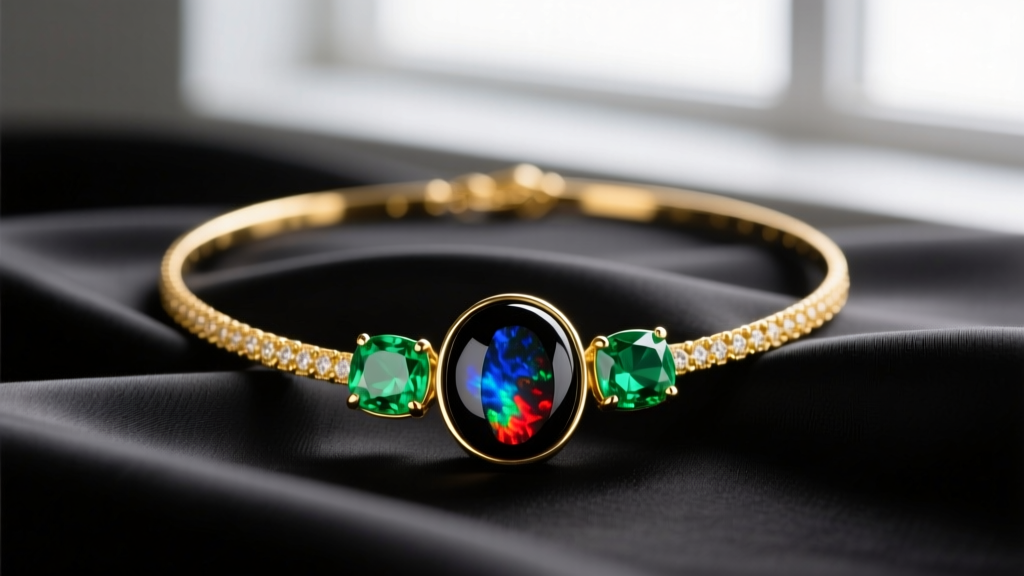
The Allure of the Opal Emerald Necklace: A 2026 Gifting Perspective
Gifting jewelry is an exercise in emotional translation, and few combinations speak as eloquently as the opal emerald necklace. Pairing the fiery, spectral flashes of an opal with the deep, verdant saturation of an emerald creates a striking juxtaposition of earth and ether. As we navigate the 2026 gifting season, this dual-gemstone pairing has surged in popularity among collectors and milestone gifters who want to move beyond traditional diamond solitaires. However, merging these two specific gemstones requires a masterclass in material science, setting selection, and wearability. Both stones present unique structural vulnerabilities that demand expert handling.
This comprehensive guide will walk you through the gemological realities, occasion-matching strategies, and critical setting requirements necessary to select an opal and emerald pendant that will survive generations.
Decoding the Gemstones: Durability and Grade Specifics
Before selecting a piece, you must understand the inherent physical properties of these two gems. They are notoriously demanding, and treating them like standard sapphires or diamonds will result in catastrophic failure.
Emeralds: The Brittle Beauty
Emeralds belong to the beryl family and register between 7.5 and 8 on the Mohs hardness scale. However, hardness (scratch resistance) should not be confused with toughness (resistance to breaking). Natural emeralds are almost universally included with internal fractures and mineral deposits known in the trade as jardin (French for garden). Because of these inclusions, emeralds are highly brittle and susceptible to chipping from minor impacts or even the pressure of a jeweler's prongs. According to the Gemological Institute of America (GIA), over 90% of natural emeralds on the market undergo clarity enhancement, typically involving the infusion of cedar oil or synthetic resins to mask fractures. When gifting, always ask for a disclosure report regarding the type and extent of fracture filling.
Opals: Play-of-Color and Moisture Sensitivity
Opals are amorphous hydrated silica, containing anywhere from 3% to 21% water within their microscopic structure. Their famous play-of-color is caused by light diffracting through tightly packed silica spheres. Registering at a mere 5.5 to 6.5 on the Mohs scale, opals are easily scratched by everyday dust (which contains quartz, a 7 on the Mohs scale). Furthermore, the origin of the opal dictates its care. Ethiopian Welo opals are highly hydrophane, meaning they absorb water and oils from the skin, which can temporarily or permanently alter their transparency and color play. Australian opals are non-hydrophane and generally more stable for daily wear in a necklace pendant.
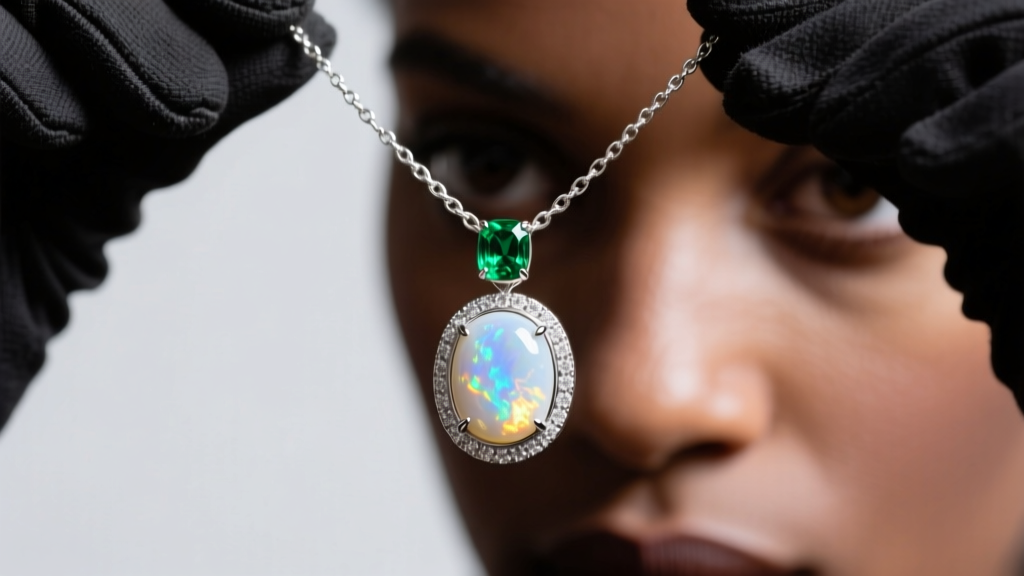
Occasion Matching: When to Gift This Dual-Gemstone Piece
An opal emerald necklace is not a casual purchase; it is a deeply intentional gift. Here is how to align this specific piece with major life milestones:
- The Dual-Birthstone Tribute: Ideal for a mother with a May-born (Emerald) and October-born (Opal) child, or a couple celebrating the union of their respective birth months.
- The 55th Wedding Anniversary: Emerald is the traditional gift for the 55th anniversary. Incorporating an opal adds a modern, personalized twist that breaks from conventional jewelry norms.
- Milestone Graduations & Doctorates: The deep green of the emerald symbolizes growth, renewal, and academic prestige, while the opal represents creativity and the multifaceted nature of a new career path.
- Push Presents & New Beginnings: The combination of green (life/fertility) and opal (magic/hope) makes this a profound gift for a partner following the birth of a child.
Critical Setting and Metal Choices for Longevity
The most common point of failure for an opal emerald necklace is the setting. If you are reviewing a piece and the opal is held in by standard four-prong settings, walk away. Prongs exert localized pressure that will eventually crack a domed opal cabochon or catch on a knit sweater, pulling the stone out entirely.
The Bezel Mandate
Both stones require full bezel or rub-over settings. A bezel setting involves a continuous ribbon of metal wrapped around the entire girdle (edge) of the gemstone. This protects the brittle edges of the emerald from impact and secures the opal without applying downward pressure on its dome. For the opal specifically, the metal must be burnished smoothly over the edge without sharp tools that could gouge the silica.
Metal Selection: 14k vs. 18k Gold vs. Platinum
While platinum is the most durable metal for chains, 14k or 18k yellow or rose gold is often superior for the pendant bezels. Gold is more malleable than platinum, allowing a master jeweler to burnish the metal tightly against the irregular edges of a natural opal or included emerald without the risk of the metal's stiffness cracking the stone. Yellow gold also provides a high-contrast backdrop that enhances the warmth of the emerald and the fire of the opal.
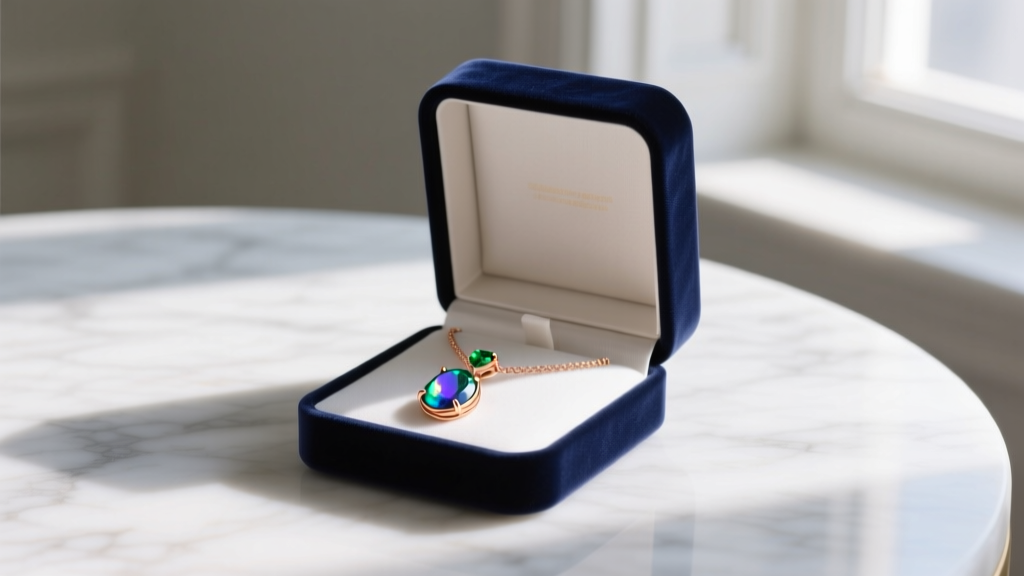
2026 Pricing Tiers: What to Expect
The price variance in opal emerald necklaces is extreme, dictated entirely by the origin and treatment of the stones. Use this table to benchmark your budget against market realities in 2026.
| Tier | Gemstone Specifications | Metal & Setting | Estimated Price Range |
|---|---|---|---|
| Accessible | Lab-created emerald; Synthetic or lab-grown opal | 10k or 14k Gold; Bezel | $300 - $800 |
| Mid-Range | Natural Zambian emerald (moderate oil); Natural Ethiopian white opal | 14k Gold; Halo or Bezel | $1,200 - $3,500 |
| Investment | Natural Colombian emerald (minor oil); Natural Australian Black Opal | 18k Gold or Platinum | $6,000 - $25,000+ |
Care and Maintenance: The Gift of Longevity
Gifting an opal emerald necklace also means gifting the knowledge of how to care for it. Standard jewelry cleaning methods will destroy this piece. Ultrasonic cleaners use high-frequency vibrations that will shatter the internal fractures of an emerald and strip away its cedar oil fillings. Steam cleaners will boil the water trapped inside an opal, causing it to craze (crack into a spiderweb pattern).
As noted in the GIA Opal Care Guide, the only safe cleaning method is a lukewarm bath of distilled water and a few drops of pH-neutral dish soap, gently agitated with a baby-soft toothbrush. The piece must be patted dry immediately with a microfiber cloth. Furthermore, the necklace should always be the last thing put on (after perfumes and lotions) and the first thing taken off before showering or swimming.
Final Verdict
An opal emerald necklace is a masterful, unconventional gift that speaks to a deep appreciation for color, geology, and bespoke design. By prioritizing full bezel settings, understanding the hydrophane nature of certain opals, and respecting the brittle inclusions of natural emeralds, you can confidently select a piece that is not only breathtaking upon unboxing but structurally sound enough to become a cherished family heirloom.


