Material Guide: Choosing Your Horizontal Crucifix Necklace
Compare metals for your horizontal crucifix necklace. We analyze durability, tarnish, and pricing for silver, gold, titanium, and steel.

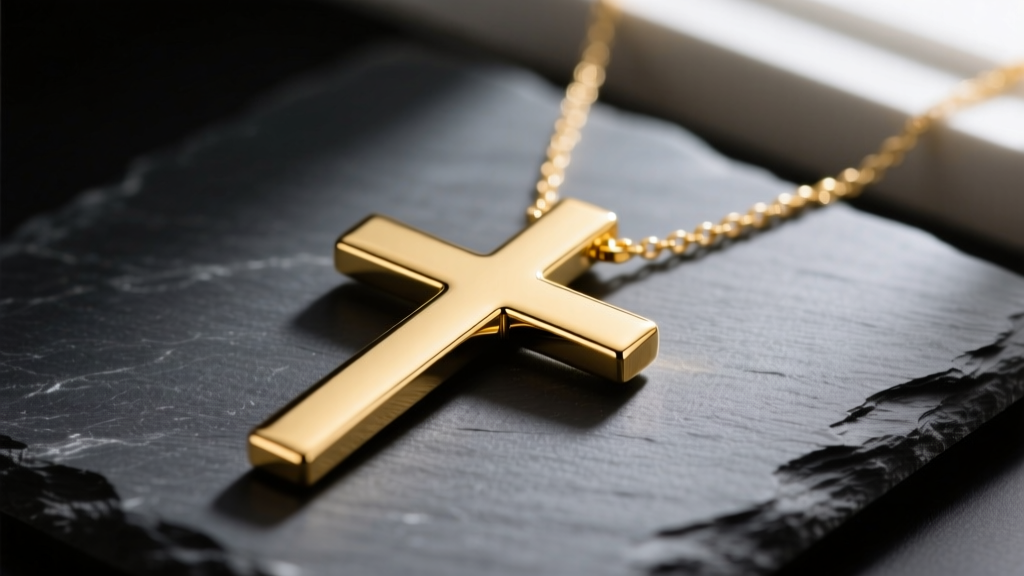
The horizontal crucifix necklace—often referred to as a sideways cross or equal-arm cross—has evolved from a niche religious symbol into a mainstream staple of contemporary jewelry layering. Unlike traditional vertical crucifixes, the horizontal orientation distributes visual weight evenly across the collarbone, creating a sleek, modern silhouette. However, this unique geometry introduces specific mechanical stresses and wear patterns that make material selection far more critical than with standard pendants. When shopping for a horizontal crucifix necklace, understanding the metallurgical properties of your chosen metal is the difference between a lifelong heirloom and a bent, tarnished disappointment.
The Unique Mechanics of Horizontal Pendants
Before diving into specific alloys, it is vital to understand how a horizontal crucifix interacts with its chain and the wearer's body. Because the pendant's center of gravity is spread laterally, it is highly susceptible to torsional stress. When the necklace shifts, the bail (the loop connecting the pendant to the chain) experiences asymmetric friction. Furthermore, the extended horizontal arms are more likely to catch on clothing, applying sudden lateral torque to the metal. According to the Federal Trade Commission's Jewelry Guides, manufacturers must ensure structural integrity in stress points, but as a consumer, you must choose a metal with adequate Vickers Hardness (HV) to resist bending and bail thinning.
Metallurgical Showdown: Properties & Performance
Sterling Silver (925) vs. Argentium (960)
Standard 925 sterling silver is the most common entry point for horizontal crucifix necklaces, prized for its bright luster and affordability. However, 925 silver contains 7.5% copper, which reacts with sulfur in the air and skin oils to form silver sulfide (tarnish). Because horizontal pendants rest flat against the chest, they are constantly exposed to perspiration, accelerating this oxidation process. For a superior alternative, seek out Argentium silver. This patented alloy replaces some of the copper with germanium, creating a transparent germanium dioxide layer on the surface that drastically slows tarnishing. While 925 silver has a Vickers Hardness of roughly 65 HV (making it prone to scratching and bending if the cross arms are thin), work-hardened Argentium 960 can reach up to 130 HV, offering vastly superior durability for the delicate geometry of a horizontal cross.
Solid Gold: 14k vs. 18k Alloys
Gold remains the premier choice for fine jewelry, but pure 24k gold is far too soft (approx. 25 HV) for a pendant that may catch on a sweater. Therefore, alloying is essential. According to the Gemological Institute of America (GIA), 14k gold (58.3% pure gold) offers an optimal balance of richness and structural integrity. With a Vickers Hardness ranging from 130 to 150 HV depending on the copper-to-silver ratio, 14k gold will easily withstand the lateral torque applied to a horizontal crucifix. Conversely, 18k gold (75% pure gold) is softer (approx. 110-120 HV) and more prone to micro-scratches and bail deformation over time. If you prefer the warmer, deeper hue of 18k gold for your horizontal crucifix necklace, ensure the piece is die-struck rather than cast; casting can introduce microscopic gas porosity that severely weakens the thin, horizontal arms of the cross.
Titanium and Surgical Steel: The Modern Alternatives
For those prioritizing hypoallergenic properties and extreme durability, titanium and stainless steel are exceptional choices. Grade 2 commercially pure titanium is highly biocompatible but relatively soft. For jewelry, Grade 5 titanium (Ti-6Al-4V) is the gold standard. With a staggering Vickers Hardness of 334 HV, a Grade 5 titanium horizontal crucifix will virtually never bend, scratch, or deform. The GIA notes that alternative metals like titanium require specialized tooling, which often results in sharper, more precise CNC-machined edges compared to cast gold or silver. 316L surgical stainless steel is another robust option (approx. 150-200 HV), though it is significantly heavier, which can cause the horizontal pendant to pull uncomfortably on thinner chains.
Comparative Data: Weight, Hardness, and Cost
To help you make an informed decision, the table below compares the most common metals used for horizontal crucifix pendants, assuming a standard 1.5-gram pendant weight.
| Metal / Alloy | Vickers Hardness (HV) | Tarnish Resistance | Avg. Price (1.5g Pendant) | Best Chain Pairing |
|---|---|---|---|---|
| 925 Sterling Silver | 65 - 75 | Low | $25 - $45 | Box Chain (1.0mm) |
| Argentium 960 Silver | 110 - 130 | High | $40 - $70 | Cable Chain (1.2mm) |
| 14k Yellow/White Gold | 130 - 150 | Very High | $120 - $180 | Rope Chain (1.0mm) |
| 18k Yellow Gold | 110 - 120 | Very High | $160 - $240 | Wheat Chain (1.2mm) |
| Grade 5 Titanium | 330 - 350 | Absolute | $35 - $60 | Snake Chain (1.5mm) |
| 316L Surgical Steel | 150 - 200 | High | $15 - $30 | Curb Chain (1.5mm) |
Chain Pairing and Torsional Stress Management
The structural integrity of your horizontal crucifix necklace is only half the equation; the chain you pair it with dictates how stress is distributed. Because horizontal pendants have a wider lateral profile, they act as a lever arm when pulled. If paired with a delicate, hollow chain (like a standard herringbone or thin snake chain), a sudden snag will not bend the pendant—it will snap the chain or crush the chain links inside the bail.
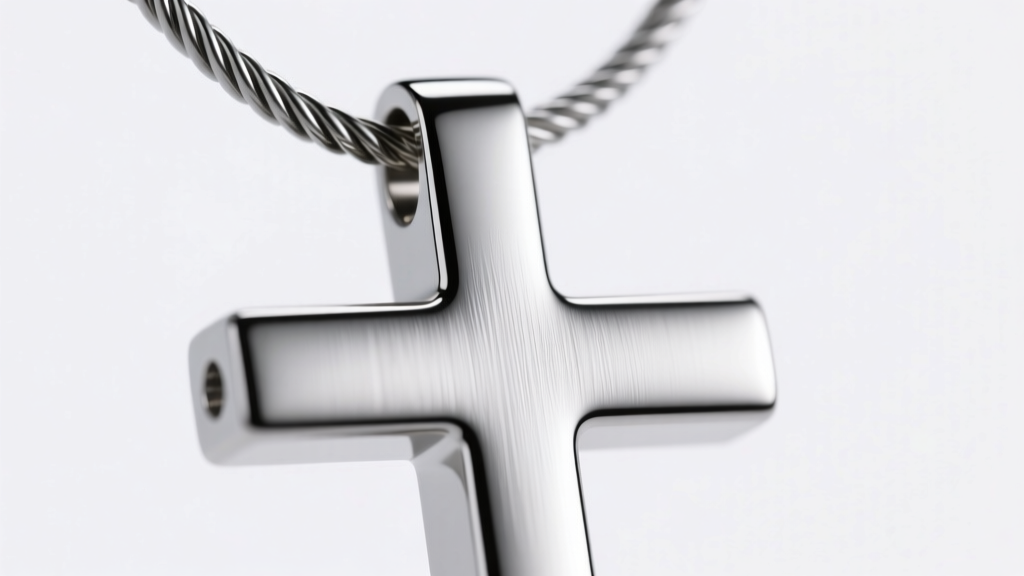
For optimal performance, pair your horizontal crucifix with a solid-core chain that offers high tensile strength. A solid 1.0mm to 1.2mm box chain or a tightly woven wheat chain provides the necessary rigidity. Furthermore, pay close attention to the bail design. A hidden bail (where the chain threads directly through a hole in the horizontal cross) eliminates the weakest link entirely, distributing the pulling force across the entire width of the pendant's center. If the design features a traditional soldered loop bail, ensure the solder joint is laser-welded rather than torch-soldered, as laser welding provides a deeper, more durable penetration into the base metal.
Troubleshooting Common Failure Modes
Even with the right metal, horizontal crucifix necklaces can experience specific wear issues. Here is how to identify and prevent them:
- Bail Thinning: Inspect the inside of the bail loop every six months. If you see a deep groove carved by the chain, the metal is wearing away. Switch to a chain with smoother, rounded links (like a rope chain) to reduce friction.
- Arm Warping: If the horizontal arms of your silver or 18k gold cross begin to bend upward or downward, the metal has suffered from compressive stress (often from being slept on or pressed against a hard surface). Take it to a jeweler for professional mandrel straightening and work-hardening.
- Finish Degradation: Many horizontal crucifixes feature sandblasted or matte recessed areas to contrast with polished edges. Avoid ultrasonic cleaners, as the high-frequency vibrations can strip these delicate surface treatments. Instead, use a mild dish soap and a soft baby toothbrush.
Final Verdict: Which Metal Should You Choose?
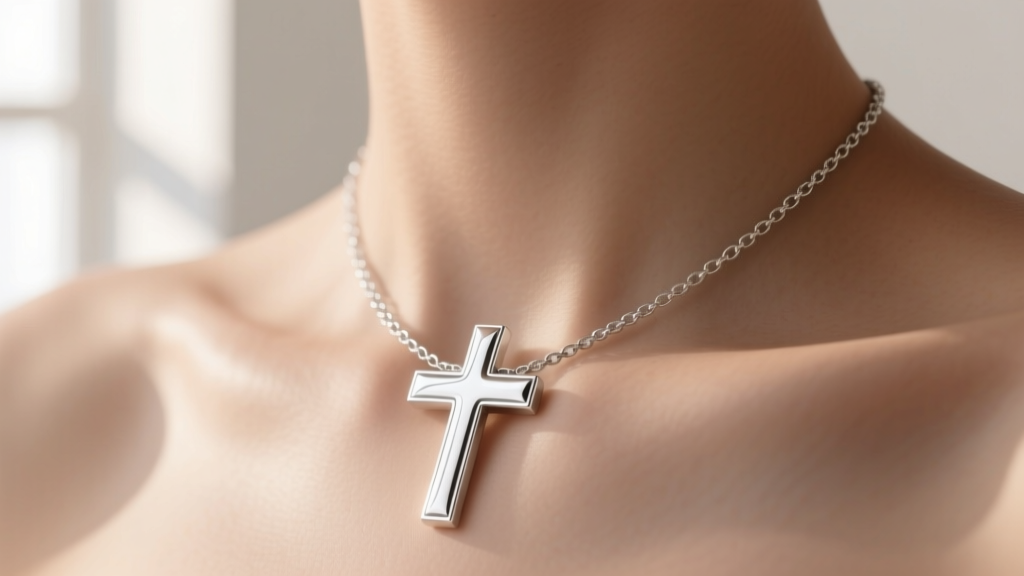
Selecting the ideal metal for your horizontal crucifix necklace ultimately depends on your lifestyle, budget, and aesthetic preferences. If you desire a budget-friendly, everyday piece and don't mind occasional polishing, 925 sterling silver remains a classic choice. However, for a truly resilient, low-maintenance silver option, the slight premium for Argentium 960 is a worthwhile investment that pays dividends in longevity.
For those seeking a generational heirloom with undeniable prestige, 14k solid gold offers the perfect intersection of rich color and structural hardness, ensuring the horizontal arms will not warp under daily stress. Finally, if you have sensitive skin, work with your hands, or simply prefer an industrial, modern aesthetic, Grade 5 titanium is virtually indestructible and will maintain its exact geometry for a lifetime. By matching the metallurgical properties of the metal to the unique mechanical demands of the horizontal design, you ensure your necklace remains a flawless staple in your jewelry collection for years to come.


