Opal Pearl Necklace Gift Guide: Occasions & Styles 2026
Discover the ultimate opal pearl necklace gift guide for 2026. Learn how to match gemstone grades, chain lengths, and settings to specific occasions.

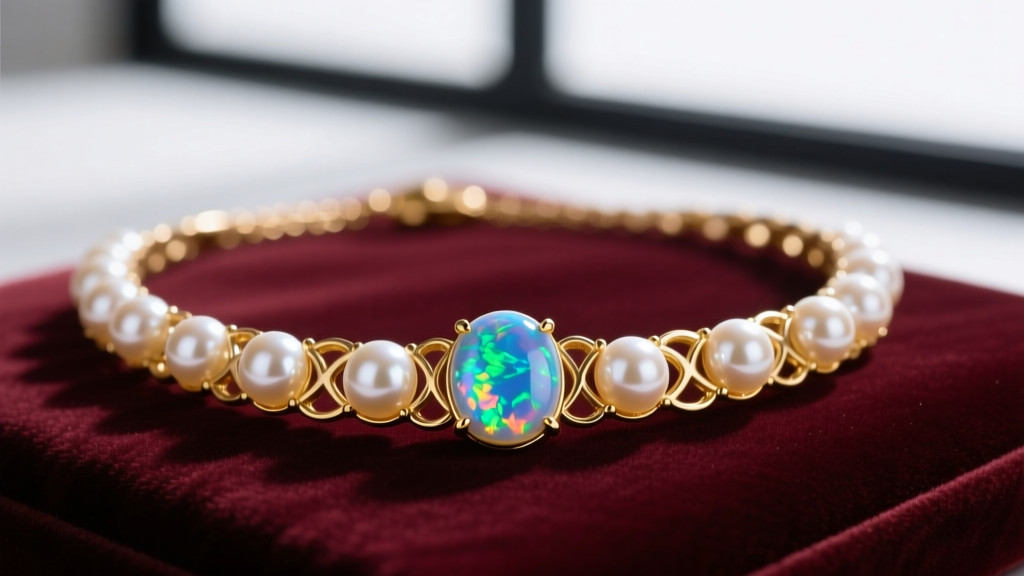
Gifting jewelry is an intimate act, but finding a piece that balances rarity, wearability, and profound symbolism can be daunting. In 2026, the opal pearl necklace has emerged as a premier choice for milestone gifting, combining the fiery, unpredictable play-of-color in opals with the timeless, grounding luster of pearls. However, because both gemstones are organic or water-bearing and rank relatively low on the Mohs hardness scale, selecting the right combination requires genuine gemological knowledge.
This comprehensive guide bypasses generic jewelry advice to provide actionable, technical insights into matching specific opal and pearl varieties to life’s major occasions, ensuring your gift is both breathtaking and structurally sound for long-term wear.
Decoding the Stones: Opal and Pearl Grades for Gifting
Not all opals and pearls are created equal. The failure mode of many poorly chosen gifts lies in ignoring the structural realities of these gems. Opals range from 5.5 to 6.5 on the Mohs scale, while pearls sit even lower at 2.5 to 4.5. Understanding their specific varieties is critical for matching the necklace to the recipient's lifestyle.
Opal Varieties: Stability vs. Vibrancy
- ETHIOPIAN WELO (Hydrophane): Known for electric, neon play-of-color and affordability. However, Welo opals are hydrophane—they absorb water. If exposed to heavy sweat or rain, they temporarily lose their color and turn clear. Best for occasional wearers.
- AUSTRALIAN SOLID WHITE: The traditional standard. Non-porous, highly stable, and featuring a classic pastel play-of-color against a white body color. Ideal for daily wear.
- BOULDER OPAL: Mined with its natural ironstone backing intact. This matrix makes it the most durable opal variety, highly resistant to chipping and cracking. Perfect for heavy pendants.
Pearl Varieties: Nacre Thickness and Luster
When gifting pearls, nacre thickness is the ultimate indicator of longevity. Pearls with nacre thinner than 0.3mm will eventually peel, exposing the bead nucleus beneath. According to the Gemological Institute of America (GIA), high-quality Akoya pearls should boast a nacre thickness of at least 0.4mm to ensure a deep, mirror-like luster that lasts generations.
| Gemstone | Variety | Mohs Hardness | Stability / Nacre | Price Tier |
|---|---|---|---|---|
| Opal | Ethiopian Welo | 5.5 - 6.5 | Hydrophane (Absorbs water) | $ |
| Opal | Australian White | 5.5 - 6.5 | Stable / Non-porous | $$$ |
| Opal | Boulder | 5.5 - 6.5 | Highly Stable (Ironstone) | $$$$ |
| Pearl | Freshwater | 2.5 - 4.5 | Solid Nacre (Very Durable) | $ |
| Pearl | Akoya | 2.5 - 4.5 | 0.4mm+ Nacre (Mirror Luster) | $$$ |
| Pearl | Tahitian | 2.5 - 4.5 | Thick Nacre (Dark Body) | $$$$ |
Occasion Matching: Which Opal Pearl Necklace to Gift When
The symbolism of the stones should align with the milestone being celebrated. Here is how to map specific gemstone pairings to life events in 2026.
Graduations & 21st Birthdays: Freshwater & Ethiopian Welo
For younger recipients entering a new phase of life, a pairing of baroque Freshwater pearls and Ethiopian Welo opals offers incredible visual impact at an accessible price point. The irregular, organic shapes of baroque pearls complement the neon flashes of Welo opals, creating a modern, avant-garde aesthetic that appeals to contemporary fashion sensibilities.
Bridal & Weddings: Akoya & Australian Solid White
Weddings demand timelessness and reliability. An 18-inch princess-length necklace featuring perfectly round, high-luster Akoya pearls interspersed with bezel-set Australian White opals provides a sophisticated, elegant look. The stable nature of Australian opals ensures the bride doesn't have to worry about humidity or perspiration affecting the stones on her big day.
Milestone Anniversaries (10th/20th): Tahitian & Boulder Opal
For profound milestones, rarity is paramount. Tahitian pearls offer deep, moody body colors with peacock or aubergine overtones. When paired with the rich, earthy ironstone matrix of a Boulder opal, the resulting necklace is a striking, high-contrast statement piece that signifies enduring strength and deep commitment.
Neckline Pairings & Chain Specifications
A beautiful pendant will fail visually if hung on the wrong chain length or gauge. The weight of opals and pearls dictates the necessary metal thickness, while the recipient's preferred wardrobe dictates the length.
Chain Gauge and Weight Ratios
Opals, particularly boulder varieties, can be surprisingly dense. A standard 0.8mm cable chain is sufficient for lightweight freshwater pearls and small Welo opals (under 5 grams). However, if you are gifting a substantial boulder opal pendant weighing 10 grams or more, you must upgrade to a 1.2mm to 1.5mm box chain or wheat chain. Thinner chains will suffer from metal fatigue and eventually snap under the pendulum motion of a heavy stone.
Length and Neckline Matrix
- 16-Inch Choker: Sits tightly at the base of the neck. Best paired with off-the-shoulder gowns or wide boat necklines. Avoid for heavy pendants, as they will flip outward.
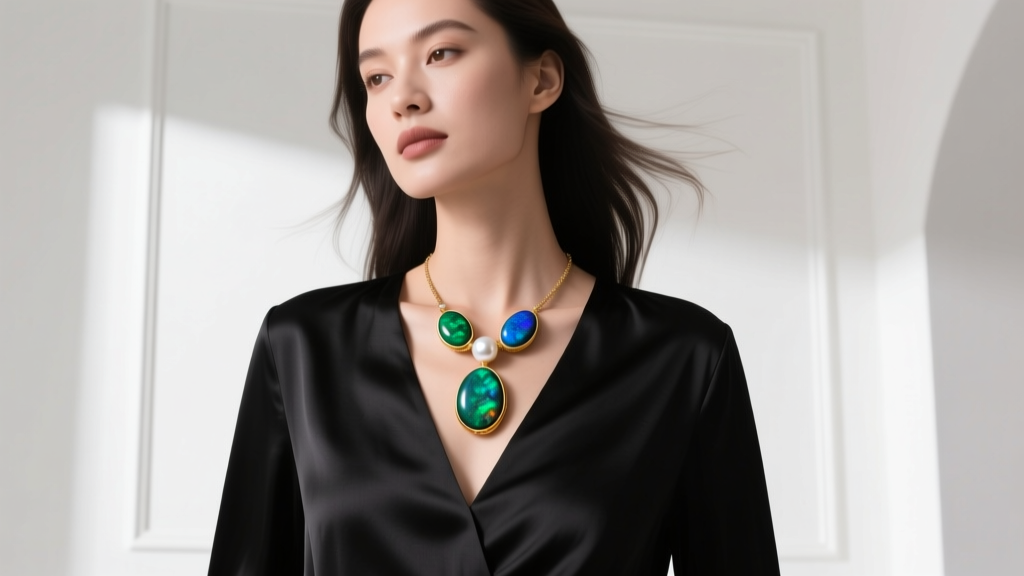
- 18-Inch Princess: The universal standard. Rests on the collarbone. Perfect for V-necks, scoop necks, and open blouses, allowing the opal's play-of-color to catch direct light.
- 20-Inch Matinee: Falls just above the bust. Ideal for business attire, turtlenecks, and high-necked garments, providing a layered look without tangling.
The Hidden Pitfalls: Durability, Settings, and Care
To ensure your gift survives beyond the unboxing, you must scrutinize the jewelry's structural engineering. The intersection of opals and pearls presents unique gemological challenges.
The Friction Problem: Silk Knotting is Mandatory
If the necklace features a strand of pearls with an opal pendant or interspersed opal beads, the pearls must be silk-knotted between each stone. Opal (5.5 Mohs) is significantly harder than pearl (2.5 Mohs). If they are allowed to slide freely against one another on a continuous wire or thread, the opal will act like sandpaper, permanently scratching and dulling the pearl's nacre over time.
Setting Styles: Prong vs. Bezel
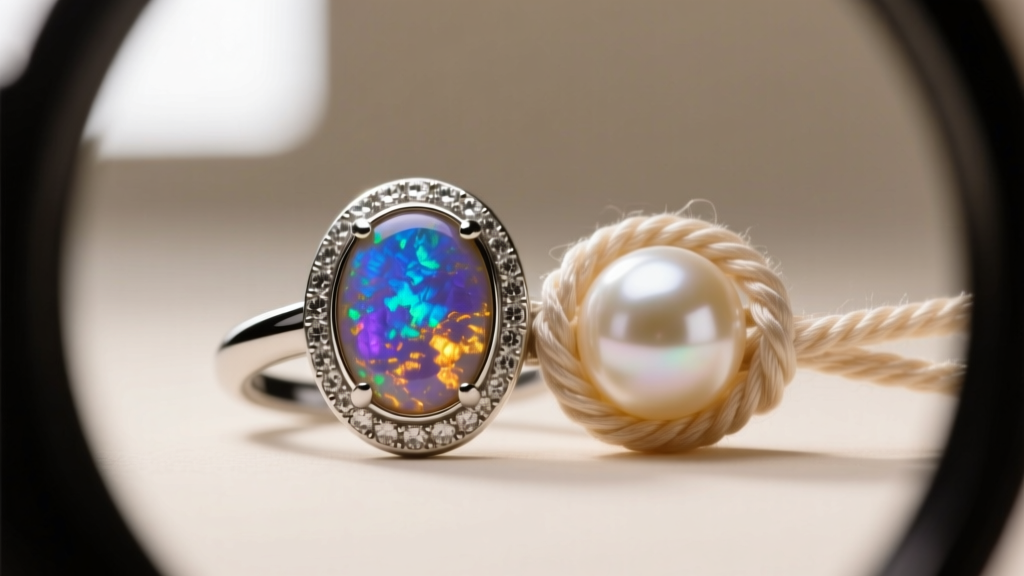
Never gift a prong-set opal pendant for daily wear. Opals are amorphous and lack a crystalline structure, making their edges highly susceptible to chipping if struck. Always opt for a bezel or semi-bezel setting where a rim of gold or platinum completely encircles the opal's girdle, absorbing impact and protecting the vulnerable edges.
For comprehensive maintenance protocols, the GIA's opal care guidelines strongly recommend storing opals away from extreme heat and direct, prolonged sunlight, which can cause the silica gel within the stone to dry out and craze (crack).
Clasp Accessibility and Security
Consider the recipient's dexterity. Traditional spring-ring clasps are notoriously difficult for individuals with arthritis or long acrylic nails to operate. For older recipients or those with mobility concerns, upgrade the necklace with a neodymium magnetic clasp equipped with a secondary safety figure-8 latch. This provides effortless independence without sacrificing security.
Final Gifting Checklist for 2026
Before finalizing your purchase, run through this expert checklist:
- Verify Nacre: Ensure pearls have thick, lustrous nacre (no chalky spots or peeling).
- Check the Setting: Confirm the opal is secured in a protective bezel, not fragile prongs.
- Inspect the Knotting: Look for tight silk knots between stones to prevent abrasive damage.
- Match the Gauge: Ensure the chain thickness can support the physical weight of the pendant.
- Include Care Instructions: Provide a note explaining the hydrophane nature of Welo opals (if applicable) and the need to apply perfumes and hairsprays before putting the pearls on.
By prioritizing gemological integrity and structural engineering over mere aesthetics, your opal pearl necklace will transcend being a simple accessory, becoming a resilient, cherished heirloom equipped to handle the realities of daily life.


