Finding the Right Opal Pendant Necklace Gold Setting
Discover how to choose the ideal opal pendant necklace gold setting. We compare Ethiopian vs. Australian opals and 14k vs. 18k gold for lasting wear.

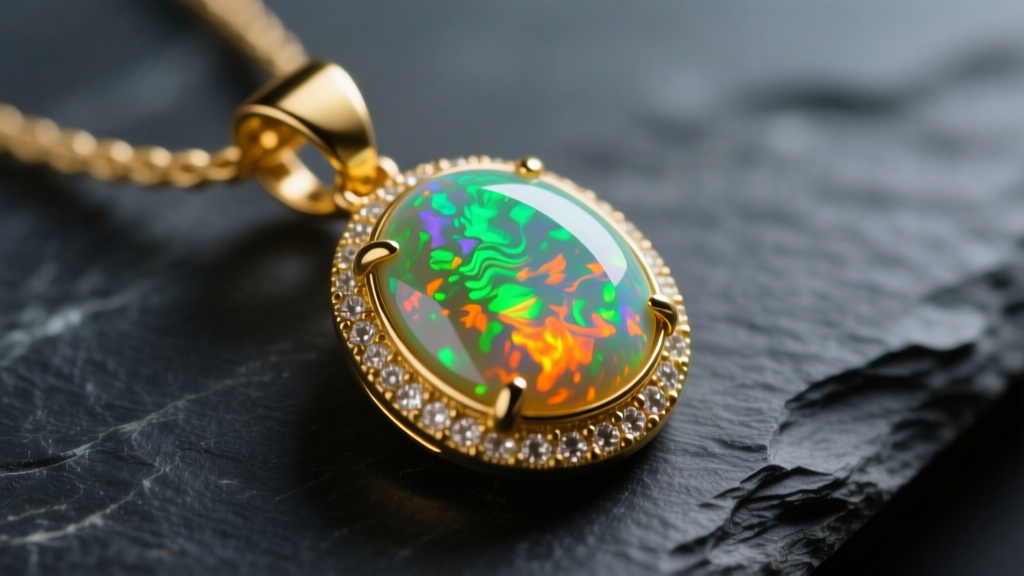
When investing in fine jewelry, the intersection of gemology and metallurgy dictates both the beauty and the lifespan of the piece. An opal pendant necklace gold setting represents one of the most delicate pairings in jewelry design. Opals are renowned for their mesmerizing play-of-color, but their unique physical properties demand specific gold alloys and setting mechanics to prevent catastrophic failure. In this comprehensive material guide, we break down the exact properties of different opal types, the metallurgical realities of gold alloys, and the structural engineering required to keep your pendant secure and vibrant for decades.
The Gemological Reality of Opal Materials
Unlike crystalline gemstones such as diamonds or sapphires, opal is an amorphous mineraloid composed of hydrated silica (SiO₂·nH₂O). This means it lacks a defined crystal lattice and contains varying amounts of water, typically between 3% and 21% by weight. Understanding the origin and formation of the opal is the first critical step in selecting a pendant, as this dictates its porosity, stability, and care requirements.
Ethiopian (Welo) Opals: The Hydrophane Factor
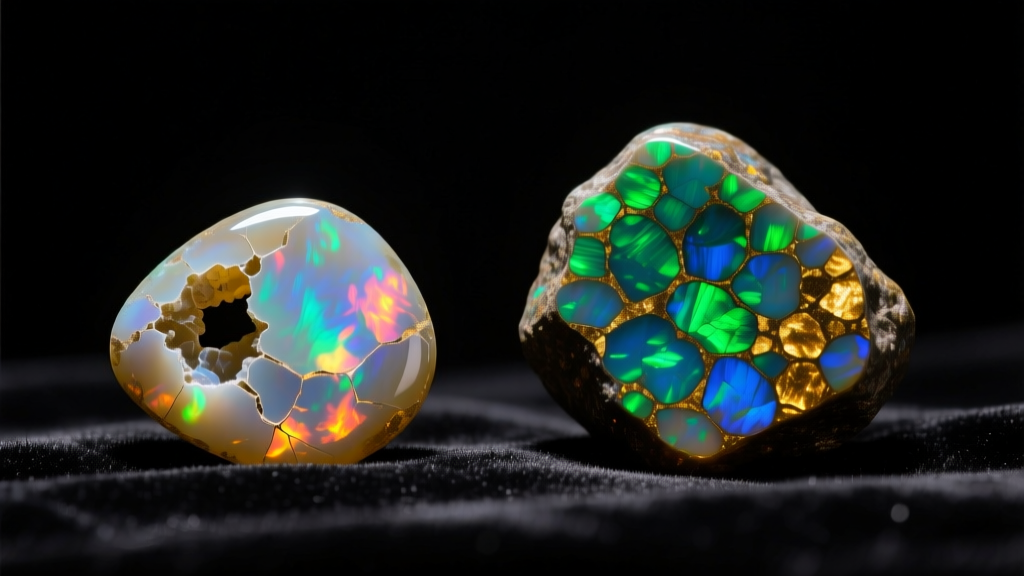
Ethiopian opals, primarily sourced from the Wollo province, are volcanic in origin and highly porous. They are classified as hydrophane, meaning they readily absorb water. While this can temporarily alter their transparency and play-of-color, rapid moisture loss or exposure to extreme heat can lead to "crazing"—a network of internal fractures that destroys the stone's structural integrity. According to the Gemological Institute of America (GIA), hydrophane opals require strict climate control and should never be cleaned in ultrasonic machines.
Australian Sedimentary Opals: The Stable Standard
Mined in regions like Lightning Ridge and Coober Pedy, Australian opals form in sedimentary environments over millions of years. They are non-porous, highly stable, and far less susceptible to crazing. Their lower water content makes them the superior choice for daily-wear pendants, as they will not absorb oils, lotions, or atmospheric moisture.
Material Comparison Matrix
| Opal Type | Origin | Mohs Hardness | Porosity | Avg. Price per Carat (2026) |
|---|---|---|---|---|
| Ethiopian (Welo) | Volcanic | 5.5 - 6.5 | High (Hydrophane) | $15 - $150 |
| Australian White/Crystal | Sedimentary | 5.5 - 6.5 | Low (Non-porous) | $50 - $500+ |
| Australian Boulder | Sedimentary | 5.5 - 6.5 (Ironstone back) | Very Low | $30 - $300 |
| Lab-Created (Gilson) | Laboratory | 5.5 | None | $10 - $40 |
Data synthesized from Mindat.org mineral databases and current wholesale market averages.
Gold Alloy Metallurgy: 14k vs. 18k vs. Vermeil
The gold setting is not merely a decorative frame; it is the structural exoskeleton protecting a relatively soft, brittle gemstone. Pure 24k gold is entirely unsuitable for opal settings due to its extreme malleability. Therefore, alloying metals (copper, silver, zinc) are added to increase tensile strength and Vickers hardness (HV).
14k Gold: The Structural Workhorse
Comprising 58.5% pure gold, 14k gold offers a Vickers hardness of approximately 135 HV. This makes it the optimal choice for prong settings. The increased copper and silver content provides the necessary "memory" and tension to keep prongs tightly wrapped around the opal's girdle, resisting the daily snags that pull on necklace chains. For active wearers, a 14k gold bezel or heavy prong setting is the safest investment.
18k Gold: The Luxury Compromise
With 75% pure gold, 18k gold boasts a richer, warmer yellow hue that beautifully complements the fiery flashes of an opal. However, its Vickers hardness drops to roughly 110 HV. Over a period of 3 to 5 years of daily wear, 18k gold prongs can wear thin and bend backward, risking the loss of the cabochon. If you choose 18k gold, opt for a full bezel setting, which relies on the continuous rim of metal rather than individual tension points.
Gold Vermeil and Plated Brass: The Failure Trap
Vermeil (sterling silver base plated with 2.5 microns of gold) and gold-plated brass are common in mass-market opal jewelry. These should be avoided for genuine opals. The base metals are prone to galvanic corrosion and outgassing, which can introduce moisture and chemicals directly to the back of a porous opal, causing irreversible discoloration and internal cracking.
Setting Mechanics and Chain Engineering
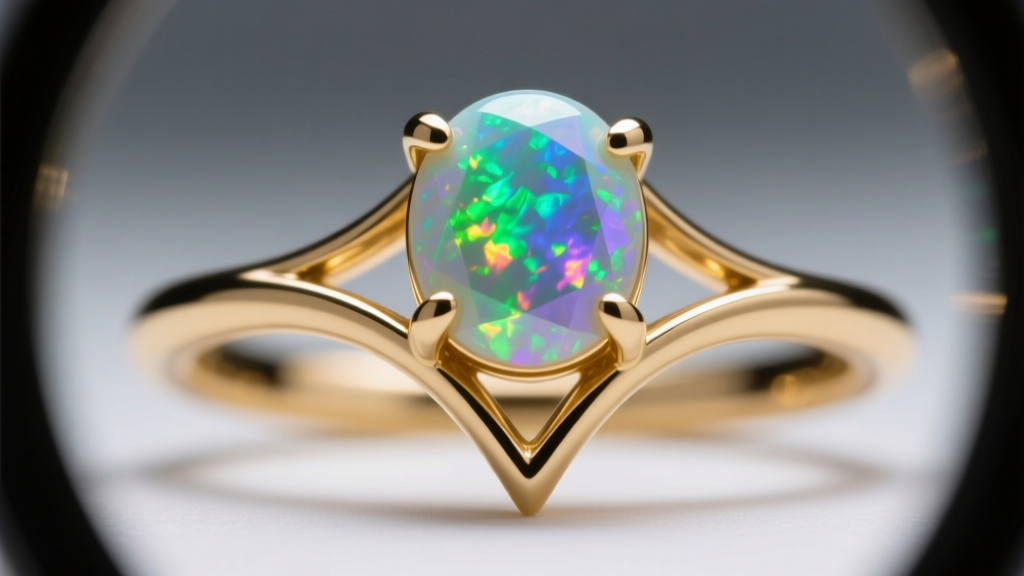
Opals are cut en cabochon (with a smooth, domed top and flat or slightly curved base) rather than faceted. Because they lack a sharp, defined girdle, traditional prong setting is highly risky. Opals exhibit conchoidal fracturing—meaning they chip and shatter in smooth, shell-like curves similar to glass. A jeweler applying excessive pressure to a standard prong can easily induce a catastrophic fracture.
- Bezel Settings: The gold rim is pushed entirely around the opal's circumference. This is the safest method, protecting the vulnerable edges from impact, though it slightly reduces the visible surface area for play-of-color.
- V-Prong Settings: If prongs are desired for maximum light exposure, V-prongs or heavy claw prongs must be used. The metal must be notched precisely to cup the dome without applying downward pressure on the apex.
- Doublet/Triplet Considerations: If your pendant features an opal doublet (a thin slice of opal glued to a black backing), the setting must never allow water to penetrate the seam, as the adhesive will turn white and delaminate.
Chain Gauge and Weight Distribution
A standard 15x20mm solid opal cabochon in a 14k gold setting can weigh between 6 and 12 grams. Pairing this with a delicate 0.5mm chain will result in chain elongation and eventual snapping at the clasp. For pendants in this weight class, utilize a 14k gold rope chain or a solid cable chain with a minimum thickness of 1.2mm to 1.5mm, ensuring the jump ring on the pendant bail is soldered shut.
Preventing Failure Modes: Crazing and Thermal Shock
The most common cause of opal destruction in pendants is thermal shock and rapid humidity fluctuation. Leaving an opal pendant on a car dashboard, wearing it in a sauna, or exposing it to direct, concentrated halogen jewelry lights can cause the water inside the silica spheres to expand or evaporate too quickly. This results in crazing, rendering the stone opaque and structurally compromised.
Expert Storage Protocol: If you live in an arid climate or are storing your Ethiopian opal pendant for several months, place the jewelry in a sealed ziplock bag with a damp (not wet) cotton ball. This maintains a stable micro-humidity environment, preventing the hydrophane opal from drying out and cracking.
Ultimately, selecting the perfect opal pendant necklace gold setting requires balancing the visual warmth of the gold alloy with the structural demands of the gemstone. By prioritizing non-porous Australian opals or carefully managed Ethiopian stones, paired with a structurally sound 14k gold bezel, you ensure that the pendant remains a durable, multi-generational heirloom rather than a fragile, short-lived accessory.


