Opal and Ruby Necklace Buying Guide: What to Look For
Discover what to look for when buying an opal and ruby necklace. Learn about gemstone grading, setting durability, and pricing tiers in this expert guide.

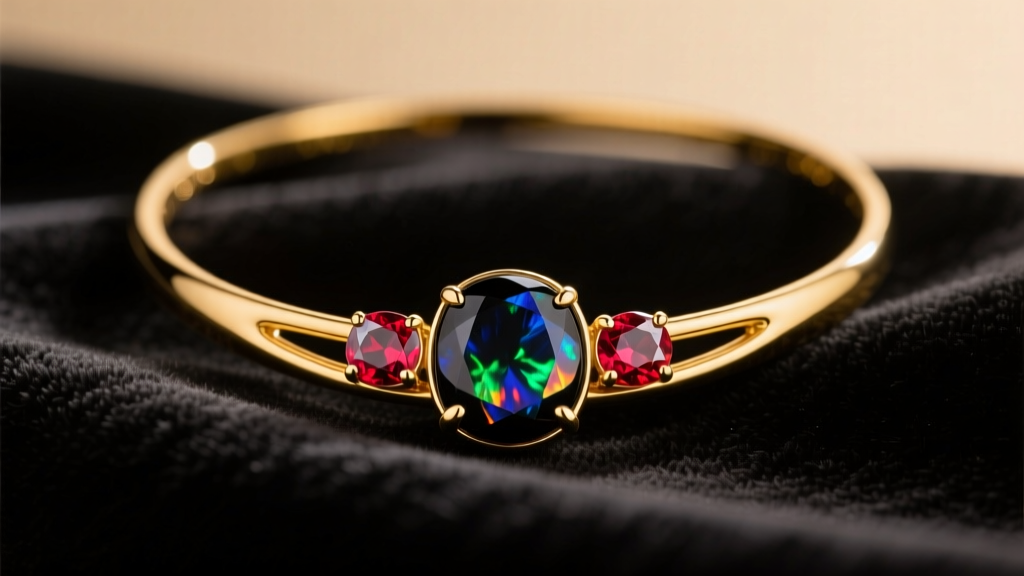
The Allure and Challenge of Dual-Gemstone Necklaces
An opal and ruby necklace represents one of the most striking juxtapositions in fine jewelry. You are pairing the fiery, structured crimson of corundum (ruby) with the ethereal, shifting play-of-color of hydrated silica (opal). From a design perspective, the contrast is breathtaking. From a gemological perspective, however, it is a high-stakes balancing act. Ruby ranks as a 9 on the Mohs hardness scale, making it exceptionally durable, while opal sits at a fragile 5.5 to 6.5 and contains up to 21% water. Buying a necklace that combines these two stones requires a deep understanding of structural integrity, treatment disclosures, and setting mechanics. This guide provides the exact framework you need to evaluate quality, avoid common pitfalls, and invest in a piece that will survive daily wear.
Evaluating the Opal: Play-of-Color and Structural Integrity
The opal is the most vulnerable component of your necklace. When evaluating the opal pendant or accents, you must look beyond the visual flash and assess the stone's structural composition and origin.
Solid vs. Doublet vs. Triplet
Never purchase an heirloom-grade necklace without verifying that the opal is a solid stone. Doublets (a thin slice of opal glued to a black backing) and triplets (a doublet capped with a clear quartz dome) are common in commercial jewelry but are highly susceptible to delamination when exposed to moisture, skin oils, or temperature changes over time. A solid opal, whether Australian or Ethiopian, is a single piece of natural gem material.
Ethiopian vs. Australian Opals
Ethiopian Welo opals are renowned for their intense, neon play-of-color and lower price point. However, they are hydrophane, meaning they are porous and will absorb water, lotions, and perfumes, which can temporarily turn them transparent or cause permanent crazing (internal cracking). Australian opals (like those from Lightning Ridge or Coober Pedy) are non-porous, more stable, and vastly superior for necklaces that will rest against the skin and be exposed to environmental elements. According to the Gemological Institute of America (GIA), proper care and understanding of an opal's water content is critical to preventing structural failure.
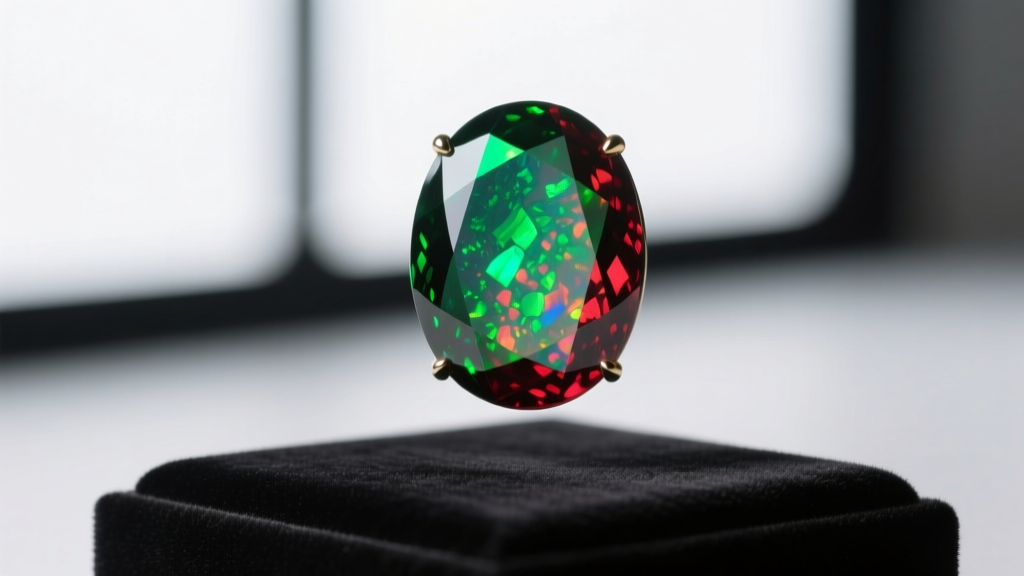
Assessing the Ruby: Color, Clarity, and Treatments
While the opal provides the magic, the ruby provides the anchor. The value of the rubies in your necklace will dictate the overall market tier of the piece.
The Color Spectrum and "Pigeon's Blood"
The most prized ruby color is "pigeon's blood"—a vivid, highly saturated red with a subtle purplish secondary hue and strong fluorescence. In a necklace setting, look for rubies that exhibit high brilliance rather than deep, inky darkness. Darker rubies (often from Thai or Cambodian origins) can look black in low-light environments, defeating the purpose of the color contrast with the opal. Burmese and Mozambican rubies generally offer the best light return for pendant settings.
Treatment Disclosures: Heat vs. Fracture Filling
Over 95% of rubies on the market are heat-treated to improve color and clarity; this is a stable, universally accepted practice. However, you must aggressively avoid fracture-filled or glass-filled rubies. This treatment involves filling surface-reaching cracks with lead-glass to make a low-grade stone appear transparent. Glass-filled rubies are extremely fragile, can be dissolved by mild acids (even lemon juice or household cleaners), and hold virtually no resale value. Always demand a report from a reputable lab like the Gemmological Association of Great Britain (Gem-A) or GIA confirming the rubies are only heated, or completely unheated.
Design and Setting Considerations for Dual-Stone Necklaces
Because of the extreme Mohs scale mismatch between opal (5.5) and ruby (9), a jeweler cannot use the same setting technique for both stones in a single necklace. The setting must be engineered to protect the weaker stone while maximizing the optical properties of the stronger one.
| Gemstone | Recommended Setting | Gemological Reasoning |
|---|---|---|
| Opal | Bezel or Semi-Bezel | Opals are brittle and prone to conchoidal fracturing. A metal rim (bezel) protects the delicate edges from chipping upon impact against hard surfaces. |
| Ruby | Prong or Channel | Rubies are exceptionally hard and can withstand the pressure of prongs. Prong settings allow maximum light entry from the crown and pavilion, enhancing the stone's fluorescence and brilliance. |
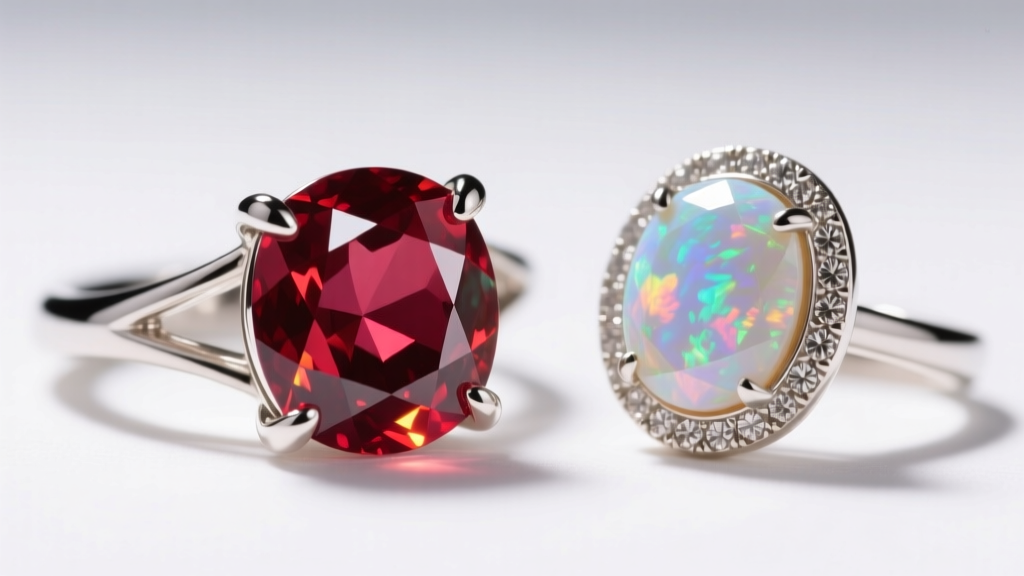
The Importance of the Bale and Chain Gauge
A dual-gemstone pendant can be surprisingly heavy, especially if it features a solid black opal cabochon and multiple carats of ruby. Do not pair a heavy pendant with a delicate 0.8mm chain. Look for a reinforced bale (the loop the chain passes through) and a chain with a minimum gauge of 1.2mm to 1.5mm. Wheat, rope, or box chains offer the necessary tensile strength to support the pendant without stretching or snapping over time.
Pricing Tiers and Market Value
Understanding what you should pay for an opal and ruby necklace prevents overpaying for commercial-grade stones or underestimating the cost of heirloom-quality materials. Here is a breakdown of current market expectations:
- Entry-Level ($400 - $900): Features lab-grown or heavily included natural rubies, Ethiopian opal doublets or triplets, and 14k gold vermeil or sterling silver settings. Suitable for occasional wear, but not durable for daily use.
- Mid-Range ($1,500 - $4,500): Features natural, heat-treated Mozambican rubies, solid Australian white or crystal opals, and 18k yellow or white gold settings. This is the sweet spot for fine jewelry buyers seeking longevity and vibrant color.
- Investment/Heirloom ($10,000 - $50,000+): Features unheated Burmese "pigeon's blood" rubies, solid Lightning Ridge black opals with strong red/green fire, and custom platinum or 22k gold bezel settings. These pieces come with full laboratory dossiers and appreciate in value.
Care and Maintenance for Mixed-Hardness Gems
The most common way buyers ruin an opal and ruby necklace is by attempting to clean it using methods suitable for diamonds or standalone rubies. Because the necklace contains opal, the entire piece must be treated according to the weakest link.
CRITICAL WARNING: Never place an opal and ruby necklace in an ultrasonic cleaner. The high-frequency vibrations will shatter the opal's internal silica structure. Furthermore, steam cleaners can force moisture into the opal's matrix or melt the adhesives in composite stones. Always rely on manual, gentle cleaning.
To clean your necklace, use a soft, untreated microfiber cloth to gently wipe the opal. For the ruby, you can use a soft baby toothbrush dipped in lukewarm water with a drop of mild, non-detergent soap. Avoid getting the soapy water on the opal if it is an Ethiopian hydrophane stone. Always store the necklace in a soft pouch away from harder gemstones like diamonds or sapphires, which can easily scratch the opal's surface during transit.
Final Verdict: Making the Purchase
When shopping for an opal and ruby necklace, prioritize the structural safety of the opal through bezel settings and verify the ruby's treatment status through independent lab reports. By focusing on solid Australian opals and ethically sourced, non-fracture-filled rubies set in 18k gold or platinum, you will secure a piece of jewelry that is not only visually spectacular but engineered to last generations. For further reading on corundum durability and grading, consult the GIA Ruby Grading Guide before finalizing your investment.


