How to Choose and Style the Perfect Open Heart Necklace
Discover how to choose, style, and care for an open heart necklace. Learn about metals, chain pairings, and neckline matching in our beginner guide.

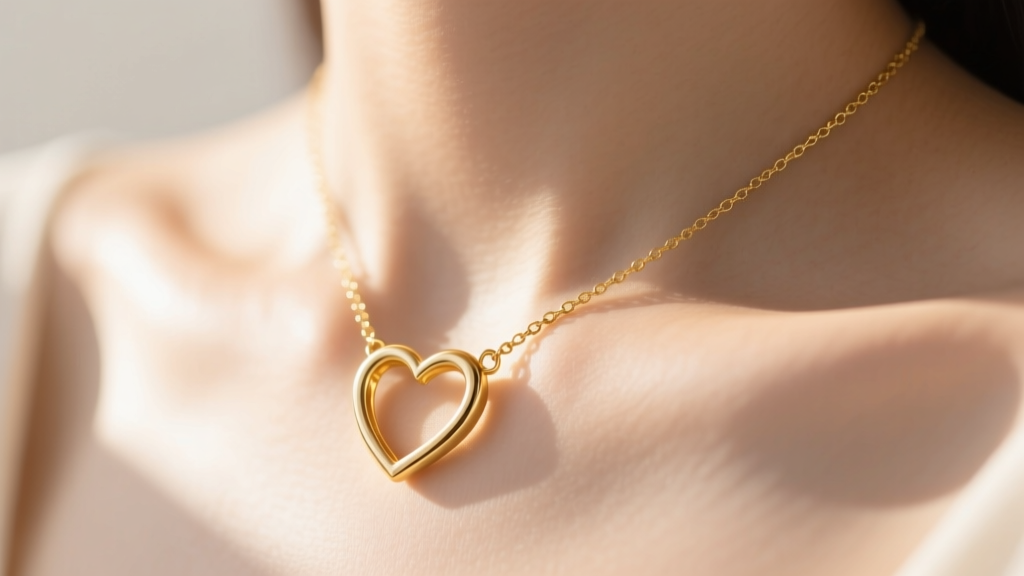
The open heart necklace is a masterclass in minimalist jewelry design. By utilizing negative space to outline the universal symbol of love and connection, this pendant style achieves a delicate, modern aesthetic that solid heart pendants often lack. Whether you are buying your first fine jewelry piece or looking to add a versatile staple to your daily rotation, understanding the mechanics of metal grades, chain pairings, and proportion is essential. As we navigate the jewelry landscape of 2026, the open heart remains a definitive staple, but not all iterations are created equal. This beginner-friendly guide will walk you through the exact specifications you need to look for to ensure your necklace is durable, visually balanced, and perfectly styled.
Decoding Metals: What to Look For (and Avoid)
When shopping for an open heart necklace, the metal composition dictates both the longevity of the piece and its price point. Because the open heart design relies on a continuous, unbroken line of metal, any tarnishing, plating wear, or structural weakness will be immediately visible. Here is a breakdown of the most common metals used in this design.
| Metal Type | Average Price Range | Durability & Lifespan | Best For |
|---|---|---|---|
| Sterling Silver (925) | $40 - $90 | High (can be polished indefinitely) | Everyday wear, budget-conscious buyers |
| Gold Vermeil | $70 - $150 | Medium (2-5 years before replating) | Gold lovers wanting a lower entry price |
| Solid 14k Gold | $250 - $600+ | Lifetime (heirloom quality) | Waterproof daily wear, sensitive skin |
| Gold-Plated Brass | $15 - $40 | Low (months before tarnishing) | Occasional wear, fast fashion trends |
A critical detail for beginners to understand is the difference between "gold vermeil" and standard "gold plating." According to the Federal Trade Commission (FTC) Jewelry Guides, for a piece to be legally marketed as vermeil in the United States, it must have a base of sterling silver and be plated with a minimum of 2.5 microns of gold. Standard gold-plated brass often features a microscopic layer of gold (sometimes less than 0.5 microns) that will quickly wear away, exposing the brass underneath and potentially turning your skin green. Always verify the base metal and micron thickness before purchasing vermeil.
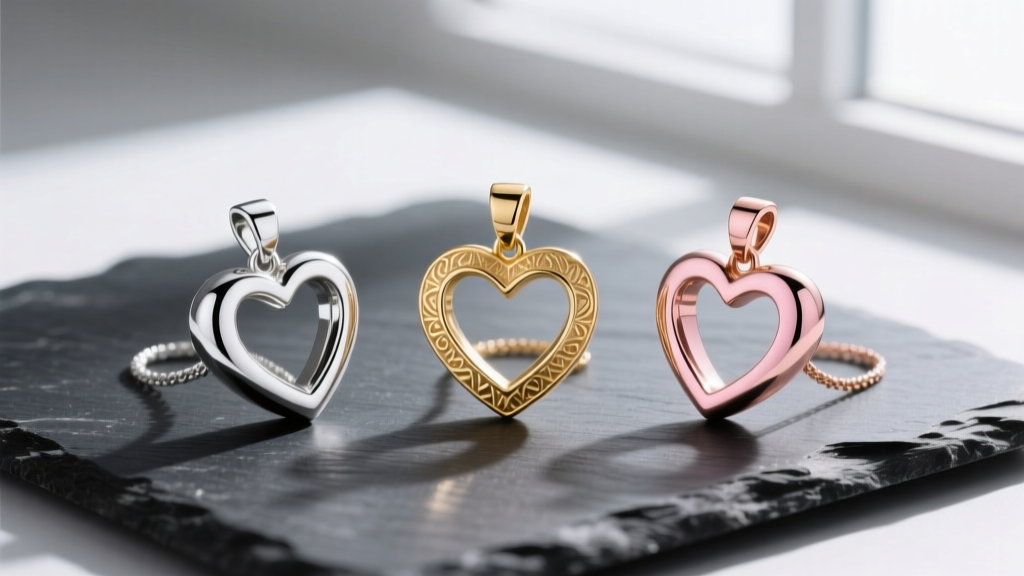
Chain Pairings: Matching the Pendant to the Chain
The open heart pendant is only half the equation; the chain you select will dramatically alter the necklace's overall vibe and functionality. The most common point of failure for beginners is pairing a heavy pendant with a weak chain, or a delicate pendant with a bulky chain. Furthermore, you must consider the bail—the small loop at the top of the heart that slides onto the chain.
Top Chain Styles for Open Hearts
- Cable Chain (1.0mm - 1.5mm): The classic choice. The uniform oval links provide a traditional look that allows the open heart to take center stage. A 1.2mm cable chain is the industry standard for medium-sized pendants.
- Box Chain (1.0mm - 1.5mm): Composed of square links, box chains are highly resistant to tangling and kinking. Their geometric structure beautifully complements the clean lines of a modern open heart pendant.
- Snake Chain (1.5mm - 2.0mm): Sleek and fluid, snake chains offer a contemporary, liquid-metal look. However, they are prone to kinking if bent sharply and can trap body oils, requiring more frequent cleaning.
- Rope Chain (Avoid for small pendants): While beautiful, rope chains have a twisted texture that can catch on the smooth inner edges of an open heart bail, causing micro-scratches over time. Reserve these for large, heavy statement hearts.
Expert Tip: Always check the interior dimensions of the pendant's bail. A standard open heart bail measures roughly 2mm x 3mm. Ensure your chosen chain is at least 0.5mm thinner than the bail's inner width to allow the pendant to drape flatly against your chest rather than sitting rigidly at an angle.
Troubleshooting: Why Does My Pendant Keep Flipping?
One of the most frequent complaints among newcomers to open heart necklaces is the pendant constantly sliding off-center or flipping upside down. This is rarely a defect; rather, it is an issue of physics and weight distribution. The open heart shape is naturally bottom-heavy, and if the chain is too slippery or the bail is too wide, gravity will pull the heart askew.
To solve this, implement these three professional styling hacks:
- Switch to a Box Chain: As mentioned above, the flat edges of a box chain create more friction against the bail than a round snake chain, helping to anchor the pendant in the center of your collarbone.
- Use a Silicone Pendant Stay: You can purchase microscopic, clear silicone o-rings (often sold as "jewelry stays" or "pendant stops") for a few dollars. Slide one onto the chain on either side of the bail to lock the heart perfectly in place.
- Opt for a Sliding Bail: When shopping, look for designs where the chain threads directly through the top curve of the heart itself (a sliding pendant) rather than using a separate soldered loop. This eliminates the flipping issue entirely by lowering the center of gravity.
Sizing, Scale, and Neckline Matching
Choosing the right millimeter (mm) size for your open heart pendant depends heavily on your wardrobe and body proportions. The Gemological Institute of America (GIA) notes that visual scale is just as important as carat weight or metal purity when evaluating jewelry aesthetics. Here is a practical framework for sizing and styling.
The Sizing Framework
- Petite (10mm - 12mm): Ideal for layering with longer chains or wearing as a subtle choker (14-16 inches). Best for petite frames or minimalist office environments.
- Medium (15mm - 18mm): The "Goldilocks" size. It is large enough to be seen from a distance but small enough for daily wear. Pairs perfectly with an 18-inch princess chain.
- Statement (25mm - 35mm+): A bold, artistic piece that demands attention. Requires a thicker chain (2.0mm+) to support the physical weight and visual balance.
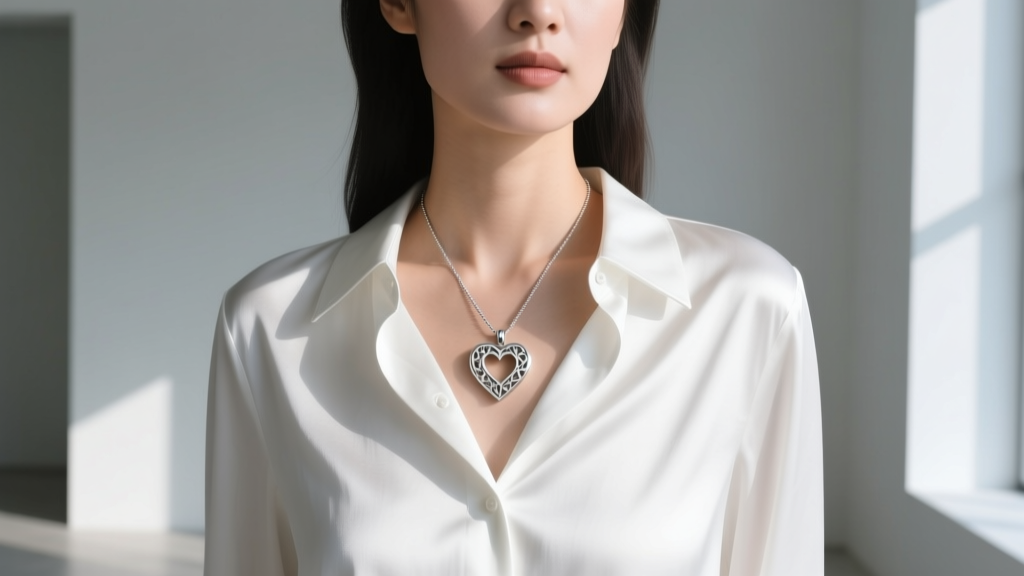
Neckline Pairings
An open heart necklace thrives on negative space, meaning the fabric surrounding it is crucial to its visual impact.
- V-Necks and Wrap Dresses: The natural geometry of a V-neck mirrors the downward point of the heart pendant. An 18-inch or 20-inch chain allows the heart to rest perfectly in the center of the V, elongating the neck.
- Crew Necks and T-Shirts: Opt for a shorter 16-inch choker length with a petite (10mm) heart. This keeps the jewelry above the fabric line, preventing it from looking tangled or lost.
- Button-Down Shirts: Leave the top two buttons undone and layer a 16-inch gold vermeil open heart with a 20-inch delicate chain. This creates a sophisticated, elongated silhouette perfect for smart-casual settings.
Care and Maintenance: Keeping the Shine Alive
Because the open heart design lacks gemstones or intricate filigree, scratches and tarnish are highly visible on the smooth, polished surfaces. Proper maintenance is non-negotiable if you want your piece to retain its mirror-like finish.
The Golden Rule of Storage: Never store your open heart necklace in a tangled pile with other jewelry. The continuous outer curve of the heart is a prime target for micro-scratches from harder metals or gemstone settings. Always hang it on a jewelry tree or lay it flat in a soft, anti-tarnish flannel pouch.
For sterling silver, use a dedicated silver polishing cloth (impregnated with mild abrasives and anti-tarnish agents) once a month. Avoid liquid silver dips, as they can strip the protective rhodium plating that many jewelers apply to silver to delay tarnishing.
For gold vermeil and solid gold, a simple bath in warm water with a few drops of phosphate-free dish soap, followed by a gentle scrub with a baby toothbrush, will remove body oils and lotions that dull the metal's brilliance. Always ensure the necklace is completely dry before storing it to prevent moisture buildup in the bail crevices.
Ultimately, an open heart necklace is more than just a trend; it is a versatile canvas for personal expression. By paying close attention to metal grades, chain mechanics, and proportional styling, you can select a piece that not only captures the eye but stands the test of time.


