Is a luxury p necklace worth it? Budget and value guide
Discover the true value of a p necklace. We compare materials, plating thickness, and brand markups to help you budget for initial pendants.

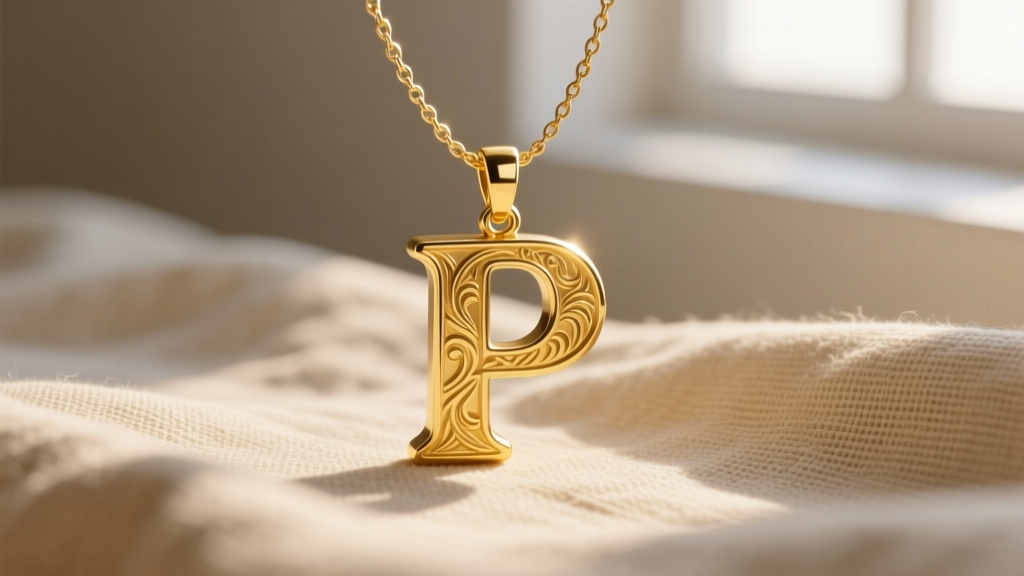
The Anatomy of an Initial Pendant: Where Your Money Goes
Initial jewelry has transcended fleeting trends to become a permanent staple in modern wardrobes. However, when evaluating a p necklace, consumers often face a massive pricing chasm. You can find a letter P pendant for $18 on a fast-fashion marketplace or $1,800 at a heritage luxury jeweler. But what actually justifies a 100x price increase? As we move through 2026, the jewelry market has become more transparent, yet brand markups on personalized items remain notoriously high. To assess true value, we must look past the marketing and examine the metallurgy, manufacturing techniques, and structural integrity of the piece.
The cost of a p necklace is primarily driven by three factors: the base metal, the manufacturing method (stamped versus cast), and the brand premium. Stamped pendants are cut from a sheet of metal using a hydraulic press. They are lightweight, highly durable, and inexpensive to produce, making them ideal for budget-friendly solid gold options. Cast pendants, on the other hand, are created using the lost-wax method. While casting allows for intricate, three-dimensional designs and diamond settings, it introduces risks like internal porosity and requires more metal, driving up the price.
Material Breakdown: Price vs. Longevity
Understanding material science is critical when assessing the budget and value of any initial jewelry. According to the Federal Trade Commission Jewelry Guides, terms like 'gold plated' and 'vermeil' have strict legal definitions that directly impact longevity.
| Material Grade | Avg. Price Range | Plating Thickness | Longevity & Value |
|---|---|---|---|
| Brass/Alloy (Gold Plated) | $15 - $35 | 0.1 - 0.5 microns | Poor. Tarnishes in weeks; causes skin discoloration. |
| Gold Vermeil (Sterling Base) | $45 - $95 | 2.5+ microns (FTC Std) | Good. Lasts 1-3 years with daily wear before needing re-plating. |
| Solid 10k or 14k Gold | $130 - $280 | N/A (Solid Alloy) | Excellent. Lifetime durability; retains intrinsic scrap value. |
| Designer Solid 14k/18k | $350 - $800+ | N/A (Solid Alloy) | High markup. You are paying for brand equity, not material superiority. |
For the best balance of budget and value, a solid 14k gold p necklace in the $130 to $250 range from a direct-to-consumer maker or reputable Etsy artisan offers the highest return on investment. You avoid the inevitable tarnishing of plated metals while bypassing the 300% markup of luxury retail brands.
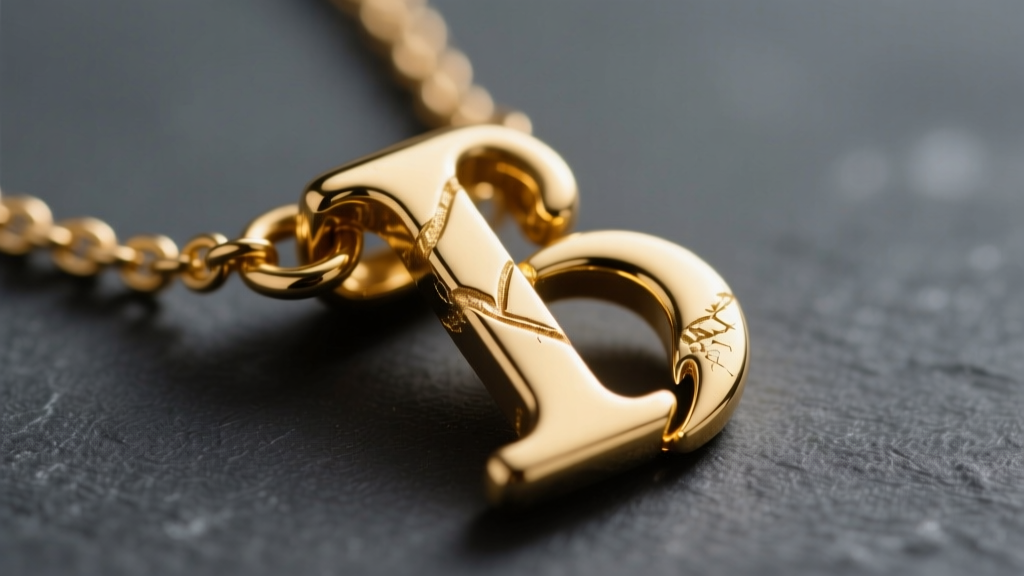
The Chain Factor: The Hidden Cost of Initial Necklaces
A common failure point in budget jewelry is the chain. Many brands will pair a heavy, solid gold cast letter pendant with a flimsy 0.5mm cable chain to save on manufacturing costs. This creates a severe tensile mismatch. The Gemological Institute of America (GIA) notes that the structural integrity of a gold alloy depends heavily on its cross-sectional mass. A 0.5mm 14k gold chain cannot support a 3-gram pendant without eventually stretching or snapping at the jump ring.
When inspecting a p necklace, check the chain gauge. For pendants weighing between 1 and 4 grams, a 0.9mm to 1.2mm cable or box chain is the mechanical sweet spot. Furthermore, scrutinize the clasp. Spring-ring clasps are notoriously difficult to operate and prone to internal spring failure. A well-constructed necklace will feature a lobster clasp or a secure magnetic clasp, alongside a fully soldered jump ring connecting the pendant bail to the chain. If the jump ring has a visible gap, the pendant will eventually slip off and be lost.
Diamond-Accented vs. Solid Metal P Pendants
If you are considering a diamond-encrusted p necklace, the value assessment becomes more complex. Most initial pendants in the $300 to $1,000 range utilize 'melee' diamonds—tiny stones typically weighing between 0.01 and 0.05 carats each. In this tier, brands rarely use high-clarity stones. You are likely getting SI1-SI2 clarity and G-H color diamonds. While this is perfectly acceptable for melee stones (as inclusions are invisible to the naked eye at that size), you should not pay premium prices for them.
A solid metal p necklace often offers superior visual impact and longevity compared to a diamond-accented version at the exact same price point. Prong-set melee diamonds in letter pendants are highly susceptible to catching on knitwear, which can bend the microscopic prongs and result in lost stones. If your budget is under $400, a high-polish or matte-finished solid gold letter will always outlast and outshine a low-tier diamond alternative.
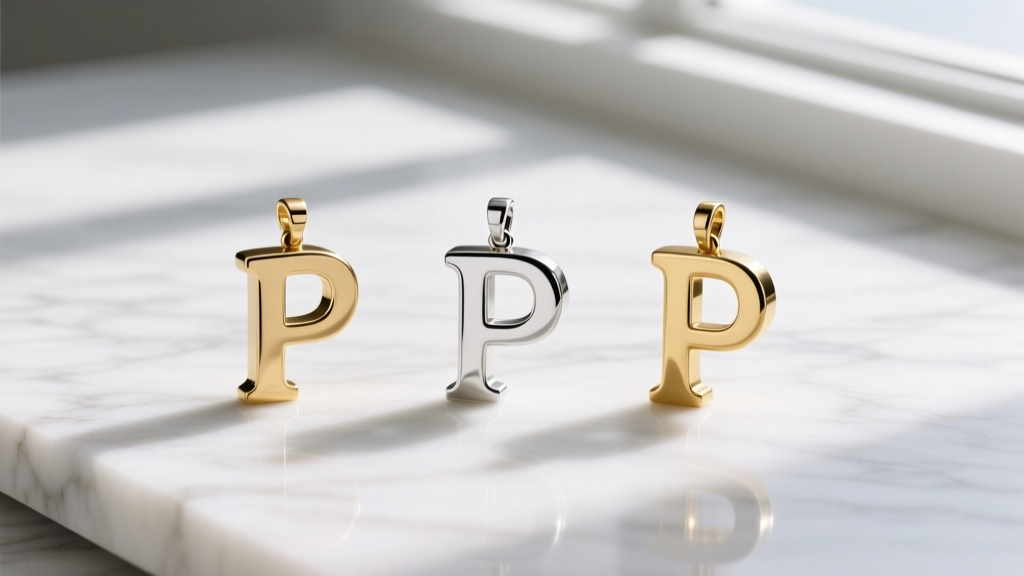
How to Inspect a p Necklace Before Buying
Whether you are shopping online or in a brick-and-mortar boutique, use this practical checklist to verify the quality and value of the piece:
1. Verify the Hallmark and Weight
Look for a '14K', '585', or '925' stamp on the pendant bail or the chain end tag. For online purchases, demand the exact gram weight. A solid 14k gold initial pendant should weigh between 1.2g (stamped, minimalist) and 4.5g (cast, bold). If a brand refuses to disclose the gram weight, they are likely selling an ultra-thin, hollowed-out casting that will dent easily.
2. Check for Casting Porosity
If buying a cast letter pendant, examine the surface under bright light. Tiny pits or 'pinholes' indicate casting porosity—a defect caused by trapped gas during the melting process. Porosity weakens the metal structure and traps skin oils, leading to rapid tarnishing even in solid gold.
3. Assess the Bail Integration
The bail is the loop that connects the letter to the chain. In high-value pieces, the bail is either cast as one continuous piece with the letter or securely laser-welded. Avoid pendants where the bail is attached with cheap adhesive or thin, unsoldered wire loops.
Final Verdict: What Should You Actually Pay?
The true value of a p necklace is dictated by its material permanence and structural engineering. In 2026, there is no excuse for paying over $100 for gold-plated brass or vermeil initial jewelry. For a budget of $150 to $250, you can easily acquire a beautifully crafted, solid 14k gold p necklace with a durable 1.0mm chain and a secure lobster clasp from independent jewelers. Reserve budgets over $500 strictly for pieces featuring premium gemstone settings, artisanal hand-engraving, or heritage brand provenance. By prioritizing metallurgy over marketing, you ensure your initial pendant remains a lifelong accessory rather than a disposable trend.


