2026 Buyer's Guide: Pearl and Amethyst Necklace Value & Pricing
Discover the true value of a pearl and amethyst necklace in 2026. Learn grading secrets, pricing tiers, and how to avoid overpriced fakes.

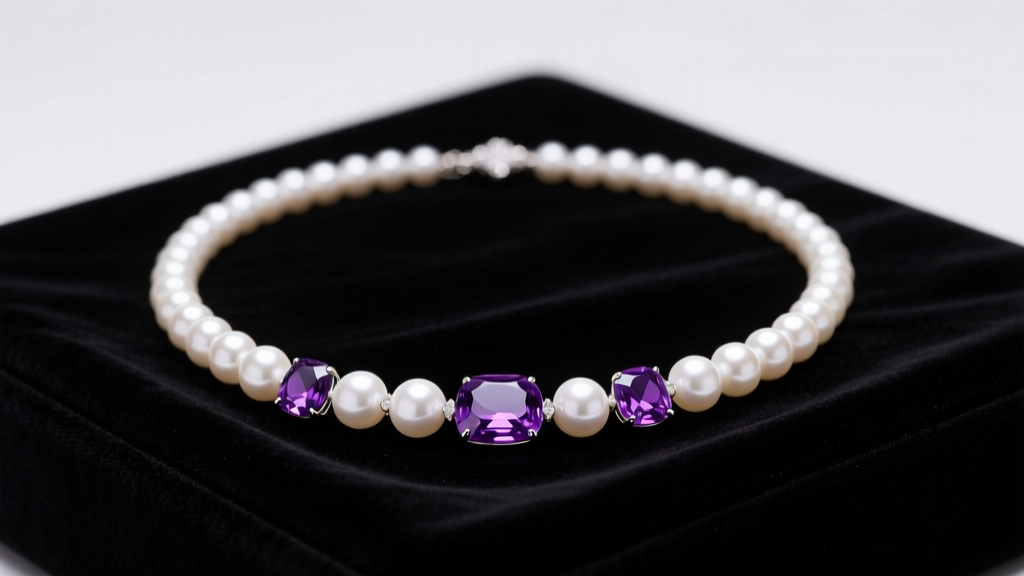
The juxtaposition of organic calcium carbonate and crystalline quartz creates one of the most striking pairings in fine jewelry: the pearl and amethyst necklace. As we navigate the 2026 jewelry market, inflation and shifting supply chains have drastically altered the pricing landscape for both gemstones. Whether you are eyeing a vintage estate piece or a modern designer pendant, understanding the true value of these materials is critical to avoiding inflated markups. This guide breaks down the exact grading metrics, market pricing tiers, and structural red flags you need to assess before investing in a pearl and amethyst necklace.
Decoding the Components: What Drives the Price?
To accurately assess a necklace's budget and value, you must evaluate the pearl and the amethyst independently before considering the metalwork and brand premium. The GIA Pearl Quality Factors and amethyst grading standards provide the baseline for this assessment.
Pearl Valuation: Luster, Nacre, and Origin
Not all pearls are created equal, and the origin dictates the baseline price. In a pearl and amethyst necklace, you will typically encounter three types of pearls:
- Akoya Pearls: The traditional standard for high-luster, perfectly round white pearls. A high-quality 7-8mm Akoya strand commands a premium due to its mirror-like luster, though nacre thickness must be verified (minimum 0.4mm to prevent peeling).
- Freshwater Edison Pearls: The ultimate value hack for 2026. These bead-nucleated freshwater pearls offer Akoya-like roundness and luster at roughly 30% to 40% of the cost. They are frequently paired with amethyst pendants in mid-tier commercial jewelry.
- Tahitian or South Sea Pearls: Rarely paired with amethyst due to color clashing, but if you find a dark-peacock Tahitian pearl alongside a deep Siberian amethyst, expect a massive luxury markup.
Amethyst Grading: Color Saturation and Clarity
Amethyst is a variety of quartz (Mohs hardness 7), meaning it is abundant and generally affordable. However, the value spikes exponentially based on color zoning and origin. According to the GIA Amethyst Quality Factors, the most valuable stones exhibit a strong reddish-purple or purple hue with no visible color zoning.
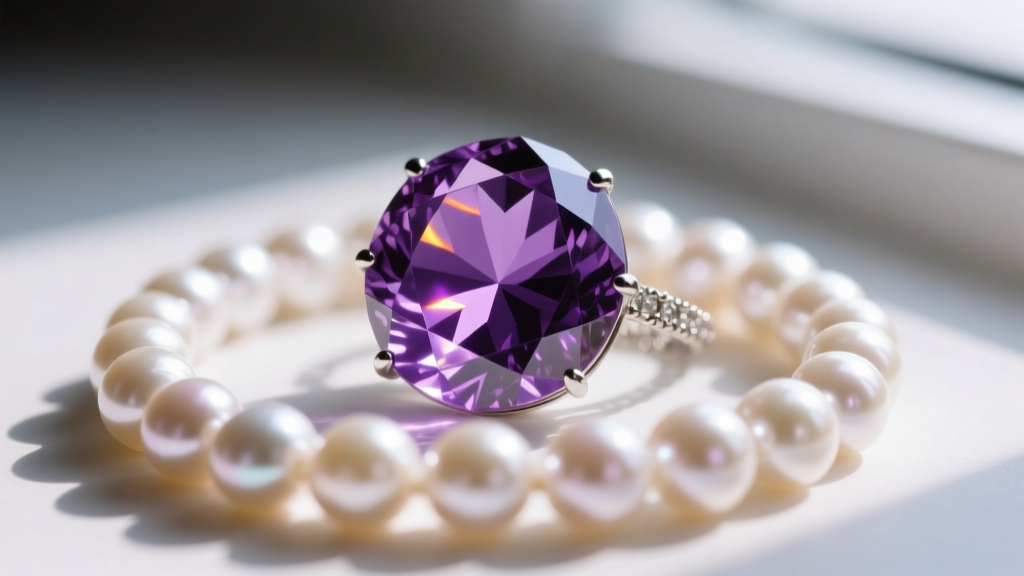
- Siberian Grade: The holy grail of amethyst. Features a primary purple hue (75-80%) with secondary red and blue flashes under varying light. Expect to pay $50 to $100+ per carat for genuine, unheated Siberian stones.
- Uruguayan/Brazilian Grade: Deep, saturated purple but lacking the complex secondary flashes. Highly durable and beautiful, priced reasonably at $10 to $25 per carat.
- Commercial/Light Grade: Pale lavender stones, often heavily included or poorly cut. These are worth less than $5 per carat and are frequently used in mass-market fashion jewelry.
2026 Market Pricing Matrix: What Should You Actually Pay?
When evaluating a pearl and amethyst necklace, use this matrix to determine if the asking price aligns with the intrinsic material value and craftsmanship. Prices below reflect the 2026 market for standard 16-to-18-inch necklaces or standard pendant-and-chain configurations.
| Tier | Materials & Specifications | Estimated Fair Value (2026) | Target Buyer |
|---|---|---|---|
| Fashion / Costume | Glass or plastic pearls, dyed quartz, gold-plated brass base metal. | $25 - $65 | Trend-focused buyers; short-term wear. |
| Fine Commercial | AAA Freshwater Edison pearls, standard Uruguayan amethyst, 925 Sterling Silver or heavy Gold Vermeil. | $120 - $350 | Everyday luxury; excellent value-to-cost ratio. |
| Premium Designer | High-luster Akoya pearls, Siberian-grade amethyst, solid 14k/18k Gold, custom bezel settings. | $800 - $2,500+ | Heirloom collectors; investment buyers. |
Red Flags: How to Spot Overpriced or Fake Pieces
The secondary market and online boutiques are rife with misrepresentations. Protect your budget by watching for these specific failure modes and deceptive practices:
1. The 'Heat-Treated' Amethyst Bait-and-Switch
Nearly 80% of commercial amethyst is heat-treated to enhance color or remove brownish inclusions. While this is an accepted industry practice, a heat-treated stone should not be priced as a rare, unheated Siberian amethyst. Always ask the jeweler for AGTA (American Gem Trade Association) disclosure documentation if the price exceeds $500.
2. Cyanoacrylate Pearl Adhesives
In a pearl and amethyst pendant, the pearl is usually mounted via a post-and-peg setting. Budget manufacturers use cheap cyanoacrylate (super glue), which becomes brittle over time and degrades when exposed to perfume or skin oils. High-value pieces use two-part jeweler's epoxy. If the pearl looks slightly cloudy at the drill hole or wiggles when gently touched, the adhesive has failed.

3. Gold-Plated Brass vs. Gold Vermeil
Many brands market 'gold-plated' necklaces without disclosing the base metal. If the base is brass or copper, the metal will react with your skin's acidity, causing the plating to flake off within months, potentially ruining the pearl's nacre in the process. Always insist on Gold Vermeil (a minimum of 2.5 microns of gold over solid 925 sterling silver) or solid gold for long-term value retention.
Sourcing Strategies for Maximum Value
If you want the visual impact of a $2,000 necklace for under $400, focus your search on independent lapidaries and direct-to-consumer pearl farms. Look for 'bead-nucleated freshwater pearls' (Edison pearls) paired with 'custom-cut Uruguayan amethyst.' This combination provides 90% of the visual brilliance of Akoya and Siberian stones at a fraction of the cost. Furthermore, buying the pearl strand and the amethyst pendant separately and having a local bench jeweler assemble them with a solid 14k gold bail often yields a superior, custom piece while bypassing retail brand markups.
Care and Maintenance to Protect Your Investment
The biggest threat to the value of your necklace is improper care. Amethyst and pearl have vastly different physical properties and require distinct maintenance protocols:
- Ultrasonic Cleaners are Fatal: Never put a pearl and amethyst necklace in an ultrasonic cleaner. The high-frequency vibrations will shatter the amethyst's internal tension points and strip the pearl's delicate nacre layers.
- UV Fading: Prolonged exposure to direct sunlight can cause amethyst to fade to a pale, washed-out gray-purple over several years. Store the necklace in a dark, velvet-lined box.
- Chemical Sensitivity: Pearls are highly porous and vulnerable to acids. Always apply perfumes, hairsprays, and lotions before putting on your necklace. Wipe the pearls with a damp, soft microfiber cloth after every wear to remove acidic skin oils.
Final Verdict on Value
A pearl and amethyst necklace remains a masterclass in contrasting textures and colors. By prioritizing nacre thickness over perfect roundness, and color saturation over dubious origin claims, you can secure a breathtaking piece of fine jewelry that holds its intrinsic and aesthetic value for decades. Stick to the Fine Commercial or Premium Designer tiers, verify your metals, and treat the organic pearls with the reverence they demand.