A Beginner's Guide to Choosing a Pearl Cross Necklace Gold Pendant
Discover how to choose, style, and care for a pearl cross necklace gold pendant. Learn about pearl grades, gold karats, and chain pairings.

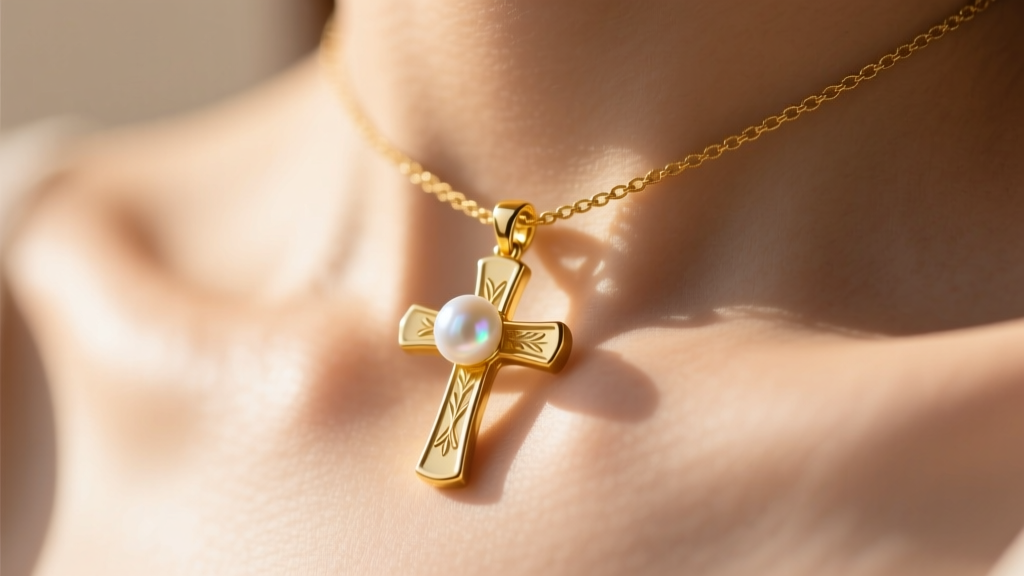
The Enduring Appeal of the Pearl and Gold Cross
Few jewelry designs balance sacred geometry and organic beauty quite like a pearl cross necklace gold pendant. For beginners stepping into the world of fine jewelry, this specific combination offers a masterclass in contrast: the rigid, structured lines of a metallic cross softened by the luminous, spherical perfection of a pearl. Whether you are shopping for a meaningful religious sacrament gift, a subtle nod to vintage aesthetics, or a modern layering piece, understanding the material nuances is critical. This guide will break down the exact specifications, grading metrics, and styling frameworks you need to make an informed purchase.
Decoding Gold: Karats, Colors, and Durability
When evaluating the metalwork of your pendant and chain, the karat weight dictates both the color depth and the structural integrity of the piece. Pure 24k gold is far too soft for daily wear jewelry; it will bend, scratch, and eventually drop your pearl setting. According to the Gemological Institute of America (GIA), gold must be alloyed with other metals to achieve durability.
- 10k Gold (41.7% pure): The most durable and affordable option. It has a slightly paler yellow hue and is highly resistant to scratching, making it ideal for active lifestyles. However, it lacks the rich warmth of higher karats.
- 14k Gold (58.5% pure): The industry sweet spot for everyday fine jewelry. It offers a beautiful, warm yellow tone while maintaining enough structural rigidity to securely hold pearl prongs or bezel settings.
- 18k Gold (75.0% pure): Prized for its deep, buttery yellow color and hypoallergenic properties. Because it is softer, 18k gold is usually reserved for high-end Akoya or South Sea pearl pendants that will be worn on special occasions rather than daily.
Expert Tip: If you prefer white or rose gold, ensure the setting holding the pearl is rhodium-plated (for white gold) to prevent the copper alloys in rose gold or the nickel in white gold from reacting with your skin's pH over time.
Pearl Grading 101: What You Are Actually Paying For
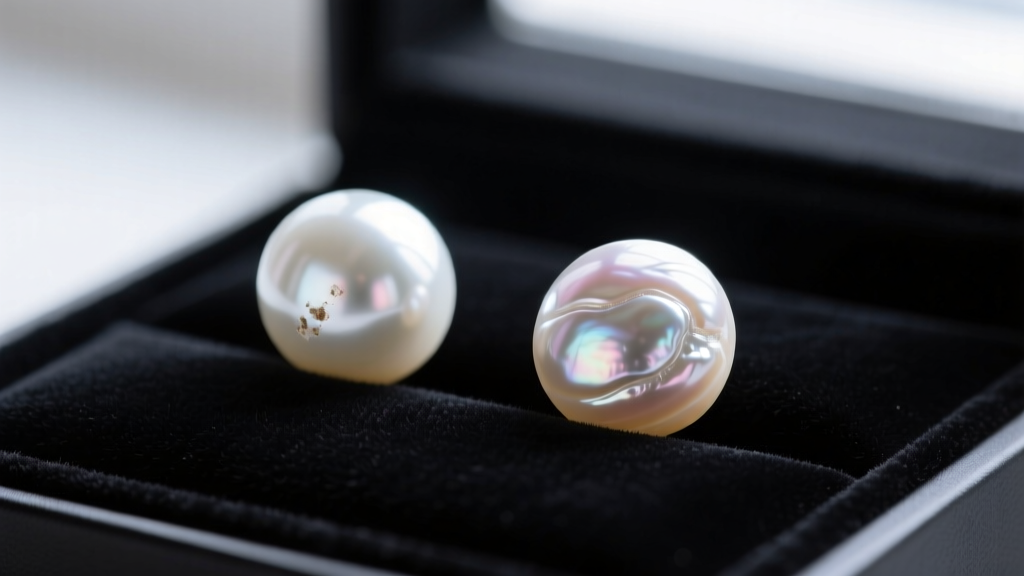
The pearl is the focal point of your necklace, and its value is determined by luster, surface cleanliness, shape, and nacre thickness. The GIA Pearl Quality Factors outline that luster is the single most important value factor. A high-quality pearl should reflect light sharply, almost like a mirror, rather than looking chalky or dull.
Comparing Pearl Types for Cross Pendants
| Pearl Type | Typical Size | Luster & Shape | Price Range (Single Pearl) | Best For |
|---|---|---|---|---|
| Freshwater | 6mm - 10mm | Moderate luster; often button or oval shaped | $15 - $75 | Everyday wear, budget-friendly gifts |
| Akoya | 6mm - 9mm | Mirror-like luster; perfectly round | $100 - $450+ | Heirloom pieces, high-end sacrament gifts |
| Tahitian | 8mm - 14mm | Dark body color with peacock overtones | $250 - $1,000+ | Alternative, gothic, or statement crosses |
The Nacre Thickness Rule
Never buy an Akoya pearl cross pendant without verifying the nacre thickness. Nacre is the crystalline substance the oyster secretes to form the pearl. If the nacre is too thin (under 0.4mm), it will eventually peel or flake off the mother-of-pearl bead nucleus inside. Always look for a minimum nacre thickness of 0.6mm for a piece meant to last a lifetime.
Chain Selection and Proportions
The chain you pair with your pearl cross necklace gold pendant drastically alters its visual weight and durability. Beginners often overlook the chain, focusing entirely on the pendant, but a mismatched chain can lead to premature breakage.
- Cable Chain: The classic choice. Composed of uniform oval links, it is incredibly durable, easy to repair if snapped, and doesn't compete visually with the cross pendant.
- Box Chain: Made of square links that lie flat. While it offers a modern, sleek look, box chains are notorious for catching on fine hair and are notoriously difficult for jewelers to solder back together if they break.
- Rope Chain: Twisted links that reflect light beautifully. However, the intricate twisting means that if a link fails, the entire chain can unravel rapidly.
Proportion Framework: For a delicate, minimalist look, pair a 15mm to 20mm cross pendant with a 1.0mm to 1.2mm cable chain. For a bolder, standalone statement piece, scale up to a 30mm cross on a 1.8mm to 2.0mm chain.
Layering Your Pearl Cross Necklace
The pearl cross is a phenomenal anchor piece for layering. To execute a balanced stack, use the 'Rule of Three' with varying lengths and textures. Start with a 14-inch gold choker (perhaps a simple herringbone or snake chain), add your 18-inch pearl cross necklace gold pendant as the centerpiece, and finish with a 22-inch or 24-inch gold rope chain featuring a small, simple coin or geometric medallion. This creates a cascading effect that draws the eye downward and flatters almost every neckline, from deep V-necks to crewneck sweaters.
Care, Maintenance, and Failure Modes
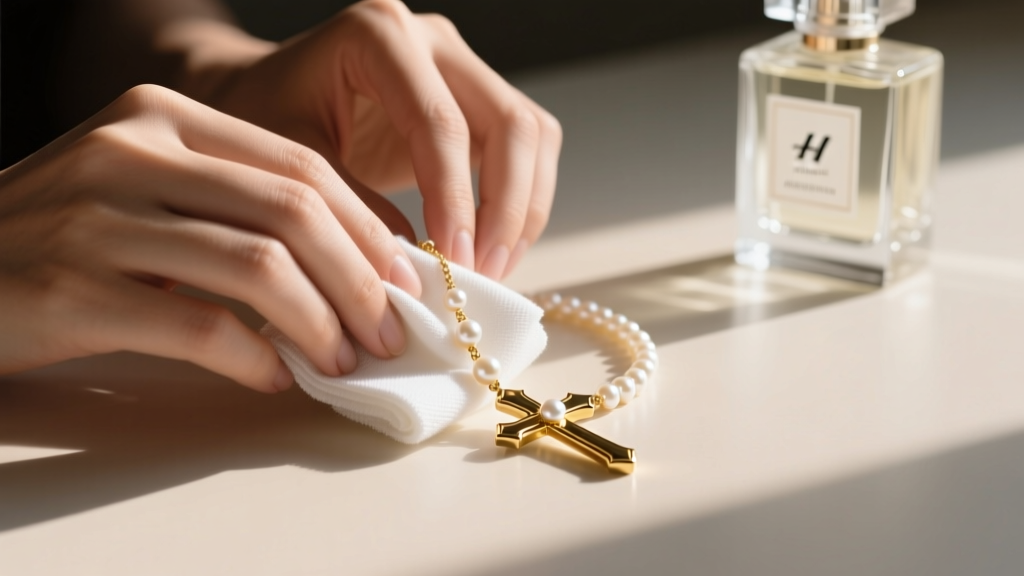
Pearls are organic gemstones, ranking a mere 2.5 to 3.0 on the Mohs hardness scale. They are highly susceptible to chemical damage and dehydration. To protect your investment, adopt the 'Last On, First Off' rule. Your pearl cross necklace should be the very last thing you put on after applying perfume, hairspray, and lotions, and the first thing you take off when you get home.
Warning: Never use ultrasonic jewelry cleaners or steam cleaners on a pearl cross necklace. The high-frequency vibrations will shatter the nacre, and the heat will dehydrate the pearl, causing it to crack and lose its luster permanently.
To clean your necklace, simply wipe it down with a damp, lint-free microfiber cloth after wearing it. If the gold chain becomes tarnished, use a specialized gold polishing cloth on the metal links, but avoid rubbing the polishing compound directly onto the pearl. Finally, if your pendant is strung on silk thread rather than a metal chain, have it professionally re-knotted every 18 to 24 months to prevent the silk from stretching and snapping under the weight of the gold cross.


