Beyond the Definition of a Pearl Necklace: Expert Buying Guide
Discover the true definition of a pearl necklace and learn expert buying tips on luster, nacre thickness, grading, and spotting imitations.

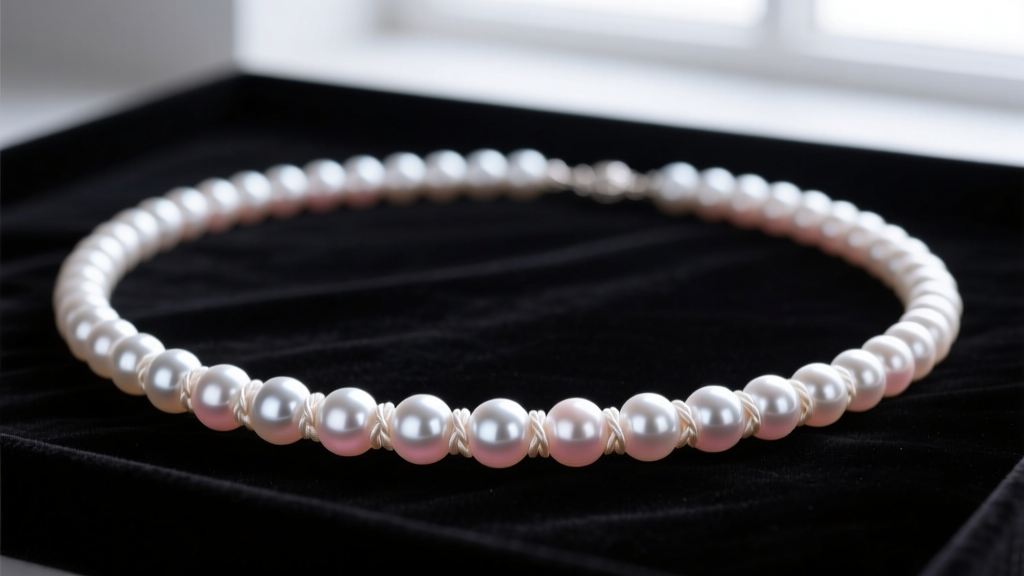
The Literal Definition of a Pearl Necklace vs. Market Reality
When consumers search for the definition of a pearl necklace, they often encounter a simplistic answer: a strand of pearls worn around the neck. However, in the realm of fine jewelry and gemology, the definition is far more rigorous. A true pearl necklace is not merely a collection of spherical gems strung together. According to the Gemological Institute of America (GIA), a fine pearl necklace consists of cultured or natural pearls that have been carefully matched for size, shape, color, and luster, drilled with precision, and traditionally hand-knotted on silk thread to protect the nacre and prevent loss in the event of a break.
Understanding this strict definition is the first step in navigating a market flooded with imitations, poorly matched strands, and mass-produced costume jewelry. Whether you are investing in a classic 18-inch princess strand or a modern, multi-layered choker, knowing what separates a genuine fine jewelry piece from a commercial imitation will save you thousands of dollars and ensure your investment lasts for generations.
The 5 Pillars of Pearl Valuation
To buy a pearl necklace like an expert, you must look past the basic definition and evaluate the gemological pillars that dictate both beauty and price.
1. Luster and Orient: The Soul of the Pearl
Luster is the most critical factor in pearl valuation. It refers to the sharpness and intensity of light reflecting off the surface and through the layers of nacre. High-quality pearls exhibit a mirror-like luster where you can clearly see your reflection. 'Orient' is the secondary, iridescent play of colors that seems to shimmer just below the surface, caused by the diffraction of light through microscopic aragonite crystals. Chalky or dull pearls lack sufficient nacre density and should be avoided entirely.
2. Surface Quality Grading
Pearls are organic gems, meaning they rarely form with flawless surfaces. Gemologists grade surface quality on a scale from Clean (no visible blemishes to the naked eye) to Heavily Blemished (deep cracks or chips that compromise durability). For a high-end necklace, aim for 'Slightly Blemished' or better. Minor pinpricks or shallow bumps are acceptable and prove the pearl's natural origin, but avoid pearls with deep fissures near the drill holes, as these are structural failure points.
3. Nacre Thickness: The Durability Metric
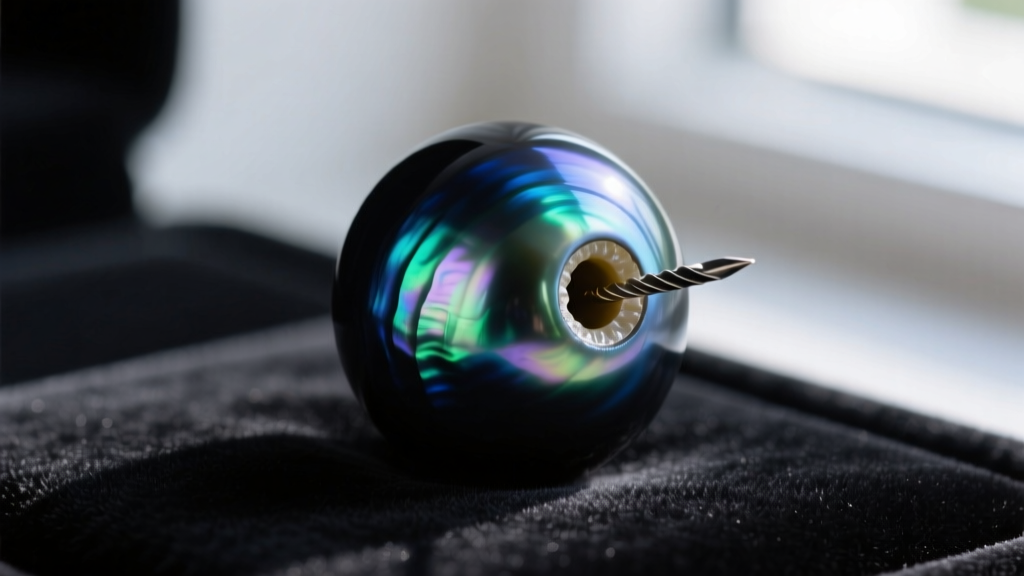
Nacre is the crystalline substance the mollusk secretes to form the pearl. In bead-nucleated pearls like Akoya, the nacre is grown over a mother-of-pearl shell bead. If the nacre is too thin (less than 0.4mm), it will eventually peel or chip away, revealing the dull shell bead beneath. Always request nacre thickness data; premium Akoya pearls should boast at least 0.8mm of nacre, while Tahitian and South Sea pearls naturally feature much thicker nacre layers, often exceeding 2.0mm.
4. Matching and Symmetry
A true pearl necklace requires meticulous matching. A strand of 60 pearls requires sorting through thousands of individual gems to find those that share the exact same overtone, body color, and millimeter size. Graduated necklaces, which taper from a larger center pearl to smaller end pearls, require even more mathematical precision to ensure a smooth, symmetrical transition.
5. Color and Overtone
Body color is the primary hue (e.g., white, silver, gold, black), while overtone is the translucent secondary color that floats over it (e.g., rosé, green, peacock). The most valuable combinations depend on the pearl type, but a classic white Akoya with a strong rosé overtone remains a perennial favorite for its ability to flatter almost all skin tones.
Decoding Pearl Types: A Buyer's Comparison Matrix
Not all pearls are created equal. The environment in which they are cultivated drastically alters their size, color, and price point. Use this matrix to determine which pearl type aligns with your budget and aesthetic goals.
| Pearl Type | Average Size | Nacre Thickness | Price Range (18-inch Strand) | Best For |
|---|---|---|---|---|
| Akoya (Saltwater) | 6.0mm - 9.0mm | 0.4mm - 1.2mm | $800 - $10,000+ | Classic, mirror-luster white strands |
| Freshwater | 6.0mm - 12.0mm | Solid Nacre | $150 - $2,500 | Durable, affordable, varied pastel colors |
| Tahitian (Saltwater) | 8.0mm - 16.0mm | 0.8mm - 4.0mm+ | $2,000 - $30,000+ | Exotic dark hues, peacock overtones |
| South Sea (Saltwater) | 10.0mm - 20.0mm | 2.0mm - 6.0mm+ | $10,000 - $100,000+ | Luxury, satin luster, large statement pieces |
Stringing Mechanics: The Hidden Architecture
The definition of a pearl necklace is incomplete without addressing its structural engineering. A fine strand is a marvel of textile and jewelry mechanics.
Expert Insight: Never buy a knotted pearl necklace strung on synthetic nylon or wire. Authentic fine pearls are strung on 100% silk thread coated in natural beeswax. The wax prevents the silk from fraying and stretching when exposed to the natural oils and moisture of human skin.
Look closely at the knots between the pearls. They should be tight, uniform, and sit flush against the pearl without gaping. The drill holes themselves should be perfectly centered and sized appropriately for the thread—typically 0.7mm to 0.9mm for standard strands. Furthermore, the ends of the necklace where the silk meets the metal clasp must be protected by 'French wire' (also known as gimp). This tiny, hollow coil of precious metal prevents the metal clasp from sawing through the silk thread over time. If a necklace lacks French wire or blind knots at the clasp, it is a hallmark of mass-produced, lower-tier manufacturing.
Red Flags and Imitation Detection
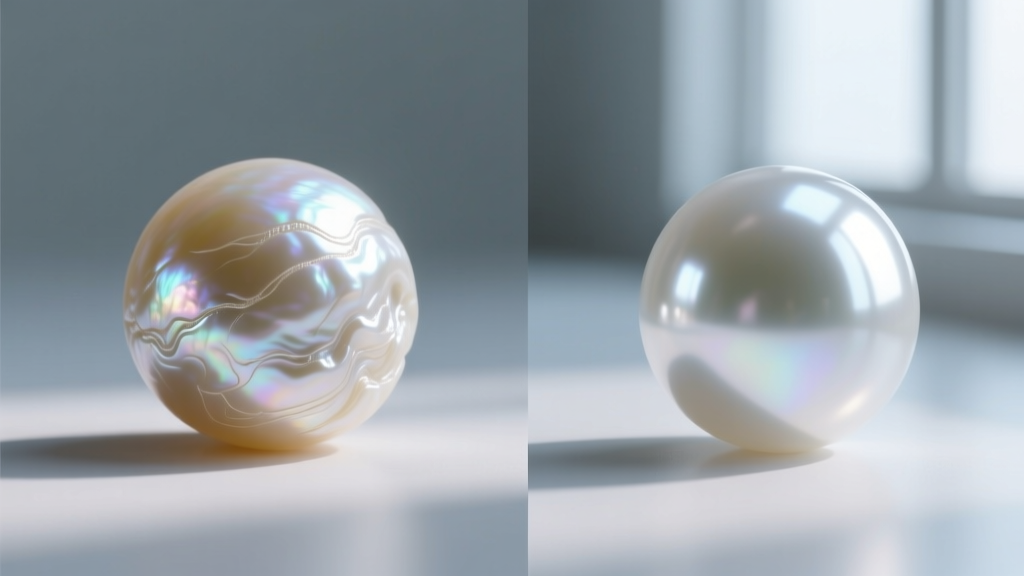
As manufacturing techniques improve, distinguishing between real cultured pearls and high-end imitations (like Majorca pearls or shell-coated glass) requires a trained eye. Here is how to verify authenticity:
- The Tooth Test: Gently rub the pearl against the biting edge of your front teeth. A real pearl, composed of overlapping aragonite platelets, will feel distinctly gritty or sandy. An imitation glass or plastic bead coated in synthetic guanine will feel perfectly smooth.
- Temperature Conductivity: Real pearls are cool to the touch and take a few seconds to warm up against your skin. Glass and plastic imitations will immediately adopt the ambient room temperature or feel unnaturally warm.
- Magnification Inspection: Under a 10x jeweler's loupe, a real pearl's surface will look like a labyrinth of overlapping crystalline scales. An imitation will reveal a smooth, eggshell-like surface, and you may even see the edges of the coating peeling near the drill hole.
- Weight Discrepancies: Solid glass imitations are often significantly heavier than cultured freshwater or Akoya pearls, while plastic-coated fakes will feel suspiciously light.
Final Verdict: Investing in Authenticity
Ultimately, the true definition of a pearl necklace extends far beyond a simple dictionary entry. It is a synthesis of marine biology, meticulous human craftsmanship, and precise gemological grading. When shopping, prioritize luster and nacre thickness over sheer size, and always inspect the stringing mechanics to ensure longevity. By consulting the guidelines set forth by the American Gem Society and insisting on transparent grading reports from reputable jewelers, you can confidently acquire a pearl necklace that is not just a beautiful accessory, but a genuine, enduring asset.


