Pearl Necklace Drawing to Reality: Custom Jewelry Buyer's Guide
Learn how to translate your pearl necklace drawing into a stunning custom piece. Expert guide on pearl grades, sizing, stringing, and pricing.

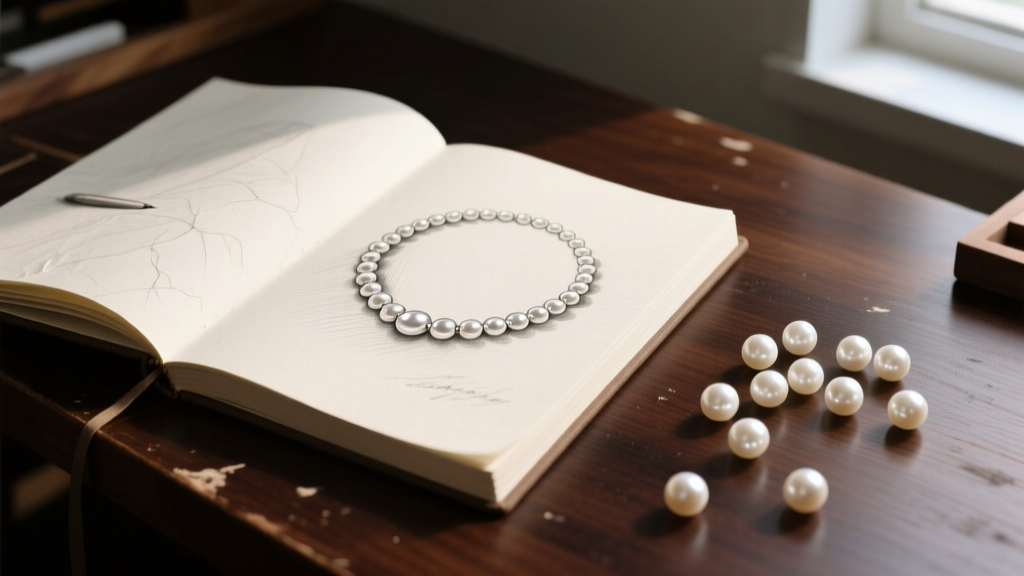
Bridging the Gap: From Pearl Necklace Drawing to Bespoke Reality
In 2026, bespoke jewelry commissions have surged in popularity, with buyers increasingly seeking one-of-a-kind pieces that reflect their personal aesthetics. While 3D CAD modeling dominates modern metalwork and gemstone setting, the organic, asymmetrical nature of pearls means that a hand-rendered pearl necklace drawing remains the gold standard for mapping out graduated strands, baroque layouts, and multi-strand torsades. Translating a two-dimensional sketch into a three-dimensional, wearable heirloom requires a deep understanding of gemology, stringing mechanics, and structural engineering.
When you first present your pearl necklace drawing to a bench jeweler or master stringer, they are not just looking at the aesthetic silhouette. They are evaluating the implied weight, the necessary drill hole tolerances, the silk thread gauges, and the clasp mechanics required to support your vision. This comprehensive buying guide will walk you through exactly what to look for, how to specify your materials, and how to ensure your custom commission perfectly mirrors your original sketch.
Translating Your Sketch into Pearl Specifications
A common pitfall for buyers is assuming that a sketch is sufficient for a jeweler to source materials. However, a drawing cannot convey luster, nacre thickness, or overtone. To move from concept to reality, your pearl necklace drawing must be accompanied by a detailed specification sheet. According to the Gemological Institute of America (GIA), pearls are evaluated on seven distinct value factors: Size, Shape, Color, Luster, Surface Quality, Nacre Quality, and Matching.
Defining Size and Graduation
If your drawing features a graduated strand—where pearls are largest at the center and taper toward the clasp—you must define the exact millimeter range. A classic graduation typically spans a 2mm to 3mm difference between the center pearl and the end pearls. For example, a strand graduating from 5.0mm to 7.0mm requires the jeweler to source dozens of intermediate sizes (5.5mm, 6.0mm, 6.5mm) to ensure a seamless visual flow. If your drawing calls for a uniform 'tin cup' or station necklace, you only need to specify a single diameter, such as 8.0mm to 8.5mm.
Pearl Type and Luster Mapping
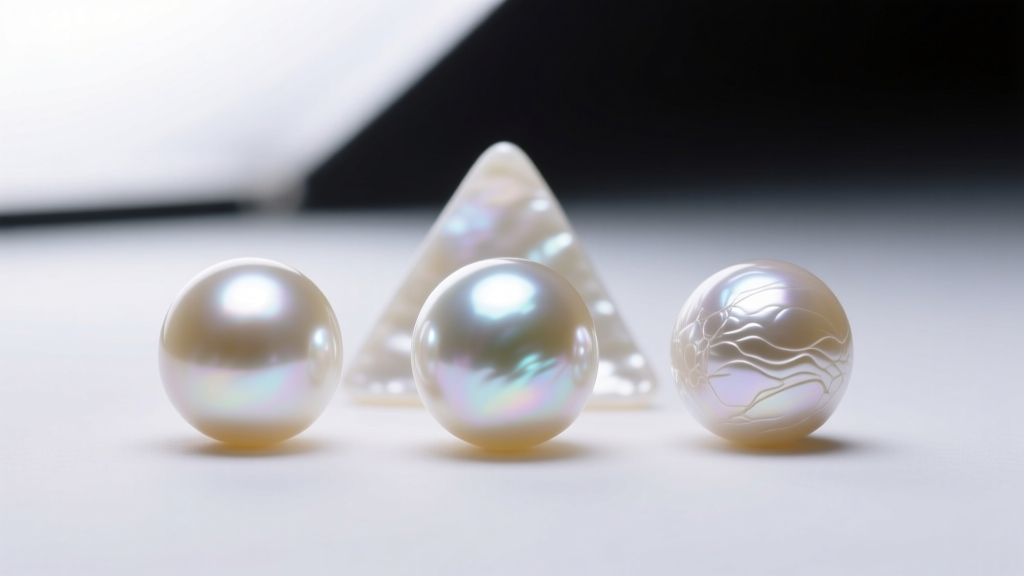
Different pearl types exhibit distinct luster profiles, which drastically alter how the necklace interacts with light. Your drawing should note the desired luster type:
- Akoya Pearls: Known for their sharp, mirror-like 'hard' luster. Best for classic, high-contrast, elegant sketches.
- White South Sea Pearls: Exhibit a soft, satiny 'soft' luster due to their thick nacre and large aragonite platelets. Ideal for opulent, heavy, and luxurious designs.
- Tahitian Pearls: Offer a metallic luster with complex overtones (peacock, aubergine, pistachio). Perfect for modern, edgy, or high-fashion drawings.
- Freshwater Pearls: Range from soft to semi-hard luster, offering the most versatility for avant-garde or baroque shapes.
Essential Hardware and Stringing Mechanics
The longevity of your custom pearl necklace relies entirely on the stringing mechanics, which are rarely visible in a preliminary pearl necklace drawing but are critical to the piece's structural integrity. Pearls are soft (2.5 to 3.0 on the Mohs scale) and their drill holes can easily abrade against metal or wire.
Silk Thread Sizing and Knotting
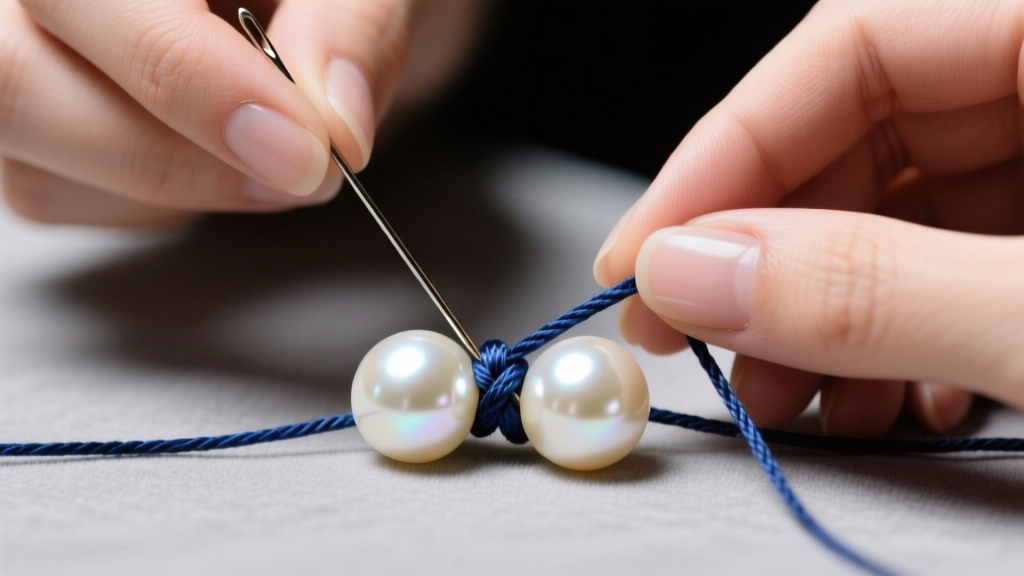
Traditional pearl stringing utilizes 100% natural silk thread, which provides the necessary flexibility and drape. The thread size must be meticulously matched to the pearl's drill hole diameter. Saltwater pearls (Akoya, Tahitian, South Sea) typically feature small drill holes ranging from 0.35mm to 0.50mm, requiring fine silk threads like Griffin Size '0' to '2'. Freshwater pearls often have larger drill holes (0.60mm to 0.80mm), accommodating heavier threads like Size '4' to '6'.
'A master stringer never forces a thick thread through a small drill hole, as the friction will cause the silk to fray and eventually snap. The knot must be proportionate to the pearl, acting as a cushion without overpowering the gem.' — Master Bench Jeweler Standard, 2026.
The Importance of French Wire (Gimp)
Your drawing might not detail the connection point at the clasp, but your jeweler must use French wire (also known as gimp). This is a microscopically fine, hollow coil of metal (usually sterling silver or 14k gold-filled) that the silk thread passes through before looping into the clasp ring. It prevents the metal clasp from sawing through the silk thread over years of wear.
Material Sourcing and Proportion Chart
When reviewing your pearl necklace drawing with your jeweler, use this reference chart to ensure the physical proportions align with the visual weight depicted in your sketch.
| Pearl Type | Typical Size Range | Drill Hole Size | Best Drawing Application |
|---|---|---|---|
| Akoya | 2.0mm - 10.0mm | 0.35mm - 0.45mm | Classic uniform strands, delicate multi-strand twists |
| White South Sea | 9.0mm - 20.0mm | 0.50mm - 0.70mm | Heavy graduated strands, bold statement centerpieces |
| Tahitian | 8.0mm - 18.0mm | 0.50mm - 0.70mm | Drop pendants, alternating color layouts, baroque strands |
| Freshwater | 4.0mm - 16.0mm+ | 0.60mm - 0.90mm | Complex woven patterns, station necklaces, coin-pearl layers |
Clasp Engineering for Custom Designs
The clasp is the engine of the necklace. If your pearl necklace drawing features a heavy, multi-strand South Sea design, a standard spring-ring clasp will fail. You must specify a clasp that distributes weight and includes redundant safety mechanisms.
- Box Clasps with Double Safeties: The industry standard for high-value pearl strands. The tongue clicks securely into a boxed housing, flanked by two figure-eight safety wires that catch the opposite jump ring if the primary mechanism fails.
- Ball Clasps (Pearl Clasps):strong> A spherical clasp featuring a push-button or screw mechanism, often adorned with diamonds. Excellent for maintaining the visual continuity of a pearl strand, as the clasp mimics the appearance of a large pearl.
- Fishhook Clasps: Common in vintage and high-end Japanese Akoya strands. They require a specific push-and-pull motion to engage and are highly secure, though they can be difficult to operate with one hand.
Budgeting Your Custom Pearl Commission
Translating a pearl necklace drawing into reality involves three distinct cost centers: the gems, the hardware, and the labor. Understanding these will help you set a realistic budget and avoid sticker shock.
Gemstone Acquisition
Matching is the most labor-intensive part of pearl sourcing. Finding 60 perfectly matched, AAA-grade, 7.0mm Akoya pearls with identical rose overtones takes significantly more time and capital than sourcing a single pendant pearl. Expect to pay a 20% to 40% premium for 'strand-matched' loose pearls compared to buying pre-strung, lower-grade hanks.
Stringing Labor
Custom hand-knotting is billed either per inch or per pearl. In 2026, master stringing rates typically range from $4 to $8 per knot for standard single strands. Multi-strand designs, complex graduations, or patterns requiring frequent thread changes can push labor costs to $150–$350 for the stringing alone, exclusive of the clasp and pearls.
Finalizing the Commission Agreement
Before your jeweler begins sourcing, ensure your final contract includes a 'matching approval' clause. This stipulates that the jeweler will lay out the matched, unknotted pearls on a neutral gray tray for your physical inspection (or high-resolution macro video review) before any stringing begins. This guarantees that the final piece honors the exact color, overtone, and luster promised in your original pearl necklace drawing, resulting in a flawless, wearable work of art.


