What's a Pearl Necklace Mean? Symbolism, Nacre Grades & Value
Discover what's a pearl necklace mean beyond symbolism. We compare nacre thickness, luster grades, and material properties of Akoya, Tahitian, and South Sea pearls.

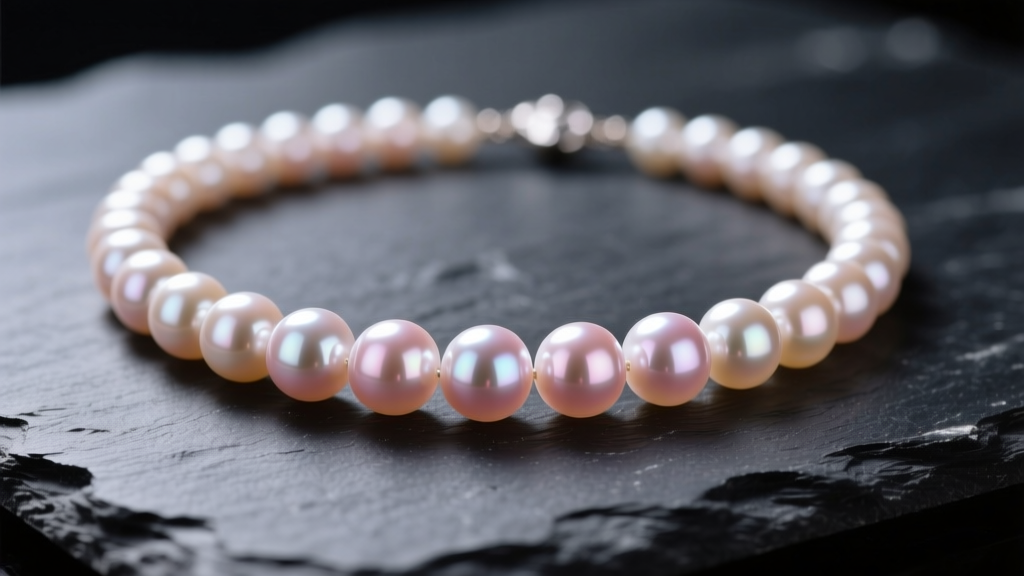
When collectors, gemologists, and first-time buyers ask, what's a pearl necklace mean in today’s fine jewelry market, the answer spans two distinct realms: deep-rooted cultural symbolism and rigorous material science. Culturally, pearls have represented purity, wisdom, and quiet luxury for millennia. However, from a gemological and material perspective, a pearl necklace represents a complex biomineralization marvel—a delicate composite of calcium carbonate and organic proteins that demands specific care, grading, and understanding to retain its value.
In this comprehensive material guide, we move beyond the poetic symbolism to dissect the actual physical properties of pearls. We will explore nacre thickness, aragonite crystal structures, failure modes, and the precise metrics that dictate the pricing and longevity of Akoya, Tahitian, Freshwater, and South Sea pearl strands.
The Dual Meaning: Cultural Symbolism vs. Material Reality
Historically, the meaning of a pearl necklace was tied to status and divine origin. Before the advent of modern culturing techniques in the early 20th century, natural pearls were so rare that only royalty could afford them. Today, the 'meaning' of a pearl necklace in a material sense is defined by its nacre quality and luster. According to the Gemological Institute of America (GIA), the value and durability of any cultured pearl are intrinsically linked to the thickness and quality of the nacre layers secreted by the host mollusk.
Understanding what a pearl necklace means materially requires looking at its chemical composition. Pearls are not gemstones in the traditional mineral sense; they are organic-inorganic composites. They consist of approximately 82-86% calcium carbonate (in the form of aragonite crystals), 10-14% conchiolin (a complex organic protein that acts as a glue), and 2-4% water. This unique matrix gives pearls their characteristic iridescence but also makes them highly vulnerable to environmental degradation.
Decoding Pearl Material Properties: Aragonite and Conchiolin
The visual magic of a pearl necklace—its luster and orient—is a direct result of how light interacts with its microscopic material structure. The aragonite crystals are arranged in microscopic, overlapping platelets. When light strikes the surface, it penetrates these layers, refracting and reflecting back to the eye.
- Luster: The sharpness and intensity of light reflected from the surface. High-quality aragonite platelets create a mirror-like, sharp reflection.
- Orient: The iridescent play of colors seen just below the surface, caused by light diffracting through the overlapping crystal layers.
- Mohs Hardness: Pearls rank between 2.5 and 3.0 on the Mohs scale, making them exceptionally soft compared to diamonds (10) or sapphires (9). They can be easily scratched by dust, which often contains quartz (hardness 7).
Nacre Thickness: The True Measure of Longevity
If you are evaluating what a pearl necklace means in terms of investment and lifespan, nacre thickness is the single most critical metric. Nacre is the crystalline substance the mollusk secretes over the nucleus bead. If the nacre is too thin, the pearl will lack deep luster, appear chalky, and is highly susceptible to peeling.
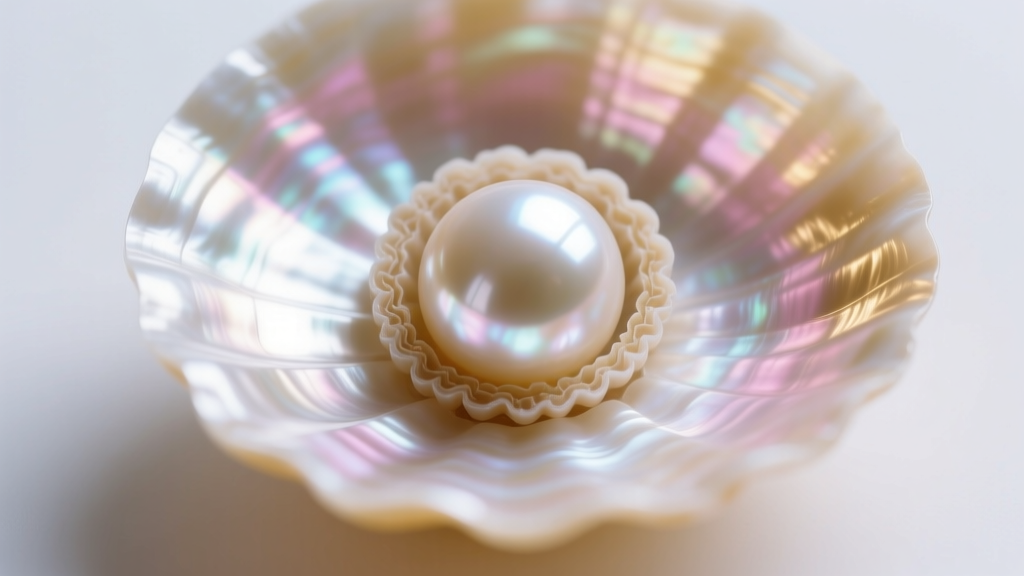
Material Comparison Chart: Saltwater vs. Freshwater Cultivars
Not all pearl necklaces are created equal. The material properties vary wildly depending on the species of mollusk and the culturing environment. Below is a technical comparison of the four primary pearl types found in the 2026 fine jewelry market.
| Pearl Type | Nacre Thickness | Size Range | Material Nucleus | Avg. Price (16' Strand) |
|---|---|---|---|---|
| Akoya (Saltwater) | 0.3mm - 0.5mm | 6mm - 9mm | Round shell bead | $800 - $6,000+ |
| Freshwater | Solid Nacre | 6mm - 12mm | Tissue only (no bead) | $150 - $2,500 |
| Tahitian (Saltwater) | 0.8mm - 2.0mm | 8mm - 15mm | Round shell bead | $1,200 - $15,000+ |
| South Sea (Saltwater) | 2.0mm - 6.0mm | 10mm - 20mm | Round shell bead | $5,000 - $60,000+ |
Note: Freshwater pearls are typically tissue-nucleated, meaning the entire pearl is composed of solid nacre. While this makes them highly durable against peeling, their luster often presents as softer or more 'satiny' compared to the sharp, mirror-like reflection of bead-nucleated saltwater pearls.
Failure Modes: How Pearl Materials Degrade Over Time
Because pearls are organic composites, they possess specific failure modes that do not affect crystalline gemstones like emeralds or rubies. Understanding these vulnerabilities is essential for anyone wondering what a pearl necklace means for daily wearability.
The 'Chalking' and 'Peeling' Phenomena
1. Acid Degradation (Chalking): Calcium carbonate is highly reactive to acids. Human sweat has a pH ranging from 4.5 to 7.0. When a pearl necklace is worn against the skin during heavy perspiration, or exposed to acidic cosmetics and perfumes, the acid slowly dissolves the calcium carbonate. Over time, this destroys the smooth aragonite platelets on the surface, resulting in a dull, matte finish known in the gemological trade as 'chalking.' Once a pearl chalks, the damage is irreversible.
2. Nacre Delamination (Peeling): In bead-nucleated saltwater pearls (especially lower-grade Akoya), if the nacre layer is too thin (under 0.3mm) or if the pearl is subjected to severe dehydration or physical trauma, the nacre can crack and flake off the nucleus. This catastrophic failure mode renders the pearl worthless. The GIA Pearl Description guidelines heavily penalize pearls with visible nacre damage or chalky appearances in their grading reports.
Expert Care Rule: Always put your pearl necklace on after applying perfumes, hairsprays, and lotions. After wearing, wipe the strand with a soft, damp microfiber cloth to remove acidic sweat and skin oils before storing it in a breathable cotton pouch—never in an airtight plastic bag, as pearls require ambient moisture to prevent the conchiolin from drying out and cracking.

How to Evaluate a Pearl Necklace's Material Quality
When shopping for a pearl necklace, you do not need a professional gemological lab to assess basic material quality. You can perform a few non-destructive tests to gauge the nacre thickness and surface integrity.
The Tooth Test and Drill Hole Inspection
- The Tooth Test: Gently rub the pearl against the biting edge of your front tooth. A high-quality pearl with a well-formed crystalline structure will feel distinctly gritty or sandy, like fine sandpaper. If it feels perfectly smooth like glass, it is likely a plastic or glass imitation coated in pearlescent paint.
- Drill Hole Inspection: Use a 10x jeweler's loupe to examine the drill hole of the pearls. In bead-nucleated pearls, you should be able to see a distinct, sharp line separating the dark conchiolin boundary layer from the white mother-of-pearl nucleus. If the nacre layer visible at the drill hole looks paper-thin, or if you see chipping around the hole edges, the pearl is of low material grade and at high risk for peeling.
- Luster Depth Check: Look at your reflection in the surface of the pearl under diffused lighting. High-grade Hanadama Akoya or top-tier South Sea pearls will show a sharp, high-contrast reflection where you can clearly see the outline of your eye or the light source. Lower-grade pearls will show a blurry, milky reflection due to poorly formed aragonite crystals.
Final Verdict: Investing in Material Excellence
So, what's a pearl necklace mean in the context of modern jewelry investments? It means owning a masterpiece of natural engineering that requires informed stewardship. The true value of a pearl strand does not merely lie in its brand name or its cultural cachet, but in the measurable thickness of its nacre, the precision of its aragonite crystallization, and the meticulous care taken to preserve its organic matrix. By prioritizing nacre quality over sheer size, and by understanding the chemical vulnerabilities of calcium carbonate, you can ensure your pearl necklace remains a luminous, enduring asset for generations.


