Decoding Pearl Necklace Value: An Appraiser's Technical Guide
Discover how gemologists determine true pearl necklace value. Learn technical grading metrics for nacre, luster, and drill holes to appraise strands.

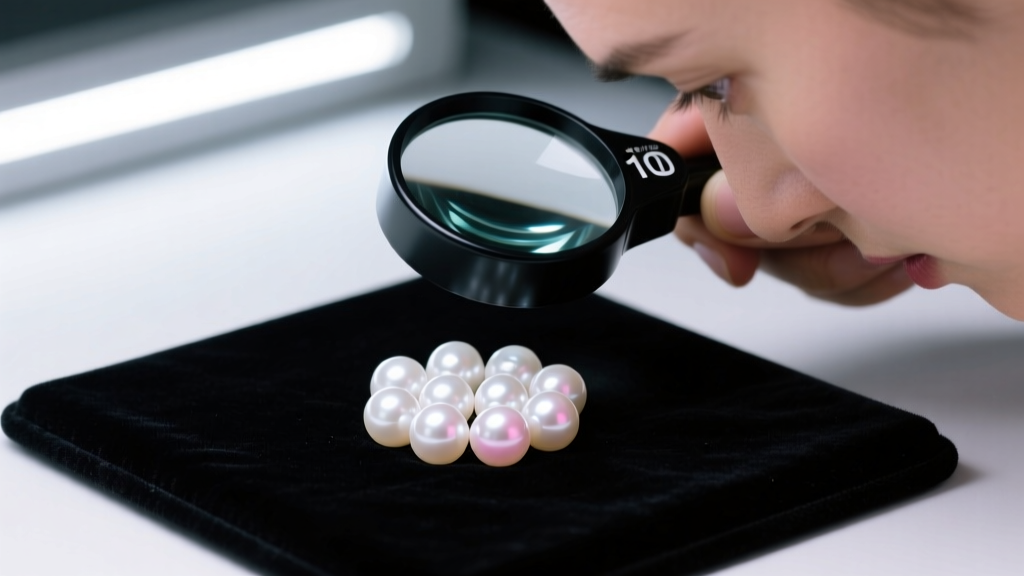
When evaluating pearl necklace value, casual buyers often fixate on superficial traits like size and basic color. However, professional gemologists and estate appraisers use a rigorous, multi-layered technical framework to determine true market worth. A strand's price is not merely a sum of its parts; it is a complex calculation of biological perfection, human intervention, and structural matching. In this expert deep dive, we deconstruct the precise metrics that dictate high-end pearl valuation, moving beyond retail marketing to the hard data used in professional appraisal labs.
The Core Metrics: Luster and Nacre Thickness
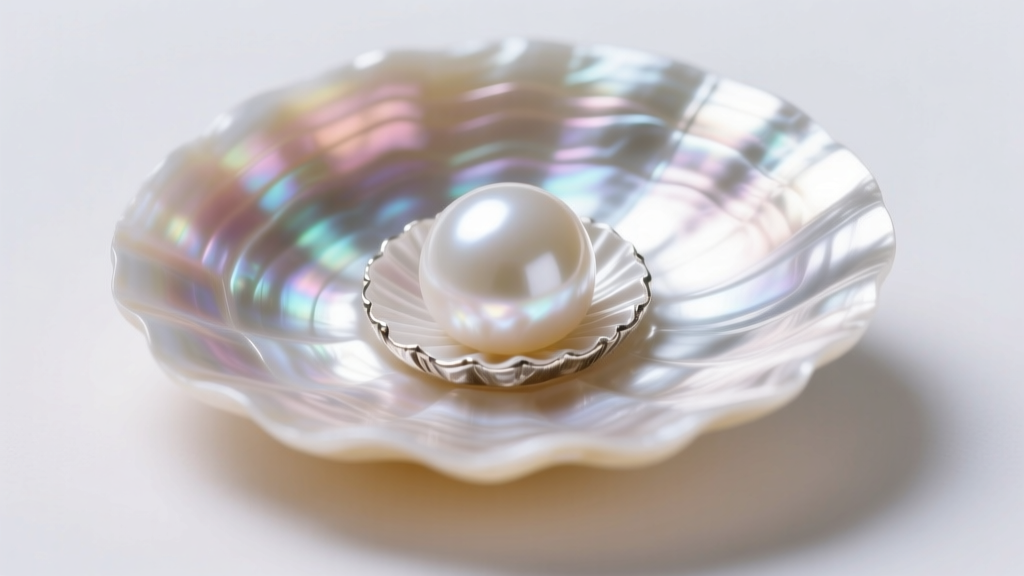
Luster is the single most critical factor in pearl valuation, but it is fundamentally dependent on nacre thickness. Nacre is the crystalline substance a mollusk secretes to coat an irritant or nucleus. According to the Gemological Institute of America (GIA), luster is graded by the sharpness and intensity of light reflections on the surface.
Technical Nacre Benchmarks by Pearl Type
- Akoya Pearls: Commercial strands often feature nacre as thin as 0.3mm to 0.4mm, which can lead to 'blinking' (seeing the shell bead nucleus through the nacre). Top-tier Hanadama-grade Akoya pearls require a minimum of 0.4mm, but investment-grade strands typically boast 0.8mm to 1.2mm of nacre.
- Tahitian Pearls: The French Polynesian government mandates a minimum export nacre thickness of 0.8mm. However, premium Tahitian necklaces feature 2.0mm to 3.0mm of nacre, resulting in deep, mirror-like luster and complex overtones.
- South Sea Pearls: Due to the large size of the Pinctada maxima oyster and the 2-4 year cultivation period, South Sea nacre ranges from 2.0mm to a massive 6.0mm. This creates a soft, satiny luster that is highly prized and heavily factored into the pearl necklace value.
Drill Hole Analysis: The Appraiser's Secret Weapon
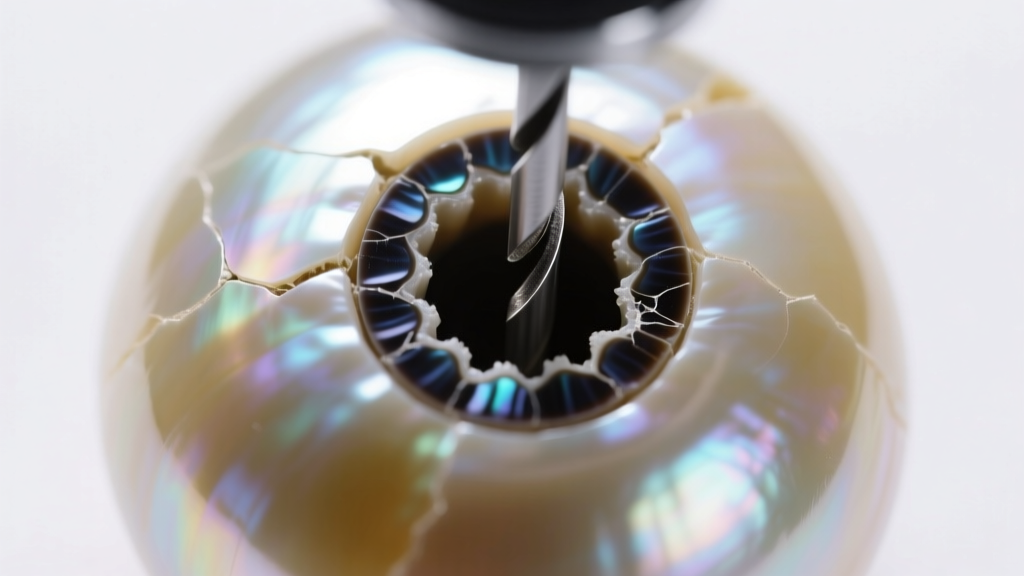
While consumers look at the surface, appraisers look at the drill hole. The drill hole provides a microscopic window into the pearl's internal structure and reveals treatments that drastically alter value.
Hole Diameter and Structural Integrity
High-end pearl necklaces are strung on fine silk thread, requiring precise, narrow drill holes typically measuring between 0.7mm and 0.9mm. Conversely, mass-produced, lower-value strands often feature drill holes of 1.2mm to 1.5mm. These wider holes are used to accommodate cheap, thick wire or synthetic cords, and they remove more carat weight from the pearl. A strand with uniformly tight, clean 0.8mm drill holes signals meticulous factory work and higher intrinsic value.
Spotting Dye and Irradiation Treatments
Color treatments are common in lower-tier freshwater and Akoya pearls. Under 10x to 30x magnification, an appraiser will examine the drill hole crevices. If the pearl has been dyed using silver nitrate or organic dyes, the colorant will pool and concentrate around the drill hole, appearing as dark, unnatural rings. Irradiated pearls, used to mimic expensive dark Tahitian or golden South Sea pearls, will show a darkened nucleus visible through the drill hole, a dead giveaway that severely depresses the necklace's appraisal value.
Expert Insight: Always examine the drill hole of a black 'Tahitian' pearl. If the nucleus appears dark grey or black through the hole, the pearl has likely been irradiated or dyed, reducing its value by up to 80% compared to a naturally colored specimen.
The Matching Multiplier: Why Strands Cost More Than Singles
A common misconception is that a pearl necklace's value is simply the aggregate cost of its individual pearls. In reality, the Cultured Pearl Association of America (CPAA) notes that the labor and statistical rarity of matching dozens of pearls in luster, overtone, shape, and size commands a massive premium. The tighter the tolerance, the higher the multiplier applied to the base carat price.
| Matching Grade | Variance Tolerance | Value Multiplier |
|---|---|---|
| Commercial | >1.5mm difference, visible luster variance | 1.0x (Base Wholesale) |
| Fine | 0.5mm - 1.0mm, uniform overtone | 1.5x - 2.5x |
| Extra Fine / Gem | <0.3mm difference, identical luster and orient | 3.0x - 6.0x |
For a graduated strand (where pearls range from 7mm at the clasp to 10mm at the center), the matching complexity increases exponentially. Appraisers evaluate the symmetry of the graduation curve; a poorly graduated strand with abrupt size jumps will be penalized heavily in the final valuation.
Market Pricing Tiers by Pearl Type
Understanding pearl necklace value requires looking at current market benchmarks. Prices fluctuate based on harvest yields and global demand, but the following tiers represent the baseline for 16-inch, extra-fine matched strands in the current market.
1. Freshwater Pearls (Edison and Traditional)
Traditional button or oval freshwater strands hold minimal resale value, often appraising between $50 and $150. However, modern Edison pearls (bead-nucleated freshwater pearls grown singly) have disrupted the market. A high-luster, 11-13mm round Edison strand with metallic overtones can appraise between $800 and $2,500, bridging the gap between freshwater and saltwater pricing.
2. Akoya Pearls
The classic white pearl necklace. A commercial 7mm strand with blemishes and thin nacre retails for $300-$600. An investment-grade, Hanadama-certified 8.5mm strand with rose overtones, thick nacre, and 18k gold clasps commands an appraisal value of $4,500 to $9,000.
3. Tahitian and South Sea Pearls
These are the heavyweights of pearl valuation. A matched 16-inch strand of 10-12mm peacock Tahitian pearls with 'Excellent' luster will appraise between $12,000 and $25,000. White or Golden South Sea pearls (13-16mm) with heavy, satiny nacre routinely achieve appraisal values of $30,000 to $75,000+, heavily dependent on the absence of surface calcification spots.
Hardware, Clasps, and Provenance
Finally, an appraiser evaluates the hardware and provenance. A genuine high-value pearl strand will never be finished with base metal or hollow stamped clasps. Look for solid 14k or 18k gold safety clasps, often featuring a figure-eight safety catch to prevent loss if the silk breaks. The presence of a recognized hallmark, such as Mikimoto's trademark 'M' inside an oyster shell, or a Tasaki maker's mark, adds a brand premium of 20% to 40% over unbranded equivalents of identical gemological quality.
Final Appraisal Checklist
Before purchasing or insuring a pearl necklace, ensure it has been evaluated against these technical parameters: verified nacre thickness via optical coherence tomography (OCT) or x-ray, absence of dye pooling in 0.8mm drill holes, a documented matching grade, and solid precious metal hardware. Only by understanding these granular details can you accurately assess the true, enduring value of a pearl strand.


