The Pearl Necklace With Pearl Drop: 2026 Trend Analysis
Discover 2026 styling trends for the pearl necklace with pearl drop. Expert guide on sizing, chain vs. strand settings, and market pricing.

The Evolution of the Pearl Necklace With Pearl Drop
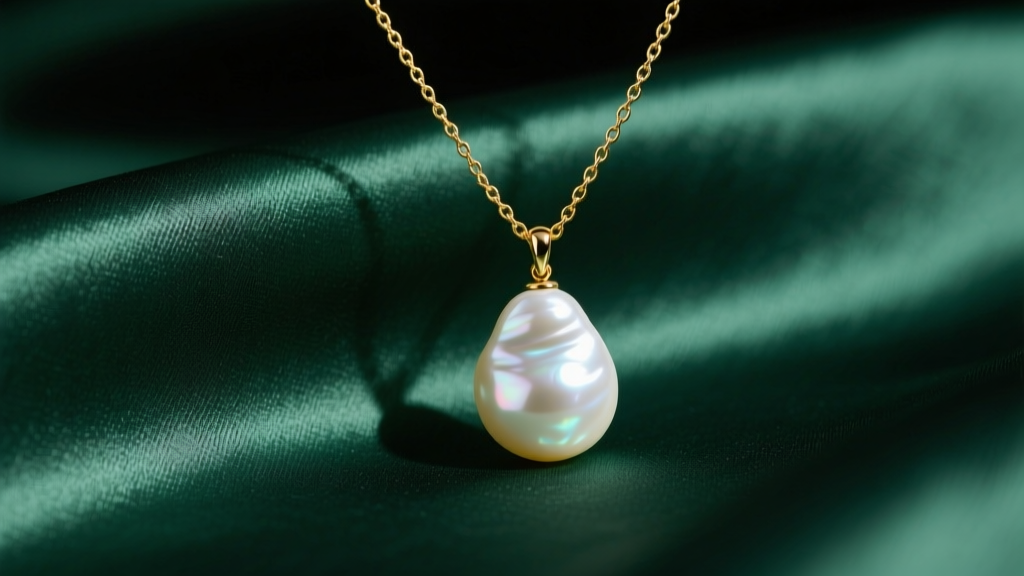
For decades, the classic pearl strand was defined by rigid uniformity—perfectly matched spherical gems graduating symmetrically toward the center. However, as we navigate the jewelry landscape of 2026, the pearl necklace with pearl drop has emerged as a definitive statement of modern asymmetry and intentional contrast. No longer relegated to vintage heirloom boxes, the single drop pendant suspended from either a delicate metallic chain or a traditional knotted strand represents a shift toward architectural minimalism and avant-garde styling.
According to recent trend forecasts highlighted by Vogue, contemporary collectors are actively seeking pieces that disrupt traditional pearl symmetry. The addition of a solitary, often baroque or teardrop-shaped pearl drop creates a striking focal point that draws the eye downward, elongating the neck and providing a canvas for high-fashion layering. This analysis breaks down the technical specifications, styling frameworks, and market valuations driving this specific silhouette in 2026.
Anatomy of the Trend: Strand vs. Chain Settings
When designing or sourcing a pearl necklace with pearl drop, the foundational setting dictates the entire aesthetic and structural integrity of the piece. The market is currently bifurcated into two distinct categories: the heritage strand setting and the modernist chain setting.
| Feature | Knotted Pearl Strand + Drop | Metallic Chain + Drop |
|---|---|---|
| Base Material | Silk thread (Size F or G), 14k/18k gold clasp | 14k/18k Gold or Platinum cable, box, or snake chain |
| Chain/Thread Gauge | 0.8mm - 1.2mm silk cord | 1.0mm - 2.5mm metallic chain |
| Optimal Drop Size | 9mm - 12mm (Proportional to strand) | 11mm - 16mm (High contrast, avant-garde) |
| Drop Attachment | Wire-wrapped loop or soldered bale | Peg-setting with epoxy or integrated loop bale |
| Style Vibe | Elegant, heritage, bridal, formal | Minimalist, editorial, everyday luxury |
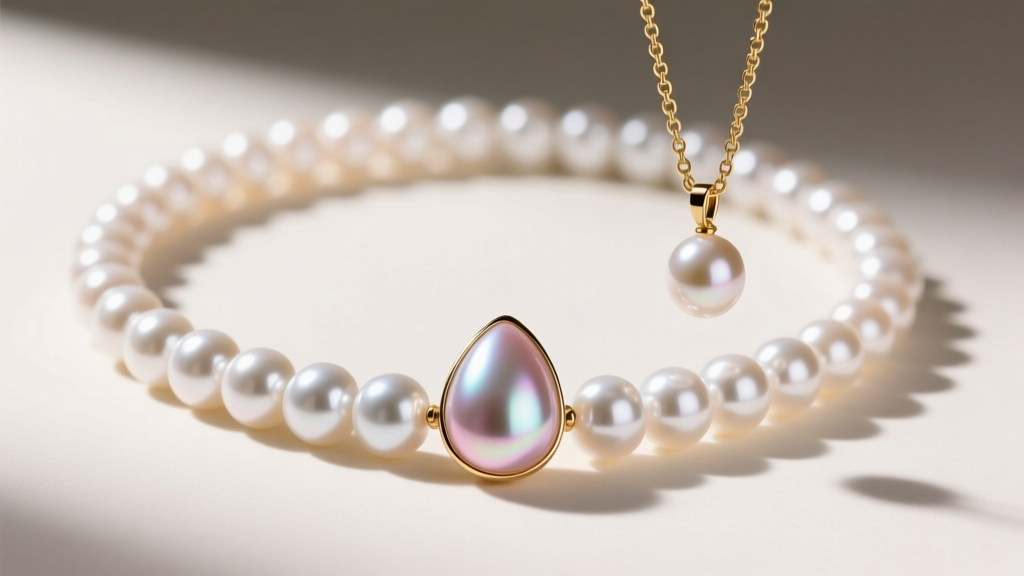
From a structural engineering perspective, the chain setting requires meticulous attention to the bail (the loop connecting the drop to the chain). For heavy South Sea pearl drops exceeding 14mm, a standard glued peg-setting is a critical failure point. Expert jewelers in 2026 insist on through-drilled peg settings secured with a mechanical cap, or a custom-soldered 18k gold wire loop that passes entirely through the pearl's 0.9mm drill hole to bear the weight dynamically.
Sizing and Proportion: The Golden Ratio of Drops
The success of a pearl necklace with pearl drop hinges entirely on proportional mathematics. A drop that is too small gets lost; a drop that is too large looks like a costume appendage. Master jewelers utilize a specific ratio framework to ensure visual harmony.
The 1.5x Multiplier Rule
For traditional knotted strands, the drop pearl should ideally be 1.5 to 1.8 times the diameter of the uniform pearls in the strand.
- 5.0mm - 6.0mm Strand: Requires an 8.0mm - 10.0mm drop.
- 7.0mm - 8.0mm Strand: Requires a 10.5mm - 13.0mm drop.
- 9.0mm+ Strand: Requires a 14.0mm+ drop (often transitioning to a South Sea or large Tahitian specimen).
Conversely, when utilizing a metallic chain (such as a 1.5mm 18k yellow gold box chain), the contrast rule applies. The chain should be virtually invisible from a distance, allowing a massive 13mm to 16mm baroque or keshi pearl drop to appear as though it is floating directly on the skin. This high-contrast styling is a hallmark of 2026 editorial fashion.
Material Grades and Nacre Thickness
Because the drop pendant acts as the undeniable focal point of the necklace, its gemological quality must surpass or perfectly complement the strand. The Gemological Institute of America (GIA) evaluates pearls based on seven distinct value factors, but for drop pendants, luster, overtone, and nacre thickness are paramount.
"In a drop pendant configuration, light hits the curved apex of the pearl directly. If the nacre is too thin (under 0.4mm), the bead nucleus will show through as a dull, chalky band, completely destroying the pendant's visual depth."
For Akoya pearl drops, buyers must demand Hanadama certification or verified nacre thickness of at least 0.8mm. The sharp, mirror-like luster of a high-grade Akoya drop captures ambient light and reflects it back with a distinct "pinpoint" highlight. For those favoring the organic, asymmetrical trends of 2026, baroque Freshwater drops offer intense orient (the iridescent rainbow effect just beneath the surface) due to their solid nacre composition, lacking a bead nucleus entirely.
How to Style the Drop Pearl for 2026 Necklines
Styling a pearl necklace with pearl drop requires strategic alignment with garment architecture. The downward visual pull of the drop interacts differently with various necklines.
The Deep V-Neck and Plunge
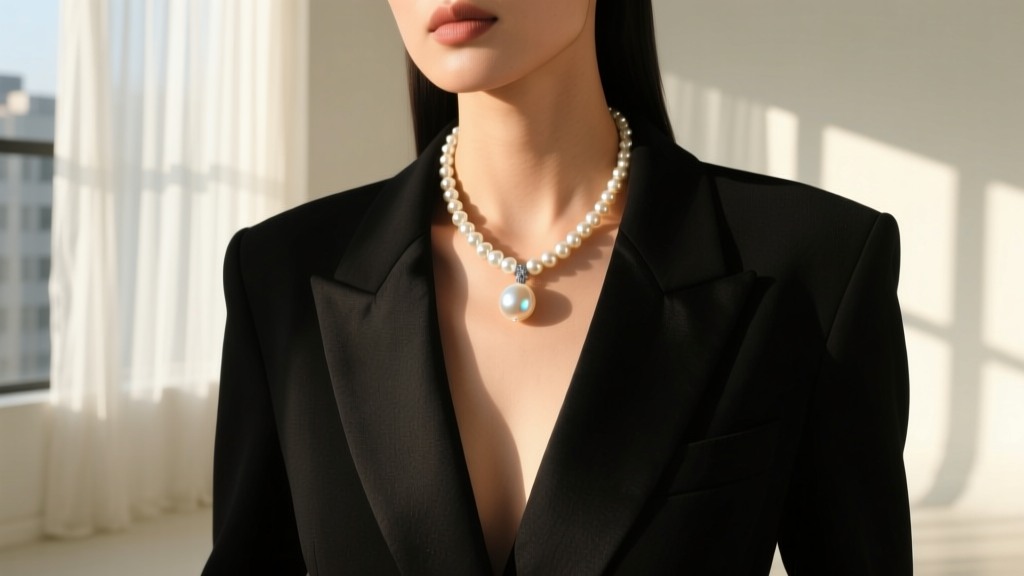
Pair a 16-inch or 18-inch chain-based pearl drop with a deep V-neck blazer or silk camisole. The metallic chain should sit flush against the collarbone, while the drop pearl should rest exactly one inch above the garment's lowest point. This creates a continuous vertical line that elongates the torso. Opt for a 14mm white South Sea drop with a silver-pink overtone to contrast against dark fabrics like charcoal, navy, or emerald.
The Asymmetrical Crew Neck
For a subversive take on the traditional crew neck sweater, utilize a 15-inch knotted 7mm Akoya strand with a 10mm teardrop pendant. Instead of centering the drop, manipulate the clasp (preferably a decorative 18k gold bayonet clasp) to sit slightly off-center at the nape, allowing the drop to rest asymmetrically near the clavicle. This styling trick is heavily featured in contemporary minimalist streetwear.
The Off-Shoulder and Bateau
Wide, horizontal necklines demand a choker-length proportion. A 14-inch strand with a pronounced 12mm button or oval drop anchors the expansive negative space of the chest without overwhelming the wearer's frame. Avoid excessively long drops here, as they will clash with the horizontal geometry of the garment.
Investment & Sourcing: What to Pay in the Current Market
Understanding the pricing matrix for a pearl necklace with pearl drop is essential for avoiding retail markups and identifying genuine value. Prices fluctuate based on pearl origin, luster grade, and the complexity of the custom bail work.
Market Pricing Tiers (2026 Estimates)
- Entry-Level (Freshwater & Silver): $150 – $450. Features 8-10mm near-round or baroque Freshwater drops on sterling silver or gold-vermeil chains. Excellent for trend-driven, everyday wear.
- Mid-Tier (Akoya & 14k Gold): $800 – $2,800. A classic 16-inch 7mm Akoya strand with a 10mm Hanadama-grade teardrop drop, finished with a 14k gold clasp and integrated wire-wrap bail.
- Haute Joaillerie (South Sea/Tahitian & 18k/Platinum): $4,500 – $15,000+. Features massive 14mm-18mm drops with flawless surfaces, deep peacock or golden overtones, suspended on hand-forged 18k gold or platinum snake chains with diamond-accented bails.
When sourcing, always request a macro-video of the drop pearl rotating under diffuse lighting to check for concentric luster bands and ensure the drill hole is cleanly countersunk, preventing the metal bail from chipping the delicate nacre at the entry point. The pearl necklace with pearl drop is not merely a piece of jewelry; it is an exercise in proportion, material science, and modern aesthetic rebellion.