Pearl Statement Necklace Buying Guide: What to Look For
Discover how to choose the perfect pearl statement necklace. Expert guide on pearl grades, nacre thickness, sizing, and real pricing tiers.

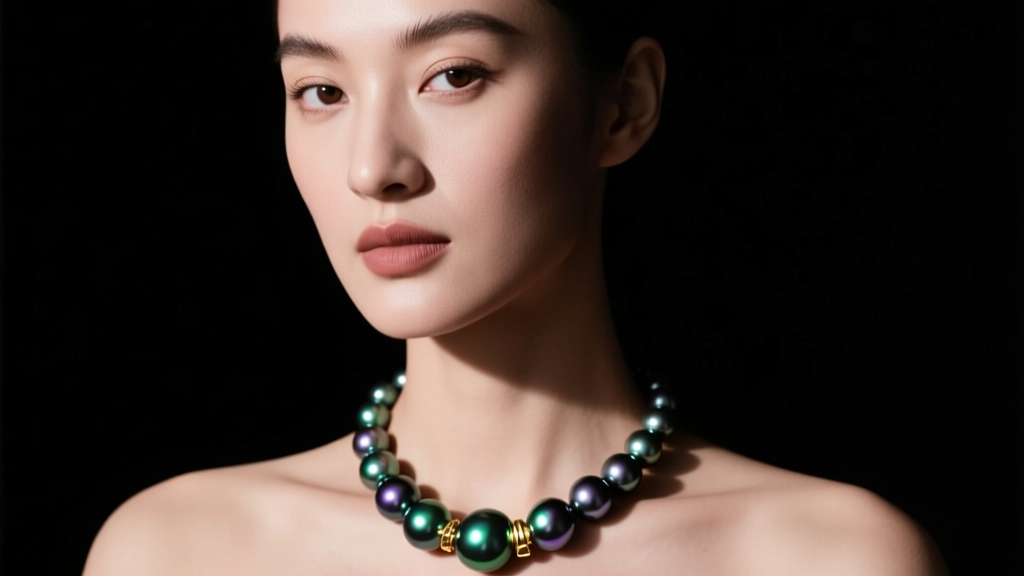
The Architecture of a Pearl Statement Necklace
A true pearl statement necklace is not merely a scaled-up version of a classic strand; it is an architectural piece of jewelry that demands attention, alters proportions, and serves as the focal point of an entire wardrobe. Whether you are drawn to the heavy, satin luster of white South Sea rounds or the moody, iridescent overtones of baroque Tahitians, buying a statement piece requires navigating a complex market. In 2026, the landscape of large-format pearls has shifted dramatically. Innovations in bead-nucleated freshwater farming have disrupted the traditional saltwater monopoly, offering massive 15mm pearls at unprecedented price points. However, this accessibility also brings a flood of treated, chalky, and poorly constructed imitations. This guide cuts through the marketing jargon to provide a rigorous, gemological framework for evaluating, sizing, and purchasing a high-impact pearl necklace.
Decoding Pearl Types for Bold Proportions
When designing or purchasing a statement necklace, the pearl variety dictates not only the price but the visual weight and color palette of the piece. According to the Gemological Institute of America (GIA), the main pearl types possess distinct size limitations and luster characteristics that directly impact their suitability for bold jewelry.
- South Sea Pearls: The undisputed heavyweight champions. Ranging from 10mm to a massive 20mm, these saltwater pearls offer a luxurious, satin-like luster. They are the premier choice for single-strand, large-bead statement necklaces, though their high cost makes multi-strand designs prohibitively expensive for most buyers.
- Tahitian Pearls: Famous for their dark body colors (peacock, aubergine, pistachio) and sizes between 8mm and 16mm. A graduated Tahitian statement necklace offers incredible depth and a modern, edgy aesthetic that pairs beautifully with both evening wear and casual denim.
- Edison Freshwater Pearls: The modern disruptor. By utilizing bead-nucleation techniques previously reserved for saltwater oysters, farmers are now producing round and baroque freshwater pearls up to 16mm. They exhibit a sharp, mirror-like luster that rivals Akoya pearls but at a fraction of the cost of South Sea equivalents.
- Akoya Pearls: Rarely exceeding 9.5mm, Akoya pearls are not ideal for chunky, single-strand statements. However, their pinpoint precision and extreme luster make them the gold standard for multi-strand statement collars and bib necklaces.
| Pearl Type | Ideal Statement Size | Luster Profile | Approx. Price (16" Strand) |
|---|---|---|---|
| White South Sea | 12mm - 16mm | Satin, deep glow | $4,500 - $15,000+ |
| Tahitian | 11mm - 15mm | Mirror to satin, dark | $1,800 - $6,000 |
| Edison Freshwater | 12mm - 16mm | Sharp, high-contrast | $400 - $1,500 |
| Akoya (Multi-Strand) | 7mm - 9mm (3+ strands) | Pinpoint, mirror-like | $2,500 - $8,000 |
The 5-Point Quality Checklist for Large Pearls
As pearl size increases, so does the visibility of surface imperfections and nacre flaws. A 6mm pearl can hide minor blemishes; a 14mm pearl cannot. When evaluating a pearl statement necklace, apply this rigorous five-point checklist.
1. Nacre Thickness and the 'Chalk' Test
Nacre is the crystalline substance that gives a pearl its beauty. For large, bead-nucleated pearls (like South Sea and Edison), the nacre must be at least 0.8mm thick to ensure longevity. Thin-nacre pearls will eventually peel, flake, or reveal the dull shell bead underneath. Visually, thin nacre presents a 'chalky' or milky appearance, lacking the deep, inner glow of a well-formed pearl. Always inspect the drill holes; if you see a sharp, distinct line separating the nacre from a white inner bead, the nacre is dangerously thin.
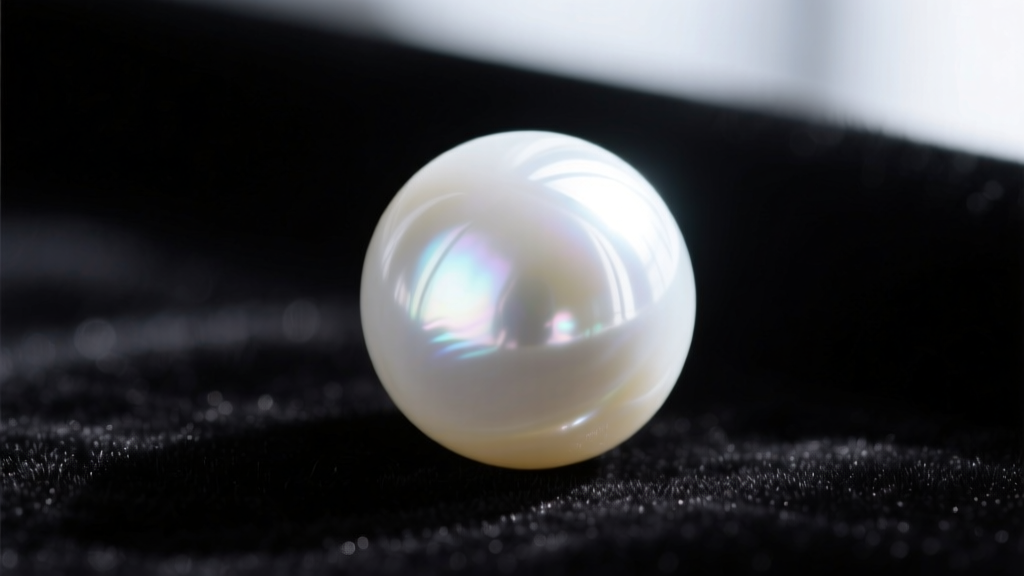
2. Surface Grading: The Sweet Spot
The GIA Pearl Quality Factors scale evaluates surface cleanliness. For statement pieces, demanding a 100% flawless surface is a financial trap. Truly flawless large pearls are auction-house rarities. Instead, target the AAA grade (or 'Clean' on international scales), where blemishes are minor, few, and difficult to see without magnification. Embracing baroque or circled shapes is a brilliant strategy for statement jewelry, as the natural ridges and grooves mask surface variations while adding incredible light-play and character.
3. Luster: The Clock Face Rule
Luster is the most critical value factor. It refers to the sharpness of light reflecting off the pearl's surface. Use the 'clock face' test: hold the pearl under a soft light source. If you can clearly read the numbers on a watch face reflected in the pearl's surface, the luster is excellent. If the reflection is blurry or diffuse, the pearl has low luster and will look dull in dim, real-world lighting.
4. Color and Overtone Matching
In a multi-pearl statement necklace, color matching is paramount. A strand of Tahitian pearls should exhibit a cohesive body color with complementary overtones (e.g., all peacock green over dark gray). Beware of 'painted' or dyed freshwater pearls sold as Tahitians; dye concentrates in the drill holes and along surface ridges, which is easily spotted with a 10x jeweler's loupe.
5. Avoiding Maeshori Treatment
Maeshori is a Japanese heating and cooling treatment used to tighten nacre and enhance luster. While common in smaller Akoya pearls, applying this to large South Sea or freshwater pearls can cause micro-cracking over time. Ask the jeweler for a guarantee that large-format pearls are untreated beyond standard polishing.
Hardware and Construction: Where Cheap Necklaces Fail
A statement necklace carries significant physical weight. A 16-inch strand of 14mm South Sea pearls can weigh over 100 grams. If the hardware and stringing are inadequate, the necklace will snap, stretch, or degrade rapidly.
- French Silk Knotting: Every single pearl must be individually knotted with high-grade French silk or synthetic equivalent. Knots prevent pearl-on-pearl abrasion (which destroys nacre) and ensure that if the strand breaks, you only lose one pearl. Run your fingers along the strand; the knots should be tight against the pearl with no visible gaps.
- Clasp Mechanics: Discard any statement necklace featuring a lobster claw or spring-ring clasp. The immense weight of large pearls will warp these thin metal loops. You need a solid 14k or 18k gold box clasp with a figure-eight safety catch. The tongue of the box clasp should click firmly into place, and the safety wire must be thick enough to hold the necklace if the primary mechanism fails.
- Wire-Wrapping vs. Stringing: For heavy baroque statement pieces, some jewelers use flexible, nylon-coated stainless steel wire with crimp beads instead of silk. While stronger, wire lacks the drape of silk and can cause the drill holes to wear out over decades. Silk remains the gold standard for high-end drape and traditional value.
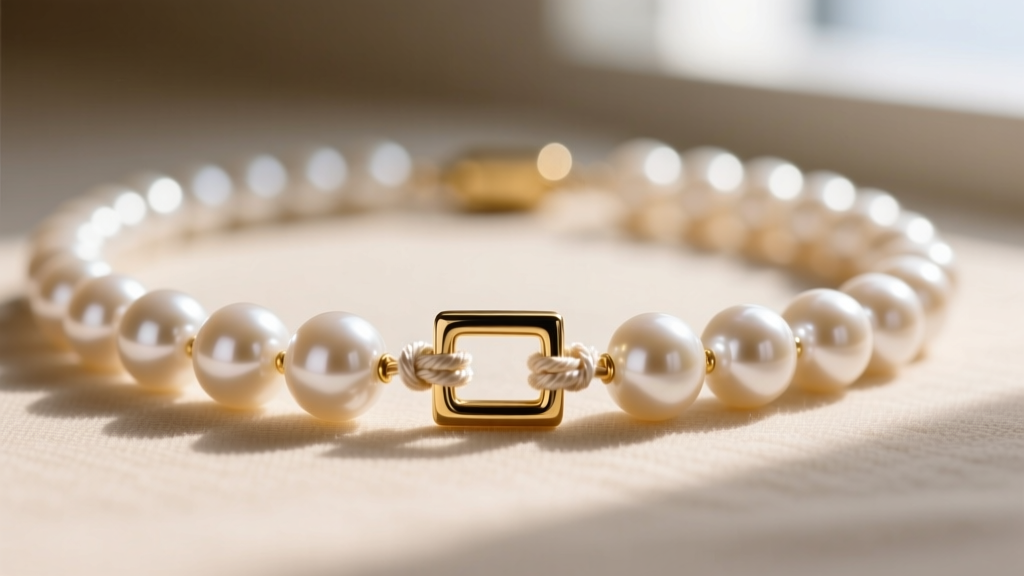
Sizing and Proportion: Matching the Frame
A statement necklace must harmonize with the wearer's proportions. The interplay between pearl diameter, necklace length, and the wearer's frame dictates the visual impact.
- The Collar (12-13 inches): Best achieved with 3 to 5 strands of 7mm-9mm Akoya or Freshwater pearls. This sits tightly against the base of the neck and demands a V-neck or off-the-shoulder neckline to avoid looking suffocating.
- The Choker (14-16 inches): The ideal length for a single strand of 11mm-13mm pearls. It rests perfectly on the collarbone, drawing the eye upward and framing the face.
- The Princess (17-19 inches): Perfect for massive 14mm+ South Sea or Baroque pearls. The lower drop allows the heavy pearls to swing and catch the light, creating a dramatic, regal silhouette that pairs well with high-necked blouses or evening gowns.
Proportion Rule of Thumb: If you have a petite frame or a shorter neck, avoid single strands of pearls larger than 12mm, as they will overwhelm your features. Instead, opt for a multi-strand design using smaller (8mm) pearls to achieve 'statement' volume without the oppressive weight of giant single beads.
Real-World Pricing: What You Should Actually Pay
The jewelry market is notoriously opaque, with retail markups often exceeding 500%. When shopping for a pearl statement necklace in 2026, use these baseline wholesale-to-retail estimates to ensure you are paying for the pearls, not just the brand name.
- Entry-Level Statement (11-12mm Edison Freshwater): $300 - $800. Expect sharp luster, minor surface blemishes, and silver or 10k gold clasps. Excellent for bold, trendy fashion statements.
- Mid-Tier Luxury (12-14mm Tahitian or High-Grade Edison): $1,200 - $3,500. Expect deep, complex overtones (for Tahitians), AAA surface quality, and solid 14k gold hardware. This is the sweet spot for serious collectors and lifelong wear.
- Investment Grade (14mm+ White South Sea): $5,000 - $20,000+. You are paying for extreme rarity, thick nacre, and flawless matching. Ensure the piece comes with a reputable gemological certificate detailing nacre thickness and origin.
By prioritizing nacre thickness, precise knotting, and intelligent proportion matching, you can acquire a pearl statement necklace that is not only visually arresting but structurally built to become a generational heirloom.


