How to Restore and Layer a 90s Metal Ball Necklace
Learn how to clean, repair, and layer a vintage 90s metal ball necklace. Expert tips on gauge sizes, material testing, and modern styling techniques.

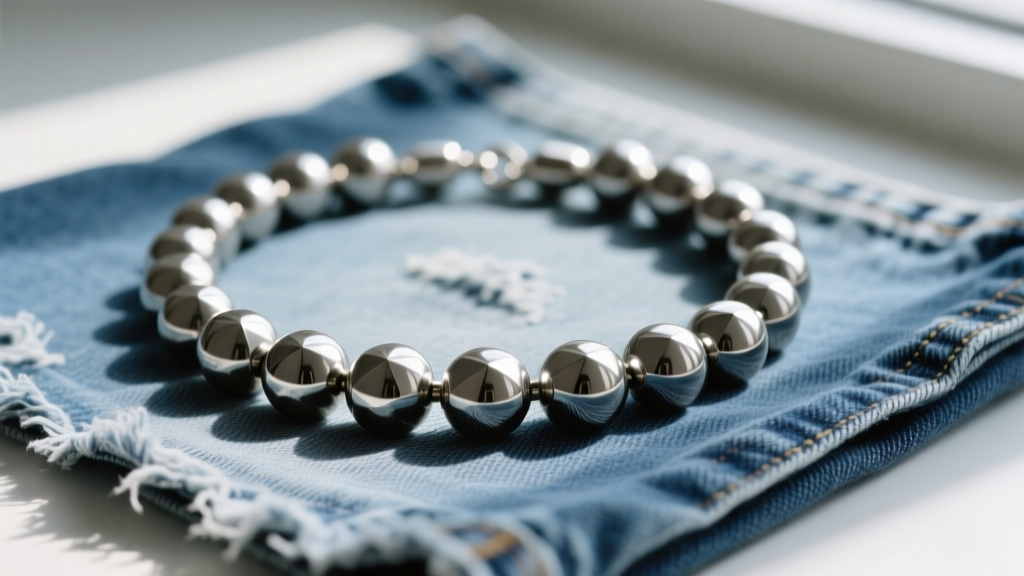
The Revival of the 90s Metal Ball Necklace
The 90s metal ball necklace—often referred to as a bead chain or ball chain—has transcended its origins as a utilitarian dog-tag staple and grunge-era accessory to become a cornerstone of modern layered jewelry. In 2026, the juxtaposition of industrial hardware with delicate, high-end jewelry is a dominant styling technique. However, if you are pulling a vintage piece from a thrift store, a childhood memory box, or an online archive, it likely requires careful restoration before it is ready for daily wear.
Unlike solid link chains, ball chains present unique structural challenges. The beads are often hollow, the connecting wires are fragile, and the original friction clasps are notorious for failing. This step-by-step guide will walk you through identifying your chain's metallurgy, safely removing decades of tarnish, repairing broken hardware, and styling the piece using contemporary layering formulas.
Step 1: Identify Your Chain Gauge and Material
Before applying any cleaning solutions, you must determine the exact material and gauge of your necklace. Applying silver dip to a base-metal alloy will strip its thin plating, while using harsh abrasives on 316L surgical steel will ruin its polished finish.
The Magnet and Ice Tests
Most 90s ball chains fall into three material categories: base metal alloys (often brass or nickel plated in silver or gold), 316L stainless steel, or 925 sterling silver.
- The Magnet Test: Hold a strong neodymium magnet to the chain. Cheap 90s base metals with high iron content will snap to the magnet. 316L stainless steel (an austenitic steel) is generally non-magnetic or only very weakly magnetic. Sterling silver is completely non-magnetic.
- The Ice Test: Sterling silver possesses the highest thermal conductivity of any common jewelry metal. Place an ice cube on the chain; if it begins to melt rapidly and the chain becomes instantly cold to the touch, you likely have 925 silver.
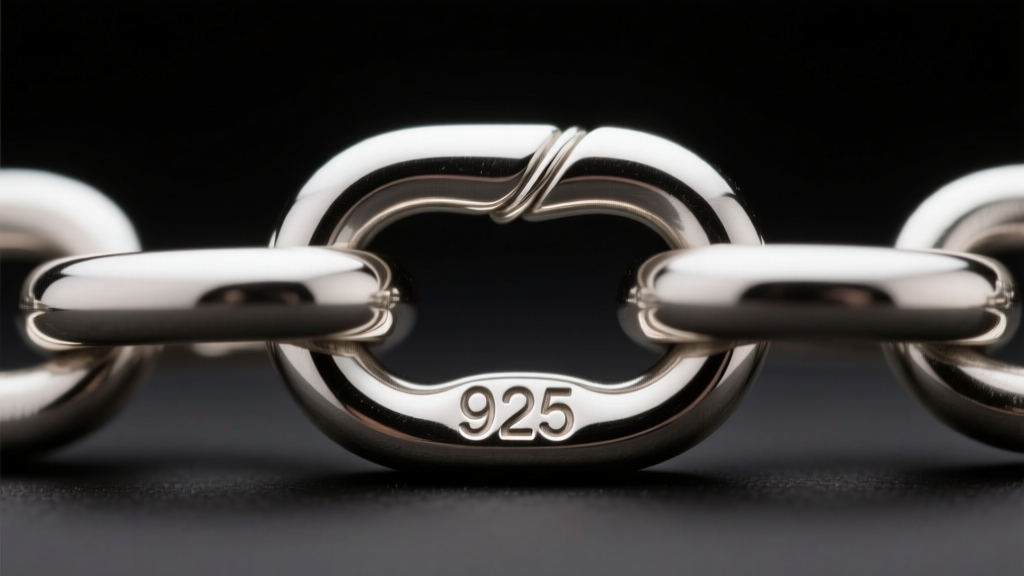
- Hallmarks: Inspect the clasp and the first connecting ring under a 10x jeweler's loupe for stamps like "925", "STER", or "316L".
Standard 90s Ball Chain Gauges
Understanding the diameter of the spheres (the gauge) is critical for sourcing replacement parts and planning your layering strategy. According to industrial jewelry supply standards like those outlined by Rio Grande's chain guide, ball chains are measured by the outer diameter of the bead.
| Gauge (mm) | 90s Style Profile | Best Use Case |
|---|---|---|
| 2.4mm | Standard Military Dog Tag | Base layer, minimalist pendants |
| 3.2mm | Mid-90s Mall Goth / Grunge | Mid-layer, chunky charm carriers |
| 5.0mm - 7.0mm | Statement / Hip-Hop Era | Solo statement piece, outer layer |
Step 2: Deep Cleaning and Tarnish Removal
Cleaning a ball chain requires extreme caution. The defining feature of a bead chain is the hollow sphere. If water or chemical solutions become trapped inside the hollow beads through the small connecting holes, the chain will rust from the inside out, eventually snapping at the wire joints.
For 925 Sterling Silver: The Electrochemical Bath
Avoid commercial liquid silver dips, which contain harsh thiourea chemicals that can degrade the delicate connecting wires over time. Instead, use a galvanic reaction to reverse silver sulfide (tarnish) without removing any base metal.
- Line a glass bowl with aluminum foil, shiny side up.
- Place your silver ball necklace in the bowl, ensuring it touches the foil.
- Boil water and pour it into the bowl to submerge the chain.
- Add 2 tablespoons of baking soda and 1 tablespoon of sea salt. The water will fizz as the sulfur transfers from the silver to the aluminum.
- Let it sit for exactly 3 to 5 minutes. Remove with wooden tongs, rinse thoroughly under distilled water, and immediately dry with a microfiber cloth. Use a hairdryer on a cool setting to blast air through the hollow beads to ensure no moisture remains trapped.
For 316L Stainless Steel: The Surfactant Wash
Steel does not tarnish, but it accumulates sebum, dead skin, and environmental grime in the crevices between the ball and the wire. Mix warm water with a few drops of Dawn dish soap. Use an extra-soft baby toothbrush to gently agitate the joints. Rinse and dry completely. Never place a vintage 90s hollow ball chain in an ultrasonic cleaner; the high-frequency vibrations can easily snap the fragile internal wire connectors.
Step 3: Repairing Broken Barrel Clasps and Connectors
The most common point of failure on a vintage 90s metal ball necklace is the barrel clasp (also known as a tube clasp). These clasps rely on a friction fit—a slightly bulbous male pin that pushes into a hollow female tube. Over decades of wear, the male pin bends, or the female tube widens, causing the necklace to slip off unexpectedly.
Restoring Clasp Tension
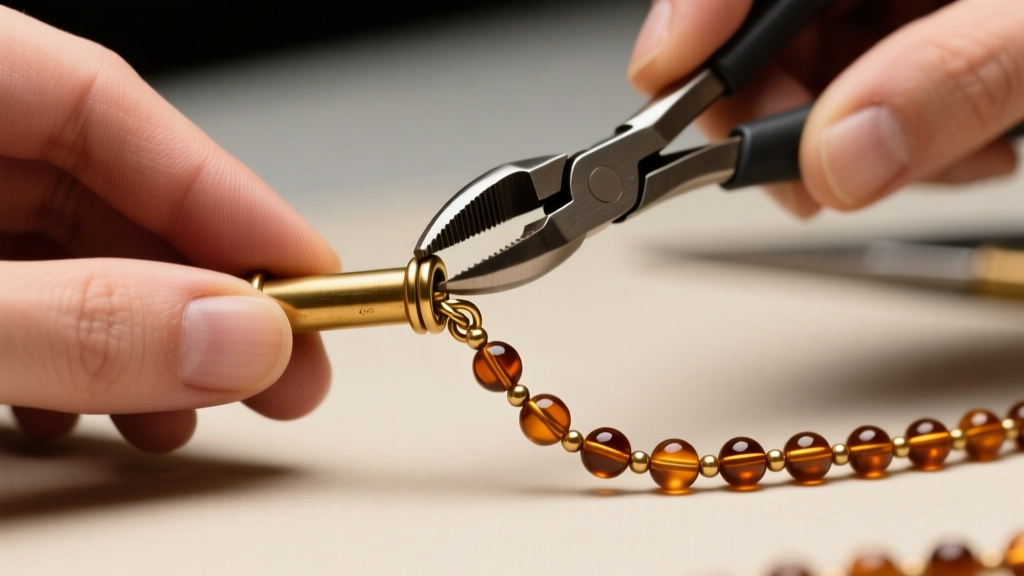
Before replacing the clasp, you can often restore the original friction fit. Using smooth-jawed flat-nose pliers (or nylon-jaw pliers to prevent marring the metal), gently squeeze the open end of the female tube. Apply pressure in a star pattern—squeeze slightly, rotate 45 degrees, and squeeze again—until the male pin snaps in with a satisfying click. If the male pin is bent, carefully roll it on a flat steel bench block and tap it straight with a rawhide mallet.
Upgrading to Modern Hardware
If the original clasp is beyond repair, do not attempt to solder a new clasp directly onto the ball chain; the heat will melt the internal solder holding the hollow beads together. Instead, use chain-nose pliers to open the small jump ring connecting the clasp to the first bead, and swap it for a 5mm neodymium magnetic clasp. Magnetic clasps are highly secure, preserve the vintage integrity of the chain, and make putting the necklace on significantly easier.
Step 4: Modern Layering Formulas for 2026
The key to styling a 90s metal ball necklace today is texture contrast. The industrial, repetitive geometry of the ball chain needs to be balanced with organic shapes or fluid, reflective surfaces. According to trend forecasts from the GIA Gem News archives, mixing disparate metal finishes and historical eras is a hallmark of contemporary personal style.
The Grunge-Revival Trio
- Layer 1 (16 inches): A delicate 14k gold vermeil snake chain with a tiny bezel-set black onyx pendant.
- Layer 2 (20 inches): Your restored 3.2mm sterling silver 90s metal ball necklace.
- Layer 3 (24 inches): A dark, oxidized silver rolo chain featuring a heavy, textured talisman pendant.
The Mixed-Material Contrast
For a softer approach that bridges the gap between streetwear and high jewelry, pair a chunky 5.0mm stainless steel ball chain with a strand of irregular freshwater baroque pearls. The rigid, manufactured perfection of the steel spheres highlights the organic, asymmetrical luster of the pearls. Wear the steel chain at 18 inches and the pearls at 20 inches to prevent the heavier steel beads from abrading the delicate nacre of the pearls.
Maintenance and Storage Best Practices
To ensure your restored 90s metal ball necklace survives for another three decades, proper storage is non-negotiable. Never toss a ball chain into a communal jewelry box. The hollow beads can easily be dented by heavier pieces, and the connecting wires can become kinked, creating permanent weak points. Store the necklace laid perfectly flat in a lined drawer, or hang it from a padded hook. If traveling, coil the necklace in a wide, loose circle and secure it inside a hard-shell pill case or a dedicated velvet roll to prevent crushing. By respecting the unique engineering of the bead chain, you preserve a vital piece of 90s fashion history while seamlessly integrating it into your modern wardrobe.


