The Ultimate Petite Diamond Cross Necklace Gift Guide
Discover the perfect petite diamond cross necklace for every milestone. Our expert gift guide covers carat weights, metals, and styling for 2026.

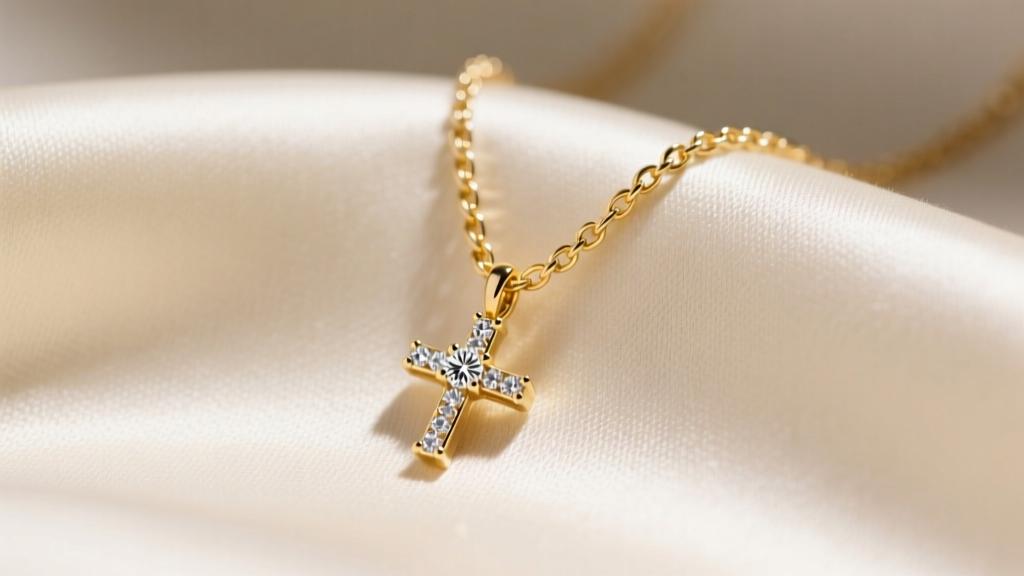
Defining the "Petite" Cross Pendant
When shopping for a meaningful, enduring gift, few pieces carry the emotional weight and timeless versatility of a cross pendant. However, the modern jewelry landscape has shifted away from heavy, oversized statement pieces toward refined, minimalist aesthetics. Enter the petite diamond cross necklace. In the fine jewelry industry, a "petite" cross is strictly defined by its millimeter dimensions and carat total weight (ctw). A true petite cross pendant measures between 8mm and 15mm in height, with a width typically ranging from 6mm to 10mm. The diamond carat weight for these micro-scale pieces usually falls between 0.05 ctw and 0.25 ctw. This specific sizing ensures the pendant sits elegantly on the collarbone, offering a subtle sparkle that transitions seamlessly from casual daytime wear to formal evening attire. Understanding these exact parameters is the first step in selecting a high-quality piece that avoids looking like cheap costume jewelry.
Diamond Grading for Melee Stones
The diamonds used in petite crosses are classified as "melee" stones, typically ranging from 1.3mm to 2.0mm in diameter. According to the Gemological Institute of America (GIA), melee diamonds are often sold in bulk and rarely come with individual grading reports. Therefore, as a buyer, you must rely on the jeweler's reputation and your understanding of micro-scale diamond grading. For stones this small, cut quality is the absolute priority. A poorly cut melee diamond will look like a dull piece of glass, regardless of its color or clarity. When evaluating a petite diamond cross necklace, look for "full cut" melee (57 or 58 facets) rather than "single cut" melee (17 or 18 facets), as full cut stones provide the necessary light return to sparkle against the skin. For color, G-H grades are optimal; they face up completely white when set in white gold or platinum, without the steep premium of D-F colorless grades. For clarity, SI1 to SI2 is the sweet spot. Inclusions in a 1.5mm stone are entirely invisible to the naked eye, making VVS or IF clarities an unnecessary expense for a petite pendant.
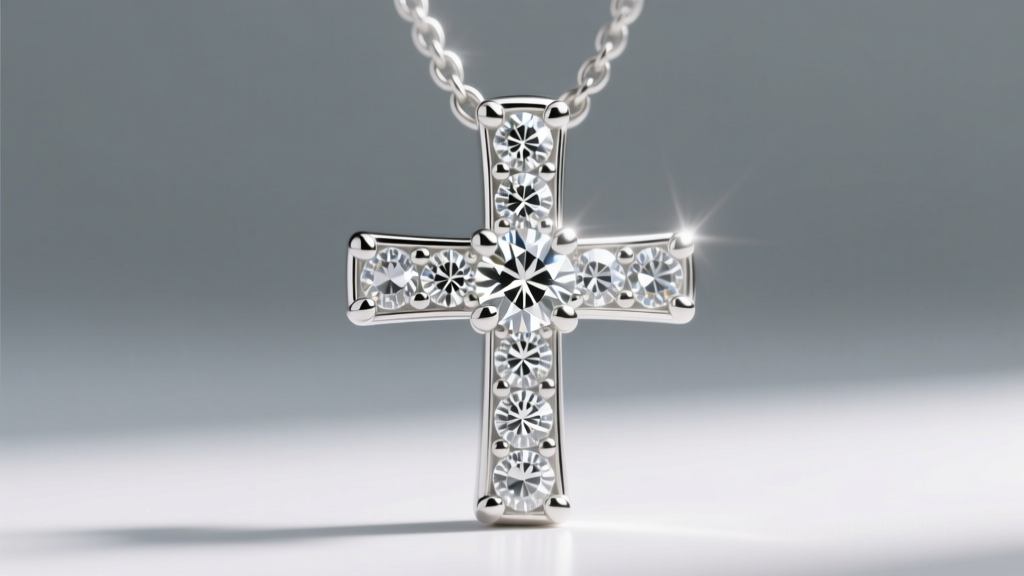
Setting Styles: Prong, Bezel, and Pavé
The setting style of your petite diamond cross necklace dictates both its aesthetic profile and its long-term durability. Prong settings (usually 3 or 4 prongs per stone) expose the maximum surface area of the diamond, allowing light to enter from all angles. This creates the most brilliant sparkle but requires periodic maintenance, as microscopic prongs can catch on knitwear and bend over time. Bezel settings surround each diamond with a thin rim of metal. While a bezel-set cross sacrifices about 10% of the diamond's visible light return, it is virtually snag-proof and highly recommended for active recipients, nurses, or those who work with their hands. Pavé settings feature diamonds set closely together with tiny metal beads holding them in place. A fully pavé cross pendant offers a continuous surface of sparkle, making the metal nearly invisible. However, pavé settings are the most fragile; a hard impact can dislodge multiple stones simultaneously. If you choose pavé, ensure the jeweler offers a complimentary stone-replacement warranty for the first year.
Chain Selection and Clasp Mechanics
A pendant is only as secure as the chain that holds it. For petite crosses weighing under 3 grams, a chain thickness between 0.9mm and 1.1mm is the industry standard. Thinner chains (0.5mm to 0.7mm) are prone to kinking and snapping under the stress of a sleeping wearer or a snagged sweater. The two most reliable chain styles for fine pendants are the cable chain and the box chain. Cable chains offer a classic, rounded link profile that complements traditional cross designs, while box chains feature square, interlocking links that lay flat and reflect light beautifully, adding a secondary layer of sparkle. Crucially, you must inspect the clasp. Avoid spring-ring clasps at all costs; their internal springs fail frequently, and the tiny lever is difficult to operate. Always opt for a solid lobster clasp. A high-quality lobster clasp features a robust internal spring and a wider lever, ensuring the necklace remains securely fastened around the neck for decades.
Occasion Matching Matrix
Matching the specific carat weight, metal, and budget to the recipient's milestone is essential for a thoughtful gift. The following matrix provides a strategic framework for selecting the right petite diamond cross necklace based on the occasion.
| Occasion | Recommended Height | Metal Choice | Diamond CTW | Estimated Price Range |
|---|---|---|---|---|
| Baptism / First Communion | 8mm - 10mm | 14k Yellow or White Gold | 0.03 - 0.05 ctw | $250 - $450 |
| Sweet 16 / Confirmation | 10mm - 12mm | 14k Rose or Yellow Gold | 0.08 - 0.10 ctw | $450 - $750 |
| High School / College Graduation | 12mm - 14mm | 18k White Gold or Platinum | 0.15 - 0.20 ctw | $800 - $1,400 |
| Milestone Anniversary / Wedding | 14mm - 16mm | Platinum (PT950) | 0.25+ ctw | $1,500 - $2,800 |
For younger recipients, 14k gold offers superior scratch resistance due to its higher alloy content, making it ideal for daily, unmonitored wear. For weddings and major anniversaries, Platinum (PT950) is the superior choice. Platinum is a dense, hypoallergenic metal that does not wear away over time; instead, it develops a soft patina that can be easily polished back to a high shine by any bench jeweler.
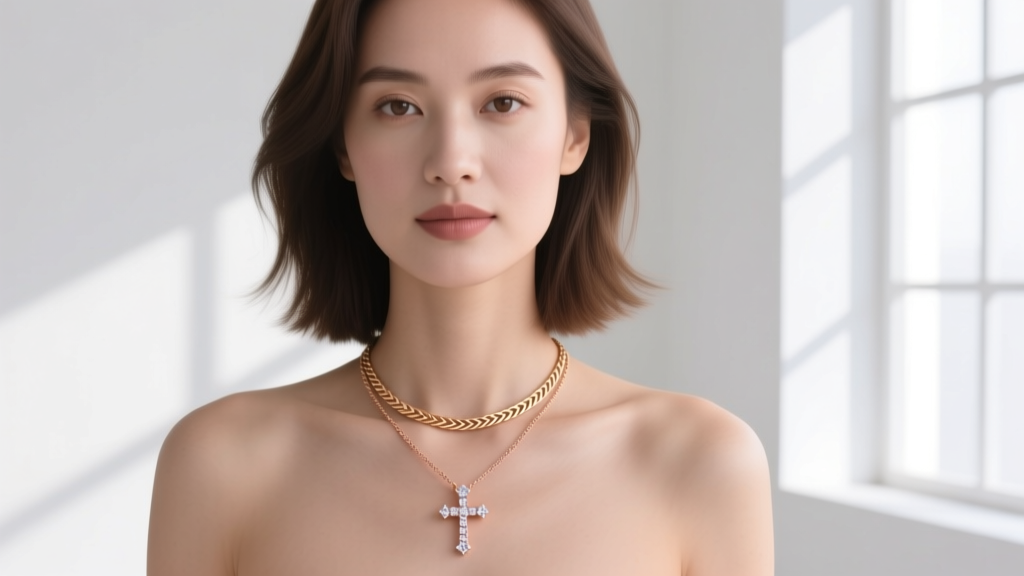
Styling and Layering Trends for 2026
The way we wear fine jewelry has evolved significantly. In 2026, the petite diamond cross necklace is rarely worn alone in a traditional, conservative manner. The prevailing trend is the "curated neckline," which involves layering the cross pendant with complementary chains of varying lengths and textures. To achieve this look, the cross pendant should sit at the 16-inch mark (the standard collarbone length). It should be paired with a 14-inch choker (such as a 2.0mm herringbone or snake chain) and an 18-inch or 20-inch princess-length chain featuring a slightly larger, non-religious pendant or a simple gold medallion. Mixed metals are also highly favored; pairing a 14k yellow gold cross pendant with a white gold or platinum satellite chain creates a modern, eclectic aesthetic that breaks away from rigid matching sets. When gifting a layered look, consider purchasing the pendant and the supporting chains from the same jeweler to ensure the clasp sizes and metal tones harmonize perfectly.
Authentication and Hallmarks
Because the petite diamond cross necklace market is saturated with mass-produced, low-quality imports, verifying authenticity is non-negotiable. The Jewelers of America and the Federal Trade Commission (FTC) mandate strict hallmarking for precious metals. Always inspect the clasp or the jump ring for a stamped hallmark: "14K", "18K", "585", "750", or "PT950". Furthermore, reputable jewelers will provide a certificate of authenticity or a detailed sales receipt that explicitly states the total carat weight (ctw) of the diamonds, the estimated color/clarity range, and the exact metal weight. Avoid pieces marketed simply as "diamond dust" or "diamond accents," as these terms often indicate microscopic, industrial-grade diamond chips that lack any faceting or brilliance. By insisting on full-cut melee, precise millimeter sizing, and proper metal hallmarks, you ensure your gift is a genuine heirloom capable of being passed down through generations.


