The Picture Jasper Necklace: Material Properties & Comparisons
Discover the unique material properties of a picture jasper necklace. Compare its hardness, durability, and pricing against agate and turquoise.

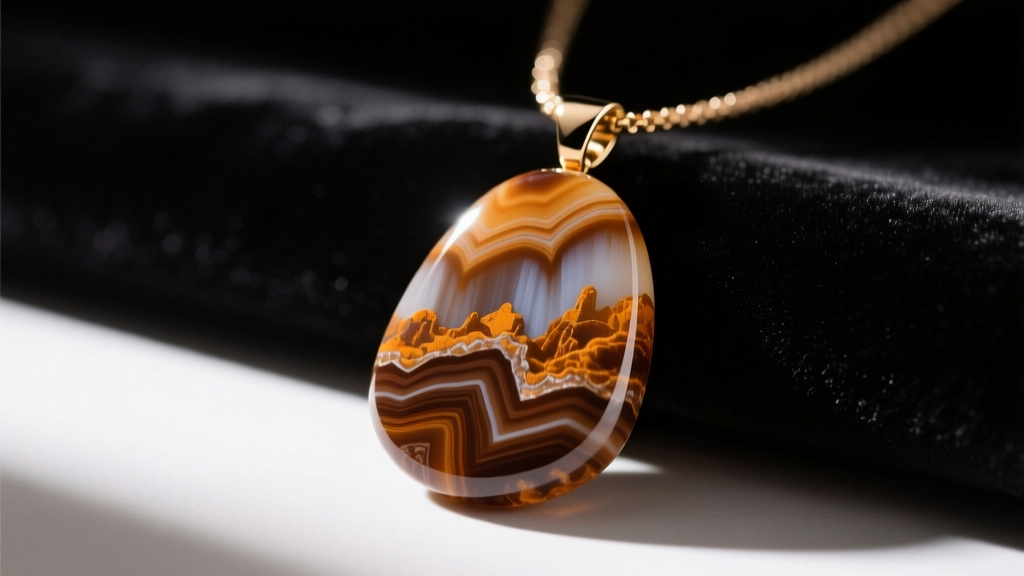
When selecting opaque gemstones for everyday jewelry, few materials offer the scenic depth and geological intrigue of a picture jasper necklace. Unlike translucent stones that rely on light refraction, picture jasper captivates through its intricate, earth-toned banding and dendritic inclusions that mimic desert landscapes. However, designing, purchasing, or wearing a picture jasper necklace requires a solid understanding of its material properties. As a microcrystalline quartz variant, its durability, specific gravity, and lapidary behavior dictate how it should be strung, set, and cared for over decades of wear.
The Geology and Material Profile of Picture Jasper
Picture jasper is a variety of chalcedony, which is a cryptocrystalline form of silica (SiO2). According to mineralogical data from Britannica, jasper forms when silica-rich mud and volcanic ash settle into gas pockets or fissures within igneous rocks. Over millions of years, groundwater carrying dissolved minerals permeates these deposits. The signature "landscape" patterns in picture jasper are primarily caused by iron oxide (hematite) and manganese inclusions that oxidize and create the striking ochre, rust, brown, and black hues.
From a material science perspective, picture jasper boasts a Mohs hardness of 6.5 to 7.0, making it highly resistant to everyday scratching. Its specific gravity ranges from 2.58 to 2.91, meaning it is noticeably heavier than organic gems like amber or coral, but slightly lighter than pure crystalline quartz due to its microscopic porosity and mineral inclusions. This density is a critical factor when designing a picture jasper necklace, as heavy 12mm or 14mm bead strands exert significant tensile stress on stringing materials.
Picture Jasper vs. Competing Opaque Gemstones
To truly understand the value and wearability of picture jasper, it must be compared to other popular opaque gemstones used in statement necklaces. Below is a material comparison chart detailing how picture jasper stacks up against landscape agate, stabilized turquoise, and petrified wood.
| Material Property | Picture Jasper | Landscape Agate | Stabilized Turquoise | Petrified Wood |
|---|---|---|---|---|
| Mohs Hardness | 6.5 - 7.0 | 6.5 - 7.0 | 5.0 - 6.0 (Pre-stabilization) | 6.5 - 7.0 |
| Porosity | Very Low | Low | High (Requires resin fill) | Low |
| Cleavage | None (Conchoidal fracture) | None | None | None |
| Average Price (8mm Strand) | $15 - $35 | $40 - $90 | $120 - $300+ | $25 - $50 |
| Visual Opacity | 100% Opaque | Translucent edges | 100% Opaque | 100% Opaque |
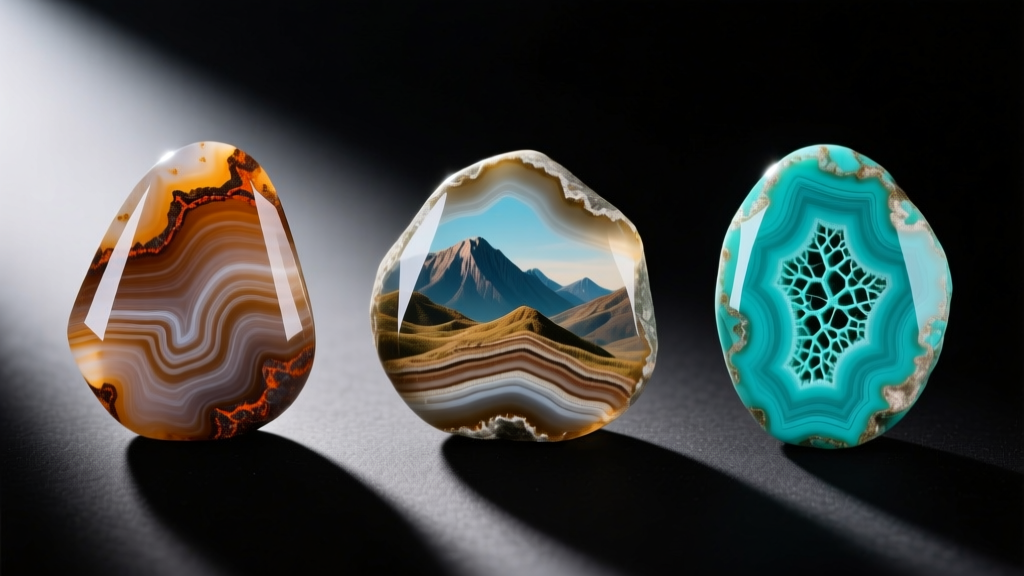
While landscape agate shares the same quartz lineage, it typically features translucent edges and distinct, parallel banding, whereas picture jasper is fully opaque with chaotic, flowing patterns. Turquoise, though highly prized, is inherently soft and porous; it must be stabilized with epoxy resins to survive as a necklace bead, altering its natural material profile. Picture jasper requires zero chemical stabilization, making it a purist's choice for natural gemstone jewelry.
Evaluating Necklace Construction and Bead Quality
Cabochon Pendants vs. Tumbled Beads
The material properties of picture jasper make it an exceptional candidate for both cabochon pendants and tumbled bead strands. Because it lacks cleavage planes and exhibits a conchoidal fracture, lapidaries can cut and polish it into smooth, domed cabochons without the risk of splitting along fault lines. When evaluating a picture jasper pendant, look for a high-domed cut that maximizes the "scene" within the stone. Flat-cut jasper often fails to capture the depth of the iron oxide dendrites.
Stringing Materials and Clasp Hardware
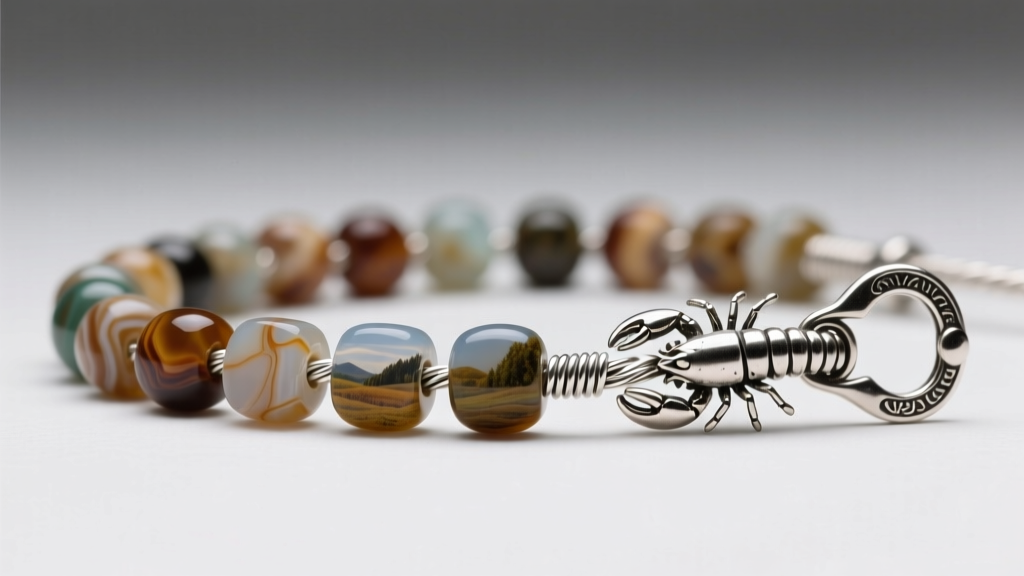
The specific gravity of picture jasper demands robust stringing materials. A standard 18-inch necklace featuring 10mm picture jasper beads can weigh upwards of 45 grams. Using silk thread or basic nylon cord will inevitably lead to stretching, sagging, and eventual catastrophic failure. Professional jewelers exclusively use 49-strand stainless steel micro-wire (such as Beadalon) in a 0.018-inch or 0.024-inch gauge for heavy jasper strands. Furthermore, the bead holes must be inspected for "blowouts"—micro-chips at the drill exit point caused by the diamond core bit breaking through the hard silica too aggressively. High-quality picture jasper necklaces feature hand-chamfered bead holes to protect the internal wire from abrasive friction.
Durability, Care, and Long-Term Wear
With a Mohs hardness of 7, picture jasper is highly durable and suitable for daily wear. It will not be scratched by household dust (which contains quartz particles at Mohs 7) or accidental bumps against glass and ceramics. However, its durability has specific limitations regarding thermal shock and chemical exposure.
Lapidary Expert Insight: "Never place a picture jasper necklace in an ultrasonic cleaner. While the silica matrix is tough, picture jasper often contains microscopic vugs (empty pockets) or natural fractures filled with secondary minerals like calcite or clay. The high-frequency cavitation of an ultrasonic bath can shatter the stone or dislodge these inclusions, ruining the polished surface."
For routine maintenance, the Gemological Institute of America (GIA) recommends cleaning opaque quartz varieties with warm water, a mild dish soap, and a soft-bristled brush. Avoid harsh chemical dips or steam cleaners, which can degrade the metal findings and dull the polish of the jasper over time. Always store your necklace in a soft pouch; while jasper is hard, it can easily scratch softer metals like silver or gold if left tangled in a jewelry box.
Pricing Tiers for Picture Jasper Necklaces
Unlike diamonds or precious gems, picture jasper is not priced strictly by carat weight. Instead, the market values the aesthetic quality of the "picture" or landscape pattern, the contrast of the colors, and the origin of the rough material. Here is a breakdown of current market pricing tiers for picture jasper necklaces:
- Commercial Grade ($15 - $30): Mass-produced 6mm to 8mm bead strands. The patterns are often muddy, with low contrast between the brown and ochre bands. Bead holes may exhibit minor blowouts, and stringing is typically done on basic nylon.
- Fine Jewelry Grade ($45 - $120): Features 10mm to 14mm beads or large, custom-cut cabochon pendants. The stones exhibit high-contrast "desert landscape" scenes with sharp dendritic lines. Strung on 49-strand steel wire with sterling silver or gold-filled hardware.
- Collector / Artisan Grade ($150 - $400+): Sourced from premium deposits (such as the famous Owyhee Picture Jasper in Oregon, though predominantly used for cabochons rather than beads). These pieces feature rare, vivid color palettes, exceptional scenic depth, and are set in custom-fabricated, heavy-gauge precious metal bezels.
Ultimately, a picture jasper necklace represents a perfect intersection of geological art and durable material science. By understanding its quartz-based hardness, respecting its weight during the stringing process, and avoiding ultrasonic cleaning, you can ensure that the miniature landscapes trapped within the stone remain vibrant and intact for generations.