Complete Care Guide for the Pinion Necklace α Chest Armor
Learn expert maintenance, cleaning, and storage tips for your Pinion Necklace α Chest Armor to prevent hinge corrosion and metal tarnish.

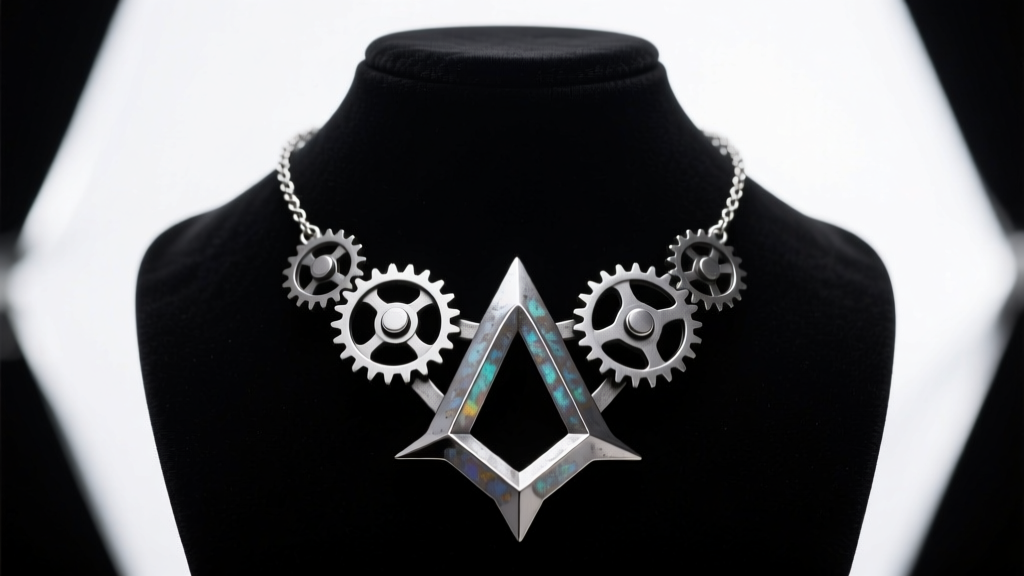
The Anatomy of the Pinion Necklace α Chest Armor
The Pinion Necklace α Chest Armor represents a pinnacle of avant-garde structural jewelry, bridging the gap between haute couture body armor and precision horology. Weighing in at a substantial 1.8 kilograms, this piece is not a standard pendant; it is a complex, articulated chassis. Understanding its material science is the first step in proper maintenance. The primary 'wing' struts are milled from aerospace-grade Grade 5 Titanium (Ti-6Al-4V), chosen for its high tensile strength and hypoallergenic properties. The central sternum plates are cast in 925 Sterling Silver, featuring an intentional liver-of-sulfur oxidation to highlight the intricate, feather-like engravings.
Unlike traditional chain necklaces, the α (Alpha) iteration utilizes 14 micro-articulating pinion joints equipped with sapphire micro-bearings to allow the chest armor to flex with the wearer's respiration and movement. Furthermore, the primary sternum clasp relies on an N52 neodymium magnetic lock. This unique combination of dissimilar metals, magnetic fields, and moving mechanical parts requires a highly specialized care regimen that goes far beyond standard jewelry polishing.
Daily Wear Protocols & Failure Modes
Wearing structural armor presents unique environmental hazards. The most common failure mode for the Pinion Necklace α is not silver tarnishing, but rather sebum and cosmetic buildup within the micro-hinges. When body oils, foundation, or aerosolized perfumes infiltrate the pinion joints, they mix with ambient dust to form an abrasive sludge that can seize the sapphire bearings.
- Cosmetic Application: Always apply perfumes, hairsprays, and lotions at least 30 minutes before donning the armor. Alcohol-based astringents can degrade the protective clear-coat applied to the titanium struts.
- Perspiration Management: The acidic pH of human sweat (typically between 4.5 and 7.0) can accelerate galvanic corrosion where the silver plates meet the titanium chassis. Wipe the interior backing with a dry, lint-free microfiber cloth immediately after removal.
- The Neodymium Hazard: The N52 magnetic clasp is incredibly powerful but acts as a magnet for ferrous micro-dust (iron particles in urban environments). If left unchecked, this dust will scratch the silver plating upon clasping.
Step-by-Step Cleaning Regimen
According to guidelines from the Smithsonian Museum Conservation Institute, cleaning mixed-metal artifacts requires pH-neutral, non-ionic surfactants to prevent localized galvanic reactions. Never use commercial 'silver dips' or ammonia-based cleaners on this piece; they will instantly strip the intentional alpha-patina from the silver recesses and leave the metal looking flat and unnaturally white.
Phase 1: Dry Debris Removal
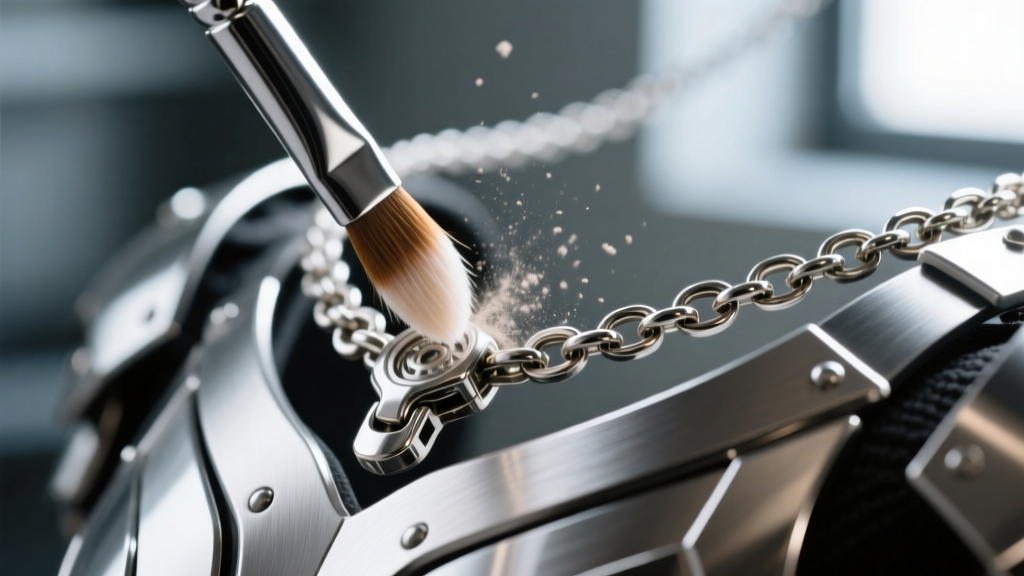
Before introducing any moisture, you must remove loose particulate matter. Use a soft-bristled goat hair brush (often used for camera lenses or watch dials) to gently sweep the micro-hinges and the magnetic clasp. Follow this with a blast of compressed air. Crucial Detail: Regulate your air compressor to a maximum of 40 PSI. High-pressure air can force dust deeper into the sapphire bearing housings or damage the delicate feather engravings on the silver plates.
Phase 2: Targeted Solvent Application
For deeper cleaning, prepare a 2% solution of a pH-neutral non-ionic surfactant, such as Orvus WA Paste, in distilled water. Distilled water is mandatory to prevent hard water calcium deposits from spotting the titanium. Dip a cotton swab into the solution, roll it on a paper towel to remove excess moisture, and carefully trace the edges of the silver plates. Avoid saturating the pinion joints.
Expert Warning: Never place the Pinion Necklace α Chest Armor in an ultrasonic cleaner. The high-frequency cavitation bubbles will shatter the sapphire micro-bearings and strip the intentional sulfur-oxidized patina from the silver engravings, causing irreversible damage to the structural integrity and aesthetic design.
Articulation & Hinge Maintenance
The articulating pinion joints are the heart of this chest armor. To maintain the fluid, wing-like movement of the piece, the joints must be lubricated every 6 to 12 months, depending on wear frequency. Standard liquid oils (like mineral oil or WD-40) are strictly prohibited; they attract dust and eventually turn into a sticky varnish that will lock the hinges entirely.
Below is a comparison of dry lubricants suitable for the α Chest Armor's micro-mechanics:
| Lubricant Type | Viscosity & Dust Attraction | Longevity | Verdict for Pinion Joints |
|---|---|---|---|
| Graphite Powder | Extremely low viscosity; messy application; can stain silver black. | Short (requires frequent reapplication) | Avoid. High risk of staining the oxidized silver plates. |
| PTFE (Teflon) Dry Lube | Low dust attraction; leaves a slight waxy residue over time. | Medium (3-4 months) | Acceptable. Good for the larger titanium strut pivots. |
| Nano-Ceramic Dry Lube | Zero dust attraction; penetrates micro-bearings; dries completely clear. | High (12+ months) | Highly Recommended. The industry standard for horological and armor joints. |
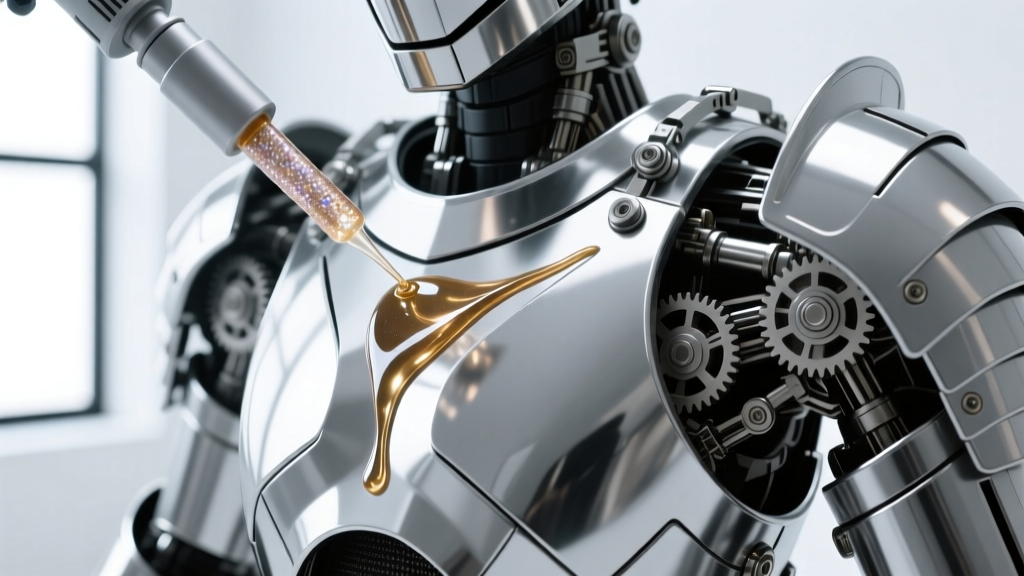
To apply the nano-ceramic lubricant, use a precision needle applicator. Place a single, microscopic drop directly onto the axis of each pinion joint, then gently flex the armor back and forth to work the ceramic particles into the sapphire bearings. Wipe away any excess immediately with a microfiber cloth.
Archival Storage Solutions
Gravity is the enemy of structural jewelry. The Pinion Necklace α Chest Armor cannot be hung on a standard jewelry hook or draped over a necklace bust. Hanging a 1.8 kg piece by its upper titanium struts will cause long-term tensile warping, permanently altering the calibrated fit of the armor against the human sternum.
Proper archival storage requires a custom-milled EVA foam insert or a convex, padded display bust that supports the entire surface area of the chassis. The GIA Gem Care Guide emphasizes that mixed-metal pieces should be stored in low-humidity environments to prevent creeping corrosion. Store the armor in a sealed, acid-free archival box with silica gel desiccant packets (maintaining a relative humidity of 35-45%). Furthermore, place a small piece of anti-tarnish 3M silver protector strip inside the box to absorb ambient sulfur compounds, ensuring the silver plates retain their exact factory-intended contrast without over-oxidizing.
Frequently Asked Questions
Can I wear the Pinion Necklace α through airport security?
While the titanium struts are generally non-magnetic, the N52 neodymium sternum clasp and the silver plates will trigger metal detectors. It is highly recommended to remove the armor and place it in a dedicated, padded carry-on case before passing through the X-ray scanner to prevent it from being dropped or snagged on the conveyor belt.
How do I clean the neodymium magnetic clasp?
Use a piece of mild adhesive putty (like jeweler's wax or a kneaded eraser) to gently dab the surface of the magnet. This will lift away trapped ferrous micro-dust without the need for liquids that could seep into the magnetic housing and cause internal rusting.


