Expert Care & Cleaning Guide for a Pink Cross Necklace
Learn expert cleaning and maintenance tips for your pink cross necklace. Discover material-specific care for enamel, rose gold, and pink gemstones.

The Material Science of Your Pink Cross Necklace
The pink cross necklace has transcended fleeting trends to become a staple in both devotional and fashion-forward jewelry collections. However, the aesthetic appeal of pink jewelry introduces unique metallurgical and gemological vulnerabilities. Unlike standard yellow gold or clear diamond pendants, achieving a "pink" hue requires specific alloys, delicate enamel work, or porous gemstones that react poorly to generic jewelry cleaners. To maintain the structural integrity and optical brilliance of your piece, you must abandon one-size-fits-all cleaning routines and adopt a material-specific maintenance protocol.
Rose Gold Alloys: Managing Copper Oxidation
If your pink cross necklace is crafted from rose gold, its color is derived from a high copper content. A standard 14k rose gold alloy contains 58.5% pure gold, with the remaining 41.5% comprised mostly of copper and a small fraction of silver or zinc. While copper provides that coveted warm pink tint, it is highly reactive to oxygen, sulfur, and the acids found in human perspiration. Over time, unprotected rose gold can develop a dark, brassy patina. According to Jewelers of America, the safest way to remove this surface oxidation without stripping the metal's natural luster is through a gentle, non-abrasive hand wash. Avoid commercial silver dips or harsh chemical polishes, as these can permanently alter the copper ratio on the surface layer, leaving the gold looking pale or unevenly discolored.
Enamel Inlays: Vitreous vs. Cold Enamel
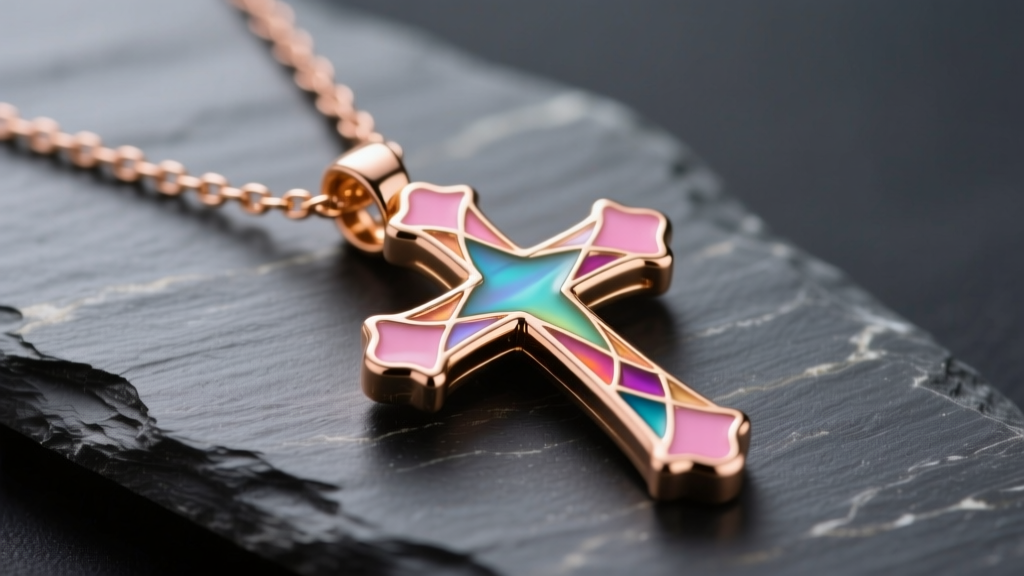
Many pink cross pendants utilize enamel to achieve a vibrant, opaque pink finish. The care protocol depends entirely on the enameling technique used by the manufacturer:
Vitreous (Hot) Enamel
Vitreous enamel is essentially powdered glass fused to metal at temperatures exceeding 1400°F. It is highly durable, scratch-resistant, and will not fade under UV light. You can safely clean vitreous enamel using warm water and a mild, phosphate-free dish soap. However, because it is glass, it is susceptible to thermal shock and impact. Never expose a vitreous enamel cross to sudden temperature changes, such as moving from a hot shower into freezing winter air, as this can cause micro-fractures in the glass inlay.
Cold Enamel (Epoxy Resin)
More common in affordable or fashion-tier pink cross necklaces, cold enamel is a two-part epoxy resin. It is significantly softer (around a 2-3 on the Mohs scale) and highly sensitive to chemicals. Perfumes, lotions, and alcohol-based cleaners will cause cold enamel to cloud, soften, or peel away from the metal backing. Clean resin-based pieces only with a slightly damp microfiber cloth, and never submerge them in water.
Gemstone-Specific Protocols: Morganite, Rose Quartz, and Pink Sapphire
When your pink cross necklace features gemstones, the cleaning methodology must adapt to the stone's crystal structure and optical properties.
Morganite and the Oleophilic Trap
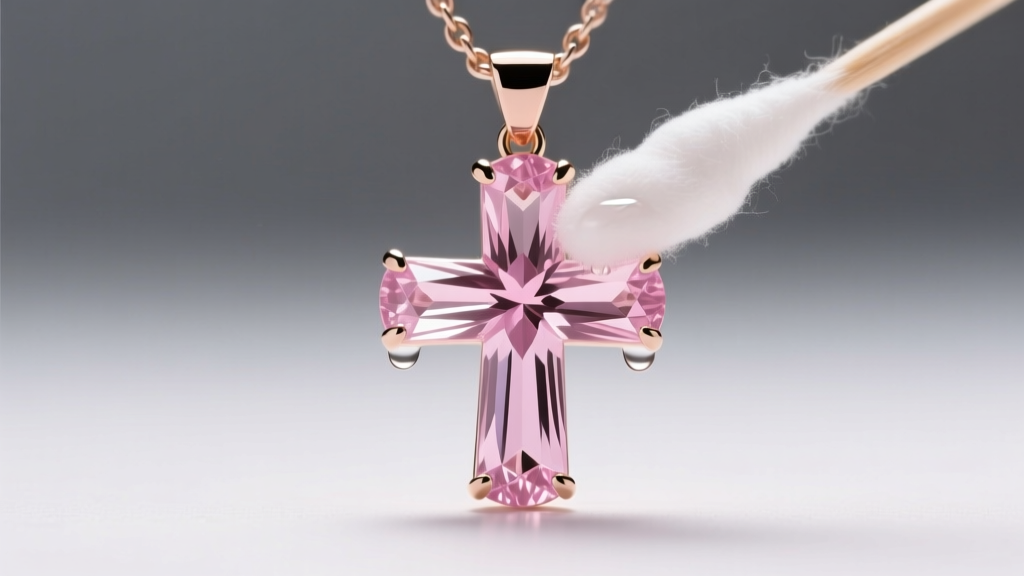
Morganite, a pink variety of beryl, is notoriously oleophilic, meaning it aggressively attracts and holds onto skin oils, sebum, and cosmetic residues. A morganite cross that looks cloudy and dull is rarely scratched; it is usually coated in a microscopic layer of oil on the pavilion (underside) of the stone. While the Gemological Institute of America (GIA) recommends warm soapy water for beryl, a more effective field-expedient method for restoring morganite's brilliance is to use a cotton swab dipped in 90% isopropyl alcohol to gently wipe the underside of the stone. The alcohol cuts through the grease instantly and evaporates without leaving a residue.
Rose Quartz and Thermal Sensitivity
Rose quartz achieves its soft pink color through trace amounts of titanium, iron, or manganese, and sometimes through microscopic fibrous inclusions. These inclusions make rose quartz highly susceptible to thermal shock and prolonged UV exposure, which can cause the pink color to fade to a pale, chalky white. Never use a steam cleaner or hot water on a rose quartz cross pendant. Stick to room-temperature distilled water and a soft horsehair brush.
Pink Sapphire and Fracture Filling
Pink sapphires (Mohs 9) are exceptionally durable and generally safe for ultrasonic cleaning. However, many commercial-grade pink sapphires undergo fracture filling with lead-glass to improve clarity. If your sapphire is fracture-filled, ultrasonic vibrations and acidic cleaners (like lemon juice or vinegar) will dissolve the filler, leaving the stone heavily fractured and cloudy. Always verify your gemstone's treatment status before utilizing mechanical cleaning methods.
The Cleaning Method Decision Matrix
Use the following framework to determine the safest cleaning protocol for your specific pink cross necklace configuration:
| Material Combination | Ultrasonic Safe? | Steam Safe? | Recommended Primary Method |
|---|---|---|---|
| 14k Rose Gold (No Stones) | Yes | Yes | Warm water, mild dish soap, soft brush |
| Rose Gold + Morganite | No | No | Isopropyl alcohol on pavilion, mild soap on crown |
| Rose Gold + Rose Quartz | No | No | Room-temp distilled water, microfiber cloth |
| Gold + Vitreous Pink Enamel | No | No | Warm soapy water, avoid thermal shock |
| Gold + Cold Pink Enamel (Resin) | No | No | Dry wipe with microfiber cloth only |
| Gold + Fracture-Filled Pink Sapphire | No | No | Damp cloth, avoid all acids and vibrations |
Chain Maintenance and Clasp Integrity
The chain and clasp of your necklace endure the most mechanical stress and environmental exposure. Lobster clasps and spring-ring clasps rely on a tiny internal tension spring. When lotion, dead skin cells, and pocket lint infiltrate the clasp hinge, the spring mechanism becomes sluggish, eventually failing to close completely. This is the leading cause of lost pendants. To maintain clasp integrity, use a wooden toothpick to gently clear debris from the hinge crevice every few months, followed by a single drop of lightweight synthetic watch oil applied with a needle-tip oiler. Wipe away any excess oil immediately to prevent it from attracting more dirt.
For the chain itself, delicate cable or rope chains in 14k rose gold are prone to kinking. Never pull a kinked chain forcefully. Instead, lay the chain flat on a glass surface, apply a drop of baby oil to the knot, and use two fine sewing needles to gently tease the links apart under a magnifying loupe.
Storage and Environmental Hazards
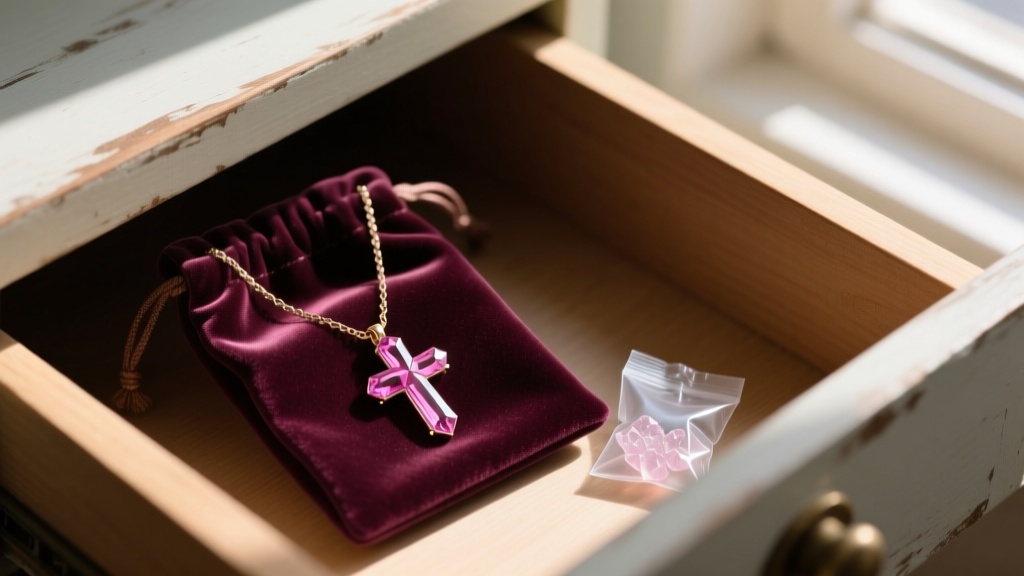
Proper storage is just as critical as active cleaning. The copper in rose gold and the chemical dyes used in some treated pink gemstones are highly reactive to sulfur compounds and high humidity. Storing your pink cross necklace in a standard bathroom jewelry box exposes it to fluctuating humidity and airborne sulfur from personal care products, accelerating tarnish and degrading cold enamel.
Expert Storage Protocol: Keep your necklace in a sealed, airtight polyethylene bag with a 3M anti-tarnish strip and a small silica gel desiccant packet. This creates a micro-climate that neutralizes sulfur gases and maintains a relative humidity below 40%, effectively halting copper oxidation and resin degradation.
Troubleshooting Common Failures
Chipped Enamel Inlays
If your vitreous pink enamel cross chips, do not attempt to fill it with clear nail polish or epoxy. This will contaminate the metal bed and make professional repair impossible. Take the piece to a specialized enamelist—a jeweler who works with a kiln and glass frit—rather than a standard bench jeweler, as the entire enamel cell may need to be cleaned and re-fired.
Fading Pink Gemstones
If your rose quartz or pink topaz cross pendant is noticeably losing its color saturation, it may be due to prolonged UV exposure or the fading of artificial irradiation treatments. While natural fading cannot be reversed, a skilled lapidary can sometimes re-polish the stone to remove a superficial layer of sun-damaged material, restoring the deeper, more saturated color beneath the surface.
By understanding the specific material composition of your pink cross necklace and adhering to these targeted maintenance protocols, you ensure that both the metallurgical finish and the gemological brilliance remain pristine for decades of wear.


