How to Choose a Pink Gem Necklace: Morganite, Sapphire & Quartz
Discover how to choose the perfect pink gem necklace. We compare morganite, pink sapphire, rose quartz, and tourmaline on durability, price, and style.

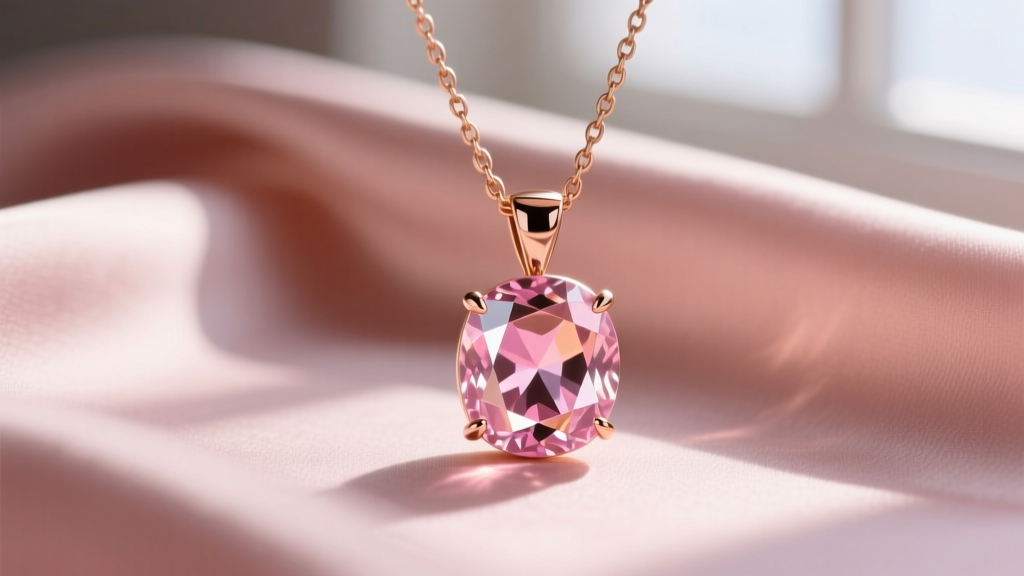
When selecting a pink gem necklace, the aesthetic appeal of the stone is only half the equation. Unlike earrings or brooches, necklaces and pendants are subject to unique physical stresses. A pendant swings with your movement, occasionally striking tables or zippers, while the chain bears the dynamic load of the stone's weight. To make a wise investment, you must understand the gemological properties, durability metrics, and setting requirements of popular pink gemstones.
In this comprehensive material comparison, we break down the top pink gems used in fine jewelry—Morganite, Pink Sapphire, Kunzite, and Pink Tourmaline—analyzing their Mohs hardness, cleavage planes, and optimal metal pairings to help you choose a piece that will last a lifetime.
The Mohs Scale and Pendant Durability
The Mohs scale of mineral hardness is the standard benchmark for gemstone durability, but it is often misunderstood. The scale is relative, not absolute. For instance, a diamond (Mohs 10) is not just twice as hard as a topaz (Mohs 8); it is exponentially harder. For a pink gem necklace, hardness dictates how well the stone will resist scratching from airborne dust (which contains quartz particles at Mohs 7). However, toughness—a stone's resistance to chipping and breaking—is equally critical for pendants.
| Gemstone | Mohs Hardness | Cleavage / Toughness | Best Setting Type |
|---|---|---|---|
| Pink Sapphire | 9.0 | No true cleavage; Excellent toughness | Prong or Tension |
| Morganite | 7.5 - 8.0 | Indistinct cleavage; Good toughness | Halo or Bezel |
| Pink Tourmaline | 7.0 - 7.5 | Brittle; Prone to internal tension fractures | Protective Bezel |
| Kunzite | 6.5 - 7.0 | Perfect cleavage in two directions; Poor toughness | Deep Bezel |
| Rose Quartz | 7.0 | No cleavage; Good toughness but brittle edges | Cabochon Bezel |
Gemological Deep Dive: Top Pink Stones
Morganite (The Beryl Family)
Morganite is the pink to peach-pink variety of beryl, sharing its mineral family with emerald and aquamarine. Its color is derived from trace amounts of manganese. According to the Gemological Institute of America (GIA), morganite is strongly pleochroic, meaning it can show different colors when viewed from different angles. Master cutters must orient the rough carefully to maximize the pink saturation.
Durability & Settings: While its Mohs rating of 7.5 to 8 makes it suitable for daily wear, morganite often forms in large crystals, leading to massive carat weights. A 12-carat morganite pendant is common, but the large surface area increases the risk of girdle chipping. We highly recommend a 14k or 18k rose gold halo setting, which not only amplifies the stone's warm peach tones but provides a physical bumper around the vulnerable edges.
Pricing: Expect to pay between $150 and $300 per carat for eye-clean, well-saturated stones. Lighter, pastel stones are significantly cheaper but lack the vibrant fire of deeper hues.
Pink Sapphire (Corundum)
For unmatched durability in a pink gem necklace, pink sapphire is the undisputed champion. Ranking at a 9 on the Mohs scale, corundum is second only to diamond. The pink hue is caused by trace elements of chromium; the more chromium present, the deeper and more intense the pink color.
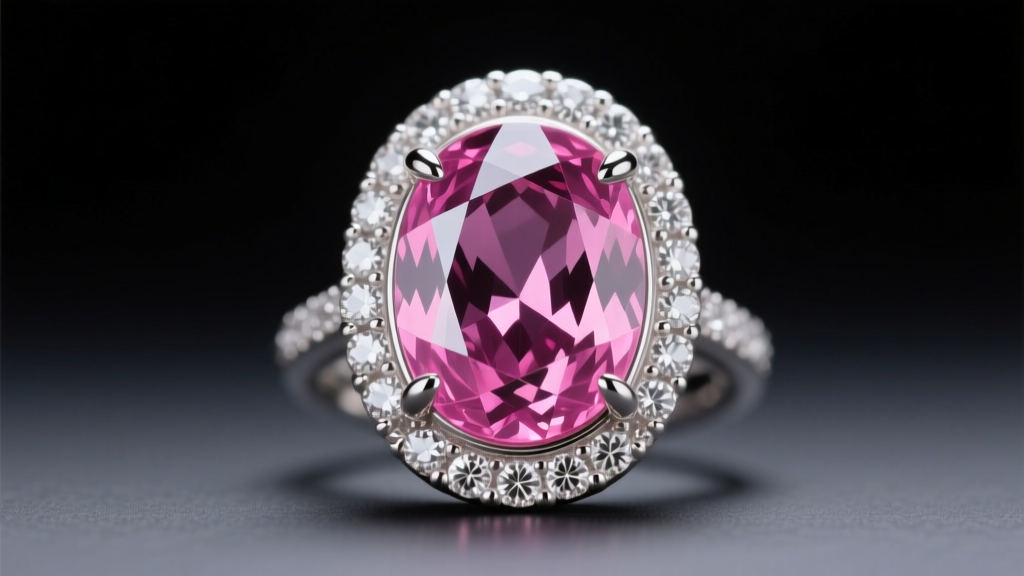
Treatments & Value: The vast majority of pink sapphires on the market are heat-treated to improve color and clarity. This is a permanent, stable, and widely accepted practice. However, unheated pink sapphires with natural, vivid saturation (often sourced from Madagascar or Sri Lanka) command massive premiums. While a beautiful heat-treated pink sapphire pendant might cost $800 to $1,500 per carat, an unheated, gem-quality stone with a GIA origin report can easily exceed $5,000 per carat.
Best Pairings: Because pink sapphires possess a cool, glassy luster, they look spectacular in platinum or 18k white gold settings. A micro-pave diamond halo adds necessary contrast and elevates the stone's brilliance.
Kunzite and Pink Tourmaline (The High-Maintenance Beauties)
Kunzite (the pink variety of spodumene) and Pink Tourmaline offer breathtaking colors but come with strict wear-and-care caveats that every buyer must understand.
- Kunzite: Known for its striking lavender-pink hue, kunzite has perfect cleavage in two directions, meaning a sharp blow can split the stone cleanly. More importantly, kunzite is highly sensitive to ultraviolet light. Prolonged exposure to direct sunlight will cause its pink color to fade permanently. Verdict: Reserve kunzite pendants for evening wear and store them in a dark jewelry box.
- Pink Tourmaline: Tourmaline is notorious for internal liquid inclusions and tension fractures. It is a brittle stone that can crack if subjected to the vibrations of an ultrasonic cleaner. Furthermore, tourmaline often exhibits 'watermelon' zoning (pink centers with green edges). Verdict: Always choose a bezel setting for tourmaline pendants and clean them only with warm, soapy water and a soft brush.
Chain Mechanics: Matching the Metal to the Mass
A common failure point in necklaces is not the gemstone, but the chain. The structural integrity of your chain must be matched to the physical weight and dimensions of your pendant.
"A 15-carat morganite pendant weighs roughly 3 grams. When you factor in the dynamic force of the pendant swinging as the wearer walks, a standard 0.8mm cable chain will eventually kink, weaken, and snap. For any pink gemstone over 5 carats, I mandate a minimum 1.2mm to 1.5mm box, wheat, or rope chain to ensure long-term structural integrity."
— Master Bench Jeweler, Jewel Style Radar Archives
Furthermore, consider the bail (the loop connecting the pendant to the chain). For heavy stones like large morganites or dense sapphires, avoid delicate soldered bails. Opt for a solid, cast bail with a reinforced jump ring to prevent the pendant from detaching during wear.
Budgeting and Value Tiers
When shopping for a pink gem necklace, aligning your budget with the right material ensures you get the best visual impact for your investment.
Tier 1: Accessible Elegance ($100 - $500)
In this range, Rose Quartz and Pink Opal reign supreme. Rose quartz is almost always cut en cabochon (smooth and unfaceted) due to its cloudy translucency. It is highly affordable ($2 to $10 per carat) and pairs beautifully with oxidized silver or brass for a bohemian aesthetic. You can also find smaller (1-2 carat) heat-treated pink sapphires in sterling silver settings at the top end of this tier.
Tier 2: The Sweet Spot ($500 - $2,000)
This is the domain of Morganite. Here, you can afford a substantial 6 to 10-carat emerald-cut or oval morganite set in 14k rose gold with diamond accents. You are paying for excellent size, high clarity, and the luxurious warmth that only morganite and rose gold can provide together.
Tier 3: Investment & Heirloom ($2,000+)
At this level, you are looking at high-clarity Pink Sapphires or rare, unheated specimens. You also enter the territory of premium Pink Diamonds (though these are exceptionally rare and often cost tens of thousands per carat). Expect 18k gold or platinum settings, custom-forged chains, and meticulous micro-pave craftsmanship.
Care and Maintenance Protocols
To maintain the optical properties of your pink gem necklace, adhere to these material-specific cleaning protocols:
- Sapphires: Safe for ultrasonic and steam cleaners. Can withstand harsh chemicals, though mild soap is always preferred.
- Morganite: Generally safe for ultrasonic cleaners unless the stone has surface-reaching fractures or has been fracture-filled with resin (a common treatment for lower-grade beryl). When in doubt, use a soft toothbrush and mild dish soap.
- Tourmaline & Kunzite: Never use ultrasonic or steam cleaners. The thermal shock and vibrations will shatter these stones. Wipe gently with a damp microfiber cloth.
By understanding the specific gemological properties, setting requirements, and chain mechanics detailed above, you can confidently select a pink gem necklace that is not only visually stunning but structurally engineered to endure.


