Pink Tourmaline Bead Necklace Buying Guide: What to Look For
Discover what to look for in a pink tourmaline bead necklace. Learn about color grading, stringing materials, bead sizing, and pricing in our expert guide.

The Allure of Pink Tourmaline: An Introduction
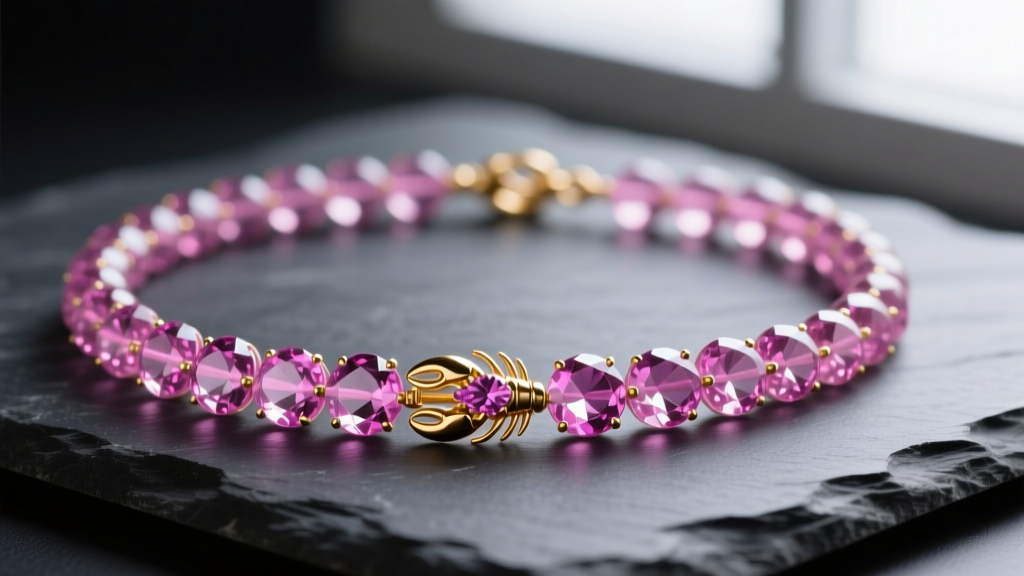
When investing in a pink tourmaline bead necklace, understanding the nuanced differences between gemstone grades, stringing durability, and clasp mechanics is essential. Pink tourmaline is a captivating gemstone, celebrated for its wide spectrum of hues ranging from pale, delicate pastel pinks to deep, saturated magentas. Unlike faceted gemstones, which are cut to maximize light return and brilliance, tourmaline beads are prized for their depth of color, translucency, and the unique way they interact with light as a unified strand. According to the Gemological Institute of America (GIA), tourmaline is a complex borosilicate mineral that exhibits strong pleochroism, meaning it can show different color intensities when viewed from different angles. This optical phenomenon makes the cutting and drilling of beads a highly specialized skill. In this comprehensive buying guide, we will dissect the critical factors you must evaluate to ensure you are purchasing a high-quality, durable, and authentic pink tourmaline bead necklace.
Understanding the Color Spectrum: Rubellite vs. Standard Pink
Not all pink tourmaline is created equal, and the terminology used in the gem trade can significantly impact the price and perceived value of your necklace. The most critical distinction to understand is the difference between standard pink tourmaline and 'rubellite.'
The Rubellite Distinction
Rubellite is the trade name for tourmaline that exhibits a highly saturated, deep pink to red color that remains vivid under both daylight and incandescent lighting. If a pink tourmaline bead shifts to a brownish or noticeably paler hue under indoor lighting, it is generally classified as standard pink tourmaline, not rubellite. When shopping for a premium necklace, look for beads that maintain their magenta or raspberry saturation in various lighting environments. Standard pink tourmaline is beautiful and often more affordable, offering lovely pastel or bubblegum hues, but it should not command rubellite-level pricing.
Evaluating Bead Quality: Clarity, Cut, and Drill Holes
Gemstone beads are typically cut from rough material that contains more inclusions than the rough used for faceted stones. However, this does not mean you should accept poor quality. Here is what to scrutinize when examining a strand.
Clarity and Translucency
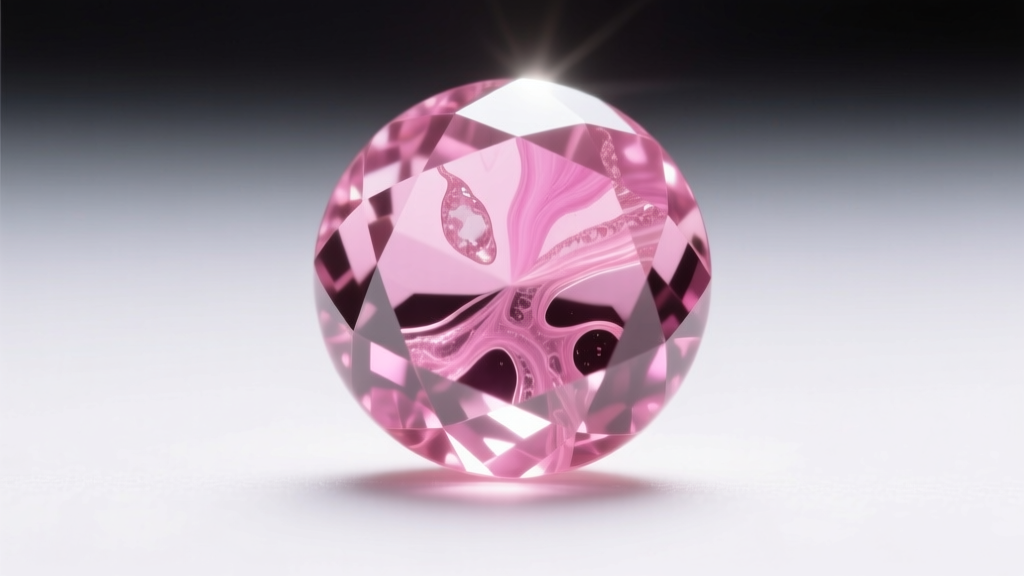
While completely flawless pink tourmaline beads are exceptionally rare and prohibitively expensive, high-quality beads should be at least semi-translucent. Avoid beads that are entirely opaque or chalky, as these indicate a lower grade of rough. Furthermore, be highly cautious of beads with surface-reaching fractures or deep pits. Tourmaline has a Mohs hardness of 7 to 7.5, making it relatively durable, but surface fractures can catch on stringing materials, leading to premature wear and eventual strand breakage. As noted by Lang Antiques University, heavy internal inclusions like liquid-filled needles are common and acceptable if they do not compromise the structural integrity of the bead.
The Importance of the Drill Hole
Examine the drill holes at the top and bottom of each bead. They should be centered, smooth, and free of jagged edges or 'blowouts' (chipping around the hole where the drill bit exited the stone). Rough or jagged drill holes will act like microscopic saws, slowly fraying the silk or nylon thread holding your necklace together.
The Critical Role of Stringing Materials and Knotting
The longevity of your pink tourmaline bead necklace depends entirely on the stringing material and technique used. Because tourmaline beads are relatively heavy and possess hard, sharp edges around the drill holes, the wrong stringing material will lead to catastrophic failure.
| Stringing Material | Durability & Stretch | Best Application |
|---|---|---|
| Natural Silk Thread | Low durability, stretches over time, degrades with moisture. | Traditional knotting for lightweight, high-end vintage styles. |
| Nylon (e.g., Silamide) | High durability, minimal stretch, resistant to moisture. | Modern knotting for medium to heavy gemstone beads. |
| Micro-Wire (49-Strand) | Extremely high durability, no stretch, requires crimp beads. | Heavy, large-diameter beads (8mm+) without knotting. |
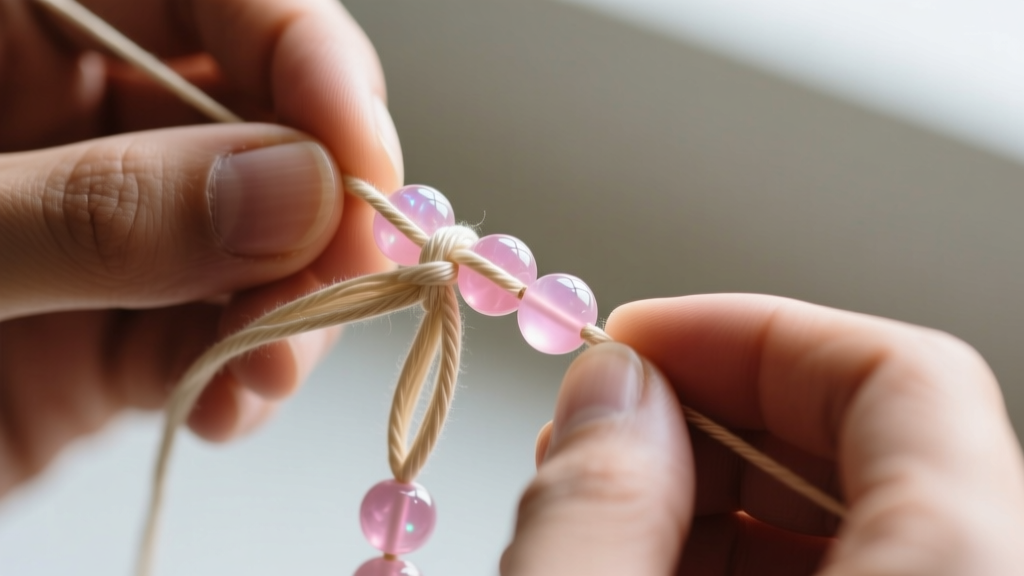
For a premium pink tourmaline bead necklace, hand-knotting between each bead using high-grade nylon or premium silk is the gold standard. Knotting serves two purposes: it prevents the beads from grinding against one another (which can cause surface abrasion over decades of wear), and it ensures that if the strand breaks, you only lose one bead rather than the entire necklace. If the beads are larger than 8mm, a 49-strand stainless steel micro-wire coated in nylon is often preferred for its superior tensile strength, though this method typically omits knots in favor of a seamless, draped look.
Clasp Hardware and Proportions
A heavy strand of 8mm or 10mm pink tourmaline beads requires a clasp that can support its weight without bending or failing. Avoid cheap base-metal spring rings, which are prone to snapping under tension and can tarnish, leaving dark marks on the stringing material and your skin.
Recommended Clasp Types
- Lobster Clasps (14k or 18k Gold): The most secure and practical option for everyday wear. Ensure the jump ring connecting the clasp to the bead strand is soldered shut or made of heavy-gauge wire.
- Box Clasps with Safety Latches: Ideal for multi-strand necklaces or very heavy, large-bead single strands. They provide a seamless look and mechanical security.
- Toggle Clasps: While aesthetically pleasing, toggles can slip open if the necklace is too long or if the beads are not heavy enough to keep the bar pulled taut against the ring. Use with caution on shorter choker lengths.
Pricing Tiers and Market Value
The price of a pink tourmaline bead necklace varies wildly based on bead diameter, color saturation, and clarity. Understanding these tiers will protect you from overpaying for commercial-grade stones or underestimating the value of gem-quality strands.
Commercial Grade ($50 - $150 per strand)
Beads in the 4mm to 6mm range with pale, uneven color, heavy opacity, and visible surface pitting. These are often mass-strung on wire without knots and finished with sterling silver or gold-plated clasps.
Fine Jewelry Grade ($200 - $600 per strand)
Beads ranging from 6mm to 8mm with consistent, vibrant pink coloration, good translucency, and clean drill holes. These strands are typically hand-knotted on silk or nylon and finished with solid 14k gold clasps.
Investment / Rubellite Grade ($800 - $2,500+ per strand)
Large beads (8mm to 12mm) exhibiting deep, saturated rubellite color with high translucency and minimal internal fracturing. These are rare, as large, clean tourmaline rough is usually reserved for high-value faceted stones rather than being carved into beads.
Red Flags and Authenticity Checks
When shopping, be vigilant for synthetic or imitation stones. Glass imitations are common and can be identified by their lack of internal inclusions, perfectly uniform color, and the presence of perfectly round air bubbles (which do not occur naturally in tourmaline). Additionally, some lower-grade pale tourmaline beads are dyed to mimic the expensive rubellite color. To check for dye, examine the bead under a jeweler's loupe; if you see color concentrated in the fractures or around the drill holes, the stone has likely been treated. While irradiation and heat treatment are common and accepted in the tourmaline market to enhance color, dyeing is considered a deceptive practice if not disclosed. Always request a certificate of authenticity or a detailed receipt stating the natural origin and any known treatments of the gemstones before finalizing your purchase.


