Plunder Design Necklace Repair: Fix Tarnish, Clasps & Weight
Learn how to troubleshoot and repair your plunder design necklace. Expert fixes for heavy clasps, brass tarnish, chain tangling, and pendant balance.

The Unique Challenges of Artisan Mixed-Metal Jewelry
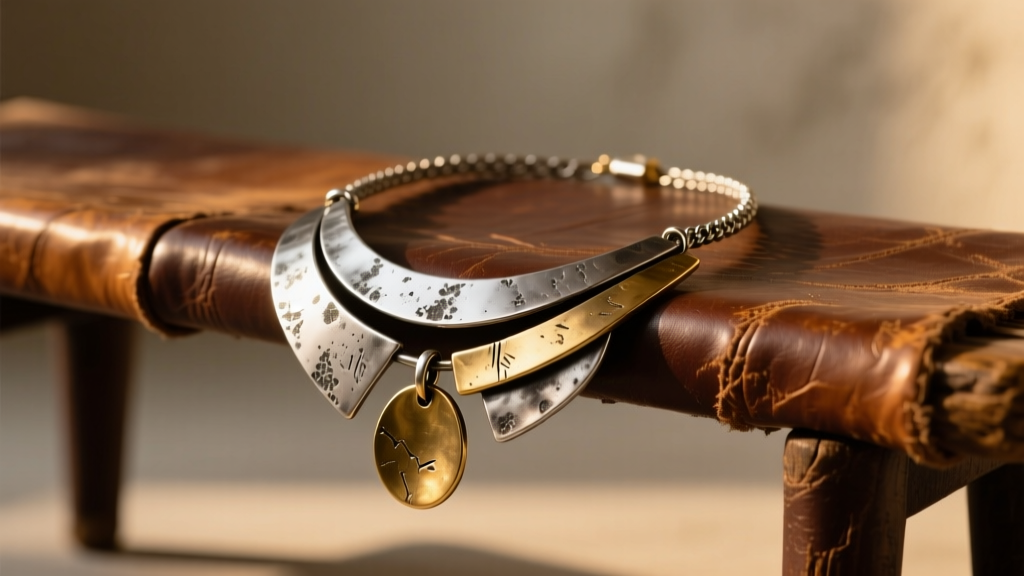
The allure of a plunder design necklace lies in its bold, eclectic aesthetic. These statement pieces typically feature a mix of oxidized sterling silver, raw jeweler's brass, copper accents, and heavy cast pendants. However, as of 2026, the ongoing trend toward oversized, artisan-cast mixed metals has made structural maintenance more critical than ever. The very elements that give these necklaces their rugged charm—mixed alloys, heavy focal points, and complex chain weaves—also create specific points of failure.
Whether you are dealing with a clasp that keeps snapping under the weight of a brass medallion, unwanted green skin discoloration, or a tangled multi-strand chain, troubleshooting these issues requires an understanding of metallurgy and jewelry mechanics. Below, we break down the most common problems associated with plunder-style necklaces and provide actionable, professional-grade solutions.
Diagnosing Tarnish vs. Intentional Patina
One of the most frequent complaints from owners of mixed-metal jewelry is confusion over cleaning. A plunder design necklace often relies on intentional oxidation (patina) to highlight the textured crevices of a cast pendant. If you use a standard liquid silver dip, you will strip this dark contrast, leaving the piece looking flat and artificially bright.
Targeted Polishing Techniques
To clean the high points of your silver and brass without ruining the antique finish in the recesses, avoid abrasive pastes. Instead, use a precipitated calcium carbonate polish or a treated Pro-Polish microfiber cloth. Apply the polish only to the raised surfaces using a soft cotton swab. For raw brass components that have developed a dull, brownish oxidation (rather than the desirable dark antiquing), a mild application of Renaissance Wax will seal the metal and restore a soft, protective luster.
Preventing Copper and Brass Skin Discoloration
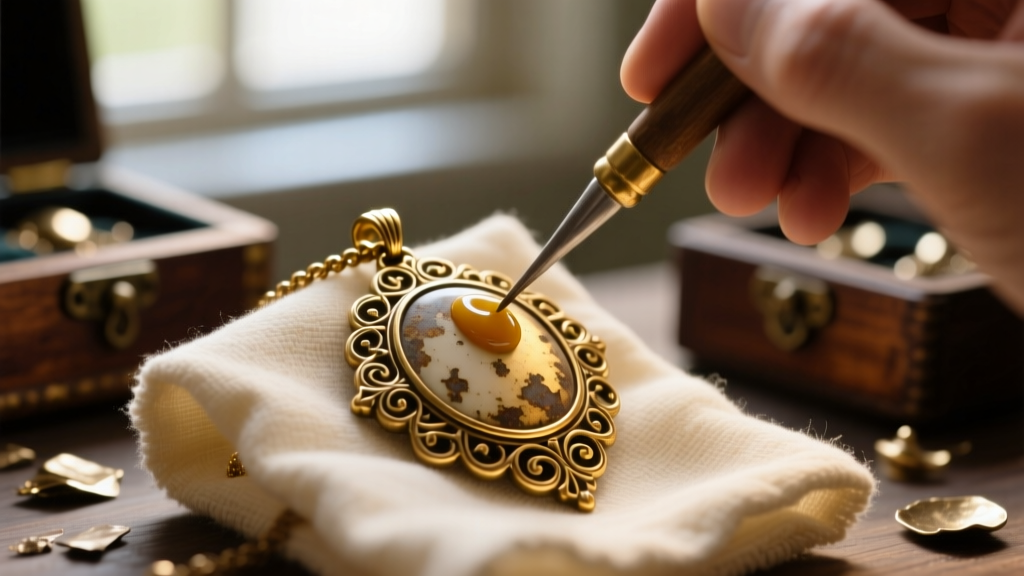
Because plunder-style pieces frequently incorporate copper and high-copper brass (like C260 jeweler's brass), they are highly reactive to the acidity in human sweat. This results in the notorious "green skin" effect. To troubleshoot this without altering the metal's appearance, apply a micro-thin layer of clear polyurethane spray or a specialized jewelry shielding lacquer to the back of the pendant and the inner links of the chain that rest against your collarbone. Reapply every three to six months depending on wear frequency.
Reinforcing Heavy Chain Links and Clasp Failures
The physics of a heavy statement necklace often overwhelm standard jewelry findings. A typical plunder design necklace can weigh anywhere from 80 to 150 grams. Standard 12mm lobster clasps and 20-gauge jump rings are simply not engineered to support this dynamic load, leading to warped rings and snapped clasps.
Upgrading Your Findings
According to structural guidelines from the Gemological Institute of America (GIA), the integrity of a necklace relies heavily on its weakest link—usually the jump ring connecting the clasp. If your jump rings are pulling apart, you must upgrade the wire gauge.
| Finding Type | Standard Gauge (Failure Risk) | Recommended Upgrade | Max Weight Capacity |
|---|---|---|---|
| Jump Rings | 20-gauge / 18-gauge | 14-gauge or 12-gauge (Soldered) | Up to 200g |
| Lobster Clasp | 12mm Standard | 18mm Heavy-Duty Trigger | Up to 150g |
| S-Hook Clasp | 16-gauge Wire | 12-gauge Forged Wire | Up to 250g |
Note: Always ensure upgraded jump rings are professionally soldered shut. A heavy pendant will easily pry open an unsoldered 14-gauge ring over time due to leverage and torque.
Solving the "Neck Strain" and Balance Issues
A common design flaw in heavy artisan necklaces is a top-heavy pendant that constantly flips upside down or pulls uncomfortably on the back of the neck. This happens when the bail (the loop connecting the pendant to the chain) is not properly aligned with the pendant's center of gravity.
The Counterweight Method
If your plunder design necklace keeps flipping, you can troubleshoot the balance by adding a discreet counterweight. Attach a small, polished sterling silver or brass bead (roughly 8mm to 10mm in diameter) to the chain directly opposite the pendant, near the clasp at the nape of the neck. This shifts the center of gravity backward, keeping the heavy focal point anchored flat against your chest.
Modifying the Bail
Alternatively, a jeweler can replace a standard loop bail with a V-ring bail or a wide saddle bail. This distributes the weight of the heavy pendant across a wider section of the chain, reducing the localized stress that causes the chain to kink and the pendant to slide off-center.
Untangling Complex Multi-Strand and Mixed-Media Chains
Plunder-style chains often feature textured, interlocking links, oxidized spikes, or mixed-media elements like leather cords woven through metal links. These textures act like microscopic hooks, making them highly prone to severe tangling. Pulling at a tangled heavy chain will only tighten the knots and warp the metal.
The Ceramic Tile and PTFE Technique
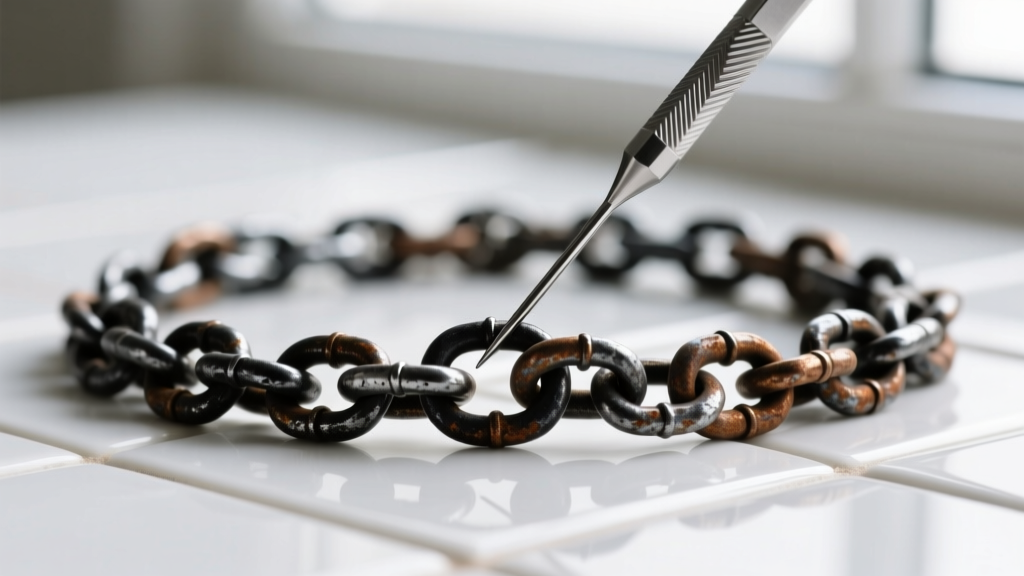
To safely detangle a thick, oxidized chain, lay it flat on a smooth, white ceramic tile. The bright, reflective surface provides high contrast, allowing you to see the exact overlap of the dark, oxidized links. Use two fine-tipped jewelry needles or sewing pins to gently work the center of the knot outward.
For stubborn knots, apply a single drop of dry PTFE (Teflon) lubricant. Unlike oil-based lubricants (like WD-40 or baby oil), dry PTFE will reduce the friction between the metal links without attracting dust or leaving a greasy residue that ruins the metal's patina. Once untangled, wipe the chain down with a dry microfiber cloth. For ongoing care and professional maintenance insights, the American Gem Society provides excellent guidelines on handling textured and mixed-metal chains without damaging their finishes.
When to Seek Professional Artisan Repair
While clasps, tangles, and tarnish can be managed at home, structural breaks on a plunder design necklace often require professional intervention. Because these pieces mix metals with vastly different melting points—sterling silver melts at roughly 1,640°F (893°C), while jeweler's brass melts at a much lower 1,680°F (915°C) but begins to weaken and discolor at much lower temperatures—traditional torch soldering is incredibly risky.
If a brass link snaps or a silver bezel pulls away from a copper backing, do not let a standard mall jeweler use a torch. Seek out a bench jeweler who specializes in laser welding. Laser welders use pinpoint, localized heat that can fuse mixed metals without transferring enough ambient heat to melt the surrounding brass or destroy the intentional chemical patina of the piece.
Final Maintenance Checklist
- Monthly: Wipe down brass and copper elements with a dry microfiber cloth to remove acidic skin oils.
- Bi-Annually: Check the jump rings connecting the clasp for signs of oval-stretching; replace with soldered 14-gauge rings if necessary.
- Annually: Reapply a jewelry-safe polyurethane sealant to the back of heavy pendants to prevent skin discoloration.
By understanding the specific metallurgical and structural quirks of your jewelry, you can ensure your statement pieces remain bold, beautiful, and structurally sound for years to come.


