The Plunder Necklace: Engineering Asymmetrical Artifact Jewelry
Master the plunder necklace with our technical guide on weight distribution, mixed-metal galvanic corrosion, and load-bearing clasp engineering.


Defining the Plunder Necklace Architecture
In the lexicon of contemporary jewelry design, the plunder necklace represents a radical departure from traditional symmetrical pendants. It is an avant-garde, asymmetrical suspension system characterized by the curated clustering of disparate masses—historical replica coins, raw uncut gemstones, vintage horological components, and mixed-metal relics. However, what appears to the untrained eye as a chaotic hoard of treasure is, in reality, a highly calculated exercise in structural engineering and kinematic balance.
Designing a plunder necklace in 2026 requires navigating complex metallurgical and physical challenges. When you suspend 250 grams of unevenly distributed artifacts from a human clavicle, standard jewelry making techniques fail catastrophically. This deep dive explores the technical specifications, material sciences, and load-bearing mathematics required to engineer a high-end plunder necklace that is both visually striking and structurally sound.
Metallurgical Challenges: Mixed Metals and Galvanic Corrosion
The defining aesthetic of a plunder necklace relies on mixing various metals: oxidized sterling silver, raw brass, copper, and sometimes bronze. When these dissimilar metals are in direct physical contact in the presence of an electrolyte (such as human perspiration or high ambient humidity), they form a galvanic cell. This leads to rapid galvanic corrosion, where the more anodic metal (like copper or zinc in brass) sacrifices itself and degrades rapidly.
Dielectric Isolation Techniques
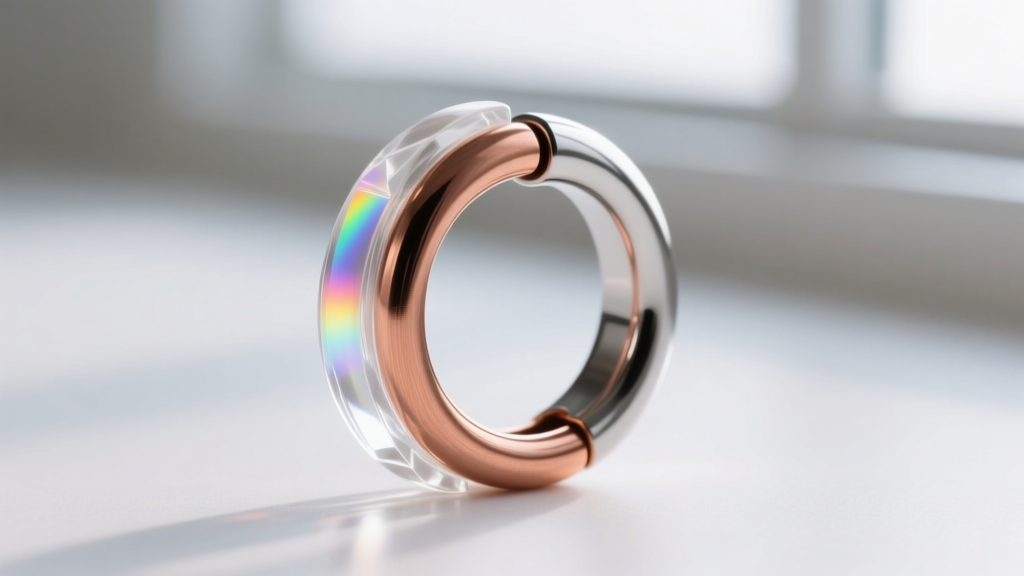
To prevent the structural failure of connection points, expert jewelers must employ dielectric isolation. This involves breaking the electrical pathway between dissimilar metals using non-conductive barriers.
- Nano-Ceramic PVD Coatings: Applying a 2-3 micron layer of titanium nitride (TiN) via Physical Vapor Deposition to brass or copper findings before assembly.
- UV Resin Encapsulation: Coating the interior of copper jump rings with a thin layer of optically clear UV-cured jewelry resin before linking them to sterling silver chains.
- Nylon Micro-Washers: Using 1mm thick nylon O-rings between heavy artifact pendants and their connecting metal loops to prevent direct metal-on-metal friction and electrical contact.
Load-Bearing Engineering: Clasps and Findings
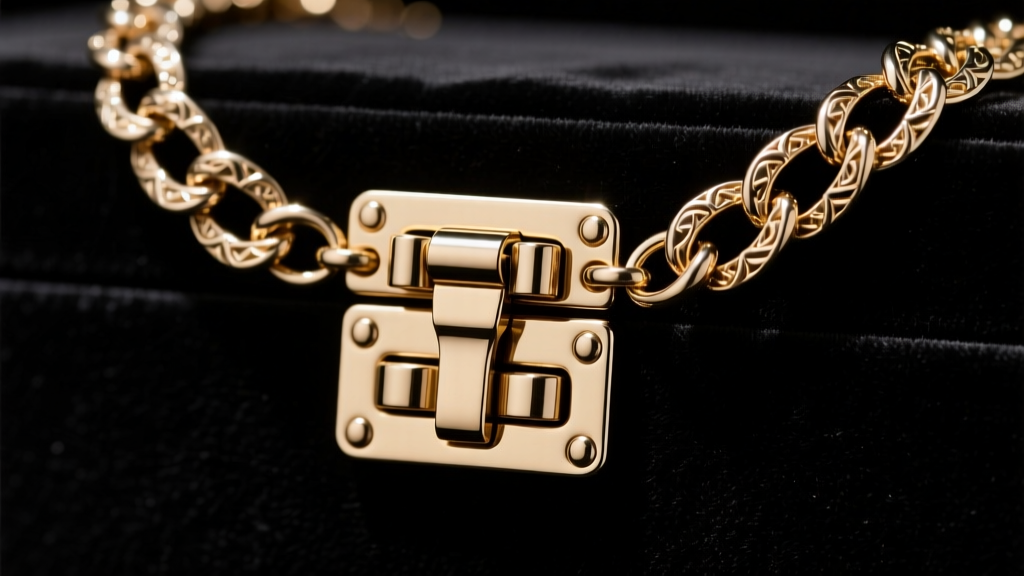
The most common point of failure in heavy artifact jewelry is the clasp. A standard 5mm cast lobster clasp has a static tensile strength of roughly 15 pounds, but its dynamic shear limit—the force applied when the necklace swings during walking or sudden movement—is drastically lower. A 200-gram plunder necklace can generate up to 600 grams of dynamic lateral force. According to structural guidelines referenced in the GIA's gemological and materials resources, relying on spring-loaded mechanisms for heavy, asymmetrical loads is a critical design flaw.
| Clasp Type | Static Weight Limit | Dynamic Shear Limit | Best Application in Plunder Designs |
|---|---|---|---|
| Standard Lobster (10mm) | 45g | 15g | Decorative terminal ends only |
| Heavy Box Clasp w/ Tongue | 180g | 120g | Primary closure for mid-weight collars |
| Neodymium Magnetic + Lock | 250g | 200g | Heavy, asymmetrical front-clasping designs |
| Bayonet Twist (Titanium) | 400g+ | 350g+ | Maximum load structural plunder necklaces |
Weight Distribution and Kinematic Balance
The "pendulum effect" is the enemy of the plunder necklace. If a heavy artifact, such as a 60-gram Roman replica coin, is suspended from a single point on a flexible chain, it will act as a plumb bob. Every step the wearer takes transfers kinetic energy into the chain, causing micro-abrasions at the jump rings and eventual metal fatigue.
The V-Suspension Framework
To counteract the pendulum effect, structural plunder necklaces utilize a V-suspension or multi-point anchor system. Instead of a single bail, heavy artifacts are drilled or framed with a double-loop bale, connecting to two separate points on the primary chain. This creates a triangular load path that dissipates lateral kinetic energy across a wider section of the collar, reducing stress on individual jump rings by up to 68%.
Jump Ring Mathematics: Gauge and Aspect Ratio
The structural nodes of any plunder necklace are the jump rings. Using standard split rings is unacceptable for heavy artifacts due to the risk of the wire unspooling under asymmetric tension. Expert fabricators use soldered flush-cut rings or heavy-gauge split rings engineered with a specific Aspect Ratio (AR).
The Aspect Ratio is calculated by dividing the Inner Diameter (ID) of the ring by the Wire Diameter (WD). For structural nodes bearing over 50 grams of artifact weight, the ideal AR is between 3.2 and 3.8. An AR lower than 3.0 makes the ring impossible to open and close without work-hardening and snapping the wire, while an AR higher than 4.5 allows the ring to distort into an oval under vertical load.
- Primary Anchor Rings: 14-gauge (1.63mm) wire with a 5.5mm ID (AR = 3.37). Must be hard-soldered.
- Secondary Linkage Rings: 16-gauge (1.29mm) wire with a 4.5mm ID (AR = 3.48). Can be heavy-duty split rings with overlapping flush cuts.
- Artifact Attachment Rings: 18-gauge (1.02mm) wire with a 3.5mm ID (AR = 3.43). Used for securing lighter horological components and raw gems.
Sourcing and Authenticating Artifacts
The soul of the plunder necklace lies in its components. When integrating raw, uncut gemstones like tourmaline or beryl, it is vital to understand their cleavage planes. As detailed by gemological authorities, setting a raw crystal requires a bezel that applies pressure only along the crystal's c-axis to prevent spontaneous fracturing. Furthermore, integrating vintage watch parts requires ultrasonic cleaning and the application of a micro-crystalline wax to halt any existing oxidation on the brass gears before they are permanently sealed into the necklace's architecture.
Conclusion: The Intersection of Chaos and Physics
The plunder necklace is a masterclass in deceptive design. It demands that the jeweler act as both an archaeologist curating a hoard and a structural engineer calculating shear forces. By respecting the anodic index of mixed metals, selecting bayonet or heavy box clasps, and employing multi-point V-suspensions, designers can create asymmetrical masterpieces that survive the rigors of daily wear. In 2026, the most celebrated plunder necklaces are not just visually chaotic; they are triumphs of hidden, meticulous engineering.


