Plus Sign Necklace Trends 2026: Minimalist Geometry & Layering
Discover 2026 plus sign necklace trends. Explore minimalist geometry, metal grades, layering techniques, and pricing for this iconic geometric pendant.

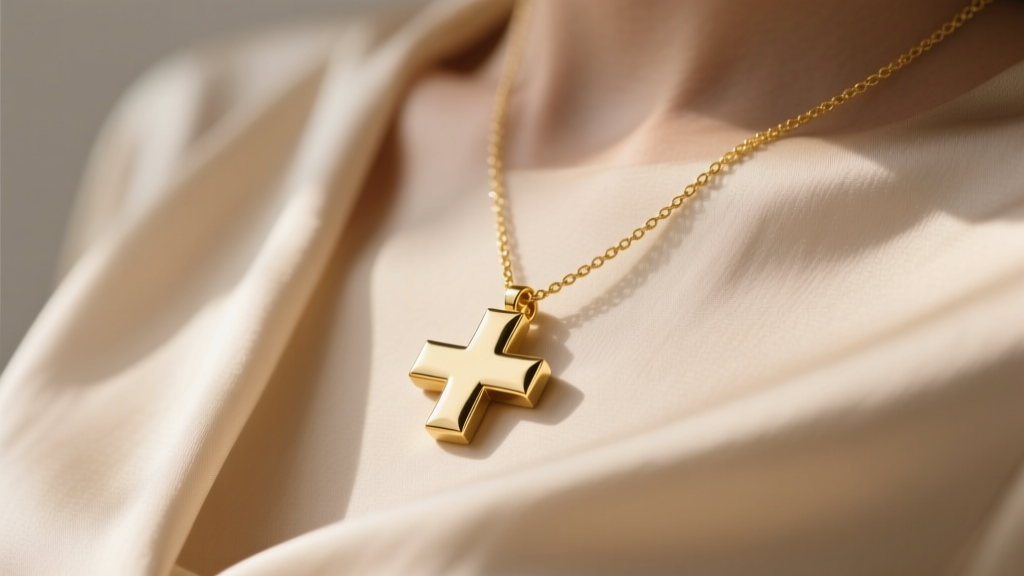
The jewelry landscape of 2026 has decisively pivoted away from the hyper-ornate, logo-heavy maximalism of the early 2020s. In its place, a new era of structured minimalism has taken hold, and at the very center of this movement is the plus sign necklace. Stripped of overt religious or medical connotations, the plus sign has been reclaimed by contemporary designers as a triumph of pure geometry. Its intersecting lines offer a visual anchor that is both mathematically perfect and endlessly versatile.
As a staple in the modern jewelry wardrobe, the plus sign pendant demands a discerning eye for proportion, metallurgy, and styling. This comprehensive trend analysis breaks down exactly how to evaluate, purchase, and layer a plus sign necklace in 2026, moving beyond generic fashion advice into the technical specifics of fine jewelry craftsmanship.
The 2026 Resurgence: From Symbol to Geometric Staple
Historically, cross and plus-shaped pendants were heavily stylized, often featuring filigree, gemstone halos, or exaggerated elongated lower arms (the Latin cross). The 2026 iteration is strictly a Greek cross—meaning all four arms are of exactly equal length. This symmetry is critical to its current appeal. When resting on the sternum, an equal-armed plus sign provides a balanced, architectural focal point that complements the clean lines of modern tailoring and structured knitwear.
Designers are currently treating the plus sign not as a symbol, but as an intersection of negative and positive space. Cutout designs, where the center of the cross is hollowed out to reveal the skin or fabric beneath, are dominating high-end collections. This reductionist approach aligns perfectly with the "quiet luxury" evolution into what industry analysts at JCK Magazine have termed "architectural essentialism."
Material Grades & Durability: What to Actually Buy
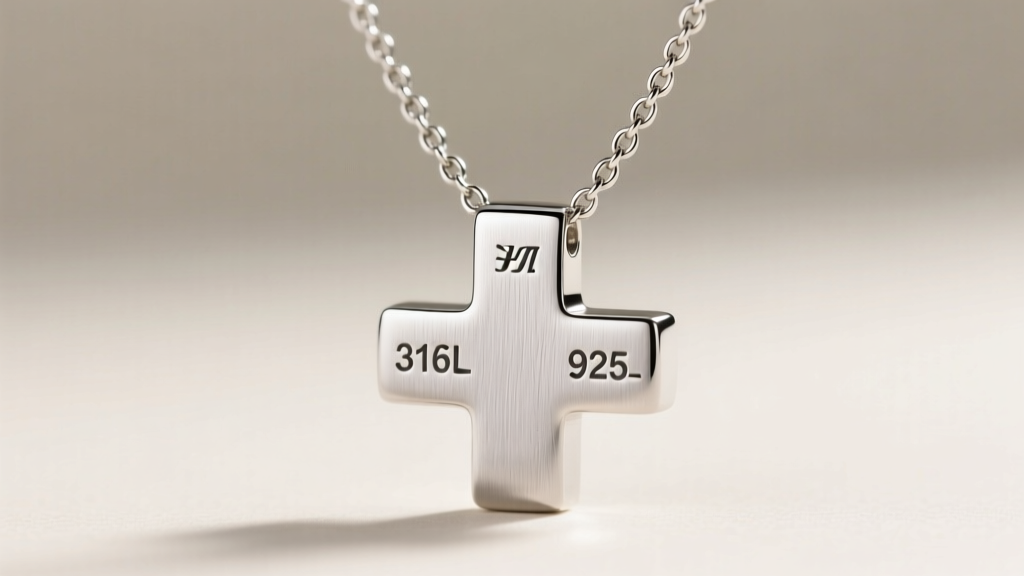
Because the plus sign relies on stark, unadorned lines, any flaw in the metal finish or structural integrity is immediately visible. Choosing the right alloy is paramount. According to the Federal Trade Commission's Jewelry Guides, metal purity stamps must be strictly accurate, but understanding the practical wearability of these metals is where true expertise lies.
The Metallurgy Breakdown
| Metal Grade | Vickers Hardness (HV) | Tarnish Resistance | 2026 Market Price Range | Best Use Case |
|---|---|---|---|---|
| 316L Surgical Steel | 150-190 HV | Exceptional | $35 - $85 | Everyday wear, active lifestyles, entry-level luxury. |
| Recycled 925 Sterling Silver (Rhodium Plated) | 60-70 HV (Base) | High (with plating) | $90 - $220 | Bridge jewelry, office wear, layered stacks. |
| 14k Solid Gold (585 Purity) | 120-150 HV | Permanent | $350 - $850 | Fine jewelry investment, heirloom pieces, sensitive skin. |
Note: The Gemological Institute of America (GIA) notes that alloy compositions in 14k gold significantly affect color and durability. For a plus sign necklace, a nickel-free 14k yellow or white gold alloy is recommended to prevent contact dermatitis while maintaining sufficient hardness to prevent the horizontal arm from bending.
Proportions & Scale: Sizing the Crossbar
The most common failure point in purchasing geometric pendants is ignoring the Z-axis (thickness). A plus sign necklace that is 20mm wide but only 0.8mm thick will warp, bend, and dent within weeks of daily wear.
- Micro (8mm - 12mm): Ideal for delicate layering or as a secondary anchor piece. Requires a minimum thickness of 1.2mm.
- Midi (15mm - 20mm): The 2026 standard for standalone wear. Must be at least 1.5mm to 2.0mm thick to maintain structural rigidity and catch the light on the beveled edges.
- Macro (25mm+): Reserved for streetwear or bold, singular statements. Often features a brushed or hammered finish to reduce visual weight.
Furthermore, pay close attention to the edge profiling. A completely flat, sharp-edged plus sign can feel abrasive against the collarbone. Look for pendants with a "softened square" profile or a subtle 45-degree chamfer on the edges, which elevates the piece from mass-produced to bespoke.
Clasp Mechanics & Bail Types
The bail (the loop connecting the pendant to the chain) dictates how the plus sign hangs.
- Integrated Stamped Bail: The highest quality option. The bail is stamped from the same sheet of metal as the crossbar, ensuring it never breaks off and allowing the pendant to sit perfectly flush.
- Soldered Jump Ring: Acceptable, provided the jump ring is fully soldered shut. An unsoldered jump ring will eventually pull apart under the pendulum motion of daily walking.
- Glued/Press-Fit Bails: Avoid entirely. These are a hallmark of fast-fashion jewelry and will fail when exposed to humidity and skin oils.
The 2026 Layering Framework: Integrating the Plus Sign
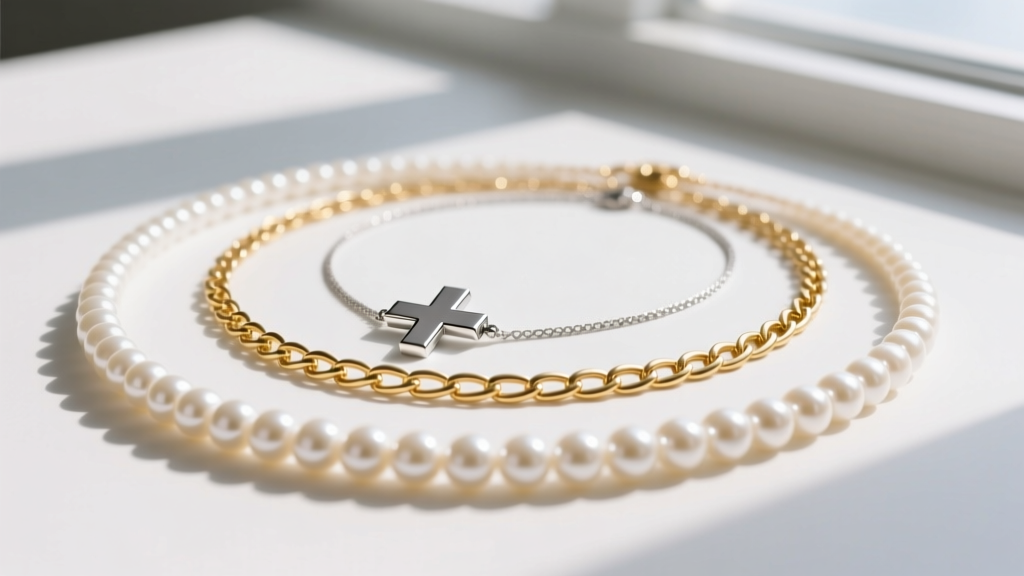
Layering in 2026 is no longer about tangling five different chains together; it is about intentional spacing and contrasting textures. The plus sign necklace acts as a geometric anchor in a stack, breaking up the organic curves of pearls or the fluid drape of snake chains.
The Gap Rule & Chain Pairings
To execute a flawless stack featuring a plus sign pendant, adhere to the "Two-Inch Gap Rule." Each subsequent necklace must be exactly two inches longer than the last to prevent the clasps and pendants from tangling and scratching one another.
The Architectural Stack (Example Configuration):
14-inch: 2.0mm 14k Gold Rope Chain (worn alone, resting on the collarbone).
16-inch: 14k Gold Herringbone Chain (provides a fluid, liquid-metal contrast).
18-inch: 1.2mm Box Chain featuring a 15mm Midi Plus Sign Pendant (the geometric focal point).
20-inch: Simple 1.0mm Cable Chain with a solitary 2mm bezel-set diamond or sapphire.
By placing the plus sign on a box chain, you introduce a rigid, linear texture that contrasts beautifully with the fluid herringbone and the twisted rope. This interplay of textures is the hallmark of advanced jewelry styling.
Market Pricing & Brand Positioning
Understanding where your purchase fits within the 2026 market hierarchy ensures you are paying for craftsmanship rather than just a brand name.
- Tier 1: Fast Fashion & Dropshippers ($15 - $45)
Typically brass or zinc alloy with flash plating (0.1 microns of gold). The plating will wear off the high-friction edges of the plus sign within 30 days. Not recommended for sensitive skin. - Tier 2: Contemporary & Bridge Brands ($80 - $250)
Solid 925 silver, often recycled, with heavy rhodium or 2-micron gold vermeil plating. Brands in this tier (like Mejuri or Monica Vinader) offer excellent entry points for trend-driven pieces with reliable return policies. - Tier 3: Fine & Independent Jewelers ($400 - $1,200+)
Solid 14k or 18k gold, often featuring hand-chased edges, hidden diamond accents (pavé set on the underside or side profile), and custom-fitted chains. This is where the plus sign transitions from a trend to a permanent heirloom.
Final Verdict: Is the Plus Sign Necklace a Permanent Fixture?
The plus sign necklace has successfully transcended its trend-cycle origins to become a fundamental geometric primitive in jewelry design. Much like the simple gold hoop or the solitaire pearl pendant, its mathematical symmetry ensures it will never look dated. By prioritizing structural thickness (minimum 1.5mm), verifying metal purity stamps, and utilizing intentional layering gaps, you can integrate the plus sign into your wardrobe as a permanent, sophisticated anchor piece for 2026 and far beyond.


