Poison Tree Necklace Guide: Styles, Metals & Care
Discover the poison tree necklace trend. Learn about toxic botanical motifs, oxidized silver care, chain pairings, and pricing in our beginner guide.

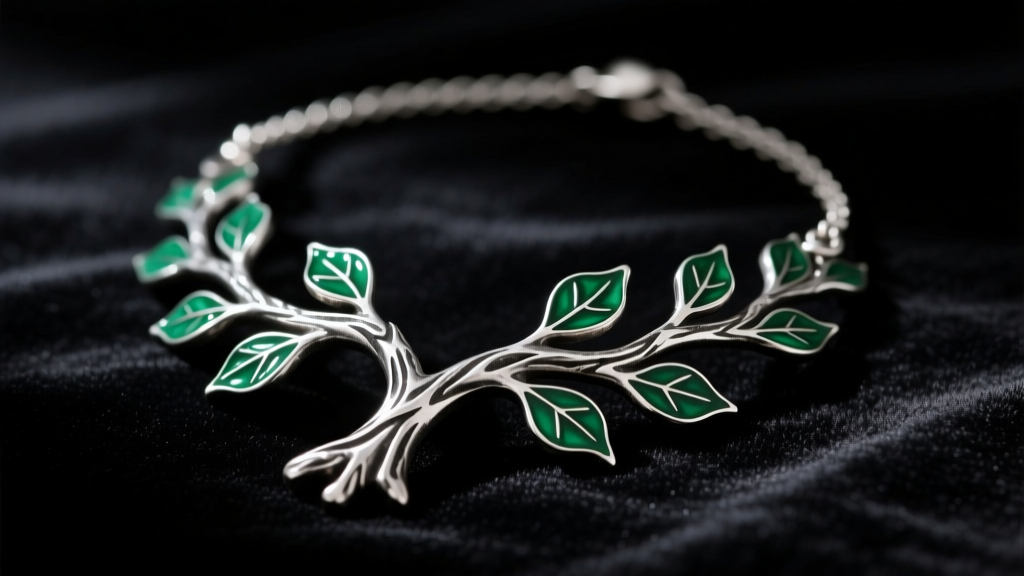
Botanical motif jewelry has long served as a wearable artifact of natural history, but few designs carry the gothic intrigue and literary weight of the poison tree necklace. As we navigate the jewelry trends of 2026, the intersection of dark academia, cottagecore, and gothic aesthetics has propelled toxic flora motifs into the mainstream. Whether inspired by William Blake’s famous 1794 poem or the deadly beauty of the Manchineel tree, these pendants are conversation starters that demand specific care and styling.
This beginner-friendly explainer will decode the poison tree necklace trend, breaking down the metallurgy, enamel techniques, chain mechanics, and maintenance required to wear these dark botanical pieces with confidence.
The Roots of the Motif: Literature and Lethal Botany
When artisans craft a poison tree necklace, they are typically drawing from one of two distinct cultural wells:
- The Literary Inspiration: William Blake’s poem A Poison Tree explores the dangers of repressed anger, culminating in the growth of a tree that bears a bright, deadly apple. Jewelers translate this into twisted silver branches, hidden skull motifs in the root systems, and striking red or black gemstone 'apples.' You can read the original text via the Poetry Foundation.
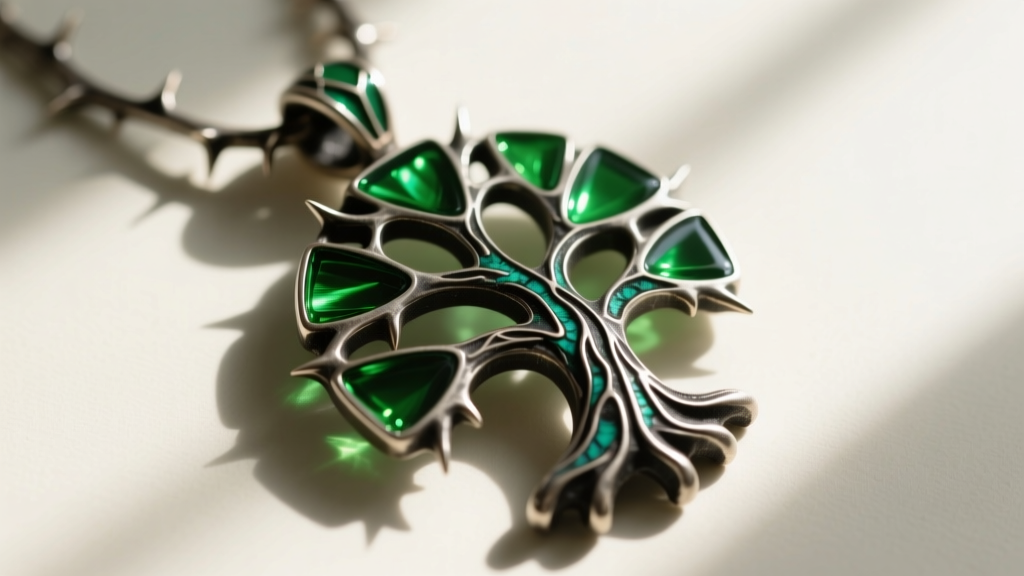
- The Botanical Inspiration: The 'poison garden' aesthetic heavily features the Manchineel tree (Hippomane mancinella), often called the 'little apple of death.' According to Encyclopedia Britannica, every part of this tree is highly toxic. Artisans mimic its serrated leaves and ominous, sprawling branch structures using heavily textured, oxidized metals.
Material Breakdown: Metals, Enamels, and Stones
A high-quality poison tree pendant relies on contrast. The interplay between dark, shadowed metal and vibrant, toxic-looking accents is what gives the piece its signature moody aesthetic. Here is what you need to look for when evaluating materials.
The Metal: Oxidized Sterling Silver (925)
While fine silver (999) is too soft to hold the intricate, spindly branches of a tree design, 925 sterling silver provides the necessary structural integrity. To achieve the 'antique' or 'gothic' look, jewelers treat the silver with liver of sulfur, a chemical compound that forces rapid tarnishing. The piece is then selectively polished, leaving the deep crevices black and the raised branches bright.
The Accents: Vitreous vs. Cold Enamel
Many poison tree necklaces feature vibrant green or black leaves. The technique used to apply this color drastically affects the price and longevity.
| Material / Technique | Durability | Visual Profile | Average Price Range |
|---|---|---|---|
| Cast Brass (Plated) | Low (plating wears off) | Flat, lacks depth | $15 - $40 |
| 925 Silver + Cold Enamel | Medium (resin can yellow) | Glossy, opaque colors | $65 - $120 |
| 925 Silver + Vitreous Enamel | High (glass fused at 1400°F) | Translucent, glass-like depth | $150 - $350 |
| 18k Gold + Plique-à-jour | Very High (heirloom grade) | Stained-glass effect, no backing | $800 - $2,500+ |
Pairing the Pendant: Chain Gauges and Clasp Mechanics
The most common mistake beginners make with heavy, cast botanical pendants is pairing them with inadequate chains. A solid cast sterling silver poison tree pendant can easily weigh between 15 and 35 grams. If you hang this on a delicate 0.9mm cable chain, the chain will snap, stretch, or permanently deform.
The 1/3 Weight Rule
As a general rule of thumb in jewelry mechanics, your chain should be rated to hold at least three times the weight of the pendant. For a 20-gram poison tree pendant, you need a chain with a minimum tensile strength of 60 grams, which usually translates to a minimum gauge of 2.0mm to 2.5mm.
Best Chain Styles for Heavy Pendants
- Wheat Chains (2.0mm - 3.0mm): The woven, braided structure of a wheat chain offers exceptional tensile strength and a textured, organic look that complements the bark-like finish of a poison tree pendant.
- Box Chains (2.5mm+): Featuring square, interlocking links, box chains distribute weight evenly and resist kinking.
- Rope Chains (2.0mm+): Twisted links provide a vintage aesthetic that pairs beautifully with dark academia styling, though they can catch on fine knits.
Avoid Snake and Herringbone Chains: These fluid, tubular chains are beautiful but structurally vulnerable. A heavy, off-center pendant will cause a snake chain to kink and bend permanently within weeks.
Care and Maintenance for Antiqued Jewelry
Cleaning an oxidized poison tree necklace requires a completely different approach than cleaning standard bright silver. If you use liquid silver dips (like Tarn-X) or ultrasonic cleaners, you will strip away the intentional liver-of-sulfur patina, leaving your dark, gothic tree looking like a flat, bright, modern piece of jewelry.
Step-by-Step Cleaning Protocol
- Dry Dusting: Use a clean, soft-bristled makeup brush to remove dust and skin oils from the deep crevices of the branches and leaves.
- Targeted Polishing: Wrap a microfiber silver polishing cloth around your index finger. Gently rub only the raised, high-polish areas of the branches. Do not press hard into the recesses.
- Enamel Care: If your pendant features vitreous enamel, avoid exposing it to sudden temperature shocks (like wearing it into a hot sauna), as the glass can craze or crack.
For more comprehensive guidelines on preserving historical and antiqued metals, the Smithsonian Institution offers excellent archival resources on silver conservation that apply perfectly to artisan jewelry.

Styling Your Poison Tree Pendant for 2026
Because of its intricate, often sprawling design, a poison tree necklace acts as a focal point. It requires the right canvas to truly shine.
Neckline Pairings
- The High Victorian Collar: A 24-inch poison tree pendant resting over a high-neck lace blouse or a dark turtleneck creates a striking, moody silhouette that is quintessential dark academia.
- The Deep Scoop: For a more modern, subtle approach, wear a smaller, 15-gram pendant on an 18-inch wheat chain over a deep scoop or V-neck sweater, allowing the 'roots' of the tree to point downward toward the neckline.
Layering with Intent
If you prefer a layered look, anchor your poison tree pendant as the longest piece in a three-chain stack. Pair it with a 16-inch oxidized silver herringbone choker and an 18-inch simple cable chain featuring a small, solitary black spinel or green onyx teardrop. This creates a cohesive 'toxic garden' narrative without overwhelming your neckline with competing visual noise.
Whether you are drawn to the literary tragedy of Blake's poetry or the lethal beauty of the Manchineel, a well-crafted poison tree necklace is an investment in wearable art. By respecting the metallurgy, choosing the correct chain gauge, and maintaining the oxidized patina, your dark botanical piece will endure as a staple of your collection for decades.


