White Gold Horseshoe Necklace: Alloy Grades, Chains & Care
Discover the technical details of a white gold horseshoe necklace. Learn about 14k vs 18k alloys, rhodium plating, chain pairings, and long-term care.

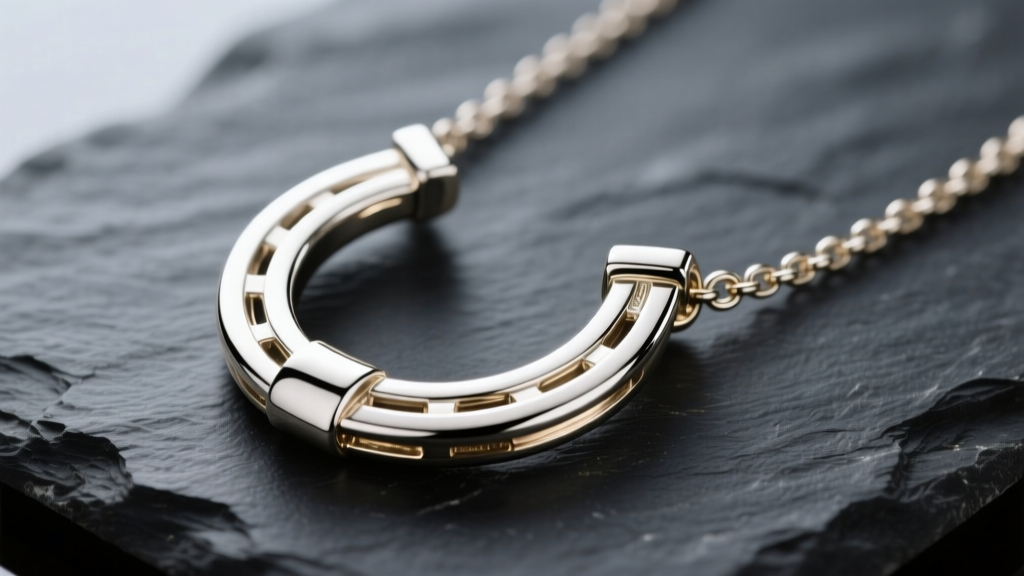
The horseshoe motif has long been a symbol of luck and protection, but when translated into fine jewelry, the structural and metallurgical choices dictate its longevity. A white gold horseshoe necklace is not merely a stylistic choice; it is a complex interplay of alloy composition, manufacturing techniques, and mechanical wear. As we navigate the 2026 jewelry market, understanding the technical specifications of these pieces is critical for both collectors and everyday wearers looking for heirloom-quality accessories.
The Metallurgy of White Gold: Nickel vs. Palladium Alloys
White gold does not exist in nature; it is an engineered alloy. Pure 24k gold is inherently yellow and too soft for pendant manufacturing. To create white gold, pure gold is mixed with white metals. According to the Gemological Institute of America (GIA), the two primary alloying families are nickel-based and palladium-based.
Nickel-white gold is the most common and cost-effective. A standard 14k nickel white gold alloy contains 58.5 percent pure gold, with the remainder being a mix of nickel, copper, and zinc. This composition yields a Vickers hardness (HV) of approximately 130, making it highly resistant to scratching and bending. However, nickel is a known contact allergen, affecting up to 15 percent of the population.
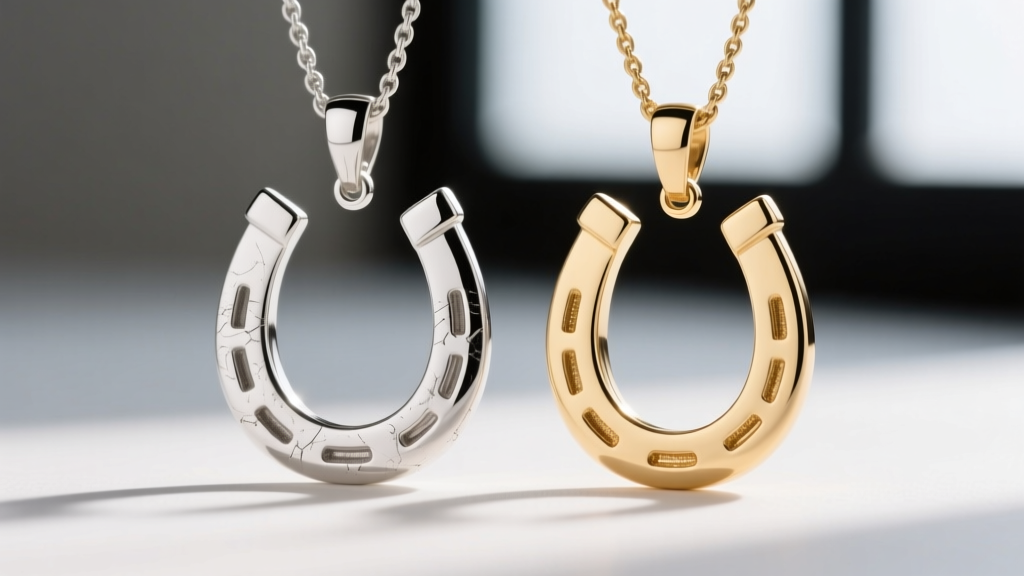
Palladium-white gold, typically seen in 18k variations (75 percent pure gold), replaces nickel with palladium and silver. While slightly softer (around 125 HV), it is completely hypoallergenic and possesses a naturally whiter undertone. For a white gold horseshoe necklace that sits directly against the collarbone, palladium alloys are vastly superior for sensitive skin, though they command a 20 to 30 percent price premium over nickel counterparts.
Structural Integrity: Casting vs. Die-Striking
The manufacturing method of the horseshoe pendant directly impacts its structural weak points. The vast majority of modern pendants are produced via lost-wax casting. While casting allows for intricate detailing, the extremities of the horseshoe shape—the two tapered tips—are the furthest points from the sprue (the channel where molten metal enters the mold).
Porosity and Tip Vulnerability
If the casting mold is not properly vented or the metal temperature fluctuates, micro-porosity can occur at the horseshoe tips. Over time, the tension from the chain pulling against the bail can cause these porous tips to snap. Die-struck horseshoe pendants, created by stamping a sheet of white gold under immense hydraulic pressure, align the metal grain and eliminate porosity entirely. While die-struck options are limited to simpler, un-stoned designs, they offer unparalleled tensile strength for daily wear.
Bail Mechanics and Stress Points
The bail is the loop that connects the pendant to the chain. For a horseshoe pendant, a soldered jump ring bail is standard, but a hidden bail (where the chain threads directly through a hollowed channel in the top center of the horseshoe) offers a cleaner aesthetic and distributes friction more evenly across the metal surface, reducing localized wear.
Chain Pairing Matrix: Matching the Pendant Weight
Pairing the correct chain with your white gold horseshoe necklace is a matter of physics. A solid 14k white gold horseshoe pendant typically weighs between 2.5 and 4.5 grams. The chain must possess a tensile strength that exceeds the dynamic load of the pendant during movement.
| Chain Style | Recommended Thickness | Max Pendant Weight | Kink Resistance |
|---|---|---|---|
| Solid Box Chain | 1.2mm - 1.5mm | Up to 8.0 grams | High |
| Cable Chain (Soldered) | 1.0mm - 1.3mm | Up to 5.0 grams | Medium |
| Wheat Chain | 1.5mm - 2.0mm | Up to 12.0 grams | Very High |
| Snake Chain | 1.0mm - 1.5mm | Under 2.0 grams | Very Low |
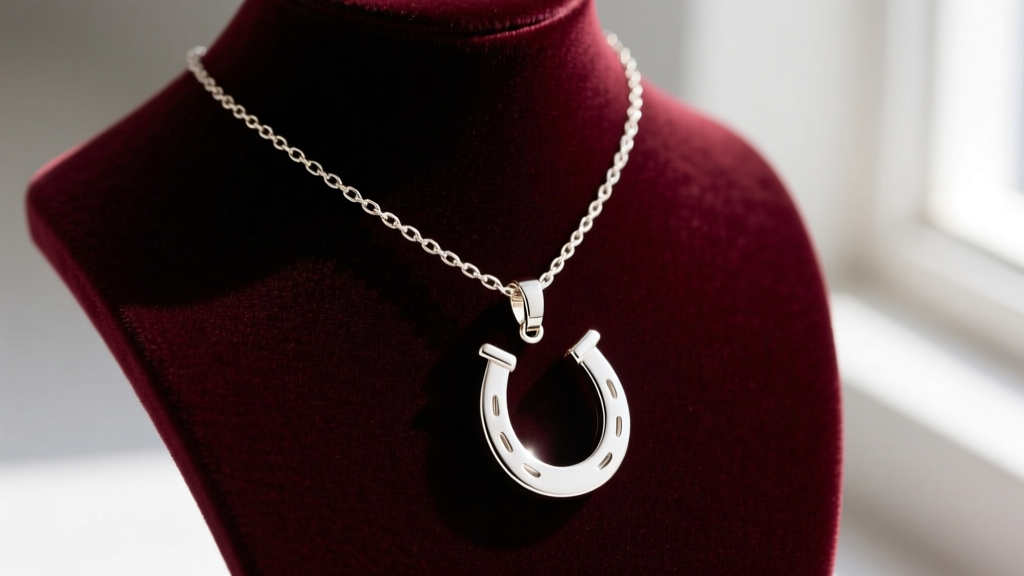
Avoid snake and herringbone chains for pendant necklaces. Their interlocking flush links lack flexibility and will permanently kink under the concentrated weight of a horseshoe pendant, eventually leading to structural failure.
Diamond Setting Techniques on Curved Surfaces
Many white gold horseshoe necklaces feature diamond accents along the outer curve. Setting round brilliant diamonds on a tight radius presents unique engineering challenges. Traditional shared-prong settings, where two adjacent diamonds share a single metal prong, can fail on a sharp curve because the outer prongs are pulled away from the diamond girdle, risking stone loss.
Expert jewelers utilize bead setting (pavé) for curved horseshoe pendants. In this technique, small burrs are raised from the surrounding white gold to secure the stones, eliminating the need for protruding prongs. This not only secures the diamonds more effectively against lateral impacts but also creates a smooth outer edge that prevents the necklace from snagging on textiles.
Rhodium Depletion and Long-Term Maintenance
Regardless of whether the alloy is nickel or palladium based, almost all white gold jewelry is electroplated with rhodium, a platinum-group metal, to achieve a brilliant, mirror-like white finish. According to Jewelers of America, standard rhodium plating on pendants ranges from 0.75 to 1.0 microns in thickness.
Expert Insight: Avoid jewelry advertised with flash plating. Flash plating is less than 0.25 microns thick and will wear off within weeks of daily use, revealing the slightly yellowish or grayish undertone of the white gold alloy beneath.
The highest friction point on a white gold horseshoe necklace is the interior of the bail, where the chain constantly rubs against the metal. Expect rhodium depletion in this area within 12 to 18 months of daily wear. Replating the pendant is a routine maintenance procedure that typically costs between 40 and 80 dollars, restoring the piece to its original luster without compromising the underlying gold.
Sourcing and Pricing Expectations
When evaluating a white gold horseshoe necklace in the current market, pricing is dictated by alloy purity, weight, and manufacturing origin. A lightweight, hollow-backed 10k or 14k nickel white gold horseshoe pendant mass-produced via casting will generally retail between 120 and 250 dollars. Conversely, a solid, die-struck or heavily cast 18k palladium white gold pendant, featuring bead-set VS-clarity diamonds and a hidden bail, will range from 800 to 1,500 dollars. Always request the exact gram weight and alloy composition from the jeweler to ensure you are paying for structural integrity rather than just the motif.


