Poppy Flower Necklace Gift Guide: Meanings & Styles
Discover the perfect poppy flower necklace for any occasion. Explore symbolism, enamel techniques, chain gauges, and expert gifting advice.

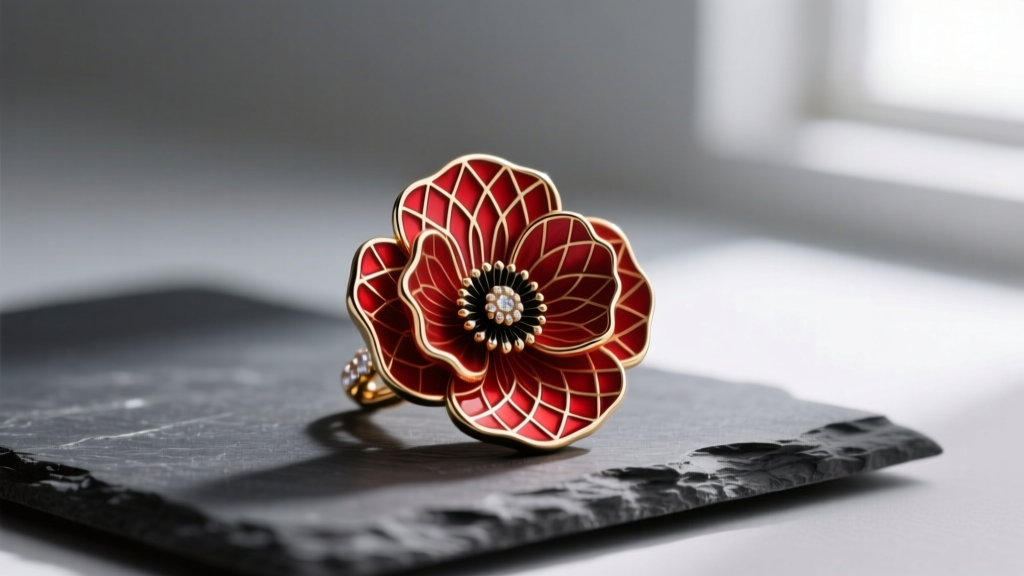
Gifting jewelry is an intimate act of communication, and few botanical motifs carry as much historical weight and emotional resonance as the poppy. A poppy flower necklace is never just a decorative accessory; it is a vessel of memory, a symbol of resilience, and a striking piece of wearable art. Whether you are honoring a veteran, commemorating a loved one, or celebrating the fierce independence of a botanical enthusiast, selecting the right piece requires an understanding of its deep roots and the craftsmanship that brings it to life.
In this comprehensive gift guide, we decode the symbolism of the poppy, break down the metallurgical and enamel techniques used to craft these pendants, and provide a precise framework for matching the perfect necklace to your specific occasion.
The Deep Symbolism of the Poppy
Before selecting a metal or enamel finish, it is crucial to understand what the poppy represents to your recipient. The Papaver rhoeas, or common red poppy, is globally recognized as a symbol of remembrance and hope. Following the devastation of World War I, the flower's ability to thrive in the chalky, disturbed soil of Flanders Fields made it a powerful emblem of resilience and eternal rest. As noted by the Royal British Legion, the red poppy remains the ultimate symbol of remembrance for those who have served and sacrificed.
However, the poppy's symbolism extends beyond the battlefield. In classical Greek and Roman mythology, poppies were associated with Demeter and Persephone, representing the cycle of life, sleep, and peace. In the language of flowers (floriography), a white poppy signifies peace and imagination, while a pink poppy conveys compassion. Understanding these nuances allows you to tailor your gift to the recipient's personal journey.
Occasion Matching: When to Gift a Poppy Pendant
Matching the occasion to the specific style of the necklace ensures your gift resonates on a personal level. Below is a decision matrix to help you choose the right material and design profile.
| Occasion | Recipient Profile | Ideal Style & Color | Recommended Material |
|---|---|---|---|
| Remembrance Day / Memorial | Veteran's family, grieving friend | Classic single red bloom, subtle profile | Sterling silver with vitreous red enamel |
| Graduation / New Beginnings | Graduate, career changer | Wild poppy cluster, organic texture | 14k gold vermeil, brushed or hammered finish |
| Romantic Anniversary | Partner, spouse | Plique-à-jour (stained glass), diamond center | 18k solid gold, translucent enamel |
| Birthday (Botanical Lover) | Gardener, nature enthusiast | Multi-color garden poppies, detailed veining | Oxidized silver with cold enamel accents |
Gifting Tip: When giving a poppy necklace for remembrance, always include a handwritten note referencing the specific memory or person being honored. The physical pendant becomes an anchor for that emotional connection.
Decoding Enamel Techniques & Materials
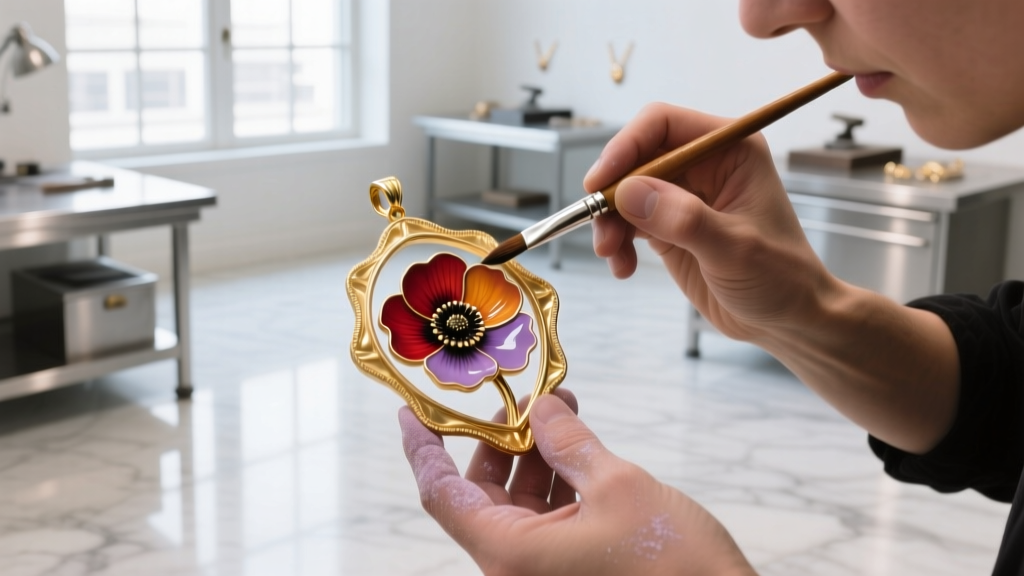
The most breathtaking poppy pendants rely on enameling to achieve their vibrant, lasting reds. As a domain expert, I cannot stress enough that not all enamel is created equal. The pricing, durability, and heirloom potential of your gift depend entirely on the technique used.
1. Guilloché Enamel (The Heirloom Standard)
Guilloché involves engine-turning a precise, repetitive geometric pattern into the base metal (usually sterling silver or 18k gold) before fusing translucent vitreous enamel over it at temperatures exceeding 1400°F. The light catches the engraved ridges beneath the glass-like enamel, giving the red poppy petals a luminous, three-dimensional depth. This is the gold standard for luxury botanical jewelry.
2. Plique-à-Jour (The Masterpiece)
Translating to "letting in daylight," this technique creates a stained-glass effect. The enamel is suspended in a metal framework with no backing, allowing light to pass directly through the red and orange petals. According to the Victoria and Albert Museum's archives on enamelling, plique-à-jour is one of the most difficult and fragile jewelry techniques in existence. Gift this only to recipients who understand how to handle delicate, museum-quality heirlooms.
3. Cold Enamel / Epoxy Resin (The Everyday Option)
Cold enamel is actually a pigmented epoxy resin poured into metal recesses and cured at room temperature. While it allows for vibrant colors and intricate detailing at a fraction of the cost (typically $30–$80), it is prone to micro-scratches and will eventually yellow or degrade under prolonged UV exposure. It is suitable for trendy, everyday wear but not for generational heirlooms.
Chain Gauges & Hardware: The Engineering of the Drape
A common failure point in botanical jewelry is a mismatched chain. Poppy pendants vary wildly in weight. A delicate, 8mm plique-à-jour poppy might weigh a mere 1.2 grams, while a solid cast-bronze or thick silver wild poppy cluster can easily exceed 15 grams.
- For Pendants Under 5 Grams: Opt for a 0.9mm to 1.1mm cable or box chain. These delicate links complement the fragility of the flower without visually overpowering it.
- For Pendants Between 5 and 12 Grams: A 1.2mm to 1.5mm wheat (spiga) or rolo chain provides the necessary tensile strength while maintaining a fluid, fabric-like drape across the collarbone.
- For Heavy Cast Pendants (12g+): You must use a minimum 1.8mm to 2.0mm rope or thick curb chain. Ensure the clasp is a sturdy lobster claw or a secure spring ring with a reinforced soldered jump ring.
Pro-Tip: Always check the bail (the loop connecting the pendant to the chain). A lined bail with a thin sheet of 14k gold or platinum insert will prevent the chain from wearing down the enamel or silver over years of friction.
Styling & Layering Botanical Pendants
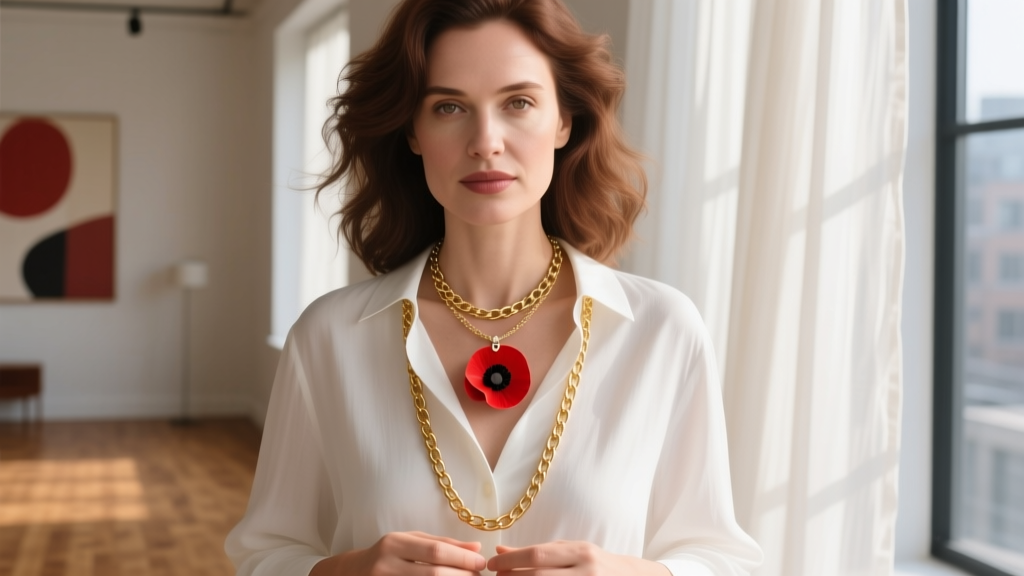
The poppy is a bold, statement-making flower, but its jewelry iterations can be beautifully integrated into modern layering techniques. The key to layering a poppy flower necklace is to balance its organic, colorful nature with minimalist, structural chains.
The 2-Inch Rule
When layering, maintain at least a 2-inch gap between chains to prevent tangling and allow each piece to breathe. Pair an 18-inch red enamel poppy pendant with a 16-inch minimalist herringbone or snake chain. The 16-inch chain sits snugly at the base of the throat, while the 18-inch poppy rests perfectly on the upper décolletage, drawing the eye directly to the vibrant botanical centerpiece.
Metal Mixing with Purpose
Do not be afraid to mix metals if the pendant dictates it. A sterling silver poppy with a black oxidized background pairs beautifully with a layered 14k yellow gold paperclip chain. The contrast highlights the cool tones of the silver while the warm gold frames the face.
Expert Care & Presentation Tips
How you present and advise on the care of the necklace will elevate your gift from a simple transaction to a curated experience.
Never Use Ultrasonic Cleaners: If your recipient wears their poppy necklace frequently, warn them against ultrasonic jewelry cleaners. The high-frequency sound waves and heat can easily shatter vitreous enamel, cause micro-fractures in plique-à-jour, and peel cold enamel right off the metal base.
The Safe Cleaning Method: Advise them to use a soft, lint-free microfiber cloth for polishing the metal. For the enamel, a gentle wipe with a slightly damp cloth and mild, non-detergent soap is all that is required to remove skin oils and lotions.
Presentation: Present the necklace in an anti-tarnish flannel pouch or a lined cedar box. Include a small, heavy-stock card detailing the specific enamel technique used (e.g., "Hand-painted Guilloché Enamel") and the historical meaning of the poppy. This transforms the unboxing into an educational and deeply emotional experience, ensuring your gift is cherished for a lifetime.


