Material Guide for an Everyday Practical Magic Necklace
Discover the best metals and crystals for a practical magic necklace. Compare tarnish resistance, durability, and skin safety for daily witchcore wear.

The Anatomy of a Practical Magic Necklace
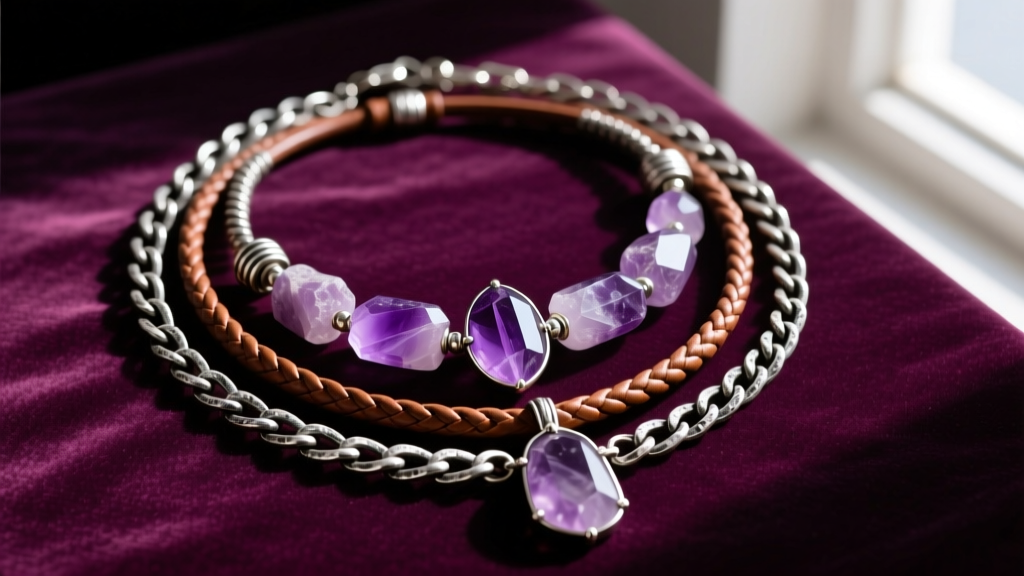
The enduring appeal of the Practical Magic aesthetic—rooted in 90s nostalgia, cottagecore, and modern witchcore—relies heavily on an earthy, mystical visual language. Think Sally and Gillian Owens: layered chains, raw crystals, tarnished metals, and leather cords. However, transitioning this cinematic aesthetic into a functional, everyday wardrobe staple requires a solid understanding of material science. A true 'practical' magic necklace must withstand the rigors of daily life, including showering, gardening, exposure to body oils, and friction from layered clothing.
Many mass-market witchcore necklaces fail the practicality test because they are crafted from base metals plated with microscopic layers of silver or gold. Within weeks, the plating wears off, exposing brass or copper alloys that react with sweat to leave green stains on the skin. To build a talisman that actually lasts, we must evaluate materials based on their metallurgical properties, oxidation rates, and structural integrity.
Chain & Cord Materials: What Survives Daily Spellwork?
The foundation of any layered necklace stack is the chain or cord. When curating a practical magic necklace, you are likely drawn to darker, antiqued, or organic-looking materials. Here is how the most popular options perform under daily wear conditions.
| Material | Composition | Tarnish & Oxidation Profile | Skin Reactivity | Est. Price (per inch) |
|---|---|---|---|---|
| Oxidized 925 Silver | 92.5% Silver, 7.5% Copper | Pre-darkened; will slowly polish bright with friction | Low (unless severe copper allergy) | $3.00 - $8.00 |
| Argentium Silver | 93.5% Silver, Germanium alloy | Highly tarnish-resistant; maintains bright/antiqued contrast | Hypoallergenic | $6.00 - $12.00 |
| Solid Copper | 100% Copper | Oxidizes rapidly to dark brown; develops verdigris (green) in moisture | High (turns skin green due to pH reaction) | $0.50 - $1.50 |
| Raw Brass | Copper & Zinc Alloy | Darkens deeply; smells metallic when wet | Moderate to High | $1.00 - $3.00 |
| Waxed Cotton Cord | Braided cotton with microcrystalline wax | Water-resistant but degrades under constant sweat/oil exposure | None | $0.10 - $0.30 |
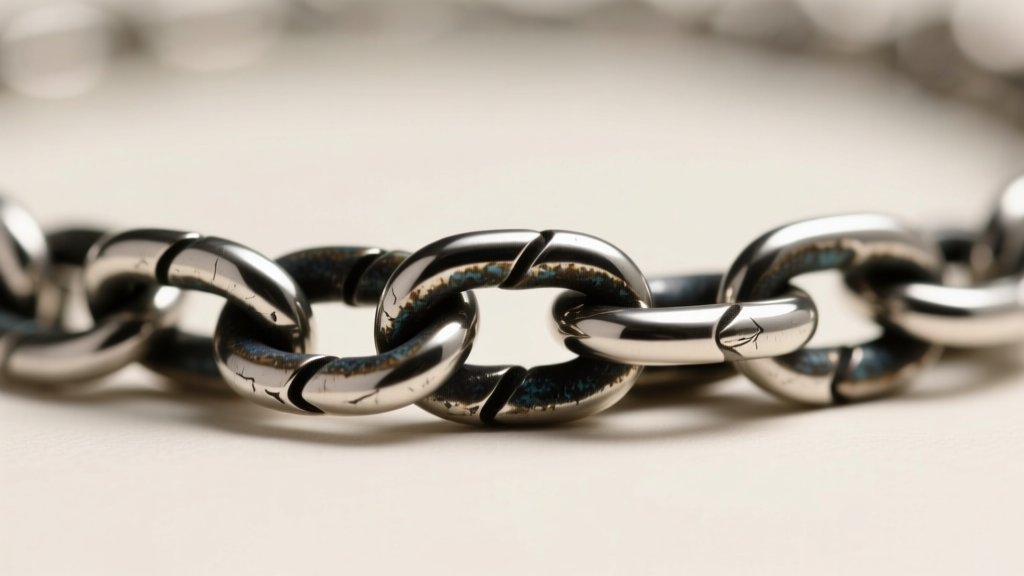
For the ultimate practical magic necklace chain, Argentium Silver is the superior choice. Unlike traditional sterling silver, which uses copper as an alloying agent (making it prone to rapid blackening), Argentium uses germanium. This creates a transparent germanium dioxide layer on the surface that drastically slows tarnishing. According to The Argentium Silver Company, this alloy is also highly ductile, making it perfect for intricate, witchy knot-work chains that need to resist snapping.
The Verdict on Leather and Cords
While a 2mm black leather cord screams 1998 witchcore, leather is highly porous. It absorbs sweat, perfumes, and sebum, eventually becoming brittle and snapping. If you prefer the cord look, opt for waxed braided cotton or vulcanized rubber cords with sterling silver end-caps. These mimic the matte, organic texture of leather but are entirely waterproof and will not degrade in the shower.
Pendant Metals: Casting the Perfect Talisman
Pendants in this aesthetic often feature organic motifs: crescent moons, serpents, poison bottles, or raw crystal cages. The metal used to cast these talismans dictates their longevity.
Why You Should Avoid Pewter
Historically, pewter was the go-to metal for affordable, cast amulets. Modern pewter is lead-free (primarily tin, with antimony and copper), but it remains a very soft, brittle metal. A heavy cast pewter pendant on a thin chain will eventually warp, and the bail (the loop connecting the pendant to the chain) will snap under the stress of daily movement. Furthermore, pewter cannot be soldered easily, meaning once a jump ring breaks, the piece is often beyond repair.
The Bronze and Brass Alternative
Bronze (copper and tin) offers a beautiful, warm, earthy tone that perfectly suits the practical magic aesthetic. It takes a dark, muddy patina that looks incredibly ancient. However, bronze requires maintenance. To prevent the metallic smell and skin staining, you must periodically seal bronze pendants with a micro-crystalline jewelry wax, such as Renaissance Wax, creating an invisible barrier between the metal and your skin's natural acidity.
Crystal & Gemstone Inclusions: Hardness Matters
A practical magic necklace is incomplete without crystals. However, the 'raw' and 'uncut' stone trend poses significant durability risks. When selecting stones for a daily-wear talisman, you must consult the Mohs Hardness Scale. The Gemological Institute of America (GIA) emphasizes that hardness determines a gem's ability to resist scratching and abrasion, while toughness determines its resistance to chipping and breaking.
- Amethyst (Mohs 7): Excellent for daily wear. It resists scratching from household dust (which contains quartz, Mohs 7) and holds up well to water.
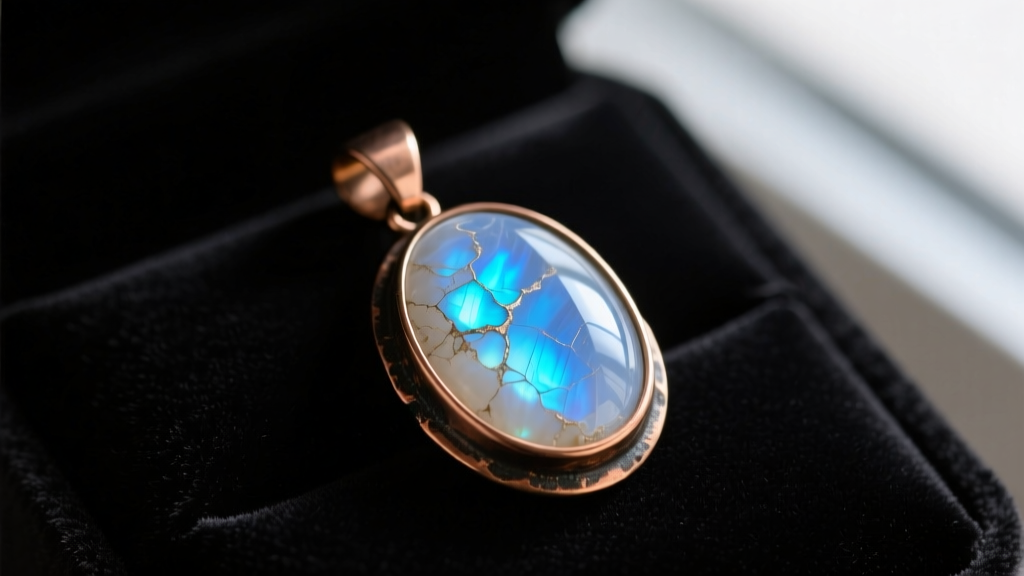
- Moonstone (Mohs 6-6.5): Beautiful, but has perfect cleavage planes. A hard knock against a doorframe can split a raw moonstone pendant in half. Requires a deep bezel setting for protection.
- Obsidian (Mohs 5-5.5): Essentially volcanic glass. It is incredibly brittle and will chip or shatter if dropped on a tile floor. Best reserved for occasional wear or necklaces that sit high on the collarbone.
- Selenite (Mohs 2): Never use in a daily-wear necklace. Selenite is a form of gypsum. It is so soft it can be scratched with a fingernail, and prolonged exposure to water (like showering) will literally dissolve the stone over time.
Pro-Tip for Crystal Cages: If your pendant features a wire-wrapped raw stone, ensure the artisan uses 'dead-soft' wire that has been work-hardened after wrapping. If the wire is too soft, the crystal will slip out of the cage within a month of daily wear.
Findings and Clasps: The Weakest Link
A common failure point in artisan witchcore jewelry is the use of open jump rings. An open jump ring is simply a loop of wire with a slit cut into it. When a heavy pendant pulls on an open jump ring, the slit can slowly pry open, resulting in the loss of your talisman. Always inspect the bail of your practical magic necklace. If it connects to the chain via a jump ring, use two pairs of jewelry pliers to twist the ring closed, or take it to a jeweler to have the seam soldered shut. Lobster clasps are standard, but for a more seamless, magical look, consider a toggle clasp cast in the shape of a branch or a serpent, which is mechanically more secure than a spring ring.
Maintenance & Patina: Embracing the Aging Process
Part of the practical magic charm is the living finish of the metals. If you want to accelerate the aging process of a bright silver or copper piece to give it that ancient, unearthed look, you can use Liver of Sulfur. By dissolving a small piece of this potassium sulfide compound in warm water and dipping your chain or pendant, you can achieve a deep, iridescent black or gunmetal grey patina in seconds. Once the desired darkness is reached, neutralize the chemical reaction by dropping the jewelry into a baking soda and water bath. You can then use a polishing cloth to gently buff the high points of the metal, leaving the dark patina in the crevices to highlight the intricate, witchy details of the casting.
By prioritizing Argentium silver, avoiding water-soluble crystals, and ensuring your findings are soldered, your practical magic necklace will transition from a fragile costume piece to a genuine, lifelong talisman capable of weathering any modern storm.


