Prasiolite Necklace Guide: Gem Properties & Comparisons
Discover the material properties of a prasiolite necklace. Compare its durability, optics, and pricing against peridot, tsavorite, and emerald.

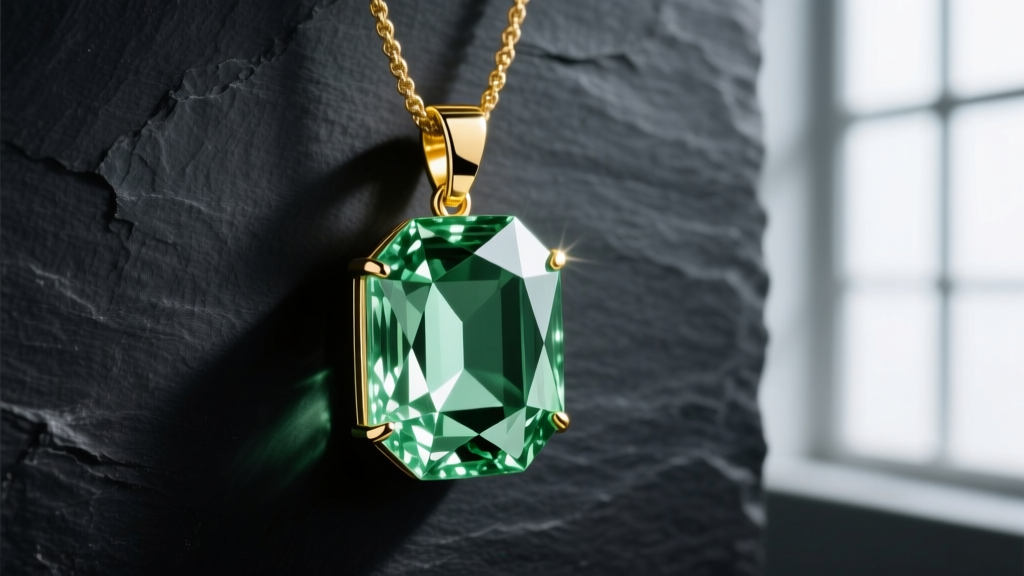
A prasiolite necklace offers a sophisticated, earthy alternative to traditional green gemstones, capturing a muted, velvety sage-to-olive hue that appeals to collectors and minimalists alike. However, because prasiolite is fundamentally a variety of quartz, its material properties, optical behavior, and structural requirements differ vastly from high-refractive green gems like tsavorite or emerald. Understanding the mineral reality of this stone is critical for selecting a pendant that will endure daily wear while maximizing its unique optical character.
The Mineral Reality: Geology and Heat Treatment
Prasiolite is the gemological term for green quartz. In nature, authentic, untreated prasiolite is exceedingly rare, typically found in trace amounts in specific Brazilian and Polish deposits. Consequently, approximately 99% of the commercial prasiolite used in modern jewelry is the result of human intervention. Gemologists and lapidaries create this stone by heat-treating specific varieties of amethyst (purple quartz) or yellowish quartz to temperatures of exactly 500°C (932°F).
This thermal process alters the iron impurities within the silicon dioxide crystal lattice, shifting the color spectrum from violet or yellow into a stable, pale-to-medium green. According to the Gemological Institute of America (GIA), this heat treatment is permanent and stable under normal environmental conditions, though ethical gemological standards mandate that sellers disclose the thermal enhancement. For the jewelry buyer, this means a prasiolite necklace provides the exact chemical durability of natural quartz, but at a fraction of the cost of untreated green gems.
Optical and Physical Properties
To design or purchase a high-quality pendant, one must understand how prasiolite interacts with light. Prasiolite possesses a Refractive Index (RI) of 1.544 to 1.553 and a birefringence of 0.009. Compared to high-RI stones like tsavorite garnet (RI 1.74), prasiolite lacks intense "fire" or brilliance. Instead, its lower refractive index yields a soft, glassy luster that allows light to penetrate deeply into the pavilion, creating a "sleepy" or velvety visual effect.
Physically, prasiolite registers a 7 on the Mohs hardness scale and has a specific gravity of 2.65. Crucially, quartz has no cleavage planes. This means that unlike diamonds, topaz, or tanzanite—which can split cleanly in half if struck along a structural weakness—prasiolite is highly resistant to splitting, making it an excellent candidate for pendant settings that may occasionally swing and impact surfaces.
Material Comparison: Prasiolite vs. Green Alternatives
When selecting a green gemstone for a necklace, buyers often weigh prasiolite against other popular green stones. The table below outlines the critical material and economic differences.
| Gemstone | Mohs Hardness | Refractive Index | Cleavage / Fracture | Avg. Price (per ct.) |
|---|---|---|---|---|
| Prasiolite | 7.0 | 1.54 - 1.55 | None / Conchoidal | $10 - $30 |
| Peridot | 6.5 - 7.0 | 1.65 - 1.69 | Poor / Uneven | $50 - $150 |
| Tsavorite Garnet | 7.0 - 7.5 | 1.74 - 1.75 | None / Conchoidal | $500 - $2,000+ |
| Emerald | 7.5 - 8.0 | 1.57 - 1.58 | Poor / Uneven | $1,000 - $5,000+ |
As Mindat.org mineralogical data confirms, while emerald and tsavorite offer superior brilliance and prestige, their high prices make large, statement-sized pendant cuts (e.g., 15 to 20 carats) financially prohibitive for most consumers. Prasiolite allows for dramatic, oversized emerald or pear cuts without the exponential price scaling seen in rare garnets or beryls.
Durability in Necklace Pendants
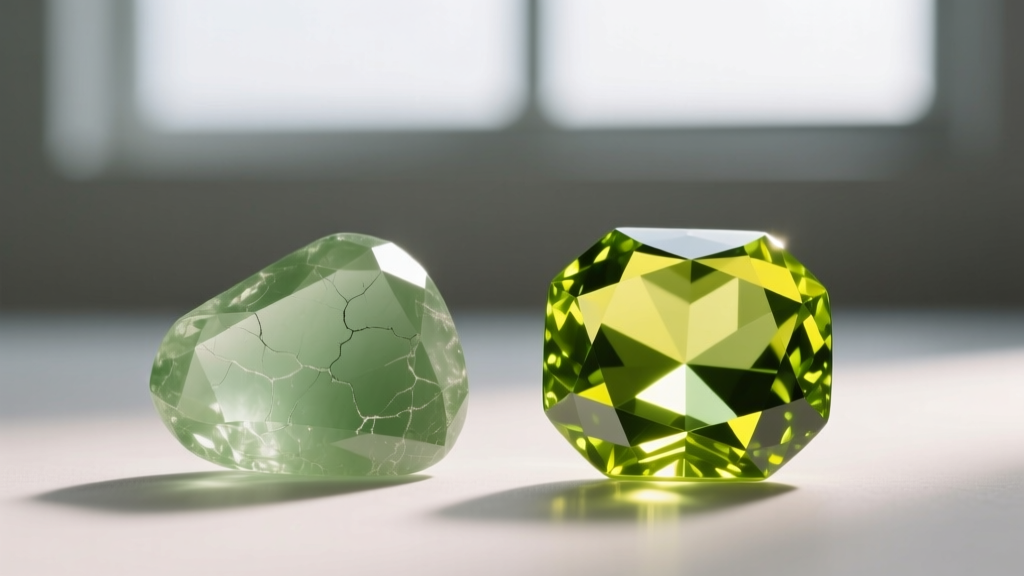
Necklaces occupy a unique position in jewelry wearability. Unlike rings, which endure constant friction and hard impacts against doors and tables, pendants rest against the sternum. However, they are prone to "pendulum impacts"—swinging forward when the wearer bends over and striking a desk or countertop. Because prasiolite lacks cleavage and exhibits a conchoidal (shell-like) fracture pattern, it absorbs these blunt impacts far better than peridot or emerald, which are heavily included and prone to chipping at the girdle.
Setting and Chain Metallurgy
The metallurgical choices for a prasiolite necklace dictate both the stone's security and its color presentation. Prasiolite's warm, earthy undertones are best amplified by yellow metals. A 14k or 18k yellow gold setting enhances the olive and sage notes within the quartz. Conversely, setting prasiolite in rhodium-plated white gold or platinum can wash out its subtle color, making the stone appear grayish or dull.
Optimal Setting Styles
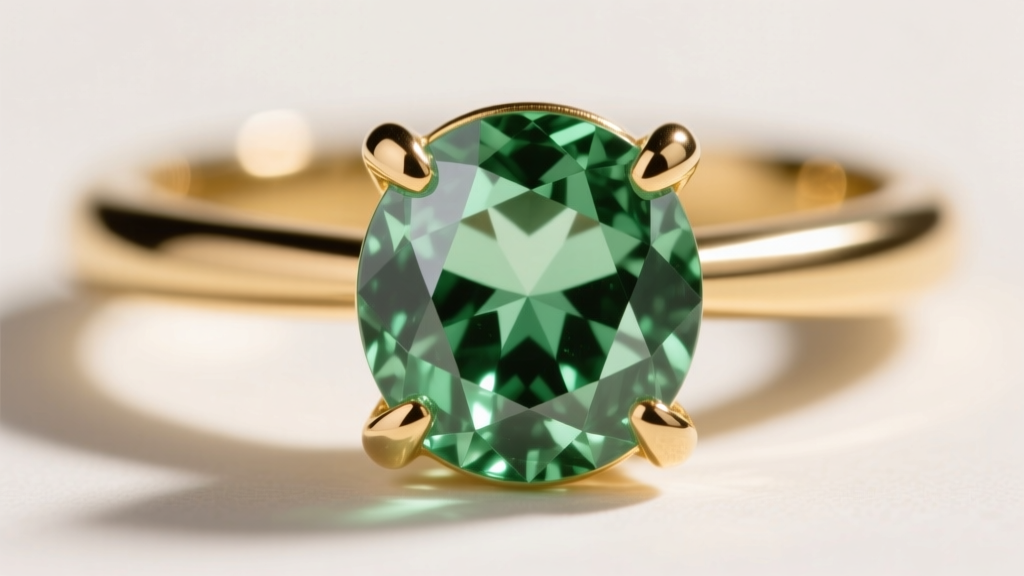
- Four-Prong or Six-Prong Settings: Because prasiolite relies on light entering the crown to illuminate its interior, open prong settings are ideal. Ensure the prongs are V-tipped if the stone is cut in a pear or marquise shape to protect the vulnerable points.
- Bezel Settings: While a full bezel offers maximum protection for the girdle, it blocks light from entering the sides of the stone. Given prasiolite's naturally low refractive index, a bezel can make the center of the gem look dark or "dead." If a bezel is preferred for aesthetic reasons, opt for a shallow pavilion cut to allow light to bounce back through the table.
Chain Mechanics and Sizing
For pendants ranging from 5 to 15 carats, a delicate 0.8mm chain is a structural liability. The optimal configuration is a 1.2mm to 1.5mm box chain or cable chain crafted in solid 14k gold. The chain should terminate in a minimum 4mm soldered jump ring to connect to the pendant bail. A bail with an inner diameter of at least 3mm is required to prevent localized friction wear, which can eventually saw through the chain loop over years of daily movement.
Care, Failure Modes, and Maintenance
While prasiolite is a highly stable gemstone, it is not invincible. Understanding its specific failure modes ensures the longevity of your necklace.
Thermal Shock Vulnerability
Although the stone was born in a 500°C oven, sudden, extreme temperature fluctuations (thermal shock) can cause internal stress fractures. Never wear a prasiolite necklace in a sauna, and do not clean it using steam cleaners. The rapid expansion and contraction of the quartz lattice can induce "feathering" (internal cracking) that clouds the stone permanently.
Chemical and Ultrasonic Cleaning
Prasiolite is highly resistant to most household chemicals, but prolonged exposure to hydrofluoric acid or harsh alkaline solutions can etch the polish off the surface. For routine maintenance, ultrasonic cleaners are generally safe for prasiolite, provided the stone does not have significant surface-reaching fractures or liquid inclusions. The safest and most effective cleaning method remains a soft-bristled brush, warm water, and a mild, phosphate-free dish soap, followed by drying with a microfiber cloth to prevent water spots on the facets.
Final Verdict
A prasiolite necklace is a masterclass in accessible luxury and understated elegance. By leveraging the exceptional durability of quartz and the economic advantages of heat-treated gemstones, buyers can acquire large, flawless, and visually striking green pendants that would cost tens of thousands of dollars in tsavorite or emerald. When paired with the correct yellow gold metallurgy and a structurally sound 1.2mm chain, prasiolite transitions from a mere geological curiosity into a lifelong staple of the modern jewelry wardrobe.


