The Anatomy of a Premium Silver Necklace with Heart: An Expert Guide
Discover the technical anatomy of a premium silver necklace with heart. Learn about sterling alloys, chain tensile strength, and casting methods.

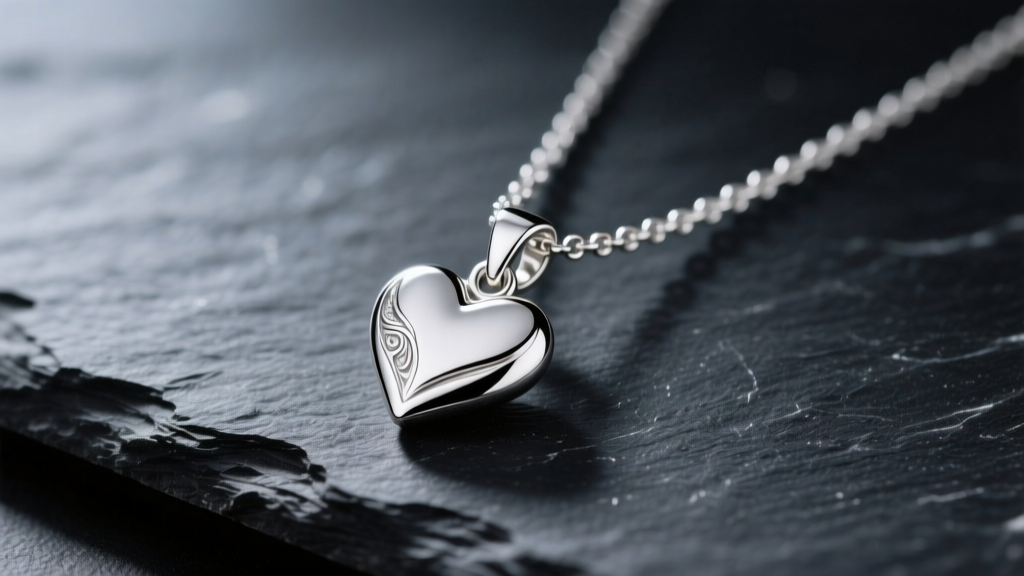
When consumers shop for a silver necklace with heart motifs, they are often drawn to the aesthetic and emotional resonance of the design. However, from a metallurgical and horological perspective, the longevity and structural integrity of these pieces vary wildly. A heart pendant is uniquely susceptible to specific stress points due to its asymmetrical weight distribution and the friction generated at the bail. In this expert deep dive, we deconstruct the technical anatomy of high-quality silver necklaces, examining alloy compositions, manufacturing techniques, and chain mechanics to help you distinguish between disposable fashion jewelry and heirloom-grade craftsmanship.
Decoding the Alloy: Why "925" Isn't the Whole Story
The stamp "925" denotes Sterling Silver, an alloy comprising 92.5% pure silver and 7.5% base metals—almost universally copper. While copper provides the necessary Vickers hardness (HV) to make the malleable pure silver wearable, it is also the primary culprit behind tarnish and firescale. When copper reacts with sulfur and moisture in the air, it forms copper sulfide, manifesting as a dark, unsightly patina.
For a premium silver necklace with heart pendants, master jewelers increasingly turn to advanced alloys like Argentium Silver. Argentium replaces a portion of the copper with germanium. According to metallurgical data cited by the Gemological Institute of America (GIA), germanium migrates to the surface of the alloy and forms a transparent, protective layer of germanium dioxide. This layer drastically slows tarnishing and eliminates firescale during the soldering process, ensuring the intricate crevices of a heart pendant remain bright without the need for heavy chemical pickling.
Hardness and Work Hardening
Standard annealed sterling silver has a Vickers hardness of roughly 65 HV, which is too soft for durable chain links or thin pendant edges. Through work hardening (such as drawing wire through a draw plate or die striking), the hardness can be increased to over 140 HV. A premium heart pendant should exhibit this higher hardness to resist denting when resting against the wearer's sternum.
The Heart Pendant: Casting vs. Die Striking
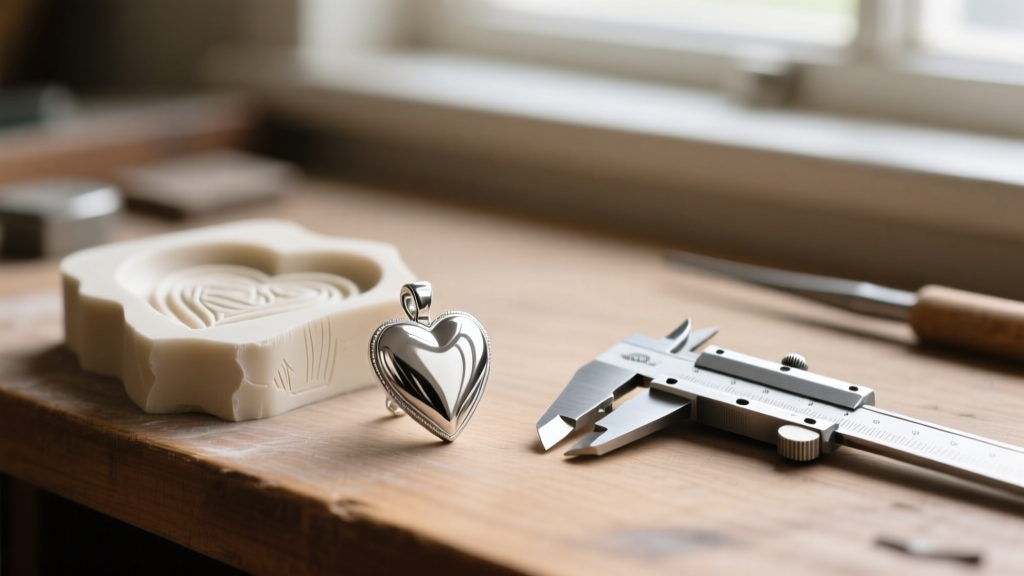
The manufacturing method of the heart pendant dictates its density, porosity, and long-term durability. There are two primary methods used in modern jewelry fabrication:
- Lost-Wax Casting: A wax model is encased in investment plaster, burned out, and molten silver is injected via centrifugal or vacuum force. While excellent for 3D, complex, or gemstone-set heart designs, casting can introduce microscopic gas porosity. If a cast pendant is subjected to repeated impact, these microscopic voids can propagate into structural cracks.
- Die Striking: This method involves placing a sheet of silver between two hardened steel dies and applying immense hydraulic pressure (often exceeding 50 tons). According to fabrication guidelines from Rio Grande, a leading jewelry supplier, die striking compresses the metal's grain structure, eliminating porosity entirely. The resulting heart pendant is incredibly dense, highly reflective when polished, and significantly more resistant to bending and warping than its cast counterpart.
For a simple, solid, or hollow-back heart pendant, die striking is the superior technical choice, offering a higher strength-to-weight ratio.
Chain Architecture: Tensile Strength and Link Mechanics
The chain supporting a silver heart pendant must be engineered to handle both static load (the weight of the pendant) and dynamic stress (snagging or pulling). A common failure mode in commercial jewelry is pairing a heavy, solid-cast heart pendant with a micro-gauge (0.5mm) chain, leading to inevitable tensile failure.
For an average heart pendant weighing between 3 to 8 grams, a chain gauge of 0.9mm to 1.2mm is technically required to ensure a safety factor of at least 3:1 (meaning the chain can hold three times the static weight of the pendant before yielding).
| Chain Style | Link Mechanics | Tensile Strength Profile | Wear & Friction Notes |
|---|---|---|---|
| Cable (Rolo) | Uniform oval or round links, alternating 90 degrees. | Moderate to High. Excellent if links are fully soldered. | Low friction against the bail. Highly resistant to kinking. |
| Box | Square links interlocked in a continuous grid. | Very High. Distributes stress evenly across four planes. | Can trap skin oils and debris; prone to permanent kinking if bent sharply. |
| Rope | Twisted links mimicking a braided rope. | High. The twisting adds structural redundancy. | The textured surface can cause accelerated wear (fretting) on the pendant bail. |
| Snake | Tightly joined, slightly curved bands forming a tube. | Low to Moderate. Vulnerable to snapping if bent. | Not recommended for heavy heart pendants due to poor lateral flexibility. |
The Weakest Link: Clasp Engineering and Jump Rings
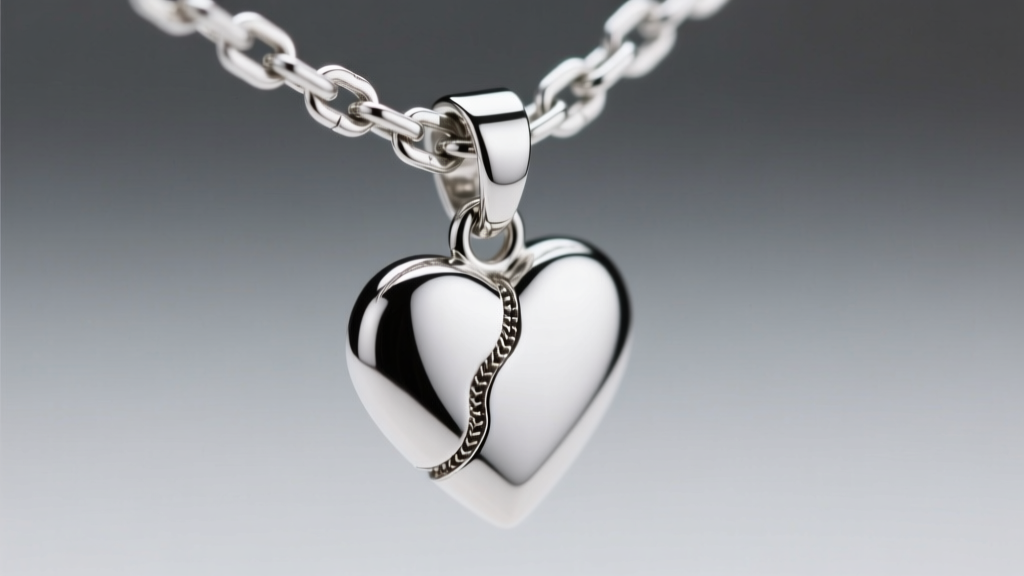
The most catastrophic failures in a silver necklace with heart designs rarely occur in the middle of the chain; they occur at the findings. The jump ring connecting the chain to the pendant bail is a critical stress point.
The Danger of Unsoldered Jump Rings
If the jump ring holding the heart pendant is merely butted (cut and closed with pliers) rather than soldered, it will inevitably fail. The constant micro-movements of the pendant against the split in the jump ring create a phenomenon known as fretting wear. Over months of wear, the silver essentially acts as a microscopic saw, cutting through the jump ring wire. A master jeweler will always use a soldered jump ring or a solid, seamless ring for the pendant connection, utilizing laser or micro-torch soldering to seal the gap without melting the surrounding chain links.
Clasp Mechanics: Lobster vs. Spring Ring
While spring rings are common on lightweight chains, they suffer from internal spring fatigue and poor ergonomics. A forged lobster claw clasp, featuring a robust internal stainless steel or titanium spring and a precision-machined trigger, offers vastly superior security. For chains supporting pendants over 10 grams, a heavy-duty lobster clasp with a minimum length of 12mm is the industry standard for preventing accidental unclasping.
Advanced Tarnish Mitigation and Finishing Protocols
To preserve the brilliant white luster of the silver without constant polishing, premium manufacturers employ advanced surface finishing techniques. The two most common are Rhodium plating and E-coating.
- Rhodium Plating: Rhodium is a platinum-group metal that is electroplated onto the silver. It provides a brilliant, scratch-resistant, and tarnish-proof surface. However, the thickness of the plating is critical. A flash plate (less than 0.1 microns) will wear off in weeks. A premium silver necklace should feature a rhodium layer of at least 0.5 to 1.0 microns to ensure longevity, particularly on the high-friction edges of the heart pendant.
- E-Coating (Electrophoretic Lacquer): This involves submerging the necklace in a water-based resin solution and applying an electrical current, which bonds a microscopic, flexible polymer layer to the silver. E-coating is often preferred for heart pendants with deep, oxidized engravings or textured surfaces where rhodium plating might pool or fail to reach recessed areas.
Conclusion: Investing in Technical Excellence
A beautifully designed silver heart pendant is only as good as the metallurgy and engineering that support it. By prioritizing advanced alloys like Argentium, demanding die-struck or vacuum-cast construction, verifying chain gauge tensile strengths, and insisting on soldered findings, you elevate a simple accessory into a resilient, lifelong artifact. When evaluating your next purchase, look past the silhouette and inspect the technical anatomy—it is the true hallmark of quality.


