Prevent an Allergic Reaction to Necklace Metals: 2026 Guide
Discover how to prevent an allergic reaction to necklace chains with our 2026 metal guide. Explore trending hypoallergenic alloys and styling tips.

The 2026 Shift: Why Hypoallergenic is the Ultimate Status Symbol
In the contemporary jewelry landscape, true luxury is defined not just by carat weight or brand heritage, but by metallurgical transparency. As we navigate 2026, the modern consumer is highly educated about material science, and the demand for skin-safe accessories has skyrocketed. Experiencing an allergic reaction to necklace chains is no longer viewed as a mere inconvenience; it is recognized as a failure of product design and material integrity. The era of hiding behind vague terms like 'hypoallergenic'—a largely unregulated marketing buzzword—is over. Today, discerning buyers demand exact alloy compositions, plating thicknesses, and elemental purity reports.
This shift toward 'safe luxury' has forced heritage houses and indie designers alike to abandon cheap copper-nickel-zinc alloys in favor of implant-grade metals and advanced ceramics. In this comprehensive guide, we break down the exact science of contact dermatitis, analyze the failure modes of traditional necklace chains, and provide a definitive framework for styling high-end, allergy-proof pendants and chains.
Decoding the Itch: What Actually Causes the Reaction?
To prevent an allergic reaction to necklace metals, you must first understand the biological mechanism at play. The vast majority of jewelry-related skin issues are not true allergies, but rather allergic contact dermatitis triggered by nickel ion migration. According to the American Academy of Dermatology, nickel allergy affects roughly 18% of the population in North America, and sensitization can occur at any point in your life after prolonged exposure.
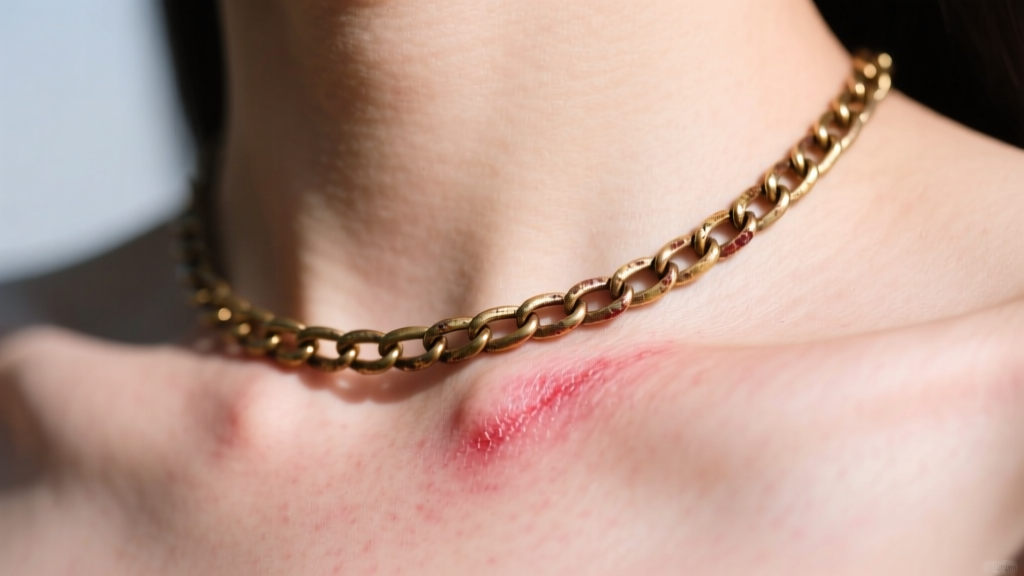
When a necklace chain rests against your clavicle, it interacts with your skin's micro-environment. Human sweat is slightly acidic (pH 4.5 to 5.5) and contains chlorides. When this acidic moisture interacts with base metals or low-karat gold alloys containing nickel, it accelerates the leaching of nickel ions. These microscopic ions penetrate the stratum corneum (the outermost layer of skin) and bind to proteins, prompting your immune system to launch an inflammatory attack. This results in the hallmark symptoms: erythema (redness), intense pruritus (itching), and in severe cases, vesicular blistering.
The EU REACH Standard and Migration Rates
The gold standard for safety is the European Union's REACH regulation (EN 1811), which strictly limits nickel migration from jewelry intended for direct and prolonged skin contact to less than 0.5 µg/cm²/week. The European Chemicals Agency enforces this rigorously, yet many fast-fashion and mid-tier jewelry brands outside the EU still utilize alloys that release up to 5.0 µg/cm²/week, virtually guaranteeing a reaction in sensitized individuals.
Metal Allergy Risk Matrix: 2026 Trend Analysis
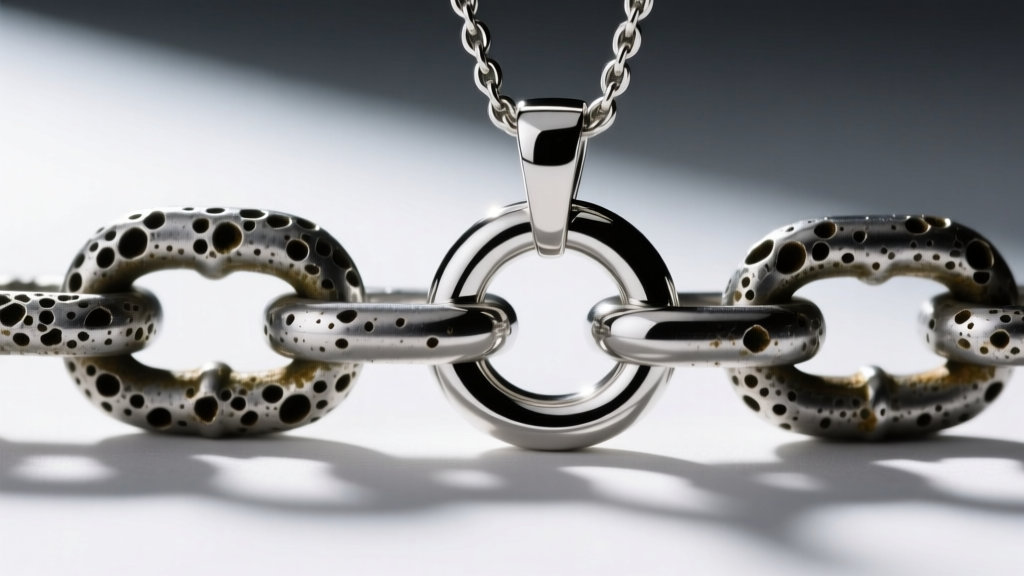
Not all metals are created equal. Below is a data-driven breakdown of common necklace materials, their nickel risk profiles, and their current status in the 2026 fine jewelry market.
| Material / Alloy | Nickel Content | EN 1811 Compliance | 2026 Market Trend |
|---|---|---|---|
| Brass / Bronze | Low (but contains copper/zinc irritants) | Fails (Tarnish causes irritation) | Declining; restricted to outerwear pieces |
| 14k White Gold (Standard) | High (Nickel used as bleaching agent) | Fails (once rhodium wears off) | Being phased out by ethical jewelers |
| 18k Palladium White Gold | Zero (Palladium used instead) | Passes | High demand; premium pricing tier |
| ASTM F136 Titanium | Zero | Passes (Implant Grade) | Surging; favored for avant-garde designs |
| Surgical Steel (316L) | Trace (8-10% but tightly bound) | Usually Passes | Stable; standard for entry-level safe chains |
| Pure Niobium | Zero | Passes | Trending for anodized, colorful pendants |
Material Grades That Guarantee Safety (And Look Incredible)
If you are prone to an allergic reaction to necklace chains, you must become a label reader. Here are the specific material grades you should seek out when investing in new pieces.
ASTM F136 Implant-Grade Titanium
Do not settle for generic 'titanium' or 'aircraft-grade' titanium, which can still contain trace alloying elements that trigger sensitivities. You want ASTM F136 (Ti-6Al-4V ELI), the exact specification used for orthopedic implants. This grade undergoes vacuum arc remelting to eliminate impurities. In 2026, high-end indie designers are utilizing CNC-milled F136 titanium to create chunky, architectural chain links that offer the visual weight of platinum at a fraction of the cost and zero biological risk.
Niobium and the Anodizing Revolution
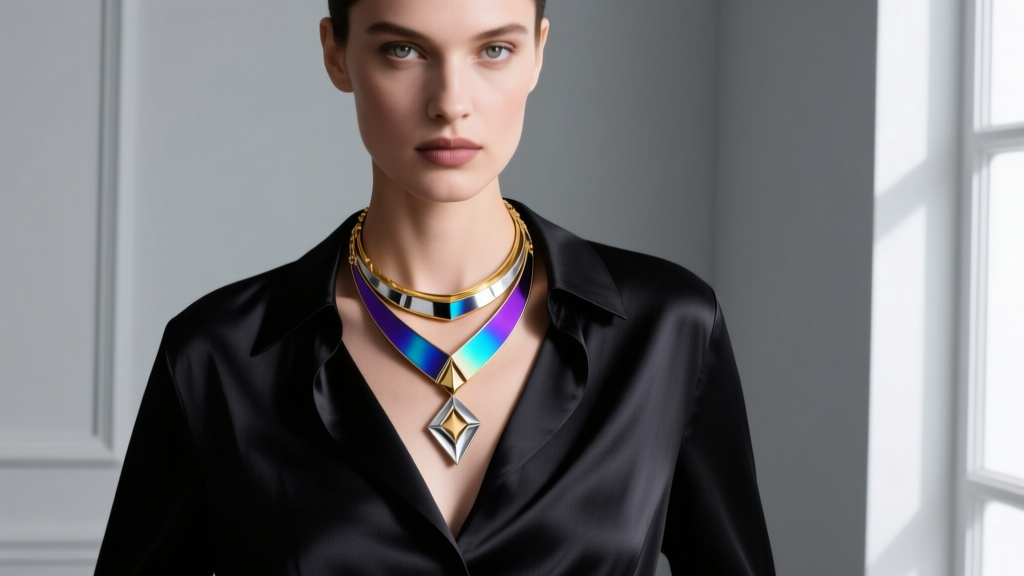
Niobium is an elemental metal, meaning it is never alloyed with other metals, completely eliminating the risk of hidden nickel. Its true superpower, however, is anodizing. By applying specific voltages of electricity in an electrolytic bath, jewelers can grow a transparent oxide layer on the niobium surface that refracts light, creating vivid, permanent colors (from electric blue to deep magenta) without using a single drop of chemical dye or enamel. This makes anodized niobium pendants a massive trend for those seeking colorful, skin-safe statement pieces.
The Rhodium Plating Trap in White Gold
A critical failure mode in fine jewelry is the rhodium plating on standard white gold. Rhodium is a platinum-group metal and highly hypoallergenic. However, plating on a necklace clasp or pendant bail is typically only 0.75 to 1.0 microns thick. Daily friction against the skin and clothing wears through this microscopic barrier in 6 to 12 months, exposing the underlying nickel-bearing gold alloy. If you love the look of white gold, the Mayo Clinic and top dermatologists recommend bypassing the plating trap entirely by choosing 18k white gold alloyed with palladium instead of nickel.
Styling Safe Metals: Current Necklace Trends
Safety does not mean sacrificing style. The 2026 layering trends heavily favor mixed-metal aesthetics that are entirely biocompatible. When layering multiple chains, the friction between the chains can accelerate metal degradation. To prevent this, stylists are mixing ASTM F136 titanium chains with high-polish 950 platinum pendants. Because both metals are incredibly hard and corrosion-resistant, they will not grind microscopic, irritating metal dust onto your chest.
Another major trend is the integration of high-tech ceramics (like zirconium dioxide) into pendant housings. Ceramic is completely inert, scratch-resistant, and possesses a deep, glass-like luster that pairs beautifully with matte-finished titanium chains. For closures, look for brands utilizing internal silicone O-rings within the clasps to prevent metal-on-metal snapping, which can pinch the skin and introduce microscopic metal shavings to the neckline.
Troubleshooting: What to Do If You Already Have a Reaction
If you have already developed a localized rash from a necklace, immediate and correct intervention is required to prevent post-inflammatory hyperpigmentation (dark spots on the décolletage).
- Remove the Offending Chain: Take off the necklace immediately and do not wear it again. Wash the chain in warm water with a mild, pH-neutral dish soap to remove sebum and sweat buildup.
- Apply a Topical Corticosteroid: Over-the-counter 1% hydrocortisone cream applied twice daily for up to seven days will reduce the T-cell mediated inflammatory response.
- Use a Barrier Cream: Once the skin has healed, if you must wear a questionable piece for a short event, apply a dimethicone-based barrier cream to the chest. Dimethicone creates a breathable, invisible shield that blocks nickel ion migration.
The 'Clear Nail Polish' Myth: Never paint the back of a pendant or a chain clasp with clear nail polish to prevent a reaction. Nitrocellulose lacquer degrades rapidly when exposed to body heat and slightly acidic sweat. It creates microscopic fissures that actually trap nickel ions and bacteria against the skin, significantly worsening the contact dermatitis and increasing the risk of secondary bacterial infections.
Final Thoughts on Skin-Safe Jewelry
Navigating the jewelry market with sensitive skin requires vigilance, but the industry's 2026 pivot toward metallurgical transparency makes it easier than ever to build a collection you can wear comfortably from morning to night. By prioritizing verified grades like ASTM F136 titanium, pure niobium, and palladium-alloyed gold, you can completely eliminate the risk of an allergic reaction to necklace chains. Invest in pieces that respect your skin's biology, and let the purity of the metal speak for your personal style.


